The best road cycling routes around Authon-Ébéon
4.6
(11)
216
riders
113
rides
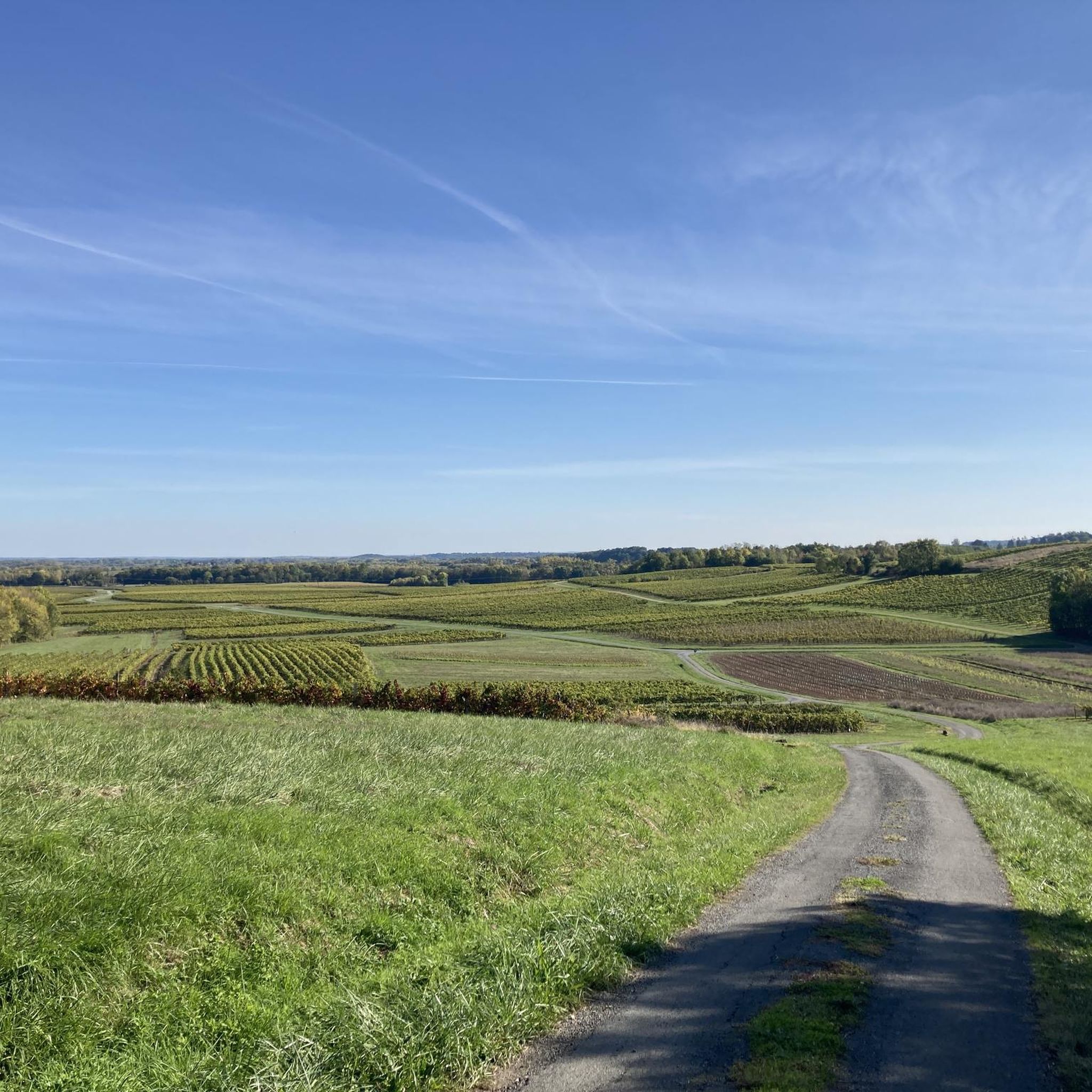
Road cycling around Authon-Ébéon features a landscape characterized by gently rolling terrain, agricultural fields, and river valleys, typical of the Charente-Maritime region in France. The area offers a network of quiet country roads suitable for various cycling abilities. Elevations are generally low, with no significant climbs, making it accessible for sustained rides. The region is known for its vineyards, particularly those associated with Cognac production.
Best road cycling routes around Authon-Ébéon
- The most popular road cycling route is Nantillé, La-Chapelle-des-Pots…
Last updated: November 1, 2026
4.5
(2)
4
riders
42.3km
01:55
290m
290m
Easy road ride. Mostly well-paved surfaces and easy to ride.
2
riders
96.2km
04:18
560m
560m
Moderate road ride. Good fitness required. Mostly well-paved surfaces and easy to ride.

4.0
(1)
9
riders
61.8km
02:38
410m
410m
Moderate road ride. Good fitness required. Mostly well-paved surfaces and easy to ride.
7
riders
41.8km
01:42
190m
200m
Easy road ride. Mostly well-paved surfaces and easy to ride.
9
riders
58.2km
02:22
300m
300m
Moderate road ride. Good fitness required. Mostly well-paved surfaces and easy to ride.
Get access to more routes and recommendations from other explorers.
Already have an account?
Our route recommendations are based on thousands of hikes, rides, and runs completed by other people on komoot.
Start today with a free account
Your next adventure awaits.




Tips from the Community

The site of La Baine, in Chaniers, predates the current mill. 14th century: the first attested mills A document dated 1310 mentions cloth mills at La Baine. They were built on piles driven into the riverbed and were used, among other things, for fulling fabrics. These mills then belonged to the dean and chapter of the cathedral of Saintes. They had been destroyed a few years earlier by the Count of la Marche. In 1313, the chapter obtained authorization to rebuild two mills, a weir, and a fishery. 17th century: Colbert's royal mill It was in the 17th century that La Baine gained considerable importance. A complex of five wheat mills was rebuilt on a secondary branch of the Charente, which was not used for navigation. Around 1630, the mills belonged to the brothers Charles and Jacques Duval, who held the beneficial ownership, while the lordship of Chaniers was under the chapter of the Saint-Pierre de Saintes cathedral. Then came Jean-Baptiste Colbert, minister to Louis XIV and Secretary of State for the Navy. Around 1670, Colbert had the mill redeveloped and enlarged to considerably increase its production capacity. The new complex had seven water passages and thus became one of the most powerful mills in the region. Why was Colbert interested in La Baine? The reason was directly linked to the creation and development of the Rochefort arsenal. The mill primarily produced wheat and barley flour intended for the sustenance of the Royal Navy sailors. The grains arrived via the Charente aboard gabares (flat-bottomed barges). After delivering their cargo to the mill, the gabares departed with the flour destined, among other places, for Rochefort. The mill of La Baine was therefore part of a true royal industrial and logistical system organized around the Charente and Rochefort. 19th century: gradual transformation In the 19th century, milling activity continued. The old mills gradually became a true industrial establishment. In 1845, the site was operated by five different millers. From 1897, the complex was gradually brought together by Mr. Lardy, who modernized the facilities and introduced machinery. His son Rémy Lardy succeeded him. 20th century: the flour mill In the 1930s, the mill had become a true industrial flour mill. Its capacity reached about 50 quintals of wheat per day. In 1936, the hydraulic power was supplied by several wheels about 5 meters in diameter. The total water intake was about 4 meters, with a head of 1.50 meters. The facilities included, among other things: two double grinders; a double converter; a pair of millstones; a plansichter; five purifiers. Milling activity finally ceased in the mid-20th century, with sources placing the end of industrial activity around the years 1940-1960, depending on whether one refers to the flour mill or the complete disappearance of milling activity. Today The building has been preserved and transformed into a restaurant, while retaining remarkable elements of its industrial past, notably the wheel and part of the old machinery. The Moulin de la Baine is now located at 14 rue Colbert, 17610 Chaniers, directly above the Charente. A particularly interesting point The mill, the dam, and the locks form an inseparable historical ensemble. The current dam has, however, undergone modern transformations: a prefectural decree from 2012 classifies the hydraulic structure of the Moulin de La Baine as a Class D dam, among other things.
0
0


The Garde-Épée dolmen is classified as a historic monument. It is made up of five slabs which delimit the room and slabs which cover it. The dolmen is five meters long and more than two meters high.
0
0

Located on a rocky spur overlooking the Charente, Taillebourg has one of the oldest castles in the province of Saintonge. It was also one of the most important in the region in the Middle Ages. This stronghold will allow the city to assert its power and prosper thanks to its port and control of trade throughout the Middle Ages. According to a chronicler, the Château de Taillebourg hosted the wedding night of Louis, future king of France under the name Louis VII, with Duchess Eleanor of Aquitaine. Louis IX (future Saint Louis) made the castle his fortress to launch the attack against the King of England, Henry III. This victorious battle of July 21, 1242 became famous and was represented several centuries later by Delacroix, whose painting can be seen in the Battles gallery at the Palace of Versailles. The castle which had endured all the sieges during the Hundred Years' War and the Wars of Religion was taken and destroyed during the Fronde in 1652. During the Revolution, it was sold in lots as national property. Having suffered from lack of maintenance, the building was the victim of a fire in 1822 and was largely destroyed. All that remains now are the ruins with the ramparts and a tower standing like an emaciated being. It now houses a park which is a haven of peace. To access it from the banks of the Charente, you have to take a small detour through the town.
0
0

Built in the 11th and 12th centuries, this church, listed as a historic monument in 1912, is a spectacular work of art. Well worth the drive past when crossing town!
0
0
This small town of less than 400 inhabitants is located in a hilly and wooded area. It is part of one of the stages of the GR 360 long-distance footpath. It is worth going past the abbey and the church while crossing the town! Both were built at the beginning of the 12th century.
2
0
With less than 200 inhabitants, Fenioux is one of the least densely populated municipalities in France. The main attraction is undoubtedly the 12th century Notre-Dame-de-l'Assomption church, a Saintonge Romanesque style church, built on even older ruins.
0
0
Small picturesque town of about 700 inhabitants. The 12th century Saint-Martial church and the castle are worth the detour!
1
0
Frequently Asked Questions
How many road cycling routes are available around Authon-Ébéon?
There are over 110 road cycling routes around Authon-Ébéon, offering a wide variety of options for different skill levels and preferences.
What is the overall difficulty level of road cycling routes in Authon-Ébéon?
The majority of road cycling routes in Authon-Ébéon are classified as moderate, with 87 routes in this category. There are also 26 easy routes, making the area accessible for various fitness levels. Only one route is considered difficult, catering to more experienced cyclists.
Are there easy road cycling routes suitable for beginners?
Yes, Authon-Ébéon offers 26 easy road cycling routes perfect for beginners or those looking for a relaxed ride. An example is the Nantillé, La-Chapelle-des-Pots et Saint-Bris-des-Bois in a loop, which connects several small villages through the local countryside.
Are there options for advanced road cyclists in Authon-Ébéon?
While the terrain is generally gently rolling, there are routes that offer a more extensive challenge. For instance, the Tour of the Cognac Vineyards is a moderate 96 km path that provides a longer journey through the region's renowned landscapes.
What kind of scenery can I expect on road cycling routes around Authon-Ébéon?
Road cycling around Authon-Ébéon is characterized by gently rolling terrain, vast agricultural fields, and serene river valleys, typical of the Charente-Maritime region. You'll often find yourself cycling through picturesque vineyards, especially those associated with Cognac production.
Are there any historical sites or landmarks to see while road cycling?
Yes, the region is rich in history. You can encounter sites like the Abbaye de Fontdouce, the Saint-Brice Church, and the Château de Chesnel. The Saint-Brice Church – Abbey of Saint-Bris-des-Bois loop from Aujac specifically leads through historical sites and rural landscapes.
Are there any circular road cycling routes in Authon-Ébéon?
Yes, many routes in Authon-Ébéon are designed as loops, allowing you to start and end at the same point. Examples include the Nantillé, La-Chapelle-des-Pots et Saint-Bris-des-Bois in a loop and the Saint-Brice Church – Abbey of Saint-Bris-des-Bois loop from Aujac.
What do other road cyclists enjoy the most about road cycling in Authon-Ébéon?
The area is highly rated by the komoot community, with an average score of 4.8 stars. Reviewers often praise the quiet country roads, the scenic vineyard landscapes, and the gentle river valleys that define the cycling experience here.
What is the best time of year for road cycling in Authon-Ébéon?
The Charente-Maritime region generally enjoys a mild climate, making spring and autumn ideal for road cycling. These seasons offer pleasant temperatures and beautiful scenery, especially during harvest in the vineyards. Summer can also be enjoyable, though it's advisable to cycle in the mornings or late afternoons to avoid the midday heat.
Are there any routes that pass through the famous Cognac vineyards?
Absolutely. The region is renowned for its Cognac production, and several routes immerse you in this landscape. The Tour of the Cognac Vineyards is a prime example, offering an extensive journey directly through these iconic vineyards.
Are there any natural monuments or unique natural sights along the routes?
Yes, you might encounter natural curiosities such as the Chêne de François 1er, a historic oak tree, which adds a touch of natural heritage to your ride.
Most popular routes around Authon-Ébéon
Most popular attractions around Authon-Ébéon

Get inspired with the komoot mobile app


Explore more
Browse the best Road cycling routes in other regions.
