Attractions and Places To See around Puy-Du-Lac - Top 20
Attractions and places to see around Puy-Du-Lac, a commune in the Charente-Maritime department of southwestern France, offer a blend of local historical charm and natural beauty. The village is situated in the Nouvelle-Aquitaine region and bordered by the River Boutonne to its southeast and south. This area is recognized for its natural heritage, including ZNIEFF and NATURA 2000 classifications, providing diverse landscapes for exploration. The region features historical monuments, natural features, and cultural sites within the village and its surroundings.
…Last updated: July 7, 2026
Tonnay-Charente Suspension Bridge
Highlight • Bridge
Translated by Google •
Tip by

Sainte-Madeleine Church of Crazannes
Highlight • Religious Site
Translated by Google •
Tip by

Sign up now to discover places like this
Get recommendations on the best single tracks, peaks, & plenty of other exciting outdoor places.
Sign up for free
Saint-Savinien Church and Statues of the Apostles
Highlight • Religious Site
Translated by Google •
Tip by
Tonnay-Boutonne
Highlight • Other
Translated by Google •
Tip by

Saint-Savinien-sur-Charente
Highlight • Other
Translated by Google •
Tip by

Sign up for free to discover even more attractions around Puy-Du-Lac.
Sign up for free
Already have an account?
Start today with a free account
Your next adventure awaits.
Login or Signup

Tips from the Community

Impressive bridge. Well worth seeing!
1
0
A truly interesting bridge. It's worth a stop.
1
0

Almost obligatory passage to cross the Charente, but it’s worth the detour
0
0

It is an absolutely beautiful village.
0
0

Small town with a special charm along the Charente.
0
0

Compensating for the needs of the Charentais who were formerly obliged to use the ferry to reach the other bank of the river, the bridge was built in 1842 with the constraint of not disrupting the passage of tall sailing ships to Tonnay-Charente in order to allow the port fluvial to continue its activity linked to the transport of salt, wines and spirits. With its 620 m long, it is one of the oldest suspension bridges in Europe. The deck, 204 m long and 5 m wide, is supported by 51 pointed arches and overlooks the river at a height of 23 m. Originally made of wood, it collapsed in 1884 and was replaced by a metal structure. The increase in road traffic eventually weakened the structure and it was closed to all traffic in the 1960s. After numerous rehabilitation works, it is now reopened, but reserved for pedestrians and cyclists. New restoration work is planned to begin at the end of 2023, because its structure remains fragile and its maintenance weighs heavily on the accounts of the small town of Tonnay-Charente.
0
0
In the Middle Ages, Tonnay-Boutonne was a fortified town of which today only one vestige remains: the Porte Saint-Pierre, named after the parish. Two other gates also existed, and the small city also had a port, a lock and a mill. At the heart of the ramparts stood a keep 20m high and 13m side with walls 3m thick. But it was razed in 1839 by the last owner who sold the stones to pay his debts, and the rubble was spread all around raising the level of the streets by 1.50 to 2m and filling the cellars of the village.
0
0
The Saint-Savinien church is a Romanesque style building built between the 12th and 13th centuries. The current sanctuary succeeds an ancient priory, cited in a charter of 1039, of which no vestige remains. The adjoining square is pleasantly decorated with statutes representing the apostles.
0
0
Frequently Asked Questions
What historical landmarks can I explore in and around Puy-du-Lac?
Puy-du-Lac and its surroundings are rich in history. You can visit the 12th-century Église Notre-Dame de l'Assomption within the village. Nearby, don't miss the Tonnay-Charente Suspension Bridge, which has a history dating back to the Middle Ages. Other notable sites include the Saint-Vivien Church in Geay, a Romanesque church from the 12th century, and the Saint-Savinien Church and Statues of the Apostles, an impressive Romanesque building with modern sculptures.
What natural features are prominent in the Puy-du-Lac area?
The commune of Puy-du-Lac is recognized for its natural heritage, falling within ZNIEFF (Natural Areas of Ecological, Faunistic, and Floristic Interest), ZICO (Important Bird Areas), and NATURA 2000 classifications. The River Boutonne forms the commune's southeastern and southern borders, contributing to the natural landscape. The area also provides refuges for bats, and the Crazannes quarries, near the Sainte-Madeleine Church of Crazannes, offer a protected natural area with gorges and rich biodiversity.
Are there family-friendly attractions near Puy-du-Lac?
Yes, several attractions in the area are considered family-friendly. The Sainte-Madeleine Church of Crazannes and its nearby quarries offer an interesting historical and natural exploration. The Saint-Savinien Church and Statues of the Apostles, with its unique blend of old and new art, can also be engaging for families. Additionally, the Saint-Vivien Church in Geay is another historical site suitable for a family visit.
What mountain biking trails are available around Puy-du-Lac?
For mountain biking enthusiasts, there are several routes in the vicinity. You can explore trails like the 'Archingeay loop from Les Nouillers' (51.95 km, moderate), 'Forest Stream – Beware of brambles loop from Saint-Savinien' (37.28 km, moderate), or the 'Mountainbike loop from Saint-Savinien' (32.9 km, moderate). Find more details and routes on the MTB Trails around Puy-Du-Lac guide.
Are there good running routes near Puy-du-Lac?
Yes, the area offers various running trails. Popular options include the 'Bois des Vergnes loop from Archingeay' (8.67 km, moderate), 'Lac de Trizay loop from La Bergerie' (11.94 km, moderate), and the 'Tonnay-Boutonne loop from Sainte-Julienne' (9.23 km, moderate). Discover more running routes in the Running Trails around Puy-Du-Lac guide.
Where can I find road cycling routes in the region?
Road cyclists can enjoy routes such as the 'Banks of the Boutonne Loop' (63.42 km, moderate), 'Saint-Savinien-sur-Charente – Rochefort Maritime Arsenal loop from Bords' (66.58 km, moderate), or an 'easy Roadbike loop from Bords' (38.66 km). For more options, check out the Road Cycling Routes around Puy-Du-Lac guide.
Are there any unique or lesser-known attractions worth visiting?
Beyond the main highlights, consider visiting Saint-Savinien-sur-Charente, labeled a “Petite cité de caractère” and “Village de pierres et d'eau.” This picturesque village features houses built on the water, troglodyte dwellings, a river port, and a Romanesque church. The Carrières de Crazannes (Crazannes quarries) near the Sainte-Madeleine Church also offer a unique natural and historical experience with a museographic space on stone quarrying.
What other towns or villages are worth visiting close to Puy-du-Lac?
Several charming towns are within a reasonable distance. Saint-Savinien (approx. 10 km) is set attractively on the banks of the Charente River. Saint-Jean-d'Angély (approx. 16 km) is home to an abbey church and a heritage site on French pilgrim routes. Rochefort (approx. 18 km) is an 18th-century town known for its corderie, and Saintes (approx. 25 km) boasts an extensive old town and a Roman amphitheater.
What do visitors particularly enjoy about the attractions around Puy-du-Lac?
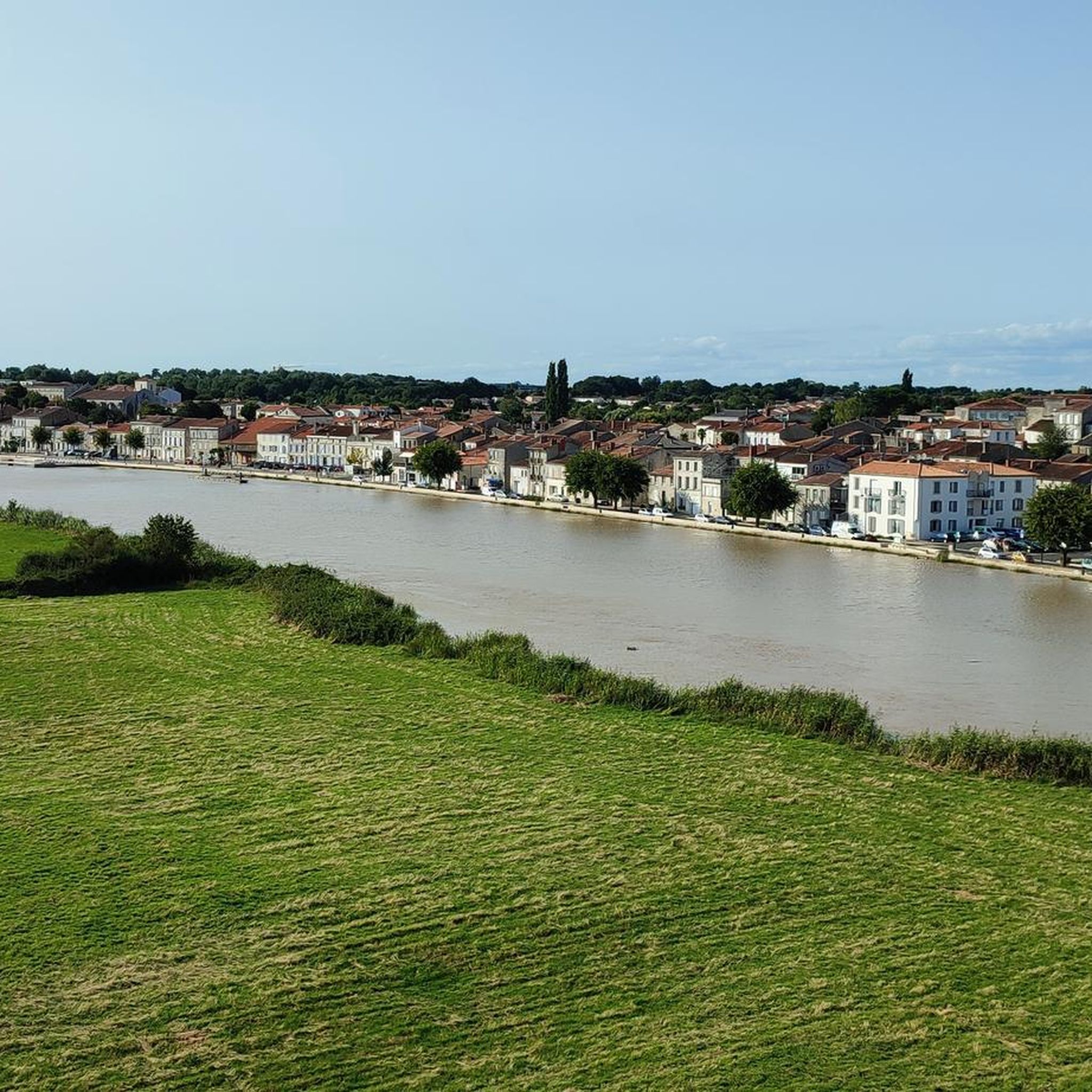
Visitors frequently praise the scenic views, especially from the Tonnay-Charente Suspension Bridge, which offers beautiful panoramas of the village and the Charente River. The blend of historical architecture, like the Romanesque churches, with natural beauty, such as the River Boutonne and the Crazannes quarries, is also highly appreciated. The unique artistic additions at the Saint-Savinien Church, where modern sculptures complement the ancient setting, are also a highlight.
Can you tell me more about the Tonnay-Charente Suspension Bridge?
The Tonnay-Charente Suspension Bridge is a very pretty bridge offering a beautiful view of the village, the Château des Capucins, and the Charente. Its original form dates back to the Middle Ages, with the current structure featuring a length of 623 meters. It has undergone several reconstructions and consolidations over centuries, and while car traffic is now banned, it is open for pedestrians and cyclists, allowing for a unique historical and scenic experience.
What is special about the Sainte-Madeleine Church of Crazannes?
The Sainte-Madeleine Church of Crazannes, built in 1874, is notable for its chevet not oriented to the east, which deviates from tradition. Inside, an ex-voto ship from 1875 hangs in the chapel of the Virgin. Nearby, the Carrières de Crazannes (Crazannes quarries) offer a museographic space on the history of stone quarrying and a protected natural area with gorges and rich biodiversity, making it a fascinating visit.
What makes Saint-Savinien Church and Statues of the Apostles noteworthy?
The Saint-Savinien Church and Statues of the Apostles is a Romanesque style building from the 12th-13th centuries. Its forecourt offers a magnificent panorama and is adorned with modern sculptures of the 12 apostles and children playing, created by local sculptor Cédric Hénnion. This unique blend of ancient architecture and contemporary art creates a delightful experience for visitors.
Is there a specific cultural event in Puy-du-Lac?
Yes, every August, Puy-du-Lac hosts an annual historical sound and light spectacle called Le Quart d'Écu Historical Sound and Light Show. This event features various living tableaus that depict rural life in the early 20th century, offering a unique cultural experience.
Can I spot any specific wildlife in the natural areas around Puy-du-Lac?
The natural areas around Puy-du-Lac, including the ZNIEFF, ZICO, and NATURA 2000 classifications, are rich in biodiversity. The region provides refuges for bats. In the Crazannes quarries, you might spot various mammals like badgers, deer, genets, and foxes, as well as batrachians such as agile frogs and salamanders. Nocturnal and diurnal birds, including owls and short-toed eagles, also inhabit the area.
Most popular routes around Puy-Du-Lac

Get inspired with the komoot mobile app


Explore more
Still not found the Highlight you’re looking for? See guides of the top attractions in other regions:
