Attractions and Places To See around Le Pin - Top 8
Best attractions and places to see around Le Pin include a variety of historical sites, natural features, and architectural landmarks. The region offers diverse points of interest, from ancient trees with local legends to significant historical buildings. Visitors can explore a mix of cultural heritage and scenic routes, suitable for various outdoor activities.
Best attractions and places to see around Le Pin
- The most popular attractions is Bridge Over the Erdre in Candé, a bridge that offers a quiet…
Last updated: July 1, 2026
Bridge Over the Erdre in Candé
Highlight • Bridge
Translated by Google •
Tip by

Nailed Oak
Highlight • Other
Translated by Google •
Tip by

Sign up now to discover places like this
Get recommendations on the best single tracks, peaks, & plenty of other exciting outdoor places.
Sign up for free
Château de la Motte-Glain
Highlight • Castle
Translated by Google •
Tip by

Le Train Bleu Historical Display
Highlight • Historical Site
Translated by Google •
Tip by

Saint-Denis Church of Candé
Highlight • Religious Site
Its facade with two square bell towers evokes the great Gothic cathedrals, such as Notre-Dame de Paris.
Translated by Google •
Tip by

Sign up for free to discover even more attractions around Le Pin.
Sign up for free
Already have an account?
Start today with a free account
Your next adventure awaits.
Login or Signup




Tips from the Community

This ancient tree is said to have the ability to cure boils. Why bother going to the doctor when all it takes is a walk in the woods to heal?
1
0

Car-free rolling path from Carquefou to Candé.
0
0

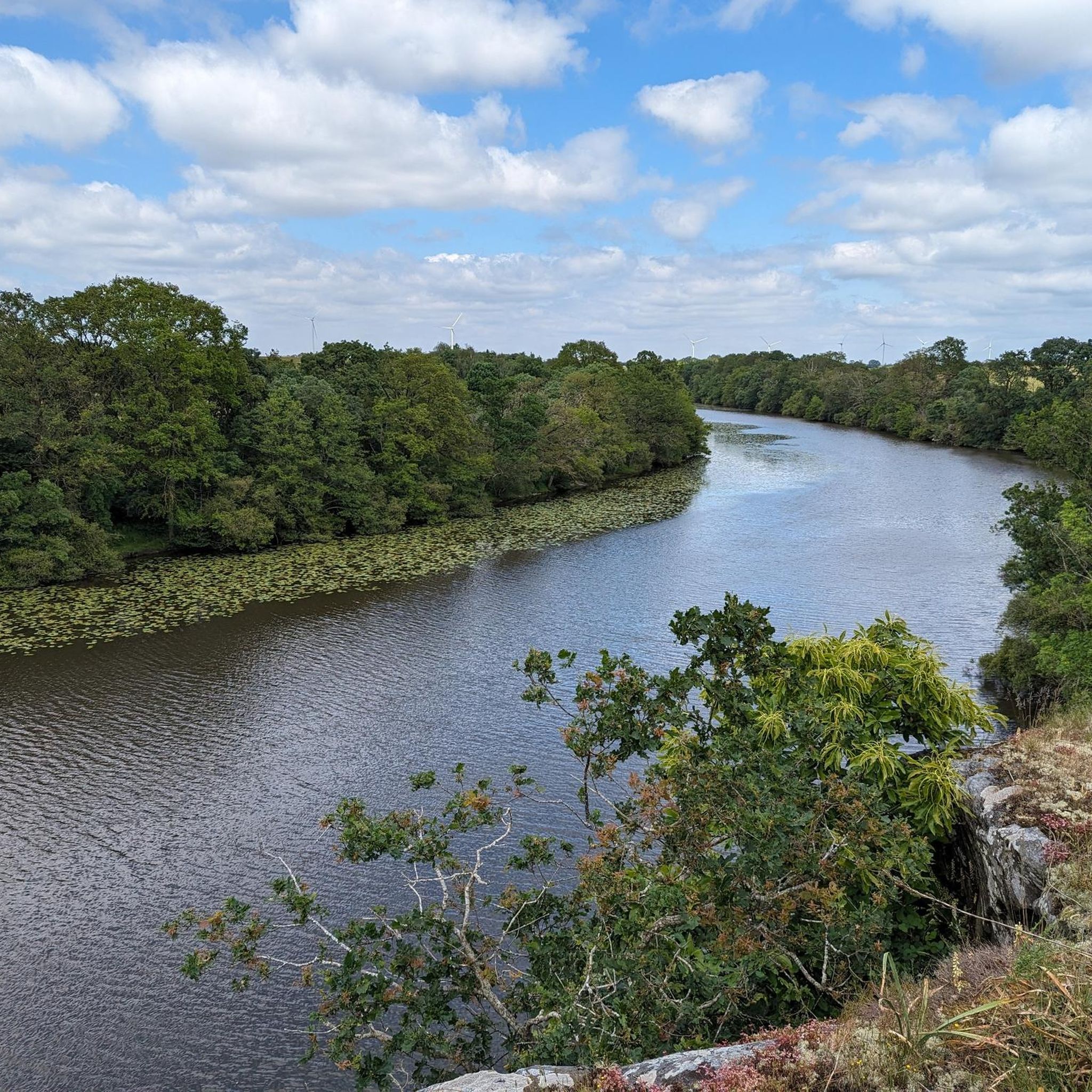
Entering Candé via the greenway, in a quiet & bucolic setting, is very pleasant. Passage over the Erdre, which at this point is still only a stream
0
0

On the Grande Balise road, a few hundred meters from the forest path, you will discover the venerable nail oak on the right. This is a 500 year old tree believed to have healing powers against furunculosis in humans. This oak would be the only survivor of a group of sessile oaks felled before 1742, it is today isolated among younger subjects. With a circumference of 4.20 meters at 1 meter from the ground, it is distinguished by a niche attached to its trunk which houses a Virgin and Child, and above all by a trunk covered with hundreds of nails. Formerly, the word nail designated boils; and popular tradition attributes to this oak the power to cure these painful conditions. An ancient pagan rite was practiced: it involved coming alone, at night, out of sight, to rub coffin nails against the sick part of one's body; then go around the tree seven times, address a prayer to the soul of the tree, drive the nails into the trunk on the side that never sees the sun. The rite ended by walking backwards and saluting the tree. https://www.petitfute.com/v75850-vallons-de-l-erdre-44540/c1173-visites-points-d-interet/c974-site-naturel/533485-le-chene-aux-clous-du- patisseau.html
1
0

Between the Middle Ages and the Renaissance, the Château de la Motte-Glain illustrates the end of one period, and the beginning of another. Neither a defensive fortress nor a pleasure residence, the castle moves with great beauty between the two functions. A schist and tuffeau castle Possibly dating back to the 12th century, the Château de la Motte-Glain was gradually rebuilt during the 15th century. A magnificent residence, the castle forms a Breton home to the north, and a French one to the west, recalling its very border nature. Between the local schist and the Angevin tuffeau, the castle is located between Brittany and Anjou, recalling its complex history and the result of prestigious sponsors. From the Middle Ages to the Renaissance. The Château de la Motte-Glain is one of the first Renaissance castles in Loire-Atlantique, before the reconstructions of Châteaubriant and Ancenis. Still very Gothic in its decoration, the castle shows new research by its sponsor, in its staircase towers, and in the use of decoration linked to Santiago de Compostela, the great pilgrimage.
0
0

Created on a former railway line, this Greenway with a stabilized surface of fairly good quality makes it possible to avoid 36km of dangerous road between Carquefou, on the north-eastern outskirts of the Nantes metropolitan area, and Saint-Mars-la-Jaille, on the edge of Maine-et-Loire. Source: https://www.af3v.org/les-voies-vertes/voies/265-voie-verte-de-carquefou-a-saint-mars-la-jaille/
1
0

The Saint-Denis de Candé church strikes with its imposing side. Its facade with two square bell towers evokes the great Gothic cathedrals, such as Notre-Dame de Paris. The restoration of this church in an imposing way is part of the current of Catholic renewal of the 19th century, in the west of France. The replacement of the parish churches, often medieval, was then necessary, to respond to the strong demographic growth. It was also a way to affirm the Catholic nature of the region after the troubles of the Revolution.
0
0
Frequently Asked Questions
What historical sites can I visit around Le Pin?
The region offers several historical attractions. You can explore the Château de la Motte-Glain, a magnificent residence showcasing a blend of medieval and Renaissance architecture. Another significant historical site is the Le Train Bleu Historical Display, which is a greenway created on a former railway line. Additionally, the Saint-Denis Church of Candé is an imposing religious building with a facade reminiscent of great Gothic cathedrals.
Are there any unique natural landmarks or features to see?
Yes, a truly unique natural landmark is the Nailed Oak. This 500-year-old tree is distinguished by a niche housing a Virgin and Child and a trunk covered with hundreds of nails. Local tradition attributes healing powers to this ancient oak.
What outdoor activities are available near these attractions?
The area around Le Pin is excellent for outdoor activities. You can find numerous routes for hiking, mountain biking, and road cycling. For hiking, explore trails like the 'Château de Villegontier loop from Candé' or the 'Nailed Oak loop from Bonnœuvre'. Mountain bikers can enjoy routes such as the 'Bois de Coléan – Bois de L'Aubriard loop from Candé'. Road cyclists have options like the 'Manoir de la Gâchetière – Saint-Denis Church of Candé loop from Candé'. You can find more details on these activities in the dedicated guides for Hiking around Le Pin, MTB Trails around Le Pin, and Road Cycling Routes around Le Pin.
Are there family-friendly attractions around Le Pin?
Absolutely. The Bridge Over the Erdre in Candé offers a car-free rolling path, perfect for a pleasant family stroll or bike ride. The Le Train Bleu Historical Display, a greenway on a former railway line, is also suitable for families. Additionally, the Château de la Motte-Glain is listed as a family-friendly historical site.
Where can I find scenic viewpoints or places for a quiet walk?
The Bridge Over the Erdre in Candé provides a quiet and bucolic setting with pleasant views over the Erdre river. It's a car-free path, ideal for a peaceful walk or cycle.
What is the 'Le Train Bleu Historical Display'?
The Le Train Bleu Historical Display is a greenway created on a former railway line. It offers a stabilized surface for walking or cycling, allowing you to avoid 36 km of road between Carquefou and Saint-Mars-la-Jaille, providing a unique way to experience the local history and landscape.
Can I visit the Château de la Motte-Glain?
The Château de la Motte-Glain is a significant historical site, illustrating the transition between the Middle Ages and the Renaissance. It's known for its beautiful architecture, blending Breton and French styles. While the guide highlights its historical importance, it's advisable to check local information for current visitor access and opening hours.
Are there any easy hiking trails suitable for beginners?
Yes, for an easier hiking experience, consider the 'Parc Bellevue loop from Candé', which is rated as an easy route. You can find more details and other hiking options in the Hiking around Le Pin guide.
What do visitors enjoy most about the attractions around Le Pin?
Visitors particularly appreciate the quiet and bucolic settings, such as the car-free path over the Erdre river at the Bridge Over the Erdre in Candé. The historical significance of sites like the Château de la Motte-Glain and the unique natural wonder of the Nailed Oak are also highly valued.
Is there a church or religious building of interest in the area?
Yes, the Saint-Denis Church of Candé is a notable religious building. Its imposing facade with two square bell towers evokes the grandeur of great Gothic cathedrals, making it a significant architectural and historical point of interest.
Can I cycle on the greenways around Le Pin?
Absolutely. The Le Train Bleu Historical Display is a greenway with a stabilized surface, perfect for cycling. Additionally, the Bridge Over the Erdre in Candé is part of a car-free rolling path, offering a pleasant cycling experience.

Get inspired with the komoot mobile app


Explore more
Still not found the Highlight you’re looking for? See guides of the top attractions in other regions:
