The best road cycling routes around Lamalou-Les-Bains
4.6
(140)
2,596
riders
84
rides
Road cycling routes around Lamalou-Les-Bains traverse the diverse landscapes of the Haut-Languedoc Regional Nature Park. The region features green, rolling landscapes, mountains, vineyards, and forests, providing varied terrain for cyclists. Routes often include significant elevation gains, particularly around the Caroux Mountains and various passes. The area is characterized by quiet roads and a mix of natural and agricultural scenery.
Best road cycling routes around Lamalou-Les-Bains
- The most popular road cycling route is Vision – Fontfroide Pass loop from Lamalou-les-Bains,…
Last updated: October 25, 2026
5.0
(3)
62
riders
49.5km
02:57
1,280m
1,270m
Hard road ride. Very good fitness required. Mostly well-paved surfaces and easy to ride.
4.0
(3)
38
riders
Moderate road ride. Good fitness required. Mostly well-paved surfaces and easy to ride.

4.5
(4)
43
riders
49.6km
02:50
1,140m
1,140m
Hard road ride. Very good fitness required. Mostly well-paved surfaces and easy to ride.
4.0
(4)
48
riders
65.1km
03:01
800m
800m
Moderate road ride. Good fitness required. Mostly well-paved surfaces and easy to ride.
4.0
(2)
20
riders
32.6km
01:25
290m
290m
Easy road ride. Mostly well-paved surfaces and easy to ride.
Get access to more routes and recommendations from other explorers.
Already have an account?
Our route recommendations are based on thousands of hikes, rides, and runs completed by other people on komoot.
Start today with a free account
Your next adventure awaits.

Tips from the Community

In the heart of the old village, the Saint-Jean-l'Évangéliste church bears witness to the history of Le Poujol-sur-Orb. For several centuries, the inhabitants depended on the old priory of Saint-Pierre-de-Rhèdes, located on the other side of the valley, in present-day Lamalou-les-Bains. In 1646, by decision of the bishop, a new church was built in Le Poujol to bring the place of worship closer to the inhabitants. Remodeled over the centuries, it notably retains beautiful 19th-century frescoes depicting saints and prophets.
2
0
In the heart of Lamalou-les-Bains, the Saints-Pierre-et-Paul church bears witness to the village's transformation into a major spa resort. Built at the beginning of the 20th century, it accompanies the rise of a town that welcomed numerous spa-goers eager to benefit from the renowned waters of the Orb valley. Before its construction, parish life was organized around the old sanctuaries of Saint-Pierre-de-Rhèdes and then Notre-Dame de Villecelle.
3
0
The Saint-Martial church is unlike any other in Haut-Languedoc. Built in 1858-1859 to replace the village's old church, which had become too cramped, it occupies the north wing of the former castle of the viscounts of Narbonne, built in the 15th century. Even more surprisingly, this castle housed a black glass workshop until 1848, before being transformed into a place of worship. The bell tower, added in 1877, completes this original ensemble where religious heritage, seigneurial architecture, and industrial history blend. Observing the buildings surrounding the church, several elements of the original castle can still be distinguished. A few steps away is the old Saint-Martial church, now private property. Built on probably Romanesque foundations, it preserves parts dating back to the 15th century. Having become too dilapidated and too small to accommodate a growing population, it was replaced in 1859 by the new Saint-Martial church. Deconsecrated and then sold by the municipality in 1867, it remains a discreet but precious witness to the religious history of Hérépian.
3
0
The Saint-Majan church is the former abbey church of a powerful Benedictine monastery founded in the 7th century, whose prosperity was based in particular on the silver-bearing lead mines that gave their name to Villemagne-l'Argentière. During the Hundred Years' War, the building was transformed into a veritable fortress: walled-up windows, a rampart walk, and machicolations allowed the monks to defend their abbey. Despite the looting of the Wars of Religion in 1562, this remarkable Gothic church has survived the centuries and still bears the traces of this turbulent past. A few steps away is the former Saint-Grégoire church, the first place of worship of the abbey. Its elegant Romanesque architecture contrasts with the Gothic style of Saint-Majan. Transformed into an archaeological museum, it presents collections dedicated to the history of the village, from Antiquity to the Middle Ages, as well as to the exploitation of the ancient mines that shaped the wealth of Villemagne-l'Argentière. By visiting these two buildings, one travels through more than a millennium of history in just a few minutes.
3
0
Mentioned as early as the 12th century, the church of Saint-Alexandre has had a turbulent history. It was first destroyed in 1364 by English troops during the Hundred Years' War, then in 1563 during the Wars of Religion, when Bédarieux fell into the hands of the Protestants. A third destruction occurred in 1622, during the campaigns led by Louis XIII to retake the Protestant strongholds of Languedoc. Rebuilt in the 17th century, it features a surprising architectural detail: its choir is slightly off-center, a layout that would symbolize the head of Christ inclined on the Cross.
3
0
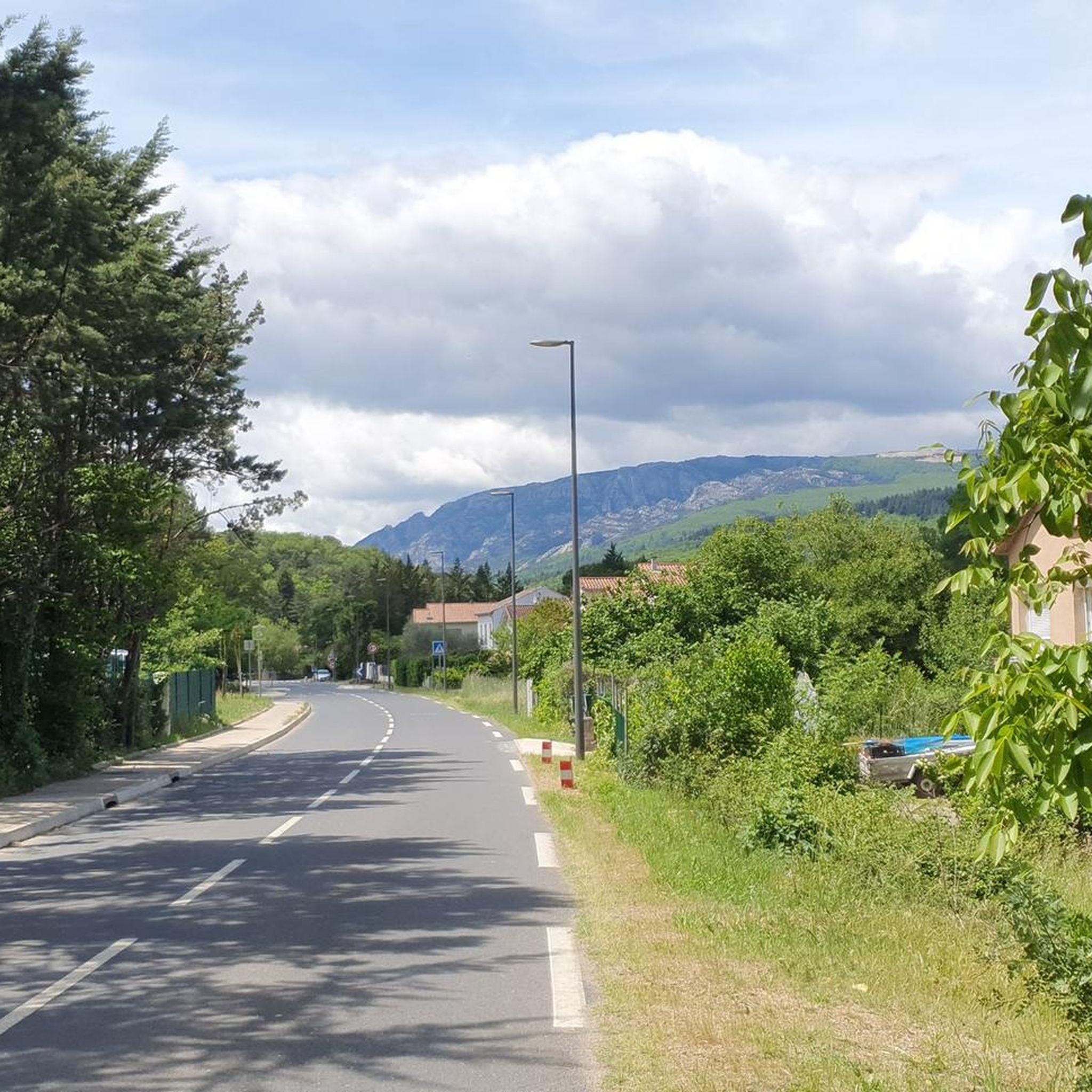
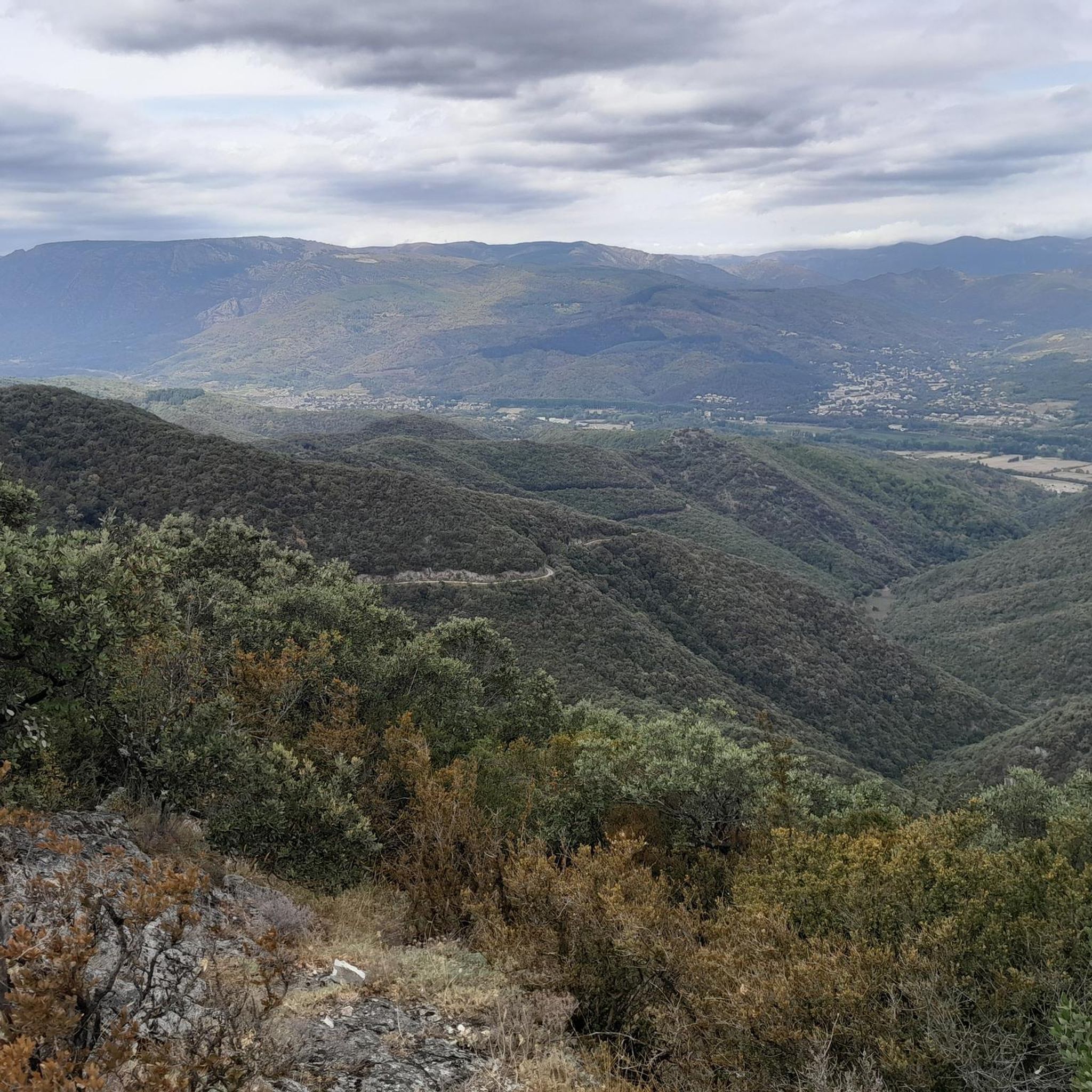
Magnificent viewpoint over the reliefs of the Haut-Languedoc. From this bend in the D180, the landscape suddenly opens up to the east, offering a striking view of the valleys and ridges of the Espinouse. An unmissable photo stop on the way to the pass.
2
0
From Saint-Gervais-sur-Mare, the Col des Treize Vents offers a pleasant and gradual climb. You can stop at one of the hairpin bends to take a moment and admire the magnificent panorama over the valley. The descent towards Hérépian is fast and exhilarating.
3
0

Characteristic suspension bridge over the Orb
0
0
Frequently Asked Questions
How many road cycling routes are available around Lamalou-Les-Bains?
There are over 85 road cycling routes around Lamalou-Les-Bains, catering to various skill levels. These include 7 easy routes, 39 moderate routes, and 39 difficult routes, offering a wide range of options for exploration.
What kind of terrain can I expect on road cycling routes in Lamalou-Les-Bains?
The terrain around Lamalou-Les-Bains is diverse, featuring green, rolling landscapes, mountains, vineyards, and forests within the Haut-Languedoc Regional Nature Park. You'll find quiet roads with varied scenery, often including significant elevation gains, particularly around the Caroux Mountains.
Are there challenging road cycling routes with significant climbs?
Yes, for experienced riders, there are challenging routes with substantial elevation gains. For example, the Vision – Fontfroide Pass loop from Lamalou-les-Bains covers 72.7 km with over 1,340 meters of elevation. Another demanding option is the Col de la Pierre Plantée – Col des 13 Vents loop from Lamalou-les-Bains, which is 48.5 km with 1,240 meters of climbing.
Are there easier or family-friendly road cycling options in the area?
Yes, for gentler rides, the region offers options like the Passa Païs Greenway. This former railway line provides a safe, shaded asphalt path over 80 km, suitable for all levels, including families. While specific komoot routes are not listed as 'easy' for road cycling, the greenway offers a less strenuous experience.
What is the best time of year for road cycling in Lamalou-Les-Bains?
The region is generally pleasant for cycling from spring through autumn. Spring offers lush landscapes, while autumn provides comfortable temperatures and beautiful colors. Summers can be warm, but many routes offer shaded sections. Always check local weather forecasts before heading out.
What scenic viewpoints can I discover while road cycling near Lamalou-Les-Bains?
Many routes offer stunning vistas. Locations like Notre Dame de Capimont provide panoramic views over the Orb valley and the Caroux massif. You can also find viewpoints such as the Viewpoint of the Cabrière trail, which offers picturesque scenery.
Are there any notable natural attractions or landmarks along the road cycling routes?
Yes, the area is rich in natural beauty. You can cycle past the impressive Héric Gorge or the Orb Gorges. Some routes also feature natural pools and waterfalls, such as the Gouffre du Cerisier Natural Pool and Waterfall. The Caroux Mountains are a constant backdrop, and you'll often traverse areas with vineyards and olive groves.
Can I find routes that pass through vineyards or olive groves?
Absolutely. Beyond the mountainous and forested areas, many road cycling routes in the Lamalou-Les-Bains region will take you through picturesque landscapes dotted with vineyards and olive groves, showcasing the agricultural beauty of the area.
Where can I find parking for road cycling routes in Lamalou-Les-Bains?
Lamalou-Les-Bains, being a hub for outdoor activities, typically offers various parking options within the town and at the start of popular routes. Specific parking details can often be found on individual route descriptions on komoot or local tourism websites.
Are there cafes or restaurants along the road cycling routes for a break?
Yes, many routes pass through or near charming villages where you can find cafes, bakeries, and restaurants. These provide excellent opportunities to refuel and experience local hospitality. It's always a good idea to check opening hours, especially in smaller villages.
What do other road cyclists enjoy most about cycling in Lamalou-Les-Bains?
The area is highly rated by the komoot community, with an average score of 4.6 stars from over 120 reviews. Cyclists often praise the varied terrain, the quiet roads, and the stunning natural beauty of the Haut-Languedoc Regional Nature Park, including the challenging climbs and scenic descents.
Are there any long-distance cycling routes that connect to Lamalou-Les-Bains?
Yes, the Véloroute V84, an approximately 200 km cycle route, connects the Canal du Midi to Béziers and passes through Mazamet and Bédarieux, offering an extensive option for touring cyclists who wish to explore beyond the immediate vicinity of Lamalou-Les-Bains.
Are permits required for road cycling in the Haut-Languedoc Regional Nature Park?
Generally, no specific permits are required for road cycling on public roads within the Haut-Languedoc Regional Nature Park. However, always respect local regulations, private property, and any specific signage for protected areas or private land.
Most popular routes around Lamalou-Les-Bains
Most popular attractions around Lamalou-Les-Bains

Get inspired with the komoot mobile app


Explore more
Browse the best Road cycling routes in other regions.
