The best cycling routes around Maillebois
4.5
(31)
233
riders
70
rides
Touring cycling around Maillebois offers routes through extensive forested areas and green countryside. The region is characterized by its proximity to the Senonches forest and the "Forêts et étangs du Perche" Natura 2000 conservation area, providing shaded routes and diverse natural environments. The Blaise river flows through the area, contributing to the scenic rural landscapes. Terrain generally features gentle undulations suitable for touring cyclists.
Best touring cycling routes around Maillebois
- The most popular touring cycling route is Saulnières Town Hall…
Last updated: July 2, 2026
5.0
(1)
46
riders
45.3km
03:31
270m
270m
Moderate bike ride. Good fitness required. Mostly paved surfaces. Suitable for all skill levels.
10
riders
45.5km
03:23
320m
320m
Moderate bike ride. Good fitness required. Mostly paved surfaces. Suitable for all skill levels.

Sign up for free
4.0
(1)
3
riders
Moderate bike ride. Good fitness required. Mostly paved surfaces. Suitable for all skill levels.
3.5
(4)
6
riders
25.3km
01:51
110m
110m
Easy bike ride. Great for any fitness level. Mostly paved surfaces. Suitable for all skill levels.
5.0
(1)
3
riders
23.0km
01:19
100m
100m
Easy bike ride. Great for any fitness level. Mostly paved surfaces. Suitable for all skill levels.
Get access to more routes and recommendations from other explorers.
Sign up for free
Already have an account?
Our route recommendations are based on thousands of hikes, rides, and runs completed by other people on komoot.
Start today with a free account
Your next adventure awaits.
Login or Signup



Tips from the Community


The Saint-Eloi Saint-Jean-Baptiste church in Crécy-Couvé is currently being restored. The spire of its bell tower, which was leaning dangerously, has been dismantled and is currently stored in the church awaiting restoration.
0
0

The Church of Saint-Éloi-Saint-Jean-Baptiste is believed to have originally been the chapel of the Château de Couvé, the first known mention of which dates back to 1215. This château belonged to the Abbey of Saint Père de Chartres. The layout of this chapel is currently unknown. Observing the architectural features of the current church allows us to place its construction between the 15th and 16th centuries. Improvement and modernization work were undertaken in the second half of the 18th century when Louis XV offered the Crécy estate to the Marquise de Pompadour: enlargement of the medieval windows, construction of an altarpiece forming a sacristy, a choir enclosure, and a gallery that could replace an older structure providing access to the attic. During this work, it is assumed that some of the bell tower's supports were removed to free up the nave and harmonize the interior spaces. After a prosperous period, the 19th and 20th centuries saw a slow deterioration of the building, despite some maintenance work being carried out on the roofs and other parts of the church that required it. It was only in 1901 that major work was undertaken, with the repair of the bell tower roof. This was followed in 1925 by work to consolidate the bell tower structures and repair the roofs of the western part of the nave. The bell tower and spire are tilting significantly to the south, linked to a failure of the old supports and the deterioration of the supporting structures, requiring urgent safety and restoration work.
0
0

The castle of Senonches. You will find an information point inside.
0
0
Beautiful little village, typical of the region.
0
0
CHURCH SAINT NICOLAS (17th century) The town of La Ferté-Vidame takes its name from the Latin Firmitas Castrum which means the fortified villa belonging to the vidame'. Its primitive church existed from the 12th century. We find it mentioned in a charter dated 1136 under the name “Ecclesia Sancti Nicolai de Firmitate”. Under the Ancien Régime, the rectory which was at the disposal of the abbot of Saint-Vincent-des-Bois became an annex of the parish of Lamblore. This particular situation of a chief town of a castellany belonging to a rural parish is explained by the detachment of the original parish from the territory around the castle. Successor to the Huguenot heirs, Claude de Rouvroy de Saint-Simon, proclaimed by the grace of Louis XIII duke and peer of France, acquired the La Ferté estate in 1632. In order to erase all traces of Protestantism, of which the church had become over the centuries a very active platform, the Duke of Saint-Simon ordered in 1658 the demolition of the original church to replace it on the same site with the current building. The work was carried out promptly. On November 1, 1659, the Saint-Nicolas church was blessed by Messire Louis Oudard de Germens, canon priest of Chartres. Classic in style with its homogeneous and ordered composition, the church was built according to a plan in the shape of a Latin cross. Its construction was inspired by the drawings of the famous Italian architect, Andrea di Pietro Palladio, whose sketches Duke Saint-Simon had brought back from Spain. The architecture remains faithful to the marriage of stone and brick while giving this alternation a fanciful touch. Very majestic, the facade is built according to the Italian pattern (bossed pilasters, superposition of orders, pediment, volutes), a style also in vogue in France since 1630. The arms of the Saint-Simon family were engraved on a stone at the pediment of the portal and on two others on either side of the portal. They were burned during the Revolution. Today, only the date engraved on the frieze remains: 1659. 16 59 Square in plan, the bell tower, which adjoins the church in the northern part, is topped with a dome surmounted by a lantern. Two bells are housed in the bell tower: one dates from 1762, the second from 1813. The history of the church is closely intertwined with that of the lords of the parish, including the families Saint-Simon, Laborde, Bourbon-Penthievre and Bourbon-Orléans remain the most famous. Grandstands accessible from the outside and opening onto the side chapels recall their presence. In 1743, at the request of Louis de Saint-Simon, a great memoirist, the family vault was built in the Chapel of the Resurrection. A slab on the ground marks the location of the grave. Unfortunately, during the Revolution, the tombs were desecrated, the bones of the benefactors were extracted from the vault and scattered in a common grave dug at the apse of the church. The church was the subject of significant restorations at the end of the 18th century and the beginning of the 19th century, including the interior ornamentation of the building which is a manifestation of the neo-classical style.
2
0

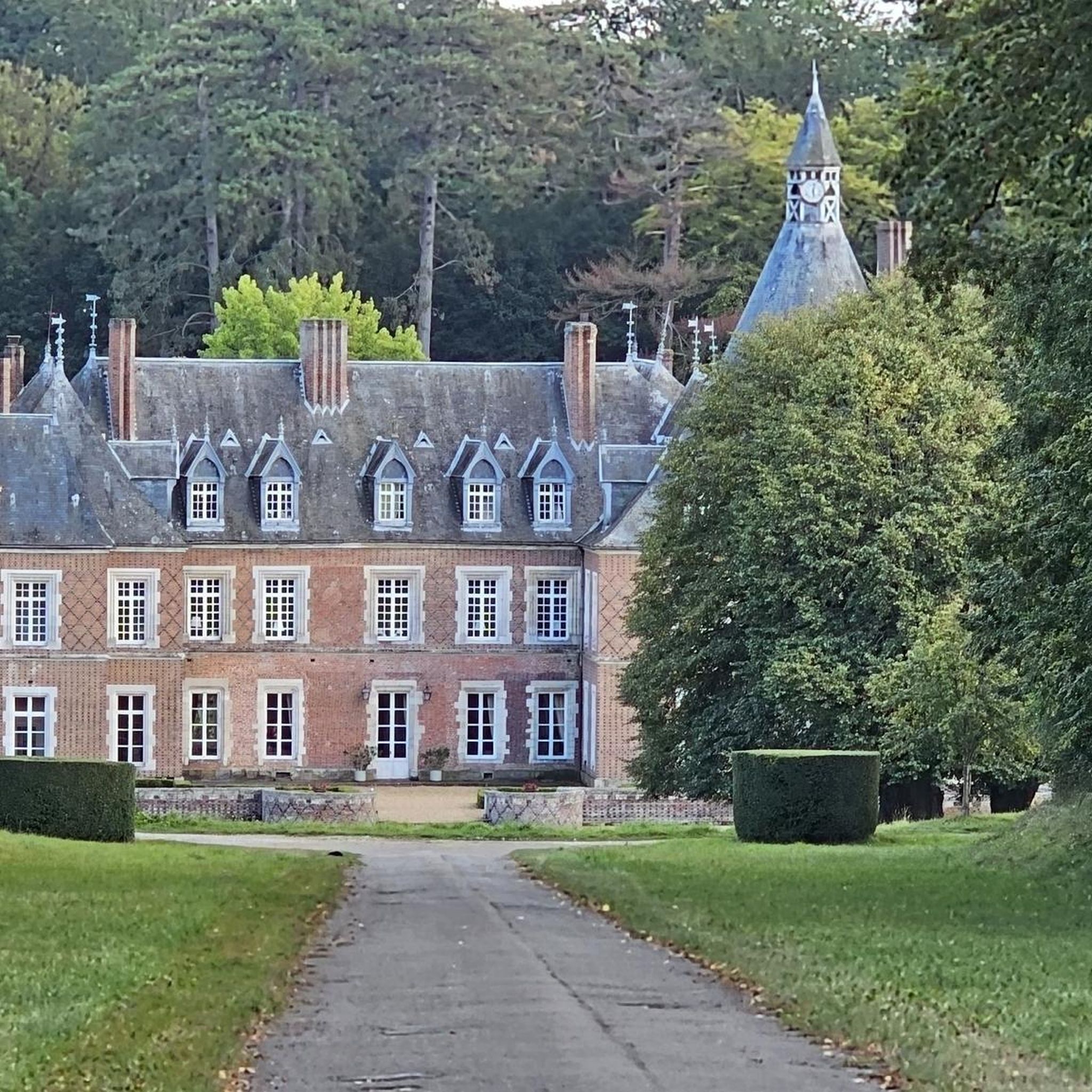
The castle of La Ferté-Vidame impresses with its ruins, the only remains of its destruction during the French Revolution. Its park is also pleasant to visit.
2
0
On the edge of the Perche, the Senonches castle, whose oldest remains date from the 12th century, had illustrious owners until the Revolution: from the lords of Thimerais to “Monsieur”, brother of King Louis XVI.
0
0
Frequently Asked Questions
How many touring cycling routes are available in Maillebois?
There are over 60 touring cycling routes around Maillebois, offering a variety of options for different skill levels. The komoot community has explored these routes over 200 times, providing valuable insights and ratings.
What kind of terrain can I expect on touring cycling routes in Maillebois?
The terrain around Maillebois generally features gentle undulations, making it suitable for touring cyclists. Routes often lead through extensive forested areas like the Senonches forest and green countryside, with some paths following the scenic Blaise river.
Are there any easy touring cycling routes suitable for beginners or families?
Yes, Maillebois offers 28 easy touring cycling routes. These routes are perfect for those looking for a relaxed ride through the tranquil landscapes. For example, the La Ferté-Vidame Town Hall – Senonches Castle loop from La Saucelle is a moderate option that can be enjoyed by many.
What are some notable natural features or landscapes I'll encounter while cycling?
You'll primarily experience extensive forested areas, including parts of the vast Senonches forest and the "Forêts et étangs du Perche" Natura 2000 conservation area, known for its rich biodiversity. The Blaise river also winds through the region, adding picturesque riverside scenery to many routes.
Can I find routes that pass by historical sites or landmarks?
Absolutely. Many routes in the Maillebois area offer opportunities to see historical landmarks. You might cycle past the impressive Château de Maillebois, the elegant Escorpain Castle, or the medieval Château de Senonches. The Rond du Roi, with its 18th-century sandstone pyramids, is another interesting historical site within the woodlands.
Are there any circular touring cycling routes in the area?
Yes, many of the touring cycling routes around Maillebois are circular, allowing you to start and end at the same point. A popular example is the Saulnières Town Hall – Rond des Quatres Barrières loop from Blévy, which takes you through forests and rural landscapes.
What is the best time of year to go touring cycling in Maillebois?
The region's extensive forests provide ample shade, making spring and autumn particularly pleasant for cycling. The mild temperatures and vibrant foliage during these seasons enhance the experience. Summer can also be enjoyable, especially on shaded routes, while winter cycling might be possible on cleared paths, though conditions can vary.
Is it possible to bring my dog on touring cycling routes?
Many of the natural trails and rural roads around Maillebois are suitable for cycling with a dog, especially if they are accustomed to a bike trailer or running alongside. However, it's always advisable to check local regulations for specific forest paths or protected areas, and ensure your dog is well-behaved and on a leash where required.
Where can I find parking for touring cycling routes in Maillebois?
Parking is generally available in the villages and towns near the starting points of many routes, such as Blévy or Châteauneuf-en-Thymerais. Look for designated parking areas or public spaces in these communes when planning your trip.
What do other cyclists say about touring cycling in Maillebois?
The touring cycling routes in Maillebois are highly rated by the komoot community, with an average score of 4.5 stars from over 20 reviews. Cyclists often praise the tranquil rural atmosphere, the beauty of the forested sections, and the well-maintained paths that make for an enjoyable ride.
Are there any longer or more challenging routes for experienced touring cyclists?
Yes, for more experienced touring cyclists seeking a challenge, there are 3 difficult routes available. An example is the Saulnières Town Hall loop from Le Gland, which covers over 50 km and features more significant elevation changes, offering a rewarding ride through varied landscapes.
What kind of wildlife might I see while cycling in Maillebois?
Given that Maillebois is part of the "Forêts et étangs du Perche" Natura 2000 conservation area, you have a good chance of encountering diverse wildlife. Keep an eye out for various bird species, deer, and other forest animals, especially during quieter times of the day or in less frequented areas.
Most popular routes around Maillebois
Most popular attractions around Maillebois

Get inspired with the komoot mobile app


Explore more
Browse the best Cycling routes in other regions.
