The best walks and hikes around Burbach
4.4
(44)
334
hikers
68
hikes
Hiking around Burbach offers diverse landscapes, characterized by picturesque hills, valleys, and dense forests. The region is situated near the Rothaargebirge mountains and the Westerwald, providing varied terrain. Notable geological features like the Trödelsteine, formed from cooled magma, and the Großer Stein contribute to its unique natural scenery. Romantic streams flow through the landscape, enhancing the outdoor experience.
Best hiking trails around Burbach
- The most popular hiking route is The Round Table loop from Zollingen, a 2.6 miles (4.2…
Last updated: July 5, 2026
5
hikers
4.21km
01:08
50m
50m
Easy hike. Great for any fitness level. Easily-accessible paths. Suitable for all skill levels.
5.0
(1)
7
hikers
10.4km
02:48
120m
120m
Moderate hike. Good fitness required. Easily-accessible paths. Suitable for all skill levels.

Sign up for free
5
hikers
15.9km
04:16
180m
180m
Moderate hike. Good fitness required. Easily-accessible paths. Suitable for all skill levels.
8
hikers
19.2km
05:05
180m
180m
Hard hike. Very good fitness required. Easily-accessible paths. Suitable for all skill levels.
4.0
(2)
6
hikers
5.65km
01:35
110m
110m
Easy hike. Great for any fitness level. Easily-accessible paths. Suitable for all skill levels.
Get access to more routes and recommendations from other explorers.
Sign up for free
Already have an account?
Our route recommendations are based on thousands of hikes, rides, and runs completed by other people on komoot.
Start today with a free account
Your next adventure awaits.
Login or Signup

Tips from the Community

Great initiative by the Tourist Office to showcase local heritage
0
0

Napoleonic benches were installed along roadsides in Alsace in the 19th century under both empires. Two series of Napoleonic benches can be distinguished by their design and period of construction. First, the King of Rome benches (also called the Marie-Louise benches) were erected between 1811 and 1812 to celebrate the birth and baptism of François, Charles, Joseph Bonaparte (1811-1832), son of Napoleon I and Marie-Louise of Austria, who was titled King of Rome at birth. In January 1812, 125 King of Rome benches were recorded in the Bas-Rhin region. Later, the so-called Empress Eugenie benches were created in 1854, for the first anniversary of the marriage of Napoleon III to Eugenie de Montijo (marriage in 1853). In 1854, 448 Empress benches were counted in the Bas-Rhin.
1
0

The church of St. Gallen was first mentioned in Mackwiller in the 15th century. From 1697 to 1897, the church was mixed, until the construction of the current parish church of St. Gallen. It was built on the site of an ancient Roman building from the 3rd century. The choir is surmounted by a bell tower built in the 15th century from ancient materials. After a fire during the Second World War, the church was rebuilt in 1842 and then in 1958.
0
0

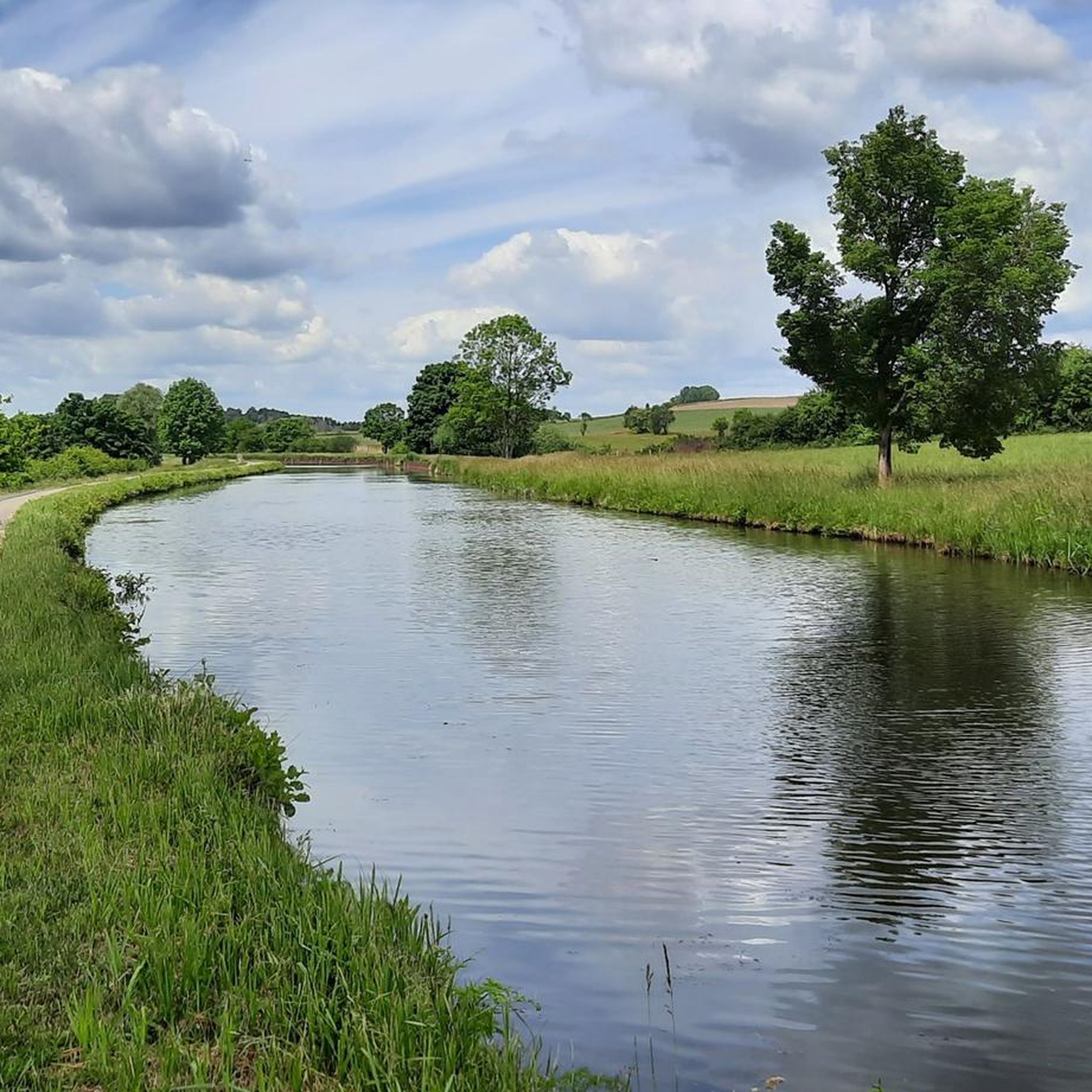
Great cycle path along the Saar Canal.
2
0

The cycle path stretches from Sarreguemines to Gondrexange.
0
0

Frequently Asked Questions
How many hiking trails are there in Burbach?
Burbach offers a wide selection of hiking opportunities, with over 60 routes available for exploration. These trails cater to various preferences, from easy strolls to more challenging hikes.
What are the difficulty levels of hikes in Burbach?
The hiking trails in Burbach offer a range of difficulty levels. You'll find 15 easy routes perfect for a relaxed walk, 43 moderate trails for those seeking a bit more challenge, and 4 difficult routes for experienced hikers looking for a strenuous adventure.
What do other hikers enjoy most about hiking in Burbach?
The hiking experience in Burbach is highly rated by the komoot community, with an average score of 4.3 stars from nearly 300 hikers. Reviewers often praise the diverse landscapes, from rolling hills and dense woodlands to unique geological formations, and the well-maintained network of trails.
Are there family-friendly hiking options in Burbach?
Yes, Burbach offers several family-friendly hiking options. Many of the 15 easy routes are suitable for families. For example, The Round Table loop from Zollingen is an easy 4.2 km path that provides accessible exploration of the local surroundings, perfect for a quick outing with children.
Can I bring my dog on the hiking trails in Burbach?
Generally, dogs are welcome on most hiking trails in Burbach. It's always recommended to keep your dog on a leash, especially in nature reserves or near wildlife, and to clean up after them. Specific rules may apply to certain areas, so look for local signage.
Are there circular hiking routes available in Burbach?
Yes, Burbach features numerous circular hiking routes. The Mackwiller Church loop from Berg is a popular moderate 15.9 km circular path. Additionally, the Burbach-Oberdresselndorf circular route leads to the unique Dreiländereck, where three German states meet, offering a distinctive geographical experience.
Where can I find unique geological formations like the Trödelsteine?
Burbach is known for its 'stone rich' landscape. The impressive Trödelsteine, formed from cooled magma, are a significant highlight. You can explore them via the Trödelstein path, which guides hikers from Buchhellertal to these distinctive basalt formations. Other notable rock formations include the Großer Stein and Wildweiberhäuschen rocks.
What kind of landscapes can I expect on Burbach's hiking trails?
Hiking in Burbach offers diverse landscapes, characterized by picturesque hills, valleys, and dense forests. The region is situated near the Rothaargebirge mountains and the Westerwald, providing varied terrain with woodlands, open vistas, and rolling hills. Romantic streams also burble through the landscape, adding to the serene atmosphere.
Are there any long-distance trails accessible from Burbach?
Yes, Burbach provides access to significant long-distance trails. Portions of the famous Rothaarsteig, known as the 'Path of the Senses,' can be reached from the area. The Siegerland Ridgeway, approximately 140 km long, also runs through the peripheral mountain ranges surrounding Siegerland, partly through the Rothaar Mountains Nature Park and along the Rothaarsteig.
What historical sites or attractions can I visit near Burbach's trails?
While hiking in Burbach, you can explore several interesting nearby attractions. There are various castles to discover, such as Fénétrange Castle, Château de Lorentzen, and Château de Diedendorf. Additionally, you might encounter features like the Canal des Houillères de la Sarre or a canal bridge, offering a glimpse into local history and infrastructure.
Is there public transport access to Burbach's hiking trails?
Public transport options are available to reach Burbach and its surrounding areas, which can provide access points to various hiking trails. While specific trailheads might require a short walk or local bus connection, Burbach is generally connected within the region. It's advisable to check local bus schedules for the most convenient access to your chosen starting point.
Where can I park when hiking in Burbach?
Parking is generally available at common starting points for hiking trails in Burbach and its districts. Many trailheads, especially for popular routes like the Trödelstein path or those in the Hickengrund area, will have designated parking spaces. Look for signs indicating hiker parking areas upon arrival.
What is the best time to hike in Burbach?
Burbach offers enjoyable hiking experiences throughout much of the year. Spring and autumn provide pleasant temperatures and beautiful scenery with blooming flowers or vibrant fall foliage. Summer is also great, though some trails might be more exposed to the sun. Winter hiking is possible, especially on the slopes of the Weidekamp, but conditions can vary with snow and ice.
Most popular attractions around Burbach

Get inspired with the komoot mobile app


Explore more
Browse the best Hikes in other regions.
