The best cycling routes around Doussay
4.0
(11)
149
riders
32
rides
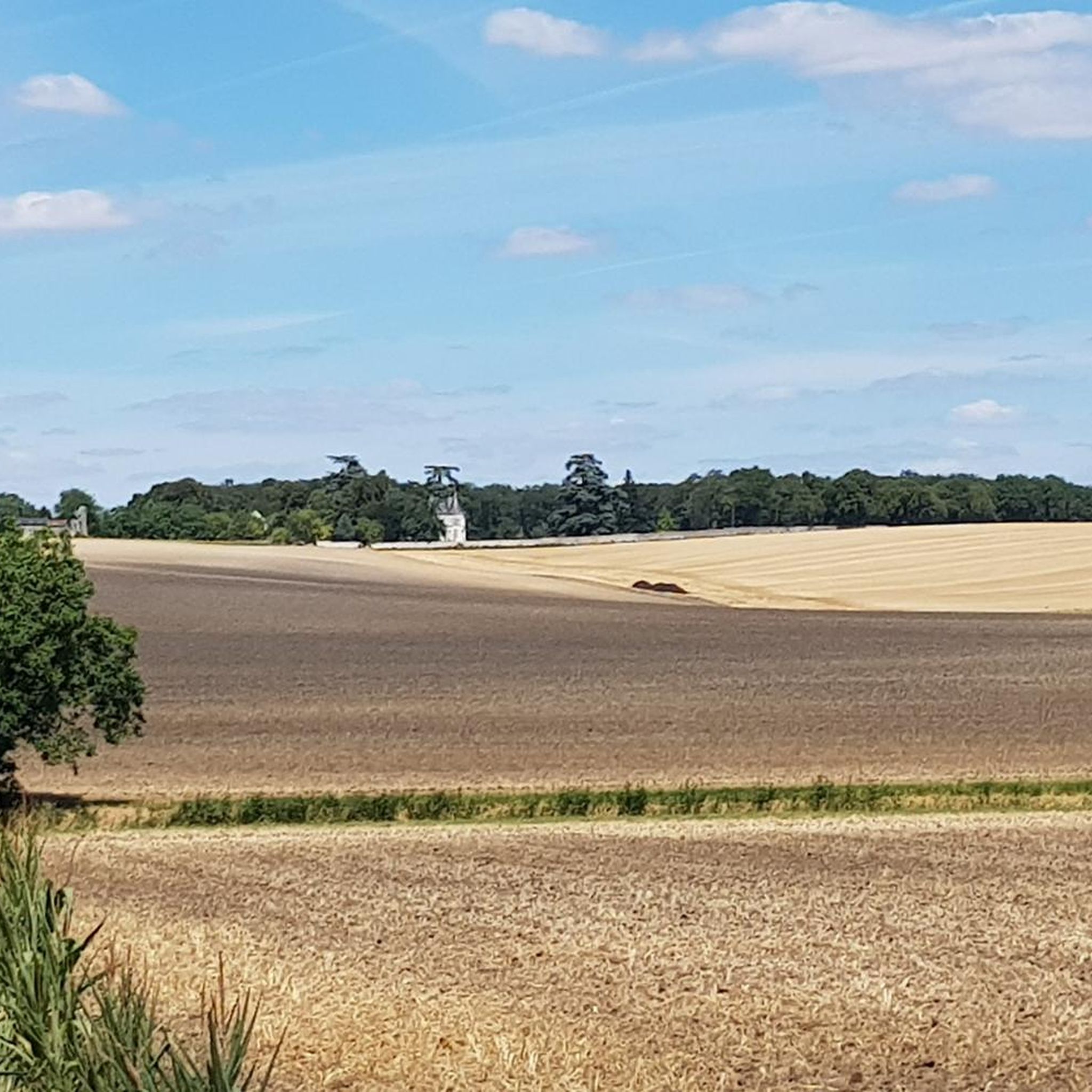
Touring cycling routes around Doussay traverse a landscape characterized by gentle rolling hills and river valleys, particularly the Envigne valley. The area features a mix of agricultural land, small woodlands, and historical sites like châteaux and keeps. Elevation changes are generally moderate, with some routes offering longer, sustained climbs.
Best touring cycling routes around Doussay
- The most popular touring cycling route is Château de Coussay et Roseraie de Lencloître – loop in the Envigne valley, an easy 18.8 miles…
Last updated: November 2, 2026
4.0
(2)
7
riders
30.3km
01:49
130m
130m
Easy bike ride. Mostly paved surfaces.
1
riders
58.9km
03:37
460m
460m

1.0
(1)
18
riders
52.6km
03:37
200m
200m
Moderate bike ride. Good fitness required. Mostly paved surfaces.
16
riders
43.3km
03:19
300m
300m
Moderate bike ride. Good fitness required. Mostly paved surfaces.
5
riders
Moderate bike ride. Good fitness required. Mostly paved surfaces.
Get access to more routes and recommendations from other explorers.
Already have an account?
Our route recommendations are based on thousands of hikes, rides, and runs completed by other people on komoot.
Start today with a free account
Your next adventure awaits.


Tips from the Community

🏭 1. A museum set up in the former “Manu” Le Grand Atelier - Museum of Art and Industry is located on the site of the former Châtellerault Arms Factory ("Manufacture d’armes"). The Manufacture was created by royal ordinance on July 14, 1819, under Louis XVIII. Construction began in 1820. Its location in Châtellerault was notably due to the presence of the Vienne river, which allowed for the use of hydraulic energy, and the existence of a significant local tradition of cutlery and metallurgy. Initially, it mainly produced edged weapons: sabers, swords, lances, and cuirasses. From the 1830s onwards, production also turned to firearms. The Manufacture gradually became a huge industrial complex, employing several thousand people. It played a considerable role in the economic and social history of Châtellerault. 🔧 2. The museum building The building now occupied by the Grand Atelier is particularly interesting. It is part of the former assembly and finishing workshop, built between 1886 and 1887, notably in the context of the production of the Lebel rifle. It is a characteristic industrial building from the late 19th century, with vast spaces, large glass bays, and saw-tooth roofs allowing for significant natural light. It is now protected as heritage. The Manufacture closed permanently in 1968. 🚗 3. The birth of the automobile museum After the closure of the Manufacture, part of the buildings was reused for cultural purposes. As early as 1969, the site hosted a museum, notably stemming from Bernard de Lassée's vehicle collection. It was first named Musée de la Technique et de l’Automobile, then became Musée Auto-Moto-Vélo. The town of Châtellerault acquired part of Bernard de Lassée's collection and gradually developed the museum. The collections include, in particular, vintage cars, motorcycles, bicycles, engines, posters, and accessories, featuring prestigious brands such as Panhard-Levassor, Delahaye, Talbot, Darracq, or Bugatti. 🏛️ 4. The merger with the former Sully museum This is an important step in understanding why the museum today bears the name “museum of art and industry”. Châtellerault also had another museum, located in the Hôtel Sully, dedicated to the history and heritage of the town: archaeology, fine arts, weapons, cutlery, ethnology, local artists, etc. Gradually, the collections of the two institutions were brought together on the site of the former Manufacture. The Ministry of Culture thus indicates that the collections were regrouped on the Manufacture site, first under the name Musée de la technique et de l’automobile, then Musée Auto-Moto-Vélo, and finally Grand Atelier. 🎭 5. The transformation into “Grand Atelier” After significant renovations, the museum was reorganized and took its current name in 2019: Le Grand Atelier – Musée d’art et d’industrie. It is therefore no longer just a museum dedicated to automobiles. It now offers three main tours: 🚗 Auto-Moto-Vélo: the evolution of transport from the 19th century to the 2000s; 🔫 Manufacture d’armes: the industrial and social history of the “Manu” and its workers; 🎭 Cabaret du Chat Noir: dedicated to Rodolphe Salis, born in Châtellerault and founder of the famous Montmartre cabaret. The museum now covers over 3,000 m² of exhibition space. An important clarification It is therefore necessary to distinguish: - The Arms Factory (“La Manufacture d’armes”) → the large industrial site created in 1819, closed in 1968. - The Grand Atelier building → a former workshop of the Manufacture, built in 1886-1887. - Le Grand Atelier – Museum of Art and Industry → the museum gradually created on this site, whose current name dates from 2019. - And the former Sully museum → a historic museum institution in Châtellerault, part of whose collections have been integrated into the Grand Atelier.
0
0

Attention private property
0
0


Former railway track, converted into a cycle path, in the heart of the bocage.
0
0

A beautifully restored castle which now houses the Living Museum of the Middle Ages. An impressive building to look at. Admire it from the outside as you pass by.
2
0
Dungeon and castle chapel which are the remains of a castle fortified by Richard Coeur de Lion. The site is the place of archaeological excavations.
2
0
Living museum of the Middle Ages, come and attend one of the live demonstrations, explore the interior of the castle or admire it from the outside as you pass by.
2
0
Frequently Asked Questions
How many touring cycling routes are available around Doussay?
There are nearly 40 touring cycling routes around Doussay, offering a variety of experiences across the region's gentle rolling hills and river valleys.
Are there easy touring cycling routes suitable for beginners in Doussay?
Yes, Doussay offers 13 easy touring cycling routes perfect for beginners. An excellent option is the Château de Coussay et Roseraie de Lencloître – loop in the Envigne valley, an 18.8-mile (30.3 km) trail that explores the scenic Envigne valley.
What kind of challenging touring cycling routes can I find near Doussay?
For those seeking a challenge, Doussay features one difficult touring cycling route. The Lencloître and Ligne Verte Loop is a 36.6-mile (58.9 km) path that incorporates a dedicated greenway, offering varied terrain and longer distances.
Are there any circular touring cycling routes in Doussay?
Many touring cycling routes around Doussay are designed as loops. For example, the Haut-Clairvaux Keep – Le Grand Atelier loop from Lencloître is a 37.5-mile (60.3 km) trail that leads through historical areas and the countryside.
What are some scenic viewpoints or landmarks to see along touring cycling routes in Doussay?
The routes often pass by historical sites and natural features. You can explore highlights such as the Haut-Clairvaux Keep, the Lencloître Convent and Rose Garden, or the unique The troglodytes. Many routes also follow the scenic Envigne valley.
What do other touring cyclists say about the routes in Doussay?
The touring cycling routes in Doussay are highly rated by the komoot community, with an average score of 4.5 stars from over 8 reviews. Cyclists often praise the varied terrain, the mix of agricultural land and woodlands, and the historical sites encountered along the way.
Are there touring cycling routes suitable for families with kids in Doussay?
Yes, the 13 easy routes are generally suitable for families. These routes typically feature gentler terrain and shorter distances, allowing for a more relaxed pace. The region's dedicated greenways, like sections of the Ligne Verte Loudun–Châtellerault, also offer safe and enjoyable cycling for all ages.
What is the best season for touring cycling in Doussay?
The best seasons for touring cycling in Doussay are typically spring and autumn, when the weather is mild and the natural scenery is at its most vibrant. Summer can also be pleasant, though it's advisable to start earlier in the day to avoid the midday heat.
Are there any touring cycling routes that incorporate greenways or dedicated cycle paths?
Yes, some routes, like the Lencloître and Ligne Verte Loop, utilize sections of the Ligne Verte Loudun–Châtellerault, a dedicated greenway. These paths offer a smooth and often traffic-free cycling experience.
How long do touring cycling routes around Doussay typically take to complete?
Route durations vary significantly based on distance and difficulty. An easy route like the Château de Coussay et Roseraie de Lencloître – loop in the Envigne valley can take around 1 hour 48 minutes, while longer, moderate routes such as the Haut-Clairvaux Keep – Le Grand Atelier loop from Lencloître might take approximately 4 hours 21 minutes.
Are there opportunities for wildlife spotting along the touring cycling routes?
Given the region's mix of agricultural land, small woodlands, and river valleys, there are opportunities to observe local wildlife. Keep an eye out for various bird species and small mammals, especially in the quieter, more natural sections of the routes.
What are the typical elevation changes on touring cycling routes in Doussay?
Elevation changes around Doussay are generally moderate, reflecting the landscape of gentle rolling hills. While some routes offer longer, sustained climbs, many feature manageable ascents and descents suitable for touring cyclists of varying fitness levels.
Most popular attractions around Doussay

Get inspired with the komoot mobile app


Explore more
Browse the best Cycling routes in other regions.
