Attractions and Places To See around Boursay - Top 14
Attractions and places to see around Boursay, a commune in France's Centre-Loire Valley region, offer opportunities to explore local natural beauty and cultural heritage. Situated in the Loir-et-Cher department, Boursay provides a tranquil setting. The area is part of the Perche Vendômois, offering access to the broader Perche Regional Natural Park. Visitors can discover historical sites and natural features within this rural landscape.
Best attractions and places to see around Boursay
- The most popular attractions is Ruins of Guériteau Chapel…
Last updated: June 24, 2026
Notre-Dame Church of Chapelle-Guillaume
Highlight • Religious Site
Translated by Google •
Tip by

Saint-Jean-Baptiste Church of Courtalain
Highlight • Religious Site
Translated by Google •
Tip by
Sign up now to discover places like this
Get recommendations on the best single tracks, peaks, & plenty of other exciting outdoor places.
Sign up for free
Saint Anne Church
Highlight • Religious Site
Translated by Google •
Tip by
Ruins of Guériteau Chapel
Highlight • Historical Site
Translated by Google •
Tip by
Saint Peter's Church
Highlight • Other
Translated by Google •
Tip by
Sign up for free to discover even more attractions around Boursay.
Sign up for free
Already have an account?
Start today with a free account
Your next adventure awaits.
Login or Signup



Tips from the Community

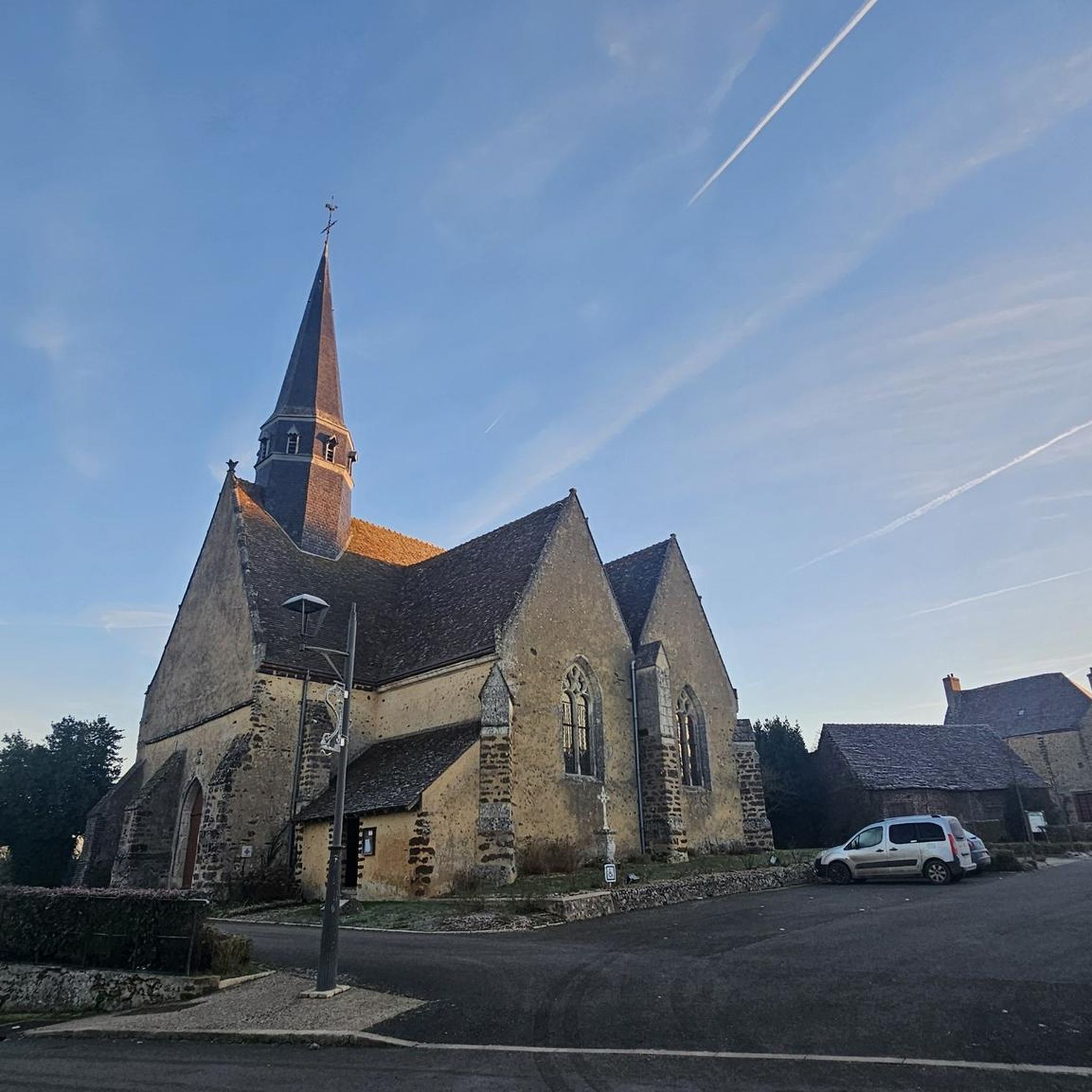
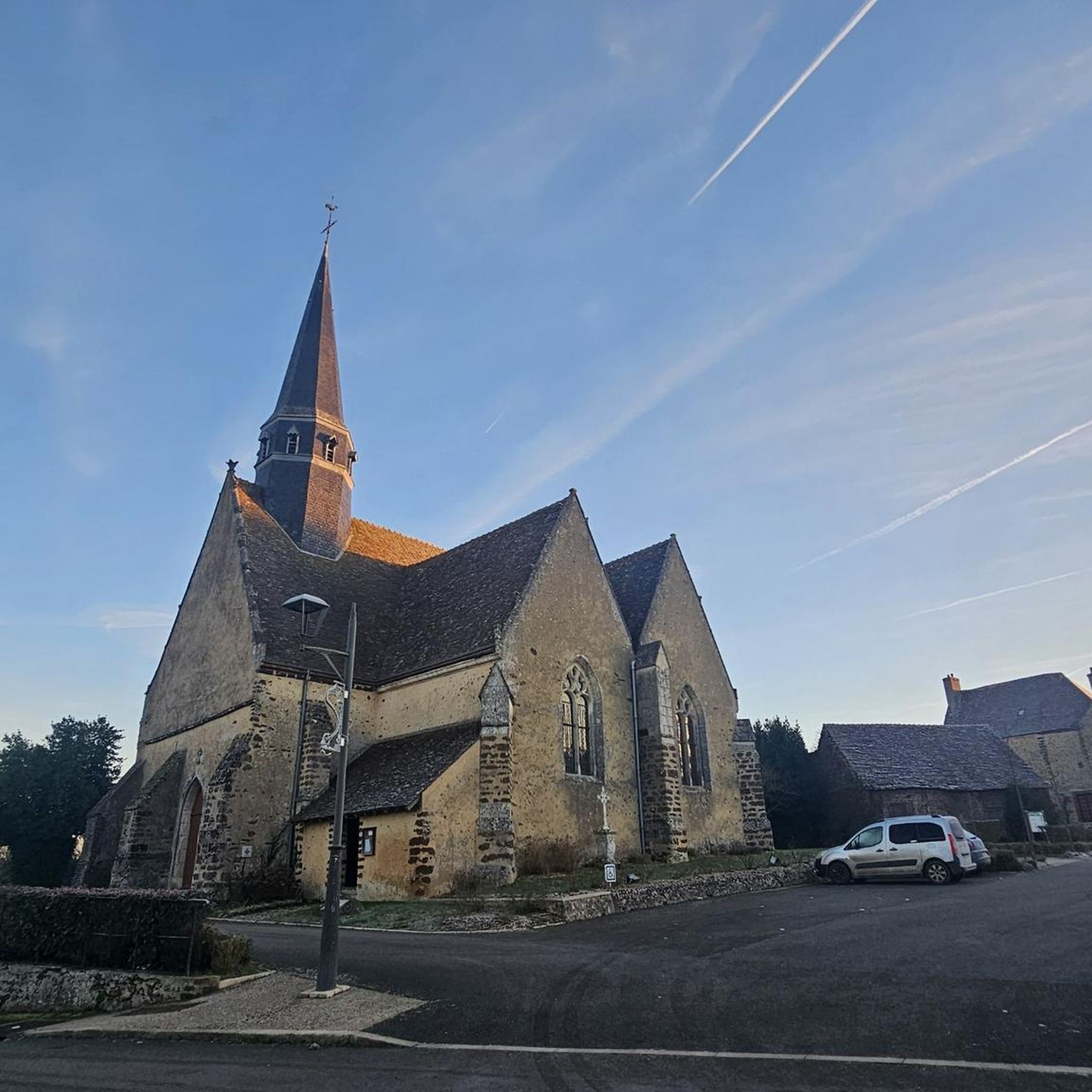
This church contains 14th century wall paintings. These paintings were discovered in 1895. They formerly occupied the entire width of the western wall of the nave. The central part was destroyed following the renovation of the door. The left side represented paradise. Of the bust of Christ, in a trilobed medallion, which occupied the center, there remains only a fragment of the cruciform halo. The rest of the composition is divided into rectangular compartments, each enclosing, in the surviving part, a figure of a crowned chosen one. On the right, hell is represented by a cauldron in which several characters are immersed, including a pope, a bishop, a monk, a king, a queen. Above, a woman with her legs apart. On the right, an enormous horned demon sticks out its tongue. On the left, another carries a basket filled with the damned and is about to plunge a woman into the cauldron. Construction periods: 14th century
0
0
The 12th century church of Saint Jean-Baptiste de Courtalain, already repaired in 1592, was rebuilt in 1809, increased by an aisle in 1838, then by a remarkable porch bell tower topped with a twelve meter spire. height, thanks to the generosity of the Montmorency family, owner of the castle. It is to Guillaume Davaugour and Perette de Baïf, his wife, that we attribute the erection of the Courtalain chapel into a parish church; The church is located in the immediate perimeter of the castle. The entire building is partly covered with flat tiles for the roof of the nave, the bell tower, the staircase turret; the three cut sides of the apse and the lower north side are covered in natural slate. Inside the nave is a Mutin Cavaillé Coll organ dating from 1936. It contains several interesting paintings.
0
0
The parish church dedicated to Saint Anne, perhaps more anciently to the Virgin, depended on the diocese of Chartres. This former possession of Ganelon, treasurer of Saint-Martin de Tours in the 11th century, was undoubtedly part of the important donation made by his descendants Eudes and Rahier de Montigny for the benefit of the chapter of Chartres Cathedral around 1160. This Romanesque building, 35 m long, with a single nave and flat apse, reinforced with buttresses and lit by round-arched windows splayed internally and simply chamfered towards the outside, was never vaulted in stone: it is covered with 'a paneled vault. The masonry is entirely made of Grison stone, including the frames, giving an austere appearance specific to this region of Perche. We enter to the west through a semi-circular door with a double arch into the lower room of a bell tower-porch established later inside the original nave. The upper part of this bell tower was pierced with semi-circular bays. The eastern one was obstructed during the installation of the high roof of the nave and the bells were placed above in a belfry under a frame. The interior of the building was in fact covered as a whole by a paneled vault with molded beams and punches from the 16th century. In the 17th century, the entire back of the choir was decorated with a large altarpiece with columns and pilasters, paintings and sculptures, of great decorative effect. A curious set of carpentry from the same period presents above a confessional a paneled pulpit surmounted by a large sounding board. Note in the furniture a carved Gothic canopy from the beginning of the Renaissance and on the glory beam a carved wooden calvary from the same period. The 19th century. added a gallery, repainted the vault and provided the windows with stained glass.
0
0
Around 1240, the Benedictines, who had a priory within the walls of the castle of Mondoubleau, having had to abandon it, settled near Choue. Of the buildings, only the chapel remains. The western gable is pierced with a double archivolt door in third point and projecting cord, chamfered. Above, a bay was flanked by two six-lobed oculi. On the western part of the southern gutter wall, a door gave access to a small room which could have been the lower room of a square tower, perhaps a bell tower. Inside, the walls were plastered.
0
0
The robust grison pillars of the church of Chapelle-Guillaume reveal its distant roots in the beautiful country of Perche-Gouët, and even if it is often difficult to fix with precision the date of construction of a church, at least It seems obvious to her that she has been watching over the small village that surrounds her for many centuries – probably not far from ten… It owes her name to Guillaume Gouët. In any case, the last two hundred years have given it many alterations and restorations. Thus the bell tower that a hurricane had brought down was rebuilt in 1827, while the capital which adorned the entrance disappeared a few decades later, serving as a narthex, or more simply as a “caquetoire”. Everything here announces the joy of welcome and the simple peace that a place of prayer requires. The interior is distinguished by the great care taken in maintaining the warm furnishings: painted vault, gallery, benches, paneling, statues and choir woodwork. The altarpiece is illustrated by a pretty painting of the Annunciation. A great harmony emerges from the whole and invites prayer. There was also not far from there near the church a Notre-Dame priory dependent on Marmoutier, where Saint Martin resided.
0
0
Frequently Asked Questions
What historical sites can I visit near Boursay?
The area around Boursay is rich in history. You can explore the Ruins of Guériteau Chapel, a historical site where Benedictines settled around 1240. Another significant historical religious building is the Saint Anne Church, a Romanesque structure made entirely of Grison stone. Further afield, the Commanderie d'Arville is also a notable historic building.
Are there any natural attractions or outdoor spaces to explore?
Yes, the Wood of Saint-Agil is a prominent natural site near Boursay. It features a botanical path, approximately 2.5 km long, where you can discover the local hedgerow environment and unique 'pollarded trees' (trognes). This area offers a tranquil escape into nature.
What kind of outdoor activities can I do around Boursay?
Boursay is a great base for various outdoor activities. You can find numerous routes for hiking, road cycling, and running. For hiking, consider the easy "Étang de Boisvinet loop from Couëtron-au-Perche" or the "Trogne loop from Le Temple." Cyclists might enjoy the "Châteaux and Seigneuries of Perche Loop." You can find more details on these activities at the Hiking around Boursay or Road Cycling Routes around Boursay guide pages.
Are there family-friendly attractions in the Boursay area?
The Notre-Dame Church of Chapelle-Guillaume is listed as a family-friendly historical and religious site, offering a glimpse into the region's heritage with its warm furnishings and painted vault. The botanical path in the Wood of Saint-Agil also provides an engaging outdoor experience for families.
Where can I experience local culture and markets?
While Boursay itself is tranquil, you can experience local culture by visiting nearby markets. Mondoubleau hosts markets on Saturdays and Mondays (7km away), Souday on Wednesdays (8km away), Droue on Tuesdays (8km away), and La Bazoche-Gouet on Saturdays (13km away). These offer a taste of local life and produce.
What are some notable religious buildings in the region?
Beyond the Ruins of Guériteau Chapel and Saint Anne Church, you can also visit the Notre-Dame Church of Chapelle-Guillaume, known for its robust grison pillars and well-maintained interior. The Saint-Jean-Baptiste Church of Courtalain, rebuilt in 1809, and the Saint Fiacre Church with its Renaissance-style choir entrance are also significant religious sites.
What are the best times of year to visit Boursay for outdoor activities?
The Centre-Loire Valley region, where Boursay is located, generally offers pleasant weather for outdoor activities from spring through early autumn. These seasons provide comfortable temperatures for hiking, cycling, and exploring the natural and historical sites.
Are there any unique botanical sites near Boursay?
Yes, the Botanical House of Boursay, opened in 2000, is a unique site dedicated to the local flora and cultural practices. It offers exhibitions and workshops, with a particular focus on 'pollarded trees' (trognes). You can find more information about their activities and exhibitions on the Vendôme Tourism website: Botanical House of Boursay.
Are there longer day trips or regional attractions accessible from Boursay?
Boursay serves as a convenient base for exploring wider regional attractions. You can take day trips to Vendome (26 km away) or Chateaudun (28 km away). The region is also known for its remarkable gardens, such as the Jardin du domaine de Sasnières (33km) and Jardins du château de Poncé (37km). The famed Châteaux of the Loire Valley, including Chateau de Blois (about 55 km) and Chateau de Chambord (approximately 61 km), are also accessible.
What kind of terrain can I expect on hiking trails around Boursay?
The hiking trails around Boursay, particularly those in the Perche Vendômois area, generally feature gentle terrain. For example, the "Étang de Boisvinet loop" and "Trogne loop" are rated as easy, suggesting relatively flat paths suitable for leisurely walks. The region's landscape is characterized by hedgerows and woodlands, offering a pleasant, often shaded, walking experience.
Are there easy walking routes near Boursay?
Absolutely. For easy walks, you can explore routes like the "Étang de Boisvinet loop from Couëtron-au-Perche," which is about 5 km long, or the "Trogne loop from Le Temple," which is around 5.7 km. These trails are generally flat and suitable for a relaxed stroll, allowing you to enjoy the local natural beauty.
What makes the Wood of Saint-Agil special?
The Wood of Saint-Agil is special for its botanical path, which highlights the unique hedgerow environment shaped by centuries of human interaction. A distinctive feature along this path is the presence of 'pollarded trees' (trognes), which are trees regularly pruned for various uses, displaying unique and interesting shapes.

Get inspired with the komoot mobile app


Explore more
Still not found the Highlight you’re looking for? See guides of the top attractions in other regions:
