The best road cycling routes around Billancelles
4.2
(44)
596
riders
216
rides
Road cycling around Billancelles traverses the Eure-et-Loir department, characterized by its rolling agricultural landscapes and river valleys. The terrain offers a mix of gentle gradients and more challenging ascents, with some routes featuring elevation gains of several hundred meters. Cyclists can expect to pass through rural villages and past historical landmarks such as châteaux and churches. The area provides diverse road cycling opportunities across its varied topography.
Best road cycling routes around Billancelles
- The most popular road cycling route is…
Last updated: November 2, 2026
11
riders
Hard road ride. Very good fitness required. Mostly well-paved surfaces and easy to ride.
16
riders
Easy road ride. Mostly well-paved surfaces and easy to ride.

7
riders
58.2km
02:19
280m
280m
Moderate road ride. Good fitness required. Mostly well-paved surfaces and easy to ride.
6
riders
Moderate road ride. Good fitness required. Mostly well-paved surfaces and easy to ride.
5.0
(1)
9
riders
49.8km
01:56
170m
170m
Easy road ride. Mostly well-paved surfaces and easy to ride.
Get access to more routes and recommendations from other explorers.
Already have an account?
Our route recommendations are based on thousands of hikes, rides, and runs completed by other people on komoot.
Start today with a free account
Your next adventure awaits.




Tips from the Community

A walk that is doable even in rainy and cool weather thanks to its cycle paths
0
0

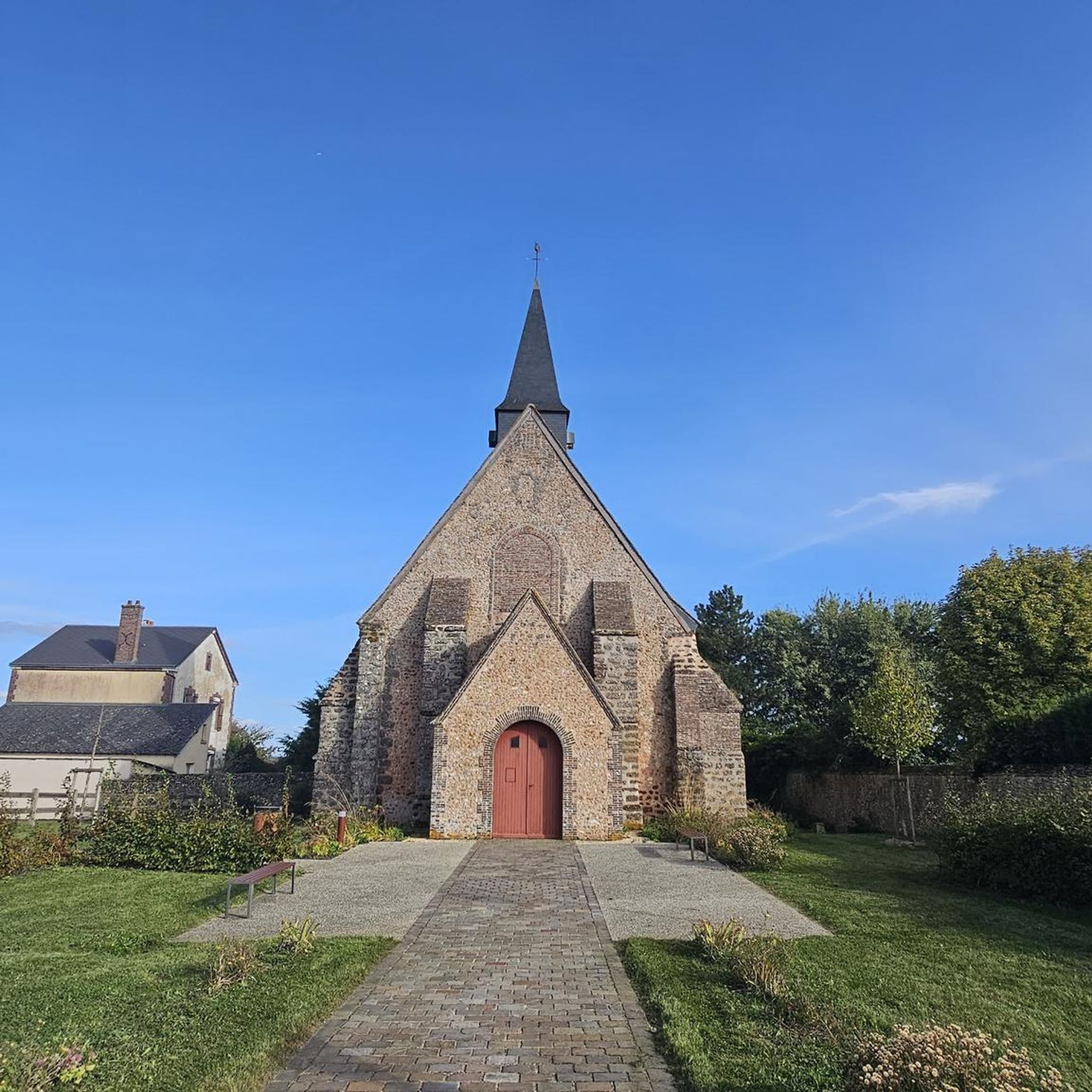
Of Romanesque origin, the church, surrounded by a cemetery, has a curious bell tower supported by machicolations and uprights of sandstone, making it one of the most unique in the region. Perhaps it was originally a bell gable, later augmented by a platform supported by these machicolations? In front of the entrance, a small building called a "caquetoire" (a small meeting place) allows the faithful to gather and converse. Inside the church, the furnishings date from the 18th and 19th centuries: a marble high altar and its gray-painted wooden altarpiece (18th century) – a painted wooden altarpiece of St. Joseph (late 18th or early 19th century) an altarpiece for the altar of the Virgin Mary (19th century) a baptismal font in red-veined marble (19th century) a waxed wooden pew (18th century) a waxed wooden choir stall upholstered in velvet paintings: the Assumption of the Virgin Mary by Octave Hauser (1839) and the Annunciation (18th century) The stained-glass windows date from 1874. The church and the eclipse A bit of history: The parish, established in the 13th century, was part of the deanery of Courville. The church's patron saint, Luperche or Luperchius, gave his name to the village. We must go back to the 4th century to find the first trace of this saint: At that time, Dacius, governor of the part of Spain that included Catalonia, Aragon, and the Kingdom of Valencia, was one of the most cruel ministers of persecution. Incited by the emperors Diocletian and Maximilian, he had eighteen confessors of Jesus Christ executed in the city of Zaragoza. In their honor, the poet Prudentius wrote hymns, and among these confessors, a certain martyr named Luperche became the patron saint of our church.
0
0

Every year, during the Heritage Days, the association "Au Cœur de Nos Villages" opens the doors of the Saint-Pierre church. A building from the 12th and 15th centuries, listed as a historical monument, whose bell tower, clock, and five renovated altarpieces, including Saint Michael slaying the dragon, are to be discovered. For the benefit of the Restos du Cœur Walkers will also be able to get to know the Atelier Arc-en-ciel (plastic arts) which exhibits the works of the adult group. Paintings, in red chalk, white pencil, sepia, etc., representing views of the church, statues, etc., will be put on sale for the benefit of the association Au Cœur de Nos Villages.
0
0

Its construction undoubtedly dates back to the Romanesque period but as it appears today it presents the characteristics of the Gothic style flamboyant period in which it was rebuilt after the destruction caused by the 100 Years' War. The date of March 23, 1511 inscribed on the entrance which surmounts the entrance to the choir gives a valuable clue to the period of its renovation. Another testimony is the coat of arms of Charles d’Ô Seigneur de Blévy and partly by Louise Gentil married in 1507 appearing on a stained glass window in the choir. The style of the tower porch, slopes of the gable of the nave and tracery of the windows clearly shows that we are in the presence of a building constructed in the first quarter of the 16th century at the twilight of the flamboyant Gothic style.
1
0

This country church stands out for its pretty little water pump on the side, as well as its cemetery where we find the grave of a Canadian aviator who died during the Second World War.
1
0
The village has a Gothic style church. The latter is approximately 32 m long and 8.5 m wide. The church was renovated a few years ago and the eastern facade has recently been lit at night. According to the departmental archives of Eure-et-Loir, the general council granted a credit of 30,000 francs in 1851, in order to have “MM. the department's travel agents the nomenclature of churches, presbyteries and other municipal buildings, briefly containing their description, their condition, the indication and approximate evaluation of the work to be done and their degree of urgency.
0
0
Composed of a Romanesque nave with flat buttresses placed symmetrically on each side (typical of the end of the 11th century or the first half of the 12th century), it was completely remodeled in the 16th century and the end of the 20th century. The bays of the nave are from the 15th century, in flamboyant Gothic style, as is the rose window. The span of the bell tower and the choir, with ribbed vaults, date from the end of the 15th or beginning of the 16th century. As early as the 16th century, the bell tower had a clock, quite rare and expensive for the time. The pillars of the central bay are richly molded and crowned with thin bands of foliage serving as capitals. The windows are decorated with flamboyant tracery of varied designs. The Romanesque portal was also remodeled in the 16th century. The powerful central bell tower with buttresses [formerly had three bells named PIC DAN JON. There will only be one left after the Revolution, the other two having been melted down to make cannons and ammunition.
0
0
Frequently Asked Questions
How many road cycling routes are available around Billancelles?
There are over 230 road cycling routes around Billancelles, offering a wide range of options for different skill levels. This includes 122 easy routes, 102 moderate routes, and 8 more challenging routes.
What kind of terrain can I expect on road cycling routes near Billancelles?
Road cycling around Billancelles traverses the Eure-et-Loir department, characterized by rolling agricultural landscapes and river valleys. The terrain offers a mix of gentle gradients and more challenging ascents, with some routes featuring elevation gains of several hundred meters.
Are there any easy road cycling routes suitable for beginners around Billancelles?
Yes, Billancelles offers a good selection of easy routes. For instance, the Villebon Castle – Orrouer Church loop from Courville-sur-Eure is an easy 49.8 km trail, and the Saint Martin Church loop from Favières is a shorter, easy 7.4 km option.
What are some notable landmarks or points of interest I might see along the routes?
Cyclists can expect to pass through rural villages and past historical landmarks. Some routes feature attractions like Vérigny Castle, Orrouer Church, and Château de Fontaine-la-Guyon. The Château de Fontaine-la-Guyon – Vaux Castle loop from Courville-sur-Eure specifically leads past historical castles.
Are there any challenging road cycling routes for experienced riders?
Yes, there are challenging options available. The Ponds of Fontenay sur Eure – Château de Frazé loop from Courville-sur-Eure is a difficult 138.6 km route with significant elevation gain, taking approximately 5 hours 38 minutes to complete.
What do other road cyclists say about the routes in Billancelles?
The routes in Billancelles are highly rated by the komoot community, with an average score of 4.2 stars from over 30 reviews. Cyclists often praise the varied rural scenery and the diverse road cycling opportunities across the area's topography.
Can I find circular road cycling routes around Billancelles?
Yes, many of the routes around Billancelles are designed as loops. Examples include the Ponds of Fontenay-sur-Eure – Fontenay-sur-Eure Church loop from Courville-sur-Eure and the Villebon Castle – Orrouer Church loop from Courville-sur-Eure, allowing you to start and finish in the same location.
Are there any cafes or places to stop for refreshments along the cycling routes?
While specific cafes directly on every route are not detailed, the area does feature local establishments. For example, Bar de la Rivière is listed as a cafe highlight in the region, suggesting options for refreshments are available.
What is the typical length of road cycling routes in the Billancelles area?
Route lengths vary significantly. You can find shorter rides like the 7.4 km Saint Martin Church loop from Favières, moderate options around 40-60 km such as the 41.5 km Ponds of Fontenay-sur-Eure – Fontenay-sur-Eure Church loop from Courville-sur-Eure, and much longer, more challenging routes exceeding 130 km.
Is the Billancelles region suitable for family-friendly road cycling?
The region offers a variety of routes, including 122 easy options, which can be suitable for families depending on their experience level. These easier routes typically have less elevation gain and shorter distances, making them more accessible for a leisurely family ride.
What kind of historical sites can be explored by road bike in Billancelles?
The Billancelles area is rich in historical sites. Cyclists can discover various châteaux and churches. Beyond the castles mentioned, the Rond du Roi is another historical site that can be found in the vicinity, offering glimpses into the region's past.
Most popular routes around Billancelles
Most popular attractions around Billancelles

Get inspired with the komoot mobile app


Explore more
Browse the best Road cycling routes in other regions.
