Attractions and Places To See around Beaulieu-Sur-Layon - Top 20
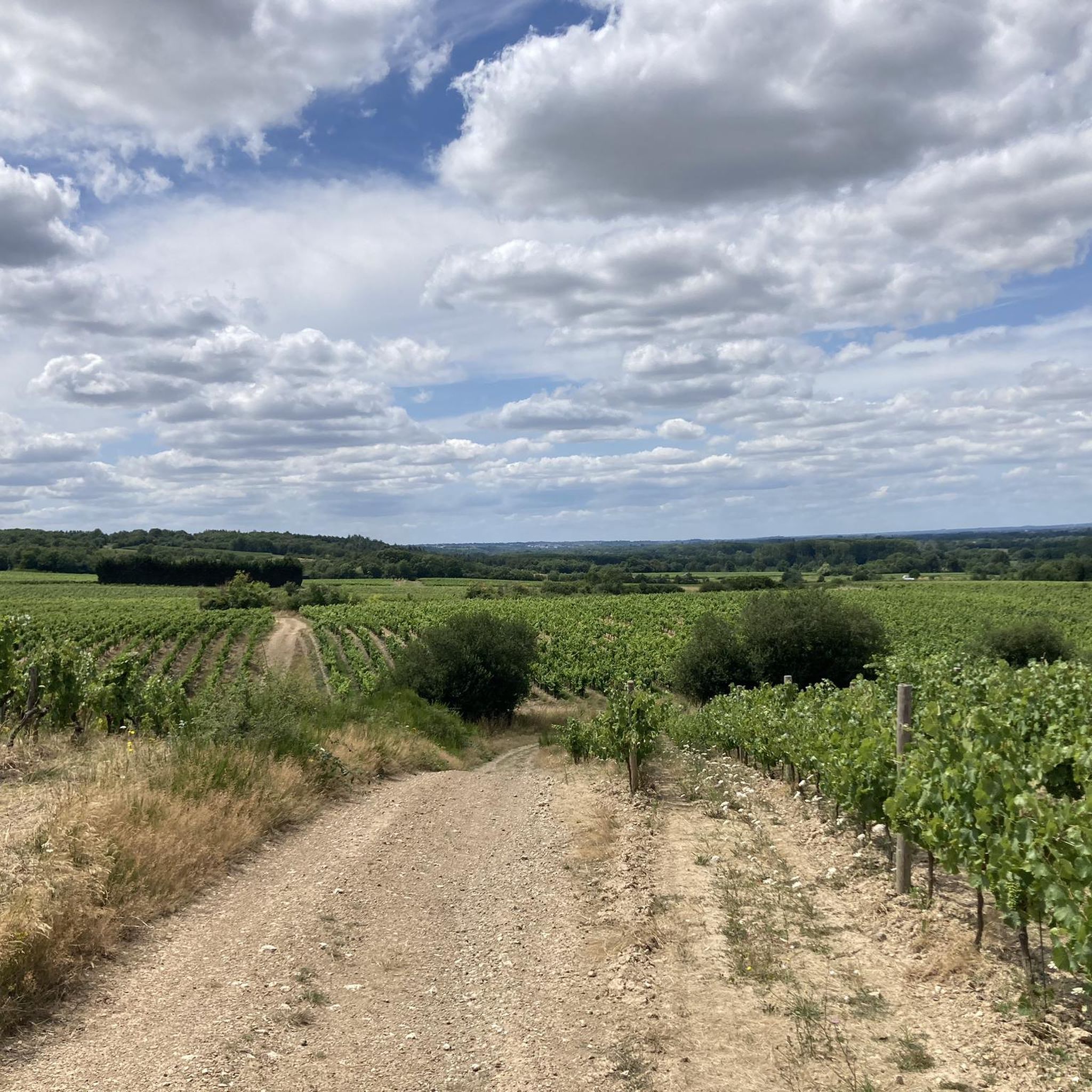
Best attractions and places to see around Beaulieu-Sur-Layon, a commune in the Coteaux du Layon region, offer a mix of historical, cultural, and natural sites. The area is characterized by its viticultural heritage, particularly its vineyards along the Layon River. Visitors can explore landmarks reflecting its history, from prehistoric times to the Vendée Wars. The landscape includes the Layon Valley and natural reserves, providing diverse points of interest.
Best attractions and places to see around Beaulieu-Sur-Layon
- The most popular attractions…
Last updated: May 26, 2026
Bouchemaine
Highlight • Settlement
Translated by Google •
Tip by

The Bécherelle Stone
Highlight • Other
Translated by Google •
Tip by

Sign up now to discover places like this
Get recommendations on the best single tracks, peaks, & plenty of other exciting outdoor places.
Sign up for free
Pointe de Bouchemaine
Highlight • Settlement
Translated by Google •
Tip by
Savennières
Highlight • Settlement
In the middle of town there is …
Translated by Google •
Tip by
The village of Béhuard
Highlight • Settlement
Famous for its flooding by the …
Translated by Google •
Tip by

Sign up for free to discover even more attractions around Beaulieu-Sur-Layon.
Sign up for free
Already have an account?
Start today with a free account
Your next adventure awaits.
Login or Signup

Tips from the Community

Beautiful village on the banks of the Loire. I ate at the café near the church (sandwich). Perfect for a lunch break.
0
0

This 350 million year old monolith has only been a separate monolith from the rest of the cliff since around 1850.
1
0

Very exotic, calm of nature, diversity of sites (Loire, hillsides, vineyards) Savennières charming village to discover
1
0

Impressive standing stone on the banks of the Loire.
0
0

PRICES Individual price adult: €9.50 Individual price child: from €0.00 to €0.00
0
0
SCHEDULES From February 12 to April 30, 2022 From May 2 to June 4, 2022 Monday 10 a.m. - 6:30 p.m. Tuesday 10 a.m. - 6:30 p.m. Wednesday 10 a.m. - 6:30 p.m. Thursday 10 a.m. - 6:30 p.m. Friday 10 a.m. - 6:30 p.m. Saturday 10 a.m. - 6:30 p.m. Sunday 10 a.m. - 6:30 p.m.
0
0
VISITS Free individual visits Individual guided tours Average duration of the individual visit: 2 hours free Group reception Free group visits Guided group tours Educational group visits Average duration of the group visit: 2h30 Languages available Spoken: French, German, English, Spanish, Italian, Dutch Panels: French, English Audio: German, English, Spanish, French, Italian
0
0
On a rocky promontory overlooking the Maine, Angers Castle is an impressive monument with a very rich history. On these lands there were in fact a Neolithic burial, a Gallic oppidum, the heart of the Roman city and a vast Romanesque count's palace. In the 13th century, the mother of King Saint Louis, Blanche of Castile, had a gigantic half-kilometer enclosure built there punctuated by seventeen towers of shale and limestone. This fortress gives off a formidable impression of power and its elaborate military architecture makes it almost impregnable. However, the adaptations of the castle to the evolution of artillery, its use as a prison and barracks led to the disappearance of certain medieval buildings. From the top of the ramparts, on the walkway, the panorama of the city is absolutely unique. In the 14th and 15th centuries, the Dukes of Anjou Louis I, Louis II and King René, close to the King of France, who were also Counts of Provence and claimed Italian territories, established their court in Angers. The buildings preserved inside the enclosure - the chapel, the chatelet and the royal residence - as well as the Apocalypse tapestry still testify today to the interest of these enlightened princes in architecture and works of art. Due to its dimensions - 100 meters long -, its age and its stylistic and technical virtuosity, the Apocalypse tapestry is an extraordinary masterpiece of medieval art, unique in the world. Commissioned at the end of the 14th century by Louis I, produced in record time, it is composed of six pieces each made up of fourteen scenes in two registers. The painter to King John of Bruges is the author of the cartoons for this priceless gem. A considerable work intended to impress those close to the prince, it illustrates the text of the Apocalypse of Saint John, the last book of the Bible. This tapestry is also a formidable document on the historical, social and political context of its creation, marked in particular by the Hundred Years' War. It belongs to the largest treasure of cathedral tapestries in Europe, comprising more than a hundred pieces, which is kept at the Château d'Angers. The Château d'Angers is also home to gardens exceptional in their diversity: the regular boxwood and yew garden, the vineyard, the vegetable garden, the rose garden, the hydrangea garden, the hanging garden and its medicinal, dyeing and evil plants … Some are also represented on the tapestry of the Apocalypse. These gardens, which combine history and innovation in a sustainable development approach, constitute a most pleasant place for walkers to breathe. To bring this unique heritage to life, the National Castle Estate regularly offers its visitors temporary exhibitions in the rooms of the royal residence or even in the gardens.
1
0
Frequently Asked Questions
What historical landmarks can I explore in Beaulieu-Sur-Layon?
Beaulieu-Sur-Layon is rich in history. You can visit the 12th-century Romanesque Chapel, which houses a 1598 polychrome wooden statue of "Notre-Dame de Beaulieu." The Town Hall, set in a former 17th-century priory, is also notable. For prehistoric history, see the Dolmen de Mont-Benault. The Pont Barré, a 12th-century bridge, is significant for its role in the Vendée Wars, commemorated by a nearby Obelisk. Other architectural gems include the 18th-century Hôtel Desmazières, Maison Jarry with its distinctive doorway, and Maison Gouin, believed to be the village's oldest house with a medieval appearance.
Are there any natural reserves or scenic viewpoints near Beaulieu-Sur-Layon?
Yes, the Coteaux du Pont-Barré Regional Nature Reserve offers stunning views over the Layon valley and its vineyards, boasting diverse plant and animal species. Another excellent viewpoint is La Roche de Mûrs, which provides breathtaking panoramas of the Loire valley and its floodplains, with a glimpse of Angers' urban skyline.
What outdoor activities are available around Beaulieu-Sur-Layon?
The area is ideal for various outdoor activities. You can enjoy hiking, gravel biking, and cycling. For specific routes, explore options like the 'Hiking loop from Beaulieu-sur-Layon' (10 km, moderate) or the 'Pont Barré – Viewpoint loop' (6 km, easy). Cyclists can try the 'Guérin Mill – Chemin de Girouard loop' (28 km, moderate). For more detailed routes and options, refer to the hiking guide, gravel biking guide, and cycling guide for Beaulieu-Sur-Layon.
Can I go climbing near Beaulieu-Sur-Layon?
Yes, climbing is possible at The Bécherelle Stone, a 350-million-year-old monolithic rock that now serves as a training spot. Additionally, La Roche de Mûrs is a popular site for climbing enthusiasts, offering varied landscapes and schist cliffs.
What is the significance of the Layon Valley and its vineyards?
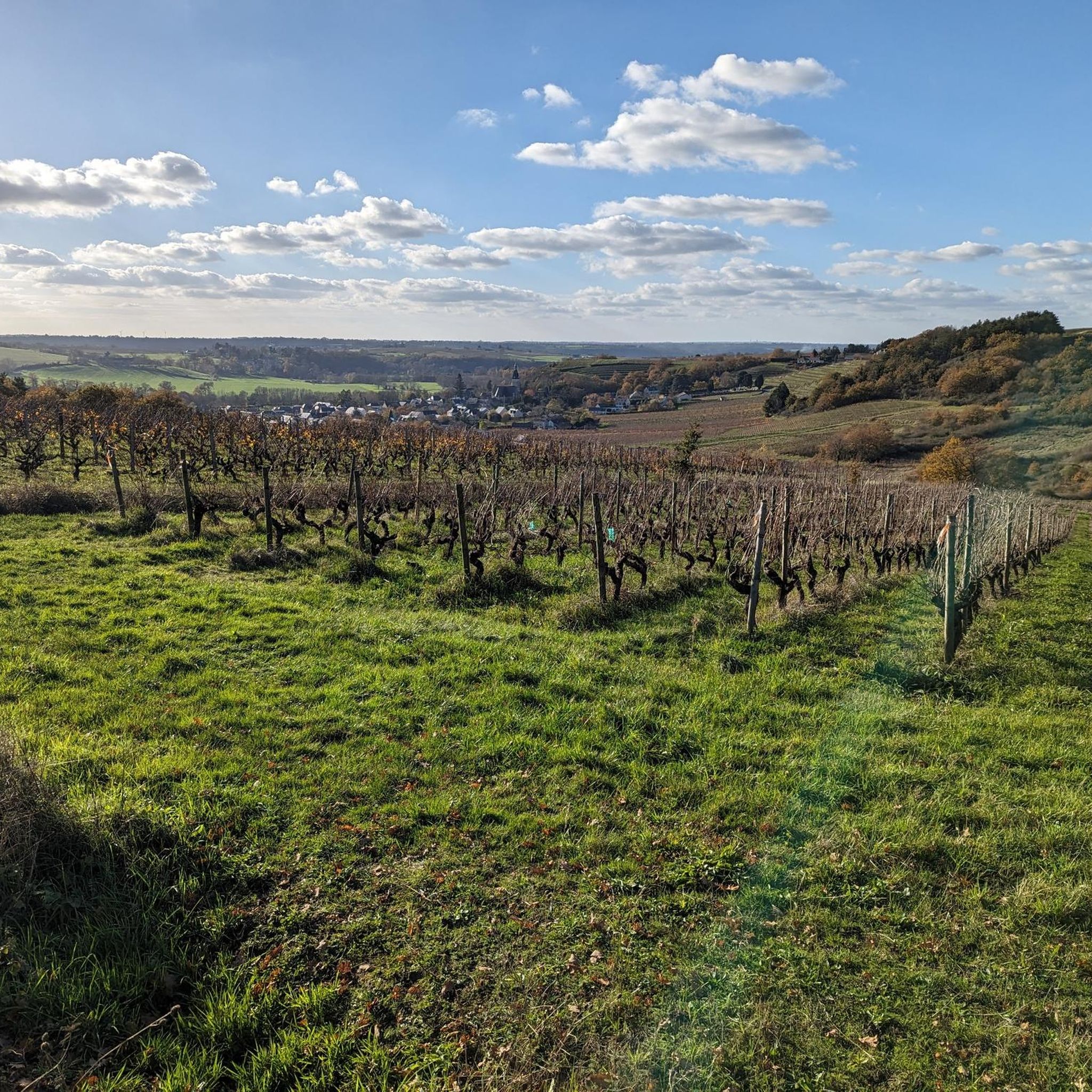
The Layon Valley is central to Beaulieu-Sur-Layon's identity, with a viticultural heritage spanning over 15 centuries. The region is particularly renowned for its sweet white Chenin wines, known as Coteaux du Layon Beaulieu. You can explore this heritage at Le Caveau du Vin, a cellar showcasing antique bottles and wine-related frescoes, or visit Savennières, a settlement famous for its intensely flavored white wines.
Are there any family-friendly attractions in the area?
Yes, several spots are suitable for families. The settlement of Savennières is considered family-friendly, offering a charming cobbled village to explore. Béhuard Village, the only island village on the Loire, is also family-friendly, with opportunities to explore its heritage and enjoy river views.
What is Bouchemaine known for?
Bouchemaine is a settlement known for its historical abbey, which once served as the second home for the bishops of Angers. Today, it hosts excellent exhibitions of paintings and sculptures. It's also appreciated for its scenic views of the mouth of the Layon, offering cultural experiences and riverside relaxation spots.
What unique local traditions can I experience in Beaulieu-Sur-Layon?
You can experience Boule de Fort, a unique local bowling game that is a traditional pastime specific to Anjou and western Touraine. This offers a glimpse into the region's distinct cultural heritage.
What is the best time of year to visit Beaulieu-Sur-Layon for outdoor activities?
The Layon Valley and surrounding areas are generally pleasant for outdoor activities from spring through early autumn. This period offers favorable weather for hiking, cycling, and exploring the vineyards. However, if you're interested in the unique experience of Béhuard Village, be aware that between December and May, it is not uncommon for streets to be flooded as the village is built entirely in a flood zone.
Where can I learn about the region's industrial past?
You can find vestiges of 19th-century Lime Kilns (Fours à chaux) in the area. One of these kilns even serves as the base for an orientation table, providing a tangible link to the region's industrial heritage.
Are there any places to relax by the water?
Yes, Bouchemaine offers beautiful views of the mouth of the Layon and has spots for riverside relaxation. Additionally, Béhuard Village, located on an island in the Loire, provides panoramic views of the river and its wildlife, perfect for unwinding.
Most popular routes around Beaulieu-Sur-Layon
Most popular attractions around Beaulieu-Sur-Layon

Get inspired with the komoot mobile app


Explore more
Still not found the Highlight you’re looking for? See guides of the top attractions in other regions:
