The best road cycling routes around Saint-Même-Les-Carrières
4.4
(30)
773
riders
234
rides
Road cycling around Saint-Même-Les-Carrières is characterized by a rolling countryside, extensive vineyards, and the Charente River. The region offers a network of quiet back roads and green lanes, providing varied terrain for cyclists. This area, nestled in the Grande Champagne region, features gentle elevations and scenic routes through the heart of Cognac production.
Best road cycling routes around Saint-Même-Les-Carrières
- The most popular road cycling route is Vibrac Bridge – View of Saint-Simeux loop from Jarnac-Charente, a 43.3 miles (69.6…
Last updated: November 2, 2026
5.0
(4)
61
riders
69.2km
02:45
260m
260m
Moderate road ride. Good fitness required. Mostly well-paved surfaces and easy to ride.
5.0
(1)
9
riders
38.9km
01:44
300m
300m
Easy road ride. Mostly well-paved surfaces and easy to ride.

14
riders
Easy road ride. Mostly well-paved surfaces and easy to ride.
5.0
(1)
10
riders
Moderate road ride. Good fitness required. Mostly well-paved surfaces and easy to ride.
5.0
(1)
5
riders
Moderate road ride. Good fitness required. Mostly well-paved surfaces and easy to ride.
Get access to more routes and recommendations from other explorers.
Already have an account?
Our route recommendations are based on thousands of hikes, rides, and runs completed by other people on komoot.
Start today with a free account
Your next adventure awaits.



Tips from the Community

The site of La Baine, in Chaniers, predates the current mill. 14th century: the first attested mills A document dated 1310 mentions cloth mills at La Baine. They were built on piles driven into the riverbed and were used, among other things, for fulling fabrics. These mills then belonged to the dean and chapter of the cathedral of Saintes. They had been destroyed a few years earlier by the Count of la Marche. In 1313, the chapter obtained authorization to rebuild two mills, a weir, and a fishery. 17th century: Colbert's royal mill It was in the 17th century that La Baine gained considerable importance. A complex of five wheat mills was rebuilt on a secondary branch of the Charente, which was not used for navigation. Around 1630, the mills belonged to the brothers Charles and Jacques Duval, who held the beneficial ownership, while the lordship of Chaniers was under the chapter of the Saint-Pierre de Saintes cathedral. Then came Jean-Baptiste Colbert, minister to Louis XIV and Secretary of State for the Navy. Around 1670, Colbert had the mill redeveloped and enlarged to considerably increase its production capacity. The new complex had seven water passages and thus became one of the most powerful mills in the region. Why was Colbert interested in La Baine? The reason was directly linked to the creation and development of the Rochefort arsenal. The mill primarily produced wheat and barley flour intended for the sustenance of the Royal Navy sailors. The grains arrived via the Charente aboard gabares (flat-bottomed barges). After delivering their cargo to the mill, the gabares departed with the flour destined, among other places, for Rochefort. The mill of La Baine was therefore part of a true royal industrial and logistical system organized around the Charente and Rochefort. 19th century: gradual transformation In the 19th century, milling activity continued. The old mills gradually became a true industrial establishment. In 1845, the site was operated by five different millers. From 1897, the complex was gradually brought together by Mr. Lardy, who modernized the facilities and introduced machinery. His son Rémy Lardy succeeded him. 20th century: the flour mill In the 1930s, the mill had become a true industrial flour mill. Its capacity reached about 50 quintals of wheat per day. In 1936, the hydraulic power was supplied by several wheels about 5 meters in diameter. The total water intake was about 4 meters, with a head of 1.50 meters. The facilities included, among other things: two double grinders; a double converter; a pair of millstones; a plansichter; five purifiers. Milling activity finally ceased in the mid-20th century, with sources placing the end of industrial activity around the years 1940-1960, depending on whether one refers to the flour mill or the complete disappearance of milling activity. Today The building has been preserved and transformed into a restaurant, while retaining remarkable elements of its industrial past, notably the wheel and part of the old machinery. The Moulin de la Baine is now located at 14 rue Colbert, 17610 Chaniers, directly above the Charente. A particularly interesting point The mill, the dam, and the locks form an inseparable historical ensemble. The current dam has, however, undergone modern transformations: a prefectural decree from 2012 classifies the hydraulic structure of the Moulin de La Baine as a Class D dam, among other things.
0
0


Beautiful view from the bridge over the Charente, the quays and the pier.
0
0

HISTORY OF THE HOUSE OF HINE In 1791, Thomas Hine (1775-1822), then aged 16, left his native land on the south coast of England to go to France… in the middle of the French Revolution. He went to Jarnac, Charente, where he was hired as a clerk in the Ranson et Delamain trading house, which produced his father’s favourite cognac. James Delamain (1738-1800), a Huguenot who had emigrated from Ireland, founded the trading house in 1763 with his father-in-law Jean-Isaac Ranson. On 3 October 1797 (13 Brumaire Year VI), Thomas Hine married Françoise Élisabeth Delamain, daughter of James Delamain and Marie Ranson. In 1817, the Ranson et Delamain house was liquidated, the heirs having been unable to agree on the succession. The eponymous son-in-law founded Thomas Hine & Co, and his cousins Paul Roullet and Henri Delamain (James' grandson) founded the Maison Roullet et Delamain seven years later, which would become Delamain et Cie. The links between the two Protestant Jarnac families remained close, and Thomas Hine's great-granddaughter, Adrienne Hine (1850-1922) married Philippe Delamain (1847-1902) - they had sons Jacques and Robert Delamain. Today, as in Thomas Hine's time, the Hine establishments line the banks of the Charente in Jarnac. The logo is inspired by Hine's speaking arms, hind meaning doe in Old English. He is lying down, his head turned backwards, symbolically looking towards England2. In 1962, Hine was granted the Royal Warrant of Her Majesty Queen Elizabeth II, and became the official supplier of cognac to the Court of England. In 1987, the company was bought by Moët Hennessy. In 2003, it became the property of the CL Financial group, which emerged from the Angostura group. The House was bought in 2013 by the Edv company. TYPOLOGY OF HINE EAUX DE VIE The House of HINE is located on the banks of the Charente, in the heart of the Cognac region. In the cellars, which ensure the protection of the precious vintages under seal, little has changed in more than 260 years. From the neighboring quays once began the journey of HINE cognacs around the world. This house is one of the oldest in Jarnac. Cognacs exclusively from the Grande and Petite Champagne vintages, a distillation with the lees, and an aging in fine grains with a light to moderate heating. Here, every manufacturing detail will be revealed to you. > To find out more: - https://hine.com/fr - Address: 16 quai Orangerie 16200 Jarnac - 05 45 35 59 59 - Visits, Tasting and Purchases possible - Opening periods: From 01/04 to 31/12 Monday, Tuesday, Wednesday, Thursday and Friday from 9 a.m. to 5:30 p.m. Excluding public holidays. Full price: from €20. Free for children under 18. (Subject to change)
0
0
HISTORY BOURG GRAVES SAINT AMANT Like its neighbor Angeac, the parish of Saint-Amant-de-Graves was a dependency of the seigneury of Vibrac. During the Revolution, the commune of Saint-Amant-de-Graves was provisionally called Amant-Charente. On January 1, 1997, the commune of Graves merged with that of Saint-Amant-de-Graves which then took the name of Graves-Saint-Amant. HISTORY CHURCH GRAVES SAINT AMANT The village of Graves is home to a parish church, the Saint-Martin church built in the 12th and 15th centuries. The latter contains in particular a mural painting (main shades red and yellow) dating approximately from the 15th century apparently representing a biblical scene (restored in 1977), which is classified as a historical monument as an object. The church has been listed as a historical monument since 1986. The church of Saint-Amant was given in 1124 by the Bishop of Angoulême, Girard II, to the Abbey of Savigny, who gave it to the priory of Bouteville. The latter kept the parish until the end of the 15th century. In 1460, Saint-Amant was the seat of a priory of its own. Unfortunately, the Wars of Religion were detrimental to it, and it was suppressed in 1580. The church of Graves, which formerly depended on the archdeaconry of Saintes, occupies a picturesque site on the left bank of the Charente. It forms a long rectangle in plan. The nave is composed of a long single bay under a barrel vault, originally Romanesque, but rebuilt at a later date. A square bay under a bell tower follows it. It is vaulted with ribbed liernes. A similar bay, whose vault bears a large, crude shield as a keystone, forms a choir with a flat chevet. Its axial bay is slightly offset to the north. The façade, high under an obtuse triangular gable, bears a cornice with modillions decorated with animals and human masks. The portal has two bare semicircular arches, separated by a chamfered joint cover with large sculpted flowers. The capitals of the side columns have been redone. Between the top of the portal and the level of the pediment, four large stone corbels once supported a canopy. Below, an enigmatic relief, probably late, shows a bearded face between the sun and the moon. The side walls have flat buttresses ending in glacis. They show that the nave, before its renovation, had two short bays. The bell tower is a beautiful piece of architecture. It has a bare base and an openwork floor with two semi-circular bays on each side. A spiral serves it in the southwest corner. Its bays were once separated in two by a small column that supported a small monolithic bare tympanum notched with two arches, and surmounted by a circular opening. This arrangement has been partially preserved. The exterior of the choir has bays from the end of the 12th century, and others probably after the Wars of Religion. Furniture: in the north wall of the bay under the bell tower, a painting shows a kneeling donor on the left, three figures against a background of yellow and red flowers, and, on the right, a priest saying mass near a kneeling altar boy. Despite the state of wear, which has made the inscriptions accompanying the scene illegible in particular, one can see the "Mass of Saint Martin", patron saint of the church. On the north wall of the choir there is another painting showing several scenes from the Passion: Jesus in the Garden of Olives, the arrest of Christ, Christ before Pilate, and the flagellation. These paintings are late, popular in style and somewhat naive.
0
0
1656 - Birth of the BRILLET House The Brillet House is located in Graves-Saint-Amant, in a place called Les Aireaux, in an enchanting setting, on the edge of the bucolic Charente. The story begins in 1656 with the birth of Guy Brillet, founding father of the wine estate in the very heart of the Cognac region. 1850 - Creation of the Négoce Vivien Brillet, 7th generation, inaugurates the trading house in 1850, creating a distillery and cellars. This is the beginning of the growth of the Brillet House that Raymond and his son Jean will develop at the turn of the 1920s, creating their own brand of Cognac, in Petite and Grande Champagne (the first two Cognac vintages) and Pineau des Charentes. Thus, 10 generations of the Brillet family succeed one another, passing on and passionately keeping the family heritage alive. 1985 - Creation of a Cognac and Pear liqueur Belle de Brillet It was in 1985 that Jean-Louis Brillet created Belle de Brillet, whose name pays homage to his "Belle", his wife Isabelle. Together, they worked passionately to promote Belle de Brillet, a unique liqueur combining Pear and Cognac with its distinctive pear-shaped bottle. Very quickly, it established itself as the flagship of the House. 2020 - Acquisition of Maison Brillet by the Rémy-Cointreau Group, which also cultivates 50 hectares of vines in Grande Champagne and Petite Champagne. Its Cognac comes from a single vineyard, certified HVE3, planted with the traditional Ugni Blanc grape variety. It is located in an atypical terroir of Fins Bois, on hillsides overlooking the Gironde estuary, and benefiting from the temperate influence of the Atlantic Ocean. These eaux-de-vie are the result of a double distillation without lees in a traditional Charente still, and are aged partly in new oak barrels. They have round, fruity and floral notes, ideal for a harmonious marriage with pear eaux-de-vie. > For more information: https://belledebrillet.com/ > Address: “Les Aireaux” 22 route de Graves 16120 Graves-St-Amant. > Visit, Tasting and Purchases possible: Opening Hours: Monday - Saturday: 9:30 a.m. - 6:30 p.m. Private & professional contact visit: contact@brillet.fr / +336 76 01 10 10
0
0
Frequently Asked Questions
How many road cycling routes are available around Saint-Même-les-Carrières?
The Saint-Même-les-Carrières region offers an extensive network for road cyclists, with over 230 routes available. These routes cater to various skill levels, including easy, moderate, and some more challenging options.
What is the terrain like for road cycling in Saint-Même-les-Carrières?
The terrain around Saint-Même-les-Carrières is characterized by a beautiful rolling countryside, extensive vineyards, and riverside paths along the Charente River. You'll find gentle elevations and quiet back roads, offering a scenic and varied riding experience through the heart of the Grande Champagne region.
When is the best time of year for road cycling in Saint-Même-les-Carrières?
The Charente region, including Saint-Même-les-Carrières, is known for being one of the sunniest in France. Spring and summer months are particularly recommended, offering agreeable weather and vibrant natural surroundings ideal for cycling.
Are there road cycling routes suitable for beginners or families?
Yes, Saint-Même-les-Carrières offers several easy road cycling routes perfect for beginners or families. For example, the Vibrac Bridge – Château de Bouteville loop from Jarnac-Charente is an easy 38.8 km path that traverses vineyards and passes historical châteaux. There are over 50 easy routes in the area.
What natural features or scenic viewpoints can I expect on road cycling routes?
Road cycling routes often feature picturesque vineyards, especially those of the Grande Champagne appellation, and offer beautiful riverside views along the Charente River. You can also find stretches of forests and quiet green lanes. A notable viewpoint is View of Saint-Simeux, which is part of the popular Vibrac Bridge – View of Saint-Simeux loop from Jarnac-Charente route.
Are there any historical landmarks or attractions to see along the routes?
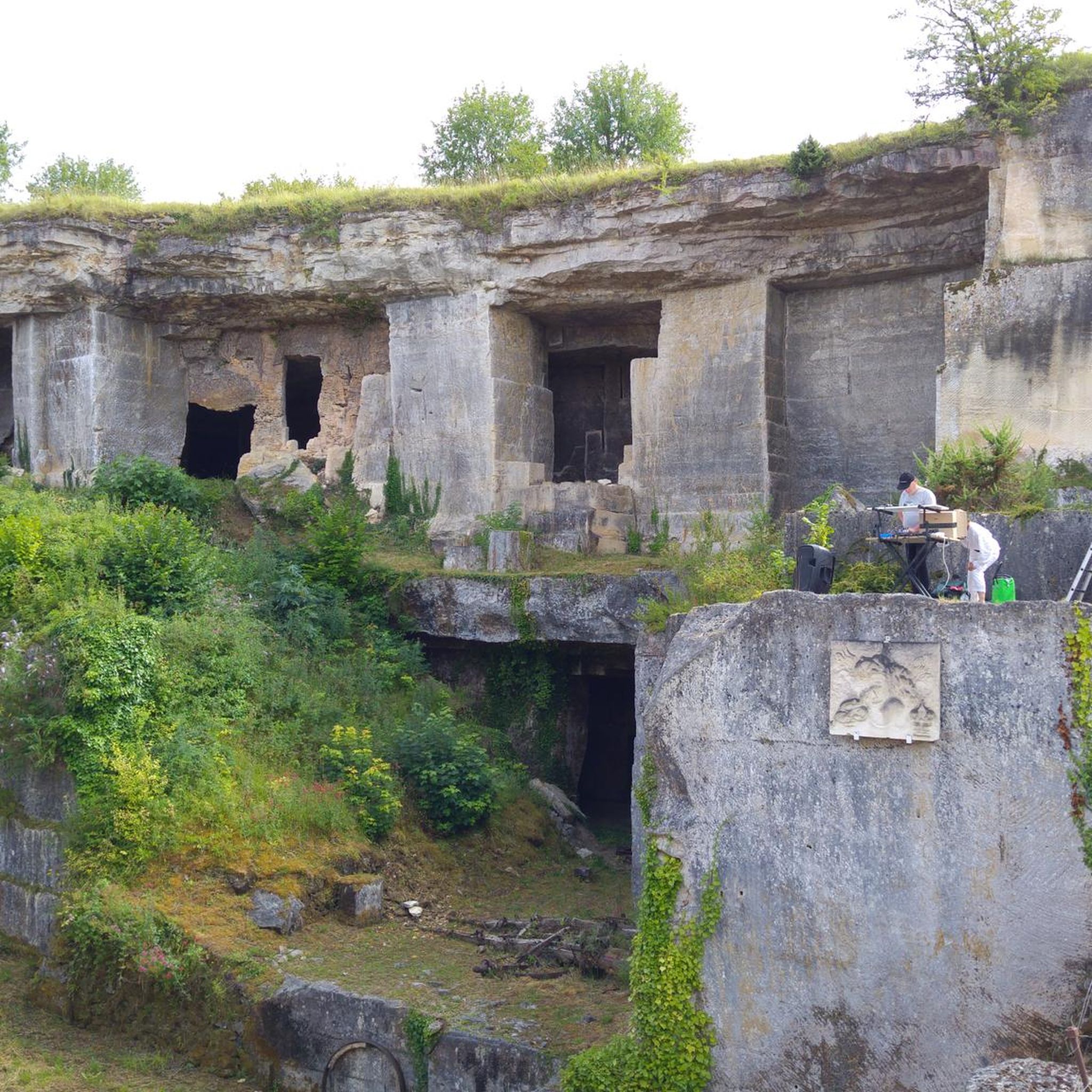
Absolutely. The region is rich in history. You might cycle past the Château de Bouteville, which is featured on the Château de Bouteville – Vibrac Bridge loop from Gondeville. Other notable sites include the Bourg-Charente Castle and the ancient stone quarries that give Saint-Même-les-Carrières its name, offering a glimpse into the region's industrial past.
Can I find long-distance road cycling routes around Saint-Même-les-Carrières?
Yes, the Charente region boasts over 1,000 kilometers of marked cycling routes, providing options for longer rides. For example, the View of the Charente River – Le Moulin de la Baine loop from Jarnac-Charente is a moderate 103.5 km route that allows for an extended exploration of the area's landscapes.
What do other road cyclists enjoy most about road cycling in Saint-Même-les-Carrières?
The area is highly rated by the komoot community, with an average score of 4.6 stars from over 20 reviews. Cyclists often praise the quiet back roads, the beautiful vineyard scenery, and the varied terrain that offers both gentle rides and more challenging options.
Are there challenging road cycling routes or climbs in the area?
While the region is generally known for its rolling countryside and gentle elevations, there are routes that offer more challenge. The extensive network includes longer exploration circuits, and some routes feature more significant elevation gains, such as the Château de Bouteville – Vibrac Bridge loop from Gondeville, which has nearly 500 meters of ascent.
Are there circular road cycling routes available?
Yes, many of the road cycling routes around Saint-Même-les-Carrières are designed as circular loops, allowing you to start and end your ride in the same location. These loops range from easy family circuits to more challenging exploration routes, such as the Garde-Épée Dolmen loop from Jarnac-Charente.
Where can I find more information about cycling in the wider Charente region?
For broader information on cycling opportunities and routes throughout the South Charente area, you can visit the local tourism website: sudcharentetourisme.fr.
Most popular routes around Saint-Même-Les-Carrières
Most popular attractions around Saint-Même-Les-Carrières

Get inspired with the komoot mobile app


Explore more
Browse the best Road cycling routes in other regions.
