Attractions and Places To See around Landudal - Top 20
Attractions and places to see around Landudal offer a blend of Breton heritage and natural landscapes in the Finistère department of Brittany, France. The area is characterized by its preserved countryside, providing opportunities for outdoor activities like hiking and cycling. Visitors can explore historical sites, including notable religious architecture and ancient manors, reflecting the region's rich past. Its proximity to the Odet River and the city of Quimper further enhances the exploration possibilities.
Best attractions and places to see around…
Last updated: June 23, 2026
Quimper
Highlight • Other
Translated by Google •
Tip by

Saint-Corentin Cathedral
Highlight • Other
It was in 1239 that Bishop Raynaud decided to build the current cathedral based on the foundations of an old Romanesque cathedral. In 1410, the …
Translated by Google •
Tip by

Sign up now to discover places like this
Get recommendations on the best single tracks, peaks, & plenty of other exciting outdoor places.
Sign up for free
Retreat Garden
Highlight • Natural
Translated by Google •
Tip by
Saint-Mathieu Church
Highlight • Religious Site
Translated by Google •
Tip by

Stangala Valley
Highlight • Gorge
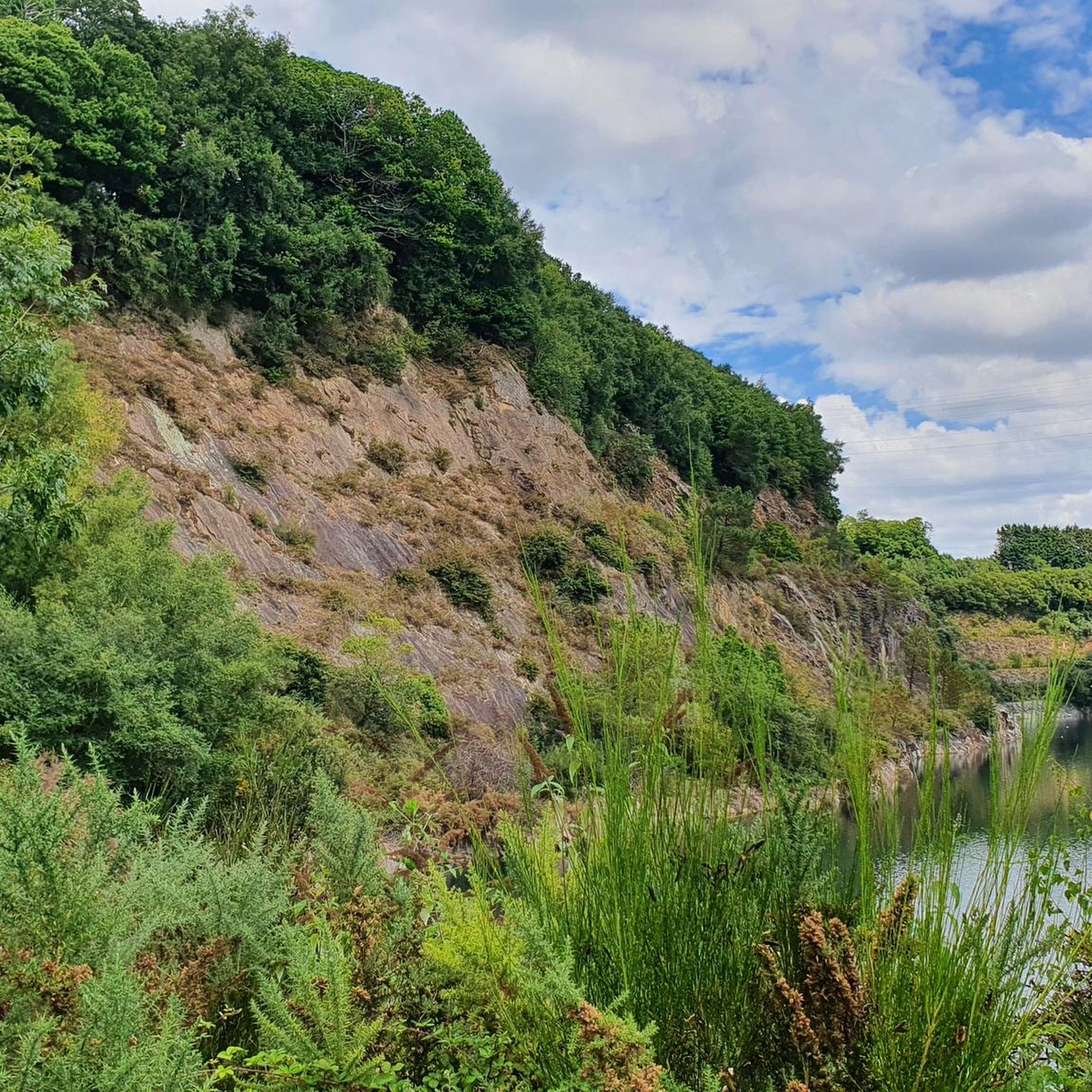
Be careful though: from September to March, the hike is only accessible on Tuesdays and Fridays, because it is located in an area where hunting is authorized.
Translated by Google •
Tip by

Sign up for free to discover even more attractions around Landudal.
Sign up for free
Already have an account?
Start today with a free account
Your next adventure awaits.
Login or Signup

Tips from the Community

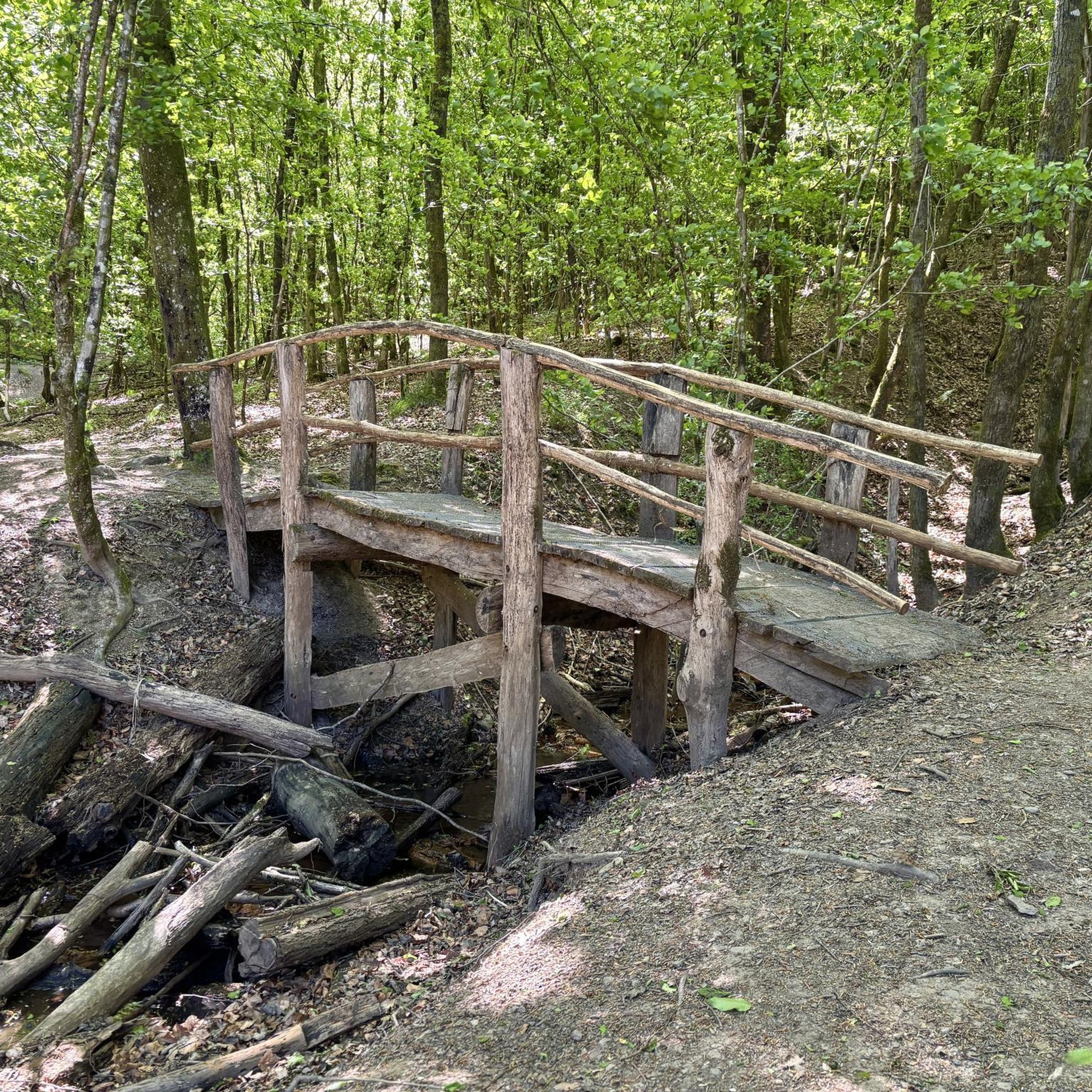
You can also reach this point on foot via the GR 38, which also runs along one of the Ways of St. James (yellow and blue crossbars), from Quimper's old town. You can then continue along the trail down to the Odet River (white and red crossbars) or take the rustic path above the river to the viewpoint above the Stangala Gorge (yellow crossbar).
1
2
In 1239, Bishop Raynaud commissioned the construction of Saint-Corentin Cathedral. It was built on the foundations of a Romanesque cathedral. Construction lasted three centuries. In 1410, the choir vaults were completed and the windows were installed. In 1424, construction began on the nave and the two towers of the facade. The reconstruction was completed in 1515. The two towers were finally finished between 1854 and 1856. A distinctive feature is its kink in the main axis. The reason for this design element is unclear. Several theories exist. One suggests that it emphasizes the crucifix. Another posits that it is due to the stability of the foundation. Yet another suggests that the kink reflects the inclined head of the crucified Jesus. Following the completion of renovations in December 1999, the cathedral can now be admired as it was decorated at the end of the 15th century. The same colors as in the original, i.e., ochre yellow and ochre red, were used in lime plaster on the rib vaults. Numerous chapels are situated around the chancel, dating from various periods between the 13th and 16th centuries. Excerpts from https://de.wikipedia.org/wiki/Kathedrale_Saint-Corentin
3
0
"The church, consecrated in honor of the Apostle Matthew, is the third building on the current site. The church was first mentioned in writing in 1209 when it was presented to the Bishop of Quimper by Guy de Thouars, Duke of Brittany. The parish of Saint-Mathieu was probably founded at the end of the 12th century by order of the Dukes of Brittany to serve the settlement that had formed west of the walled city of Quimper. [...] The current neo-Gothic parish church replaces a late Gothic building, consecrated on October 28, 1514, which had been built in the 15th/16th centuries on the site of an earlier Romanesque church. The west tower was built in 1845 according to plans by the diocesan architect Joseph Bigot. The nave, transept, and choir were built from February 1895 to 1897 according to designs by Gustave Bigot on a cruciform ground plan on the foundations of the Gothic church. The previous Gothic church had A large stained-glass window depicting the Passion of Christ was preserved; it was transferred to the new parish church. A 17th-century Crucifixion window also survives. https://de.wikipedia.org/wiki/St-Mathieu_(Quimper)
2
1

Saint-Corentin Cathedral - Quimper Saint-Corentin Cathedral was built on the foundations of a Romanesque church in Quimper, the capital of Cornouaille in Brittany. It is one of the three oldest Gothic cathedrals in Brittany, along with the cathedrals of Saint-Pol-de-Léon and Tréguier. Saint-Corentin Cathedral in Quimper is a historic building.
1
0

Not exactly a highlight for road cyclists. But still a beautiful building.
1
0

Beautiful church near the city center.
1
1
In the middle of the city, the two towers of the cathedral rise up.
1
0
Quimper is the second largest city in the Finistère department and has a beautiful city center.
1
0
Frequently Asked Questions
What historical and religious sites can I visit in Landudal?
Landudal is rich in Breton heritage. You can explore the Église Notre-Dame-de-Populo, a flamboyant Gothic church from 1539, and the 16th-century Chapelle Saint-Tugdual, which houses numerous statues and a unique whale bone. The area also features several historical calvaries and crosses, including the 16th-century calvary in the Landudal cemetery.
Are there any natural attractions or scenic viewpoints around Landudal?
Yes, the region offers beautiful natural landscapes. The Stangala Valley, located near Landudal, features deep gorges along the Odet River, providing a wild and scenic environment for exploration. You can find a convenient car park to access the gorges, but be aware that from September to March, access might be restricted to Tuesdays and Fridays due to hunting season.
What outdoor activities are available near Landudal?
The preserved countryside around Landudal is ideal for various outdoor activities. You can enjoy hiking, cycling, and mountain biking on numerous trails. For cycling enthusiasts, there are several routes available, such as the "Bike loop from Landudal" or the "Odet – Stangala Valley loop from Penity." You can find more details on these and other routes in the Cycling around Landudal guide.
What is there to see in the nearby city of Quimper?
Quimper, a historic city close to Landudal, is a cultural hub. Its medieval old town boasts half-timbered houses and the impressive Saint-Corentin Cathedral, known for its exaggerated Gothic style and distinctive kink in its main axis. Another notable spot is the Retreat Garden, a quiet oasis with a palm garden and subtropical plants, protected by the eastern city wall.
Are there family-friendly attractions in the Landudal area?
Many attractions in the wider Landudal area are family-friendly. The Saint-Corentin Cathedral and the Retreat Garden in Quimper are suitable for families. Additionally, the rural landscape of Landudal offers opportunities for family walks and exploring the countryside.
Can I find historical manor houses in Landudal?
Yes, Landudal is home to historical manor houses. The Manoir de Trémarec is notable as the birthplace of Admiral de Kerguélen, with history dating back to the 9th century. While it is a private property and not open to the public, its historical significance is considerable. Another private manor, the Manoir de Kerolven, still shows remnants of its large enclosure walls.
What is the best time to visit Landudal for outdoor activities?
The region's countryside is generally pleasant for outdoor activities. However, if you plan to visit the Stangala Valley, be aware that from September to March, access to certain hiking areas is limited to Tuesdays and Fridays due to local hunting regulations. For general outdoor exploration, spring and summer offer milder weather.
Are there any ancient archaeological sites in Landudal?
Yes, Landudal has remnants from the Gallo-Roman era. At Buzudic, you can find the "Géant à l'anguipède," which are remnants of a sculpture depicting a rider on horseback, offering a glimpse into the region's ancient past.
Where can I find information about public transport or parking for attractions?
For attractions within Quimper, such as the city of Quimper itself, there are often public transport options and parking facilities available. For specific details on transport and parking within Quimper, it is recommended to check the local tourism office's website: quimper-tourisme.bzh.
What kind of cycling routes are available around Landudal?
Landudal offers a variety of cycling routes for different preferences. You can find touring bicycle routes like the "Bike loop from Landudal" (difficult, 34.48 km) or the "Odet loop from Briec" (moderate, 26.15 km). For road cycling, options include the "Coray Church – Toullaeron Pass loop from Landudal" (difficult, 81.59 km). Gravel biking routes are also available, such as the "Quimper – Saint-Corentin Cathedral loop from Quimper" (moderate, 23.61 km). Explore more routes in the respective guides: Cycling around Landudal, Road Cycling Routes around Landudal, and Gravel biking around Landudal.
Are there any hidden gems or less-known spots to discover in Landudal?
Beyond the main churches and manors, Landudal's charm lies in its preserved rural landscape and historical details. Keep an eye out for the vestiges of several old mills that once operated in the area, offering a glimpse into its industrial past. Exploring the local countryside trails can also lead to unexpected discoveries of smaller crosses and historical markers.
Most popular routes around Landudal

Get inspired with the komoot mobile app


Explore more
Still not found the Highlight you’re looking for? See guides of the top attractions in other regions:
