Attractions and Places To See around Saint-Juvat - Top 20
Best attractions and places to see around Saint-Juvat, a commune in Brittany, France, offer a blend of local heritage and natural features. The area is characterized by its unique falun stone, a fossil-rich limestone, visible in local architecture. Visitors can explore historical landmarks, cultural sites, and outdoor activities within the "Pays des Faluns" region. The surrounding countryside provides opportunities for hiking and cycling along well-maintained paths.
Best attractions and places to see around Saint-Juvat
- The most popular attractions is Dinan…
Last updated: July 6, 2026
The Port of Dinan
Highlight • Settlement
Tip by

Dinan
Highlight • Other
Translated by Google •
Tip by

Sign up now to discover places like this
Get recommendations on the best single tracks, peaks, & plenty of other exciting outdoor places.
Sign up for free
Saint-Sauveur Basilica
Highlight • Other
Translated by Google •
Tip by

Chemin de Halage Along the Rance in Taden
Highlight (Segment) • Trail
Translated by Google •
Tip by
Saint-Malo Church, Dinan
Highlight • Religious Site
Translated by Google •
Tip by

Sign up for free to discover even more attractions around Saint-Juvat.
Sign up for free
Already have an account?
Start today with a free account
Your next adventure awaits.
Login or Signup



Tips from the Community

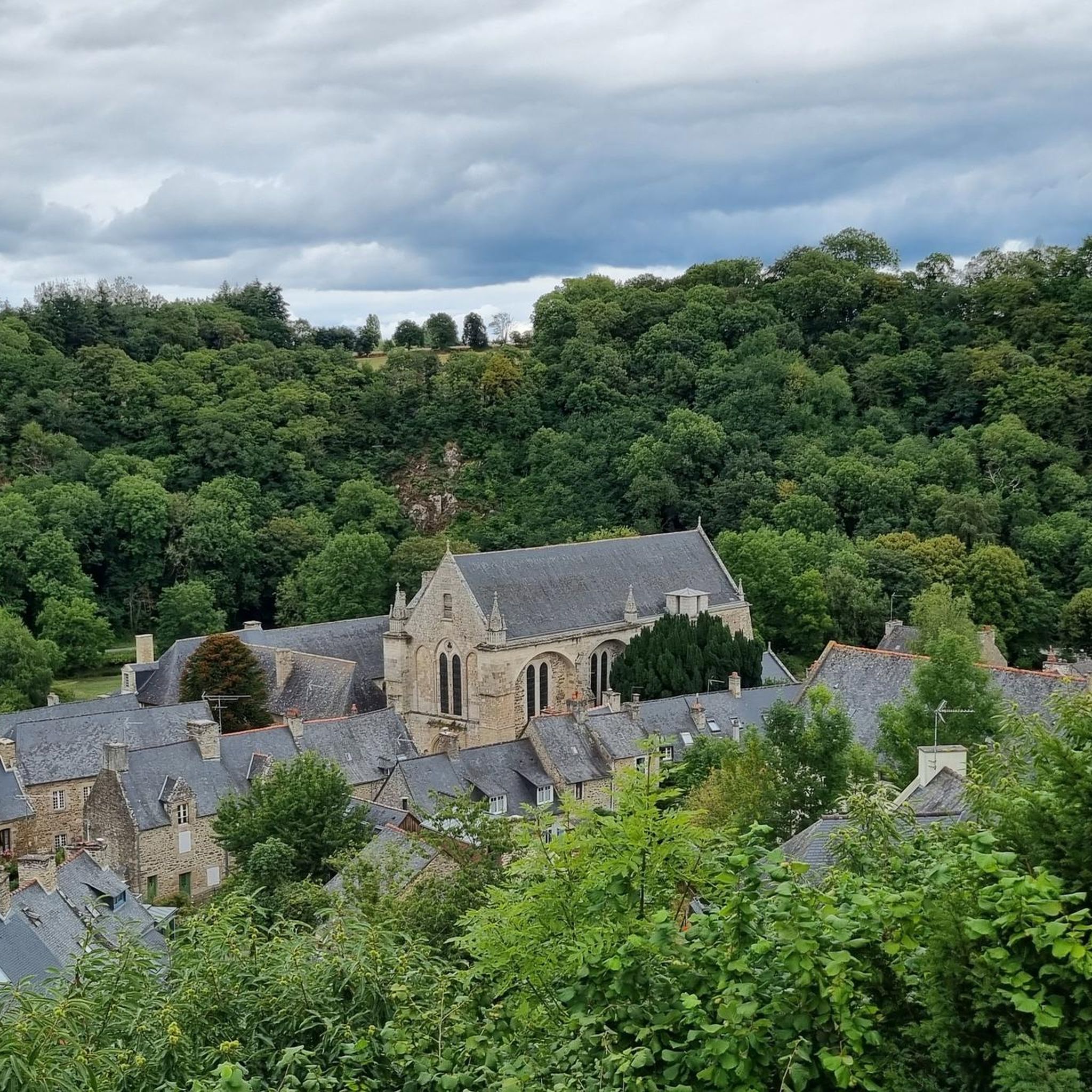
Very beautiful church. I especially liked the windows.
0
0

I was particularly impressed by the church windows.
0
0

The Basilica of Saint-Sauveur was founded around 1112 and combines Romanesque and Gothic architecture. It is famous as the burial place of the hero Bertrand du Guesclin. It has been a historic monument since 1862 and was elevated to a minor basilica in 1954. Noteworthy are the Romanesque west portal, the Gothic chapels, and the relief of the Assumption of the Virgin Mary.
1
0
The Église Saint-Malo de Dinan is a late Gothic church in the historic center. Construction began around 1490 and continued into the 19th century. Built in the Flamboyant Gothic style, it is made of Breton granite and measures approximately 76.5 meters long, 44.1 meters wide, and 21 meters high. The choir rests on eight pillars, surrounded by side chapels with ornate gables. Particularly noteworthy are the early 20th-century stained-glass windows and the historic organ. The church is dedicated to Saint Malo and is one of the most important Gothic buildings in Brittany.
1
0
Particularly worth seeing are the church windows, which tell the history of the region. They are stunningly beautiful on a sunny day.
0
0

This church was not dedicated to one of the many people we venerate as blessed or saints and ask for their heavenly intercession with God, or - like so many French churches - to the Mother of God (“Notre-Dame”). The patronage here was chosen to be the incarnate Son of God, Jesus Christ himself, and the church in Dinan was dedicated to him under the title “SAINT SAUVEUR” - that is, as the Redeemer and Savior (Latin: “Salvator”).
2
0
A towpath, which runs alongside the river or canal, was an essential part of the transport infrastructure in earlier times. Before ships could move using motor power, horses ran along the bank and pulled the ship against the current. This was called "treideln" (towing), and this is how the "towpath" that has been preserved to this day got its name.
1
0

Between the upper town and the lower town it is 75m
4
0
Frequently Asked Questions
What historical and cultural sites can I explore in Saint-Juvat and its surroundings?
Saint-Juvat offers a rich historical and cultural experience. Within the village, you can visit the 14th-century Église Saint-Juvat, the 17th-century Chapel Notre-Dame de Caragat, and the historic Calvary of the Cemetery. The Mairie-École building from 1895 also reflects local history. For a deeper dive into local craftsmanship, consider visiting the Atelier de céramique d'Armel Hédé. Many houses in Saint-Juvat also showcase unique architectural heritage using local granite, falun stone, and 'bauge' techniques.
Are there any notable natural features or unique geological aspects in the Saint-Juvat area?
Yes, Saint-Juvat is located in the 'Pays des Faluns,' a region renowned for its unique falun limestone. This fossil-rich stone is a remnant of an ancient sea and is visible in the local architecture, giving the buildings a distinctive character. The surrounding countryside also offers picturesque landscapes for outdoor exploration.
What outdoor activities are available near Saint-Juvat?
The area around Saint-Juvat is excellent for outdoor activities, particularly hiking and cycling. You can explore well-maintained paths like the 'Chemin de lecture du patrimoine du Bourg' (2 km), 'de la Pommerais' (4 km), and the 'Circuit «Terre des Faluns»' (6.7 km). For more extensive routes, consider the various hiking trails, cycling routes, and gravel biking tours available in the region.
What are some family-friendly attractions or activities around Saint-Juvat?
Families can enjoy the scenic and relatively easy walking paths around Saint-Juvat, such as the 'Chemin de lecture du patrimoine du Bourg' and 'de la Pommerais'. A short drive away, the Chemin de Halage Along the Rance in Taden is a historic towpath that makes for a restful bike and hiking trail, offering beautiful views and is considered family-friendly. The medieval town of Dinan, with its charming streets and historical sites like Saint-Malo Church and Saint-Magloire Abbey Church in Léhon, also offers engaging experiences for all ages.
What is the best time of year to visit Saint-Juvat for outdoor activities?
The spring and summer months are generally ideal for visiting Saint-Juvat, especially for outdoor activities. The town is recognized for its floral embellishments, maintaining a '4th flower' in the 'Villes et villages fleuris' competition, making it particularly picturesque during these seasons. The weather is typically pleasant for hiking, cycling, and exploring the historical sites.
Are there any unique local events or festivals in Saint-Juvat?
Yes, Saint-Juvat hosts a couple of unique annual events. The Fête au Pays des Gaulois is an annual festival held in June. Additionally, the 'earthen building day' (Journée du bâti en terre) takes place on the first weekend of July, offering demonstrations, conferences, and workshops related to traditional earthen construction techniques, which is a significant part of the local architectural heritage.
What do visitors enjoy most about the attractions near Saint-Juvat?
Visitors particularly appreciate the blend of historical charm and natural beauty. The Dinan Old Town is highly praised for its medieval atmosphere, narrow streets, and half-timbered houses. The Chemin de Halage Along the Rance in Taden is loved for its restful bike and hiking experience, offering beautiful views of the river and greenery. The architectural details, local craftsmanship, and the peaceful countryside also receive positive feedback.
Can I find accommodation or places to eat in Saint-Juvat?
While Saint-Juvat is a smaller commune, it offers a local experience. For a wider range of cafes, pubs, and accommodation options, the nearby medieval town of Dinan (approximately 11 km away) is an excellent choice, providing numerous facilities for visitors.
What kind of architecture can I expect to see in Saint-Juvat?
Saint-Juvat's architecture is distinctive, featuring a blend of local granite, falun stone (a fossil-rich limestone), and 'bauge' (earthen building techniques). You'll notice intricate details and symbols on house facades, reflecting the prosperity from linen and hemp cultivation in the 17th and 18th centuries. Some houses, like the 'Maison rouge,' are named after the local red earth used in their construction.
Is the area around Saint-Juvat suitable for dog-friendly walks?
Yes, the numerous hiking and walking paths around Saint-Juvat, including the local heritage trails and the 'Circuit «Terre des Faluns»,' are generally suitable for dog-friendly walks. The Chemin de Halage Along the Rance in Taden is also a popular choice for a relaxing stroll with pets, offering open spaces and scenic views.
Are there any specific hiking trails recommended for exploring the local geology?
To explore the unique geology of the 'Pays des Faluns,' the 'Circuit «Terre des Faluns»' (6.7 km) is specifically designed for this purpose. It allows visitors to appreciate the falun limestone and its influence on the landscape and local architecture.
Most popular routes around Saint-Juvat
Most popular attractions around Saint-Juvat

Get inspired with the komoot mobile app


Explore more
Still not found the Highlight you’re looking for? See guides of the top attractions in other regions:
