The best cycling routes around Brax
4.4
(174)
1,474
riders
145
rides
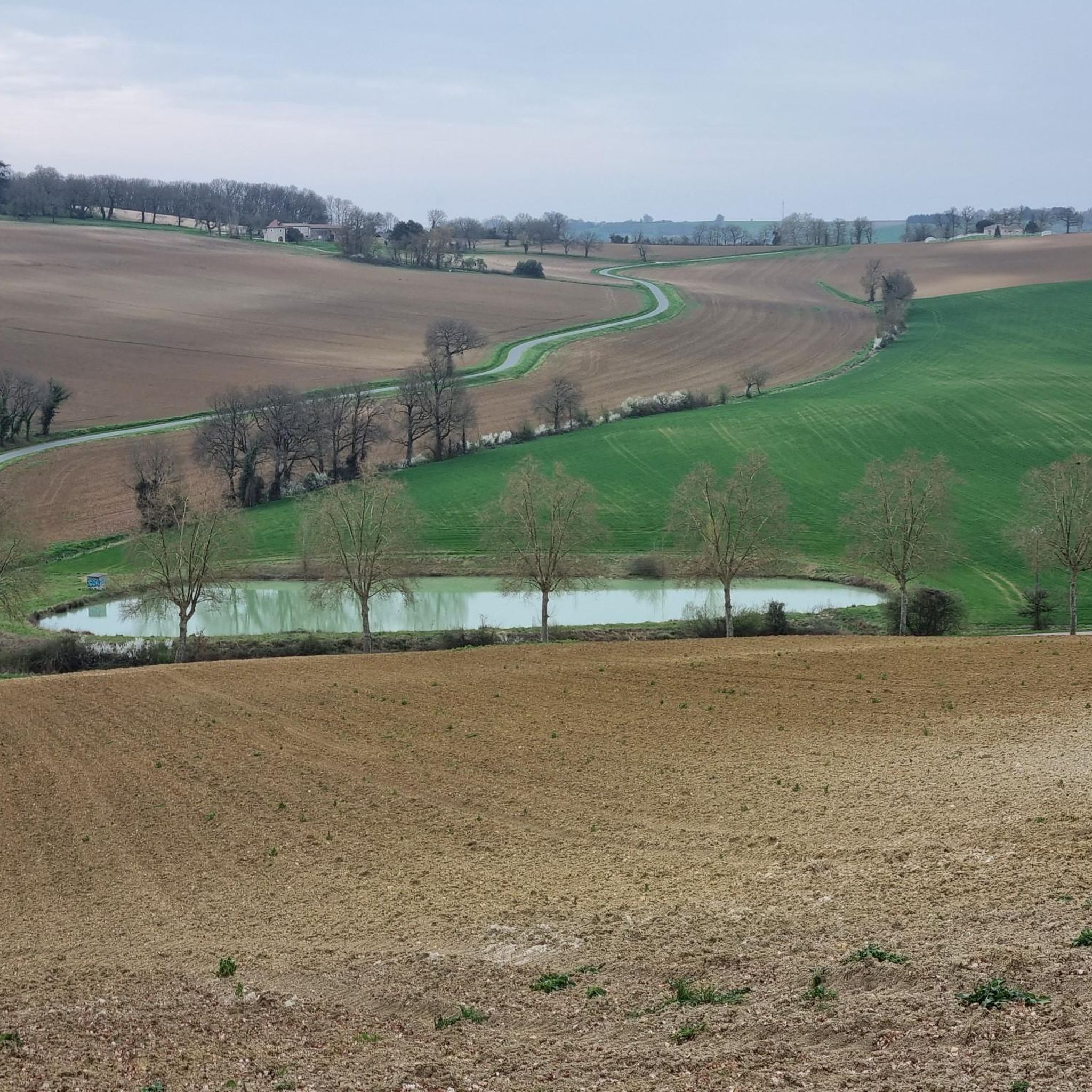
Touring cycling routes around Brax navigate a landscape characterized by gentle river valleys and agricultural plains. The region offers a mix of flat sections and subtly rolling terrain, suitable for various cycling abilities. Routes often follow waterways and pass through small villages, providing accessible cycling experiences. The area's topography supports relaxed rides with minimal elevation changes.
Best touring cycling routes around Brax
- The most popular touring cycling route is Boulangerie & Tabac loop from Le Passage, a 14.3 miles…
Last updated: June 25, 2026
3.0
(1)
19
riders
19.2km
01:06
50m
50m
Easy bike ride. Great for any fitness level. Mostly paved surfaces. Suitable for all skill levels.
5.0
(1)
17
riders
12.5km
00:44
20m
20m
Easy bike ride. Great for any fitness level. Mostly paved surfaces. Suitable for all skill levels.

Sign up for free
7
riders
63.2km
03:48
450m
450m
Moderate bike ride. Good fitness required. Mostly paved surfaces. Suitable for all skill levels.
7
riders
12.8km
00:49
140m
140m
Easy bike ride. Great for any fitness level. Mostly paved surfaces. Suitable for all skill levels.
5
riders
18.4km
01:04
50m
50m
Easy bike ride. Great for any fitness level. Mostly paved surfaces. Suitable for all skill levels.
Get access to more routes and recommendations from other explorers.
Sign up for free
Already have an account?
Our route recommendations are based on thousands of hikes, rides, and runs completed by other people on komoot.
Start today with a free account
Your next adventure awaits.
Login or Signup
Popular around Brax

Tips from the Community


Saint-Caprais Cathedral in Agen features several architectural peculiarities: its Romanesque apse is extended by a single-nave Gothic nave. Replacing an earlier wooden campanile, the current bell tower was built in 1835 at the initiative of Bishop Jean-Aimé de Levezou de Vezins and is unusual in that it consists of three Gothic stylistic elements (lancet Gothic, radiant Gothic, and flamboyant Gothic) curiously presented in reverse chronological order. A corbel composed according to this principle can still be seen in a corner of the north transept of Agen Cathedral. This corbel, in itself, is a small monument containing two large formerets and a long-span pointed arch. The paintings on the walls and ceilings depict the history of the arrival of Christianity in the region. A central role is given to the first martyrs of Agen. Other paintings are presented in series: the Evangelists, the Apostles, the patriarchs of the Jewish people (Abraham, Noah, etc.), the great kings of Israel, etc. The cathedral is much shorter than one might expect, judging by the size of the choir; indeed, political and financial difficulties greatly influenced the cathedral's final form. The painted decoration was entrusted to Jean-Louis Bézard, a painter from Toulouse who won the Prix de Rome in 1829. He completed the decoration of the chapel of the Hospice Saint-Jacques d'Agen, now the departmental hotel, in 1845, which has since disappeared. At the same time, he began painting the Chapel of the Virgin Mary in the cathedral. He continued decorating the cathedral until 1869. The choice of themes was made by the cathedral clergy and was the subject of debate between the painter and Abbé Deyche. For the decoration of the apse, the choice was made to depict the martyrdom of the saints of Agen. For the rest of the decoration, the paintings blend local themes and Marian iconography, the great figures of the Bible, the Old Testament, and the New Testament. Jean-Louis Bézard drew inspiration from the decoration of the Sicilian churches of Palermo and Montereale for the medallions of the arches of the transept crossing. The altar decoration: an altar cross and six candlesticks are listed as historical monuments. On the counter-façade, two statues: on the right, Saint Caprais, and on the left, Saint Stephen, by Louis Rochet. The main organ, built by organ builder Jean-Baptiste Stoltz, was featured at the 1855 World's Fair in Paris. According to legend, it was donated by Empress Eugenie in 1858 to Agen Cathedral, which until then had no instrument. It is the largest instrument in the Lot-et-Garonne department, with 45 stops spread over three manuals and a pedalboard. It has mechanical action. It is listed as a historic monument. The choir organ was built by organ builder Jules Magen in 1885 (15 stops over two manuals/pedalboard). It has been listed as a historic monument. Concert pianist and organist Jérôme Chabert has been its organist since 2002. He founded the Heures d'Orgue, an international festival held every summer in July and August on the cathedral's two organs.
0
0
Saint-Caprais Cathedral was built in the 12th century on the site of an episcopal basilica constructed in the 6th century, sacked by the Normans in 853 and then restored. Saint-Caprais Church is mentioned, along with Saint-Étienne Cathedral, in the will of Raymond, Lord of Toulouse, Marquis of Gothia, Count of Rouergue, Gévaudan, and Narbonne, who died in 961.[6] It was originally a collegiate church. Sacked again in December 1561 during the Wars of Religion, Saint-Caprais Collegiate Church became a fodder store in 1791 before being reopened in 1796 and becoming the official cathedral of Agen, following the destruction of the old Saint-Étienne Cathedral during the Revolution. It was elevated to the rank of cathedral in 1802. At the request of the Bishop of Agen, Jean-Aimé de Levezou de Vezins, the architect Gustave Bourrières[7] rebuilt the south façade, the bell tower, and the interior floors between 1838 and 1847.
0
0

Perched on a rocky spur overlooking the Séoune Valley, Puymirol is a fortified town founded in 1246, making it the oldest in Lot-et-Garonne. Its narrow streets lined with white stone houses and its central square surrounded by arcades reflect its rich medieval past.
0
0

The beautiful Cathedral of Agen is dedicated to St. Caprais dating back to the 11th century.
4
0

I'm sorry but the river port of Agen no longer has any influence on the transport of goods and the rental of small boats has been moved to the much more active port of Buzet sur Baïse.
1
0
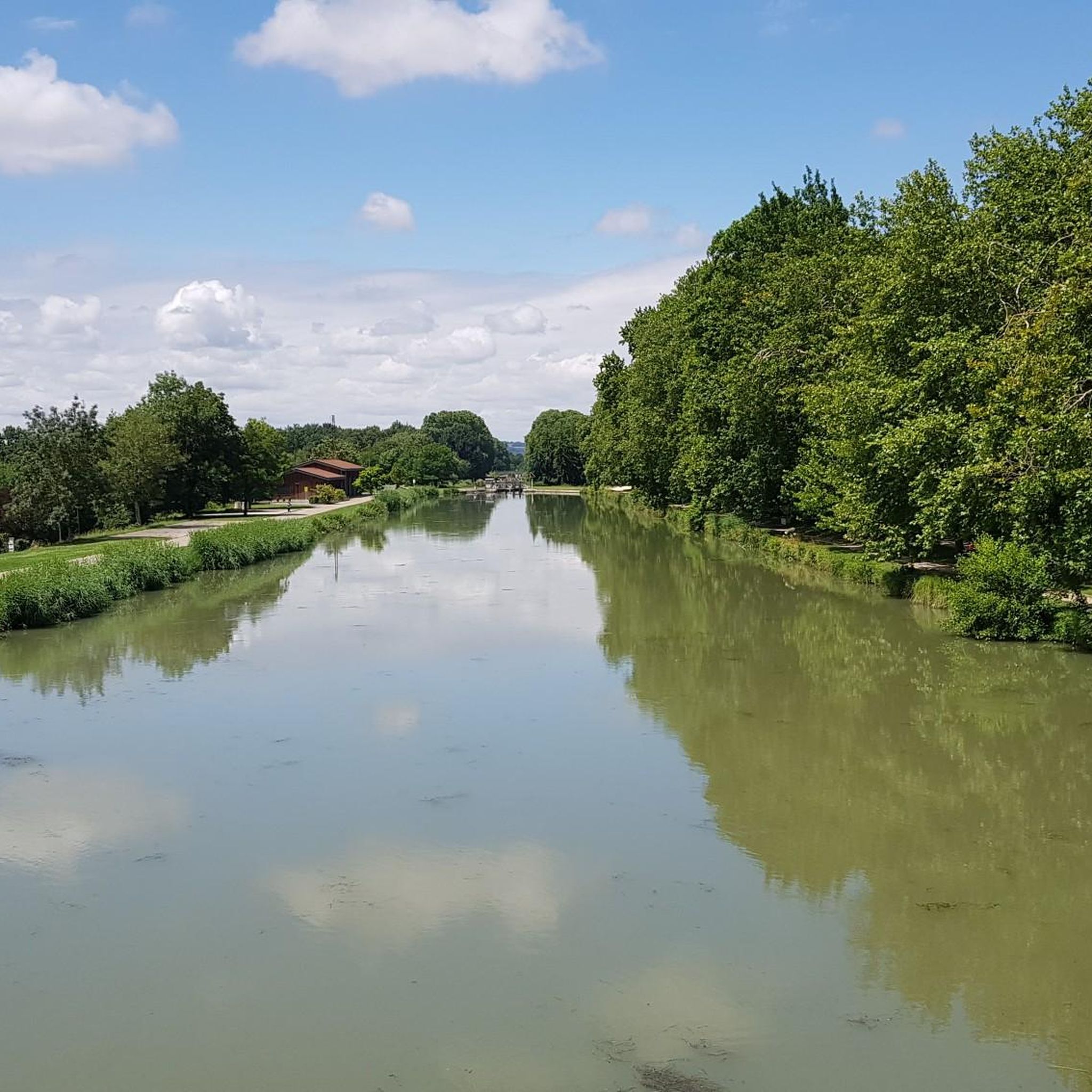
Spectacular canal bridge over the Garonne
3
0

Small bridge from the canal over the small river.
3
0
Frequently Asked Questions
How many touring cycling routes are available around Brax?
There are over 160 touring cycling routes available in the Brax area. These routes cater to various skill levels, with approximately 40 easy, 70 moderate, and 50 difficult options to explore.
Are there easy touring cycling routes suitable for beginners in Brax?
Yes, Brax offers a good selection of easy touring cycling routes, with around 40 options. These routes typically feature minimal elevation changes and follow gentle river valleys, making them ideal for beginners or those seeking a relaxed ride. An example is the Bike loop from Brax, which is an easy 12 km ride.
What kind of terrain can I expect on touring cycling routes in Brax?
The touring cycling routes around Brax are characterized by gentle river valleys and agricultural plains. You'll find a mix of flat sections and subtly rolling terrain, with routes often following waterways and passing through small villages. The topography generally supports relaxed rides with minimal significant climbs.
Are there any circular touring cycling routes in Brax?
Many of the touring cycling routes in Brax are designed as loops, allowing you to start and finish at the same point. For instance, the Agen – Agen river port loop from Estillac offers a longer circular option for exploring the area.
What can I see along the touring cycling routes in Brax?
Along the touring cycling routes, you can discover various points of interest. Many routes pass by the Agen river port, the impressive Agen Aqueduct, and the Agen Canal Bridge. You might also encounter charming village squares like Prayssas Village Square or historical religious buildings such as the Notre-Dame Church of Moirax.
Are there touring cycling routes suitable for families with children?
Yes, the gentle terrain and numerous easy routes make Brax a good destination for family cycling. Routes that follow river paths or pass through quiet villages are particularly suitable. Look for the 'easy' graded routes, which often have lower elevation gain and shorter distances, like the Agen river port – Agen loop from Dolmayrac.
Where can I find parking for touring cycling routes in Brax?
Parking is generally available in the towns and villages that serve as starting points for many routes, such as Brax itself, Le Passage, or Dolmayrac. Look for public car parks, often near local amenities or town centers, which provide convenient access to the cycling network.
What is the best time of year for touring cycling in Brax?
The best time for touring cycling in Brax is typically from spring through early autumn (April to October). During these months, the weather is generally mild and pleasant, with less rainfall, making for comfortable riding conditions. Summer can be warm, so early morning or late afternoon rides are often preferred.
Are there cafes or places to stop for refreshments along the routes?
Yes, many routes pass through small villages and towns where you can find local amenities, including bakeries (boulangeries), cafes, and small shops. The Boulangerie & Tabac loop from Le Passage specifically highlights passing through local amenities, offering opportunities for refreshments.
What do other touring cyclists enjoy most about touring cycling in Brax?
The touring cycling experience in Brax is highly rated by the komoot community, with an average score of 4.5 stars from over 250 reviews. Reviewers often praise the region's quiet agricultural landscapes, the accessibility of routes along river valleys, and the charm of passing through small, authentic French villages.
Can I bring my dog on touring cycling routes in Brax?
Generally, dogs are welcome on most public paths and trails in the Brax area, especially if they are well-behaved and kept on a leash. However, always be mindful of local regulations, especially when passing through agricultural land or near livestock. It's advisable to carry water for your dog, especially on longer rides.
Most popular attractions around Brax

Get inspired with the komoot mobile app


Explore more
Browse the best Cycling routes in other regions.
