The best walks and hikes around Orgedeuil
4.4
(136)
607
hikers
113
hikes
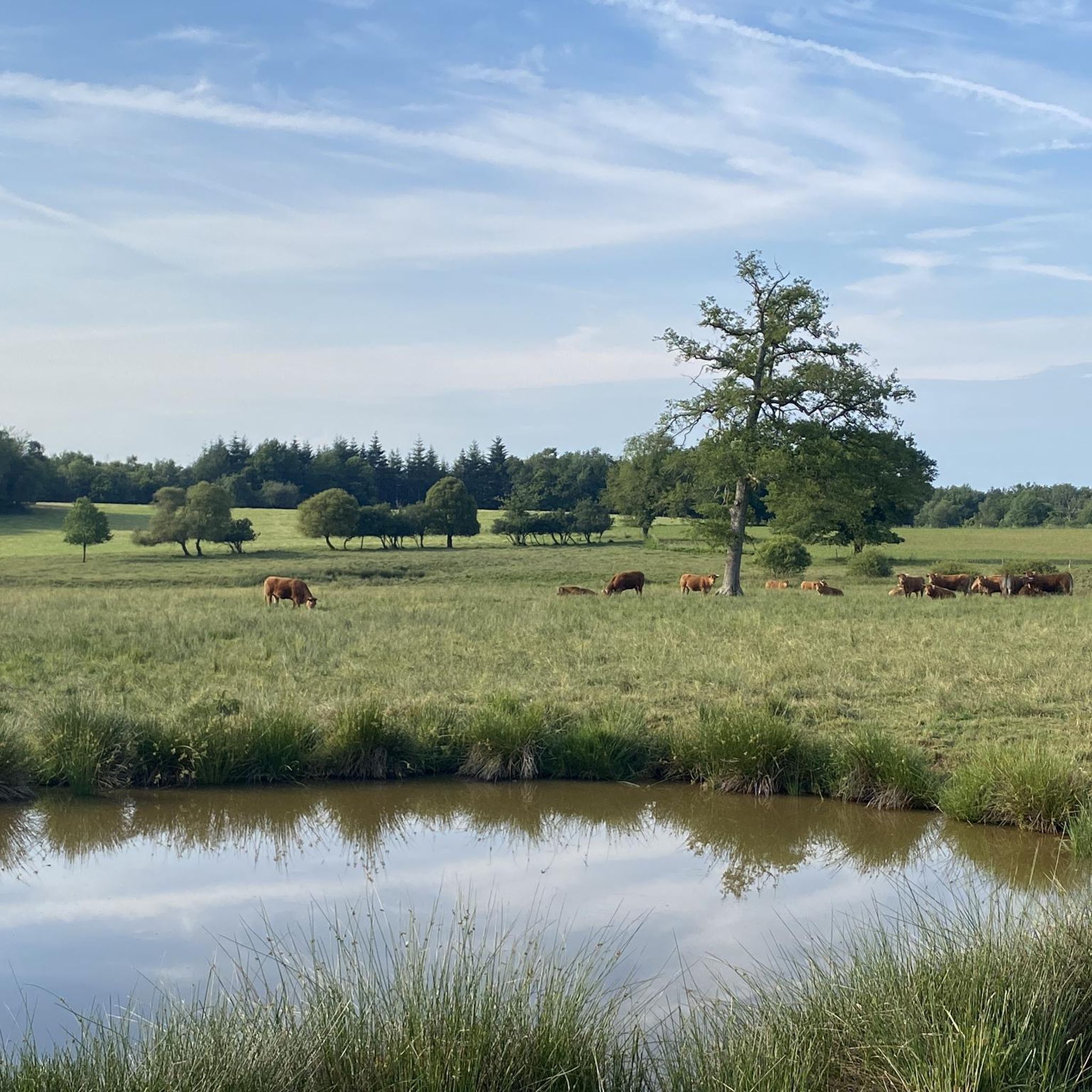
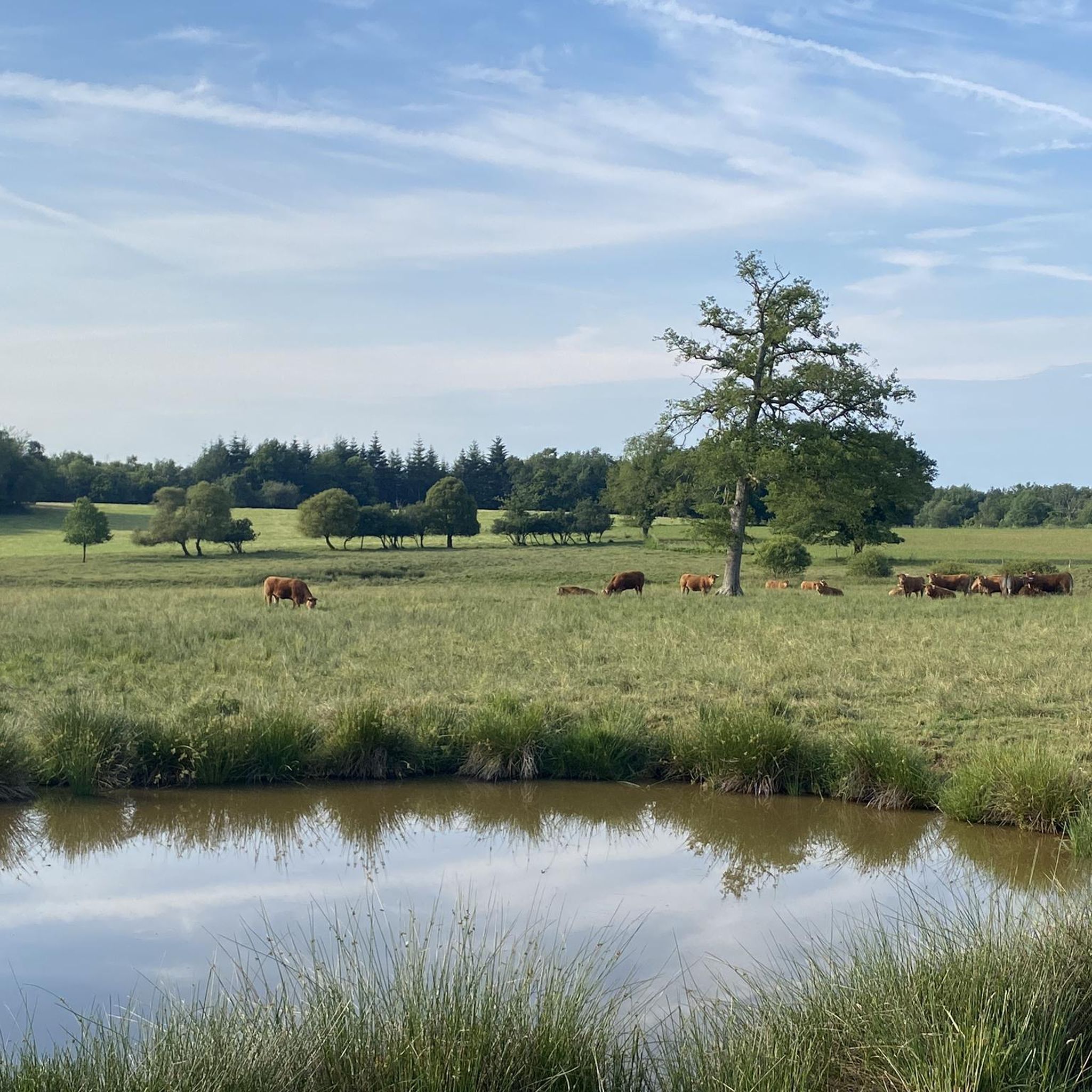
Hiking around Orgedeuil offers diverse landscapes in France's Charente department. The region features green rolling hills, the peaceful Tardoire river, lush forests, and winding valleys. Hikers will encounter notable limestone cliffs and a significant prehistoric site, providing varied terrain for exploration. These natural environments support diverse wildlife and are adorned with wildflowers, particularly vibrant in spring.
Best hiking trails around Orgedeuil
- The most popular hiking route is Chabrot Castle loop from Montbron, an easy 3.7 miles (6.0 km) trail…
Last updated: May 15, 2026
4.3
(9)
22
hikers
6.02km
01:35
50m
60m
Easy hike. Great for any fitness level. Easily-accessible paths. Suitable for all skill levels.
4.7
(3)
8
hikers
13.4km
03:42
240m
240m
Moderate hike. Good fitness required. Easily-accessible paths. Suitable for all skill levels.

Sign up for free
4.3
(3)
6
hikers
10.9km
02:57
150m
150m
Moderate hike. Good fitness required. Easily-accessible paths. Suitable for all skill levels.
4.3
(3)
6
hikers
11.0km
03:00
170m
170m
Moderate hike. Good fitness required. Easily-accessible paths. Suitable for all skill levels.
5.0
(2)
6
hikers
10.2km
02:50
180m
180m
Moderate hike. Good fitness required. Easily-accessible paths. Suitable for all skill levels.
Get access to more routes and recommendations from other explorers.
Sign up for free
Already have an account?
Our route recommendations are based on thousands of hikes, rides, and runs completed by other people on komoot.
Start today with a free account
Your next adventure awaits.
Login or Signup


Tips from the Community

We were there in July, because of the drought the river was almost dry. Too bad :(
1
0

Inside is a statue of Saint Anthony: The statue opposite represents Saint Anthony, a monk of the Carmelite monastery of La Rochefoucauld, who lived at the beginning of the 14th century. Saint Anthony is represented as a bearded old man dressed in a hooded homespun robe. He has a bell and a missal in his right hand. He puts his left hand on his chest. He is barefoot and in sandals. The features are severe, the tormented face. The statue dates from the 17th century (the base is later). Its author is unknown. It was carved directly from a piece of walnut wood with polychromy only on the front, but it had to be painted on the back as well. It has been classified as a Historic Monument since July 1, 2003. A restoration by Mrs. Bénédicte Leblanc was carried out in 2005. A local popular devotion to this statue developed: it was attributed the power to heal children. Cloths were placed at the feet of the saint; candles were also burned very close to the statue, even on the arm. This statue was presented at the Musée des beaux-arts d'Angoulême, from October 1999 to January 2000 during the exhibition "Treasures of Charente" and at the foyer des Carmes in La Rochefoucauld, in April-May 2019 for the exhibition "Treasures" of our churches in the Community of Communes La Rochefoucauld-Porte du Périgord. Note that the large stained glass window of the apse of the church of Souffrignac has for illustration this Saint Antoine, Carmelite of La Rochefoucauld. Saint Anthony traveled through the countryside, announcing his passage with a bell. One day when he was going to the church of Peyroux (municipality of Orgedeuil), passing by the chapel of Landes, a mother joined him between the summit of La Faurie and Les Bourdichoux. The woman begged him to ask God for the healing of her sick child. Father Antoine pressed one of the child's diapers over his heart, prayed, and the child recovered. This “miracle” was repeated later. In testimony of their gratitude to the good monk, the inhabitants of Saint-Sornin, in the 16th century, would have taken advantage of the passage of a sculptor to have the statue of the Saint executed, carved, it is said, in the most beautiful walnut of the plain of Chadries. .
1
0
This former Augustinian priory-cure belonged to the priory of Notre-Dame des Salles-Lavauguyon, of the diocese of Limoges. It remained a convent until around 1560. The church was restored in 1862, as indicated by the engraved lintel on the south face of the bell tower. Built in local materials of Bajocian limestone and tertiary elements, this church consists of a single nave of three bays, followed by a narrow rectangular choir opening onto two modern side chapels. Inside, the nave is coated and currently covered with a lowered barrel vault from the 19th century. A possible apse, of modest size, could complete the building to the east. It was replaced by a large arcade built in the 19th century, closed by a wall in its lower part and a modern stained glass window in its upper part. From the choir, a 17th century door provides access to the south chapel, serving as a sacristy, while opposite an arcade pierced in the north wall allows communication with the north chapel. Outside, you reach the bell tower by means of a stone staircase then a metal miller's ladder leading to a high door, datable to the 17th century. From the top of this door, the rest of the bell tower has been redone and pierced with four modern arched bays. The facade is a complete reconstruction of the 19th century. The Virgin with the Rosary. Look for this painting on the wall to the right. It is very dark and well damaged; but, as it is, it attracts restoration in memory of its possible origins: either the Venetian school or the work of Murillo's workshop. The story says that in the middle of the 17th century, the ambassador of the King of Spain returning to his country fell ill in the area and was treated at the presbytery. As a thank you for the good care received, returned to his country, he asked Murillo, a great Spanish painter, for a replica of his painting The Virgin with the Rosary, exhibited today at the Goya Museum in Castres, and gave it as a gift to Saint-Sornin. . THE CHURCH St Saturnin's church was originally a priory depending on Notre-Dame of Salles-Lavauguyon, in Limoges diocese. If kept its conventual status until around 1560. Erected in fhe 11th century, It was restored in the 19” century. Two chapels were added to each side in the 17th century. They communicate with the rectangular choir through iwo archways. On the right wall, there hangs a dark painting in very bad repair. It is supposed to be a copy of Murillo's famous Virgin of the Rosary.
1
0

Two paths allow access to the castle. The first is a ford over the Tardoire; the second is a path coming from Montbron. The facade of the castle presents, on the left, in the interior courtyard, two superimposed galleries. The upper gallery, in wood, rests on the three broken arches of the lower gallery. The castle is docked with pepper shakers. To the north are the outbuildings of the farm. Entrance into the building is from the north, through a door pierced in the west turret, a door adorned with prismatic moldings and which opens onto a spiral staircase leading to the upper rooms. To the west, a vast uncrown tower could have served as a keep for the old castle.
1
0
Frequently Asked Questions
How many hiking trails are available around Orgedeuil?
There are over 100 hiking routes around Orgedeuil, offering a wide range of options for different skill levels. You'll find everything from easy strolls to more challenging trails with significant elevation gain.
What types of landscapes can I expect to see while hiking in Orgedeuil?
The region around Orgedeuil boasts diverse and picturesque scenery. Hikers will encounter green rolling hills, the peaceful Tardoire river, golden fields, lush forests, and winding valleys. There are also notable limestone cliffs and a significant prehistoric site, adding to the natural and historical appeal.
Are there any easy hiking routes suitable for beginners or families?
Yes, Orgedeuil offers several easy routes perfect for beginners or families. For instance, the Chabrot Castle loop from Montbron is an easy 3.7-mile (6.0 km) trail that takes about 1 hour 35 minutes to complete, offering accessible paths and views of the historic castle.
What are some interesting historical or natural attractions to see along the trails?
Beyond the natural beauty, hikers can discover several attractions. You might encounter historic sites like Chabrot Castle or Château de Montbron. The area also features the Grotte de Montgaudier and the L'Église Saint-Pierre in Orgedeuil, which showcases typical Charentais architecture. The Tardoire River itself is a scenic feature, ideal for a relaxing picnic.
What is the best time of year to go hiking in Orgedeuil?
The best seasons for hiking in Orgedeuil are spring (March to June) when nature revives and wildflowers bloom, and autumn (September to November) for its vibrant fall colors. Summer (June to August) is also viable, with shaded woodlands providing respite from the heat.
Are there any longer or more challenging hikes in the area?
Yes, for those seeking a more challenging experience, the River Crossing loop from Montbron is a moderate 8.3-mile (13.4 km) path featuring river crossings and up to 240m of elevation gain. Another substantial option is the Château de Montbron loop from Vouthon, a 6.7-mile (10.9 km) trail with moderate elevation changes.
What do other hikers say about the trails in Orgedeuil?
The hiking routes in Orgedeuil are highly rated by the komoot community, with an average score of 4.4 stars from over 100 reviews. Hikers often praise the varied terrain, from peaceful river paths to lush forests, and the well-maintained trails that make exploration enjoyable.
Are there any circular walks available in Orgedeuil?
Many of the trails around Orgedeuil are designed as loops, offering convenient circular walks. Examples include the Grotte de Montgaudier loop from Montbron and the Saint-Sornin Church loop from Saint-Sornin, both providing a complete journey back to your starting point.
What kind of wildlife might I encounter on the trails?
The diverse natural environments around Orgedeuil, including lush forests and riverbanks, provide a habitat for various wildlife. While specific sightings can vary, you might spot local bird species, small mammals, and a rich array of insects, especially in the spring and summer months.
Are there any specific points of interest or landmarks near the hiking areas?
Yes, several notable landmarks are close to the hiking areas. You can visit the historic La Rochefoucauld Castle and its adjacent Castle Bridge, or explore Montbron Castle. The Saint Paul's Church in Chazelles also offers an interesting architectural stop.
Can I find trails that follow rivers or offer water views?
Absolutely. The Tardoire River is a prominent feature of the Orgedeuil landscape, and many trails run alongside it. The River Crossing loop from Montbron, for example, features multiple river crossings, providing scenic water views and a refreshing experience.
Most popular attractions around Orgedeuil

Get inspired with the komoot mobile app


Explore more
Browse the best Hikes in other regions.
