Attractions and Places To See around Guignicourt - Top 20
Best attractions and places to see around Guignicourt include a blend of historical landmarks, natural features, and cultural sites. The commune is situated along the Aisne River and the Canal Latéral à l'Aisne, offering opportunities for walks. Guignicourt serves as a base for exploring the Aisne department, known for its World War I history and unique architecture. The region provides a variety of sites, from ancient Gaulish oppida to Baroque churches and significant war memorials.
Best attractions and places to see around Guignicourt
- The most popular attractions is Hermonville, a city that is part of the nearby outer ring of Reims. It is crossed by the Champagne Tourist Route and is part of the Massif de Saint Thierry.
- Another must-see spot is Asfeld Church, a 17th-century Baroque church located in the Ardennes region. Its architecture is notable for being inspired by a musical instrument, featuring 138 pillars and columns.
- Visitors also love Craonne Memorial Stone, a memorial stone located on the Plateau de Californie. It commemorates the fighting of April-May 1917 during the Nivelle Offensive and pays tribute to the destroyed village of Craonne.
- Guignicourt is known for its historical sites, war memorials, and unique architectural landmarks. The area offers a variety of attractions to see and explore, from churches to natural waterways.
- The attractions around Guignicourt are appreciated by the komoot community, with 14 upvotes and 18 photos shared by visitors.
Last updated: July 2, 2026
Cormicy National Necropolis
Highlight • Other
Translated by Google •
Tip by

St. Pierre Church - Guignicourt
Highlight • Other
Translated by Google •
Tip by

Sign up now to discover places like this
Get recommendations on the best single tracks, peaks, & plenty of other exciting outdoor places.
Sign up for free
Craonne Memorial Stone
Highlight • Other
Translated by Google •
Tip by
Asfeld Church
Highlight • Other
Translated by Google •
Tip by

Mairie de Villeneuve-sur-Aisne
Highlight • Other
Translated by Google •
Tip by
Sign up for free to discover even more attractions around Guignicourt.
Sign up for free
Already have an account?
Start today with a free account
Your next adventure awaits.
Login or Signup
Tips from the Community

This memorial stone, located on the Plateau de Californie above the old Craonne, commemorates the fierce fighting of April-May 1917 during the Nivelle Offensive. It stands on the spot where the French army suffered heavy losses in the battle against the German defenses. The stone also pays tribute to the destroyed village of Craonne, which was not rebuilt after the war. The site is closely linked to the famous “Chanson de Craonne”, the pacifist song of the French soldiers
6
0
The town hall of Guignicourt, now part of the merged municipality of Villeneuve-sur-Aisne since 2019, is located in the historic heart of the village. The building reflects the classic style of French rural municipalities and serves as the administrative centre for the region. Situated on the Aisne River, Guignicourt has a long history as a railway junction and trading centre in the former Laonnois.
10
0
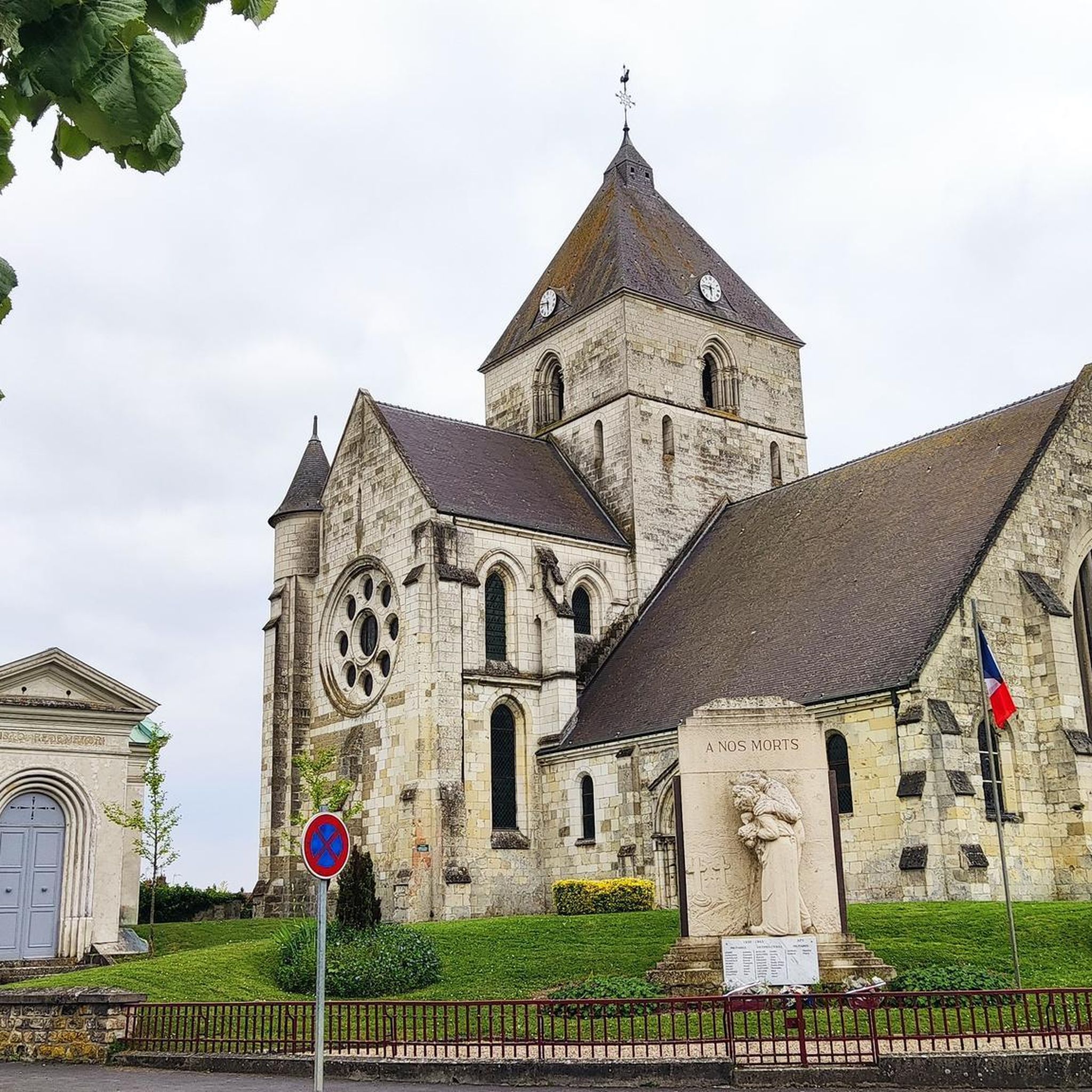
In 1924, this memorial was erected in memory of the 22 soldiers and 12 civilians from Guignicourt who died during the First World War. The monument, located near the church, shows in relief a peasant couple mourning at a grave – a rare human and modest image rather than a classic military symbol. It recalls the deep suffering that the war left in this hard-hit municipality.
9
0
This church, built between the 11th and 13th centuries, is a fine example of transitional architecture between Romanesque and Gothic. It was built on the site of an earlier wooden church and possibly even a Gallo-Roman sanctuary. The construction was partly financed by the Abbey of Saint-Hubert (Belgium), which owned land in the region. The church has been protected as a historical monument since 1921.
9
0


Very nice building in the center of Villeneuve-sur-Aisne
3
0
Beautiful church with a World War I memorial in front of it
3
0

Craonne is special among the memorial sites for France. In addition to the tragic destruction of the place, this has to do with the unfortunate battle, the errors of the army leadership and the soldiers' protests. A testimony is the famous song "Chanson de Craonne".
1
0
Frequently Asked Questions
What historical landmarks can I visit in and around Guignicourt?
In Guignicourt itself, you can explore the historic Église Saint-Pierre, dating from the 11th to 13th centuries, which is a fine example of transitional Romanesque and Gothic architecture. It's a protected historical monument. Nearby, the St. Pierre Church - Guignicourt also features a poignant Monument aux Morts commemorating WWI fallen. Further afield, the ancient Gaulish site of the Vieux Reims Oppidum is historically significant, though much of its Guignicourt section has been altered by later construction.
Are there any significant World War I sites near Guignicourt?
Yes, the region is rich in WWI history. You can visit the Cormicy National Necropolis, also known as 'La Maison Bleue,' a French military cemetery with over 14,000 graves. The Craonne Memorial Stone on the Plateau de Californie commemorates the fierce fighting of the Nivelle Offensive. The iconic Chemin des Dames, with its panoramic views and the Caverne du Dragon museum, is also a crucial historical site. Additionally, the French Tank Memorial is located in Berry-au-Bac.
What natural features can I explore in the Guignicourt area?
Guignicourt is situated along the Aisne River and the Canal Latéral à l'Aisne, offering pleasant opportunities for walks along the waterways. The area provides a tranquil setting with local descriptions mentioning empty boats and climbing ivy. While the immediate area is more about the river and canal, the wider region includes several natural reserves like the Réserve naturelle du marais de Vesles-et-Caumont, Réserve naturelle des Landes de Versigny, and Réserve naturelle du Coteau de Chartèves.
Are there family-friendly attractions or activities around Guignicourt?
For families interested in history, the WWI sites like the Cormicy National Necropolis and the Caverne du Dragon offer educational experiences. For outdoor activities, there are easy cycling routes like the 'Camping Au Bord de l'Aisne – Mairie de Villeneuve-sur-Aisne loop from Guignicourt' (21.7 km) and easy hiking trails such as the 'Sound of Water and Music Trail' (7.2 km). These routes are generally suitable for families looking for gentle outdoor exploration.
What kind of outdoor activities, like hiking or cycling, are available near Guignicourt?
The area around Guignicourt offers various outdoor activities. For cycling, you can find routes like the 'Ferme d'Hurtebise War Memorial – Monks' Pond loop' (43 km, moderate) or easier options. Hiking enthusiasts can enjoy trails such as the 'Sound of Water and Music Trail' (7.2 km, easy) or the 'Path Along the Canal – Footpath Along the Aisne loop' (16 km, moderate). You can find more details and routes on the Cycling around Guignicourt and Hiking around Guignicourt guide pages.
Can I find easy walking routes suitable for beginners or families?
Yes, there are easy walking routes available. The 'Sound of Water and Music Trail' is an easy 7.2 km hike. For cycling, the 'Camping Au Bord de l'Aisne – Mairie de Villeneuve-sur-Aisne loop from Guignicourt' is an easy 21.7 km route. These options are generally suitable for beginners or families looking for less strenuous outdoor activities. You can explore more options on the Hiking around Guignicourt guide page.
What is the best time of year to visit Guignicourt for outdoor activities?
The spring and autumn months generally offer pleasant weather for outdoor activities like hiking and cycling, with milder temperatures and beautiful scenery. Summer can also be enjoyable, especially along the waterways, but ensure you stay hydrated. Winter activities are limited, but the historical sites remain accessible year-round.
Are there any unique architectural sites worth seeing near Guignicourt?
Absolutely. The most notable is the Asfeld Church (Église Saint-Didier d'Asfeld), a stunning 17th-century Baroque church known for its unique architecture, which is said to be inspired by a musical instrument and features 138 pillars and columns. It's a rare jewel of French heritage.
Where can I find local markets near Guignicourt?
Guignicourt itself hosts a weekly market on Fridays. For larger market experiences, you can visit nearby cities like Reims, which has daily markets, or Laon, which holds its market on Thursdays. These markets offer a chance to experience local culture and find regional produce.
What do visitors particularly enjoy about the attractions around Guignicourt?
Visitors appreciate the blend of historical significance, particularly the WWI memorials and sites, and the unique architectural marvels like the Asfeld Church. The tranquil natural setting along the Aisne River and Canal also provides a peaceful escape. The community has shared 18 photos and given 14 upvotes to the attractions, highlighting their visual appeal and engaging nature.
Are there options for mountain biking trails near Guignicourt?
Yes, mountain biking opportunities are available. You can find trails such as the 'Fort de Chenay – Vinyard of the Chenay loop' (53.5 km, difficult) or the 'Cormici – Trail Path 3 loop' (17.7 km, moderate). These routes offer varying levels of challenge for MTB enthusiasts. More details can be found on the MTB Trails around Guignicourt guide page.
What are some notable cities or towns to visit within a reasonable distance of Guignicourt?
Guignicourt serves as a good base for exploring the wider region. Reims, approximately 20 km away, is a significant city known for its three UNESCO-listed sites, including the Cathedral of Notre-Dame. Laon, about 29 km away, boasts an astonishing early Gothic cathedral and a museum. You might also consider visiting Parfondeval, designated as a 'Most Beautiful Village,' about 37 km from Guignicourt.
Are there any dog-friendly trails or walks around Guignicourt?
Many of the natural walking paths along the Aisne River and Canal Latéral à l'Aisne are suitable for dog walking, provided dogs are kept on a leash and owners clean up after them. When exploring specific trails, it's always best to check local regulations or signage regarding dog access, especially in nature reserves or protected historical sites.

Get inspired with the komoot mobile app


Explore more
Still not found the Highlight you’re looking for? See guides of the top attractions in other regions:
