The best road cycling routes around Beaumont-Les-Nonains
4.8
(14)
634
riders
202
rides
Road cycling routes around Beaumont-Les-Nonains traverse a landscape characterized by rolling countryside and agricultural fields, offering varied terrain for road cyclists. The region features a mix of gentle ascents and descents, with some routes exploring the Vexin Plateau. This area is known for its historical sites, including abbeys and châteaux, which often serve as scenic points along the routes.
Best road cycling routes around Beaumont-Les-Nonains
- The most popular road cycling route is Marcheroux Abbey loop from Beaumont-les-Nonains, a 17.5…
Last updated: July 2, 2026
4
riders
35.9km
01:34
300m
300m
Moderate road ride. Good fitness required. Mostly well-paved surfaces and easy to ride.
7
riders
28.2km
01:14
180m
180m
Easy road ride. Great for any fitness level. Mostly well-paved surfaces and easy to ride.

Sign up for free
3
riders
64.3km
02:54
590m
590m
Moderate road ride. Good fitness required. Mostly well-paved surfaces and easy to ride.
10
riders
Moderate road ride. Good fitness required. Mostly well-paved surfaces and easy to ride.
4
riders
69.0km
02:53
440m
440m
Moderate road ride. Good fitness required. Mostly well-paved surfaces and easy to ride.
Get access to more routes and recommendations from other explorers.
Sign up for free
Already have an account?
Our route recommendations are based on thousands of hikes, rides, and runs completed by other people on komoot.
Start today with a free account
Your next adventure awaits.
Login or Signup
Tips from the Community

A charming village on the slopes of the Viosne with its castle and adjacent church.
0
0

A wall now traces its original layout onto the ground, offering visitors a glimpse into its religious and architectural past.
1
0

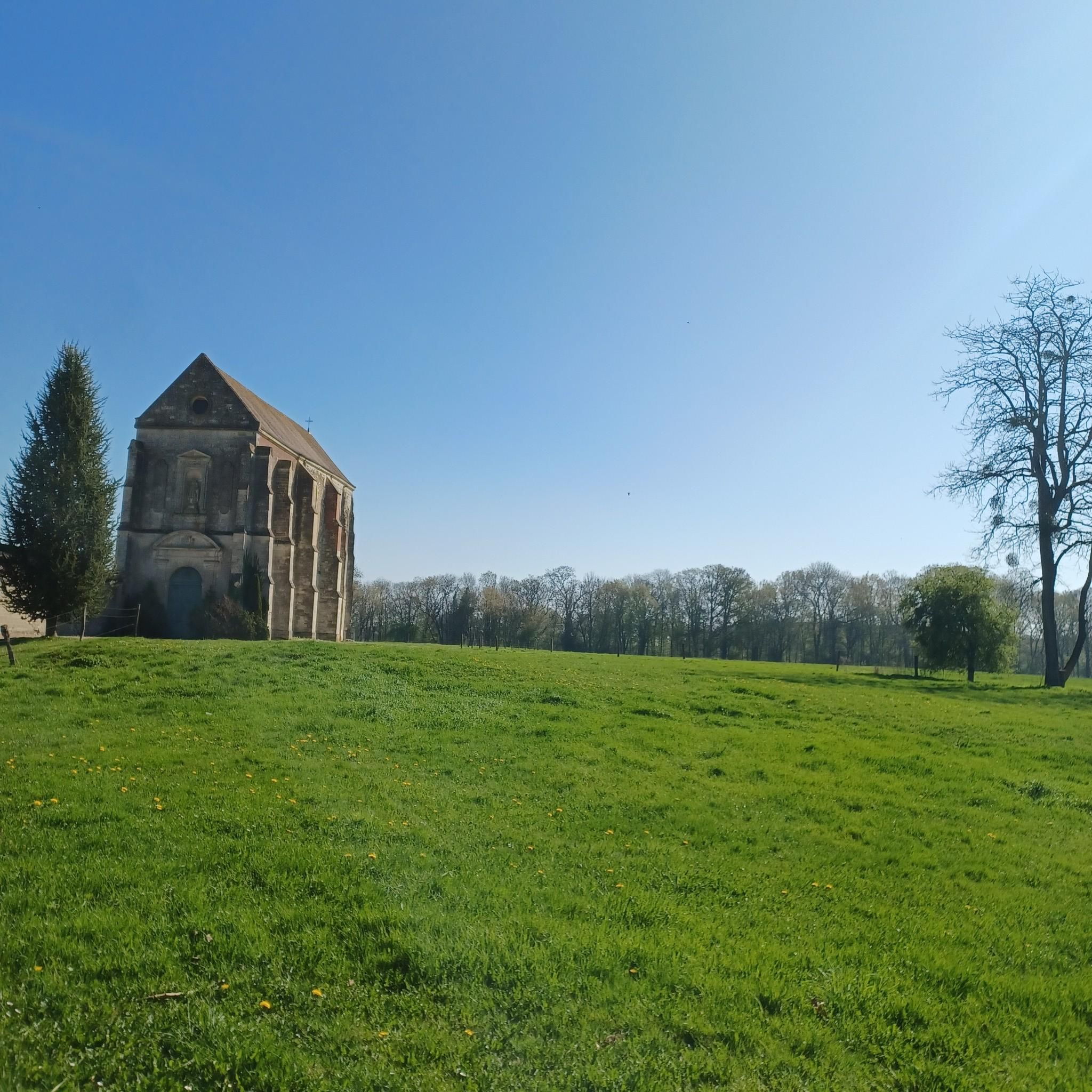
In the 11th century, a chapel was built by the prior of Bézu-le-Long, dependent on the abbey of Croix Saint-Leufroy, consisting of a nave of 5 bays lit by narrow lancets. A stone choir was added in the 12th century. Around 1335, the chapel became a parish church. Around 1780, it was enlarged by two bays and its direction was reversed. The entrance is now through the choir, itself installed in the western part. Large bays were opened at this time. The new choir is adorned with an altarpiece executed in 1760 by Jacques Carbonnier (from Gisors). The painting of the baptism of Christ is by Charles Jean Baptiste Duchêne, painter in Gisors
0
0
A military fortress with a defensive purpose, built in 1097, during the reign of William the Conqueror's second son, Gisors Castle marks a major page in the medieval history of Normandy. This fortification was intended to protect the Norman possessions of the King of England against the ambitions of the King of France. A true border place and eastern lock of Normandy, it was part of a vast campaign of fortifications in the Epte Valley, the natural boundary between the two kingdoms.
0
0
We know of Saints Gervais and Protais that they were Christian martyrs in the 2nd century in Milan. At the time, the Roman Empire forced all its subjects to worship the emperor, which was unacceptable to Christians. If they refused, they were crucified or sent to the arena to be devoured by lions between gladiatorial fights. Thus, Saint Ambrose, bishop of Milan, found them, in 386, buried side by side. This great bishop affirmed that they had been martyrs by fidelity to their baptism. He even added "They are of a prodigious size, such as one was in ancient times." Their cult reached Gaul where a large number of churches were dedicated to them.
1
0

The parish church of Saint-Gervais Saint-Protais was consecrated in 1119 by Pope Calixtus 11. This Romanesque church saw its nave ravaged by fire in 1123. It was rebuilt in 1160. Thanks to funding from Queen Blanche of Castile, the people of Gisors built a Gothic choir, consecrated in 1249. It was built according to the Chartres model, common at the time in Ile-de-France, with a three-level elevation: large arcades, triforium and high windows pierced with oculi. Thanks to funding from charitable brotherhoods and trade corporations, the church underwent multiple transformations from the end of the 15th century with the addition of radiating chapels and an ambulatory at choir level. Entrusted to the Grappins, a family of architects from Vexin, the work continued in the 15th century with the reconstruction of the nave and the chapels of the side aisles in flamboyant Gothic style, then of the façade decorated with Renaissance motifs.
0
0

The collegiate church of Saint Barthelemy, founded in 1037, was secularized during the French Revolution and converted into a residential building. After war damage and demolition, the preserved choir today reminds us of the former building.
2
0

Old fortified castle, built between the end of the 11th and the 12th century, today in ruins.
0
0
Frequently Asked Questions
How many road cycling routes are available around Beaumont-Les-Nonains?
There are over 200 road cycling routes available around Beaumont-Les-Nonains, offering a wide range of options for different skill levels and preferences.
What kind of terrain can I expect on road cycling routes near Beaumont-Les-Nonains?
The region around Beaumont-Les-Nonains is characterized by rolling countryside and agricultural fields. Routes often feature a mix of gentle ascents and descents, with some exploring the Vexin Plateau, providing varied terrain for road cyclists.
Are there easy road cycling routes suitable for beginners in Beaumont-Les-Nonains?
Yes, there are several easy road cycling routes perfect for beginners. An excellent option is the Marcheroux Abbey loop from Beaumont-les-Nonains, which is 17.5 miles (28.2 km) long and offers a pleasant ride through the local countryside.
What are some challenging road cycling routes or climbs in the area?
For those seeking a greater challenge, routes like the Vexin Plateau – Marcheroux Abbey loop from Fresneaux-Montchevreuil offer more significant elevation gains and longer distances, testing your endurance across the rolling terrain of the Vexin Plateau.
What historical sites or landmarks can I see along the road cycling routes?
Many routes pass by historical sites. You can explore landmarks such as Marcheroux Abbey, the Saint-Jean-Baptiste Church of Chaumont-en-Vexin, and the Saint-Crépin-et-Saint-Crépinien Church. The Chateau d'Hénonville – Montgeroult Castle loop from Fresneaux-Montchevreuil specifically leads through historical estates.
Are there circular road cycling routes available?
Yes, many of the road cycling routes around Beaumont-Les-Nonains are circular. For example, the The Collegiate Church of Saint-Barthélemy – Marcheroux Abbey loop from Fresneaux-Montchevreuil is a popular moderate circular path combining historical interest with rolling terrain.
What is the best time of year for road cycling in Beaumont-Les-Nonains?
The best time for road cycling in Beaumont-Les-Nonains is typically from spring through early autumn (April to October) when the weather is generally mild and the agricultural landscapes are vibrant. Summer offers longer daylight hours, while spring and autumn provide cooler temperatures ideal for longer rides.
What do other road cyclists enjoy the most about road cycling in Beaumont-Les-Nonains?
The routes in Beaumont-Les-Nonains are highly rated by the komoot community, with an average score of 4.7 stars from over 30 reviews. Cyclists often praise the varied terrain, the scenic views of the rolling countryside, and the opportunity to discover historical sites along the way.
Are there road cycling routes that are less crowded?
While specific crowd levels can vary, many routes traverse quiet agricultural roads and smaller villages, offering a peaceful cycling experience away from major traffic. Exploring routes during weekdays or off-peak hours can further enhance the tranquility.
Can I find road cycling routes that include cafes or places to stop for refreshments?
The routes often pass through or near small towns and villages where you can find local cafes or bakeries. Planning your route with komoot allows you to identify potential stops for refreshments along your chosen path.
How long do road cycling routes typically take in this region?
Route durations vary significantly based on distance and difficulty. For instance, an easy route like the Marcheroux Abbey loop from Beaumont-les-Nonains takes about 1 hour 14 minutes, while longer, moderate routes such as the Chateau d'Hénonville – Montgeroult Castle loop from Fresneaux-Montchevreuil can take around 2 hours 53 minutes.
Are there any specific attractions or points of interest to look out for?
Beyond the abbeys and châteaux, you might encounter other interesting points like the Double Washhouse of Berneuil-en-Bray. The region's charm lies in its historical architecture and serene rural landscapes.
Most popular attractions around Beaumont-Les-Nonains

Get inspired with the komoot mobile app


Explore more
Browse the best Road cycling routes in other regions.
