The best road cycling routes around Héloup
4.4
(53)
2,196
riders
622
rides
Road cycling routes around Héloup traverse a landscape characterized by gently rolling terrain and rural roads, connecting small villages and historical points of interest. The region features a mix of open countryside and areas with scattered woodlands, offering varied scenery for road cyclists. Elevation gains are generally moderate, making the area accessible for a range of fitness levels. The routes often pass by local landmarks such as churches and châteaux, providing cultural highlights along the way.
Best road cycling routes…
Last updated: July 2, 2026
14
riders
Easy road ride. Great for any fitness level. Mostly well-paved surfaces and easy to ride.
7
riders
74.3km
03:11
570m
570m
Moderate road ride. Good fitness required. Mostly well-paved surfaces and easy to ride.

Sign up for free
6
riders
79.9km
03:21
530m
530m
Moderate road ride. Good fitness required. Mostly well-paved surfaces and easy to ride.
4.0
(1)
4
riders
53.2km
02:18
480m
480m
Moderate road ride. Good fitness required. Mostly well-paved surfaces and easy to ride.
6
riders
33.9km
01:32
300m
300m
Moderate road ride. Good fitness required. Mostly well-paved surfaces and easy to ride.
Get access to more routes and recommendations from other explorers.
Sign up for free
Already have an account?
Our route recommendations are based on thousands of hikes, rides, and runs completed by other people on komoot.
Start today with a free account
Your next adventure awaits.
Login or Signup



Tips from the Community

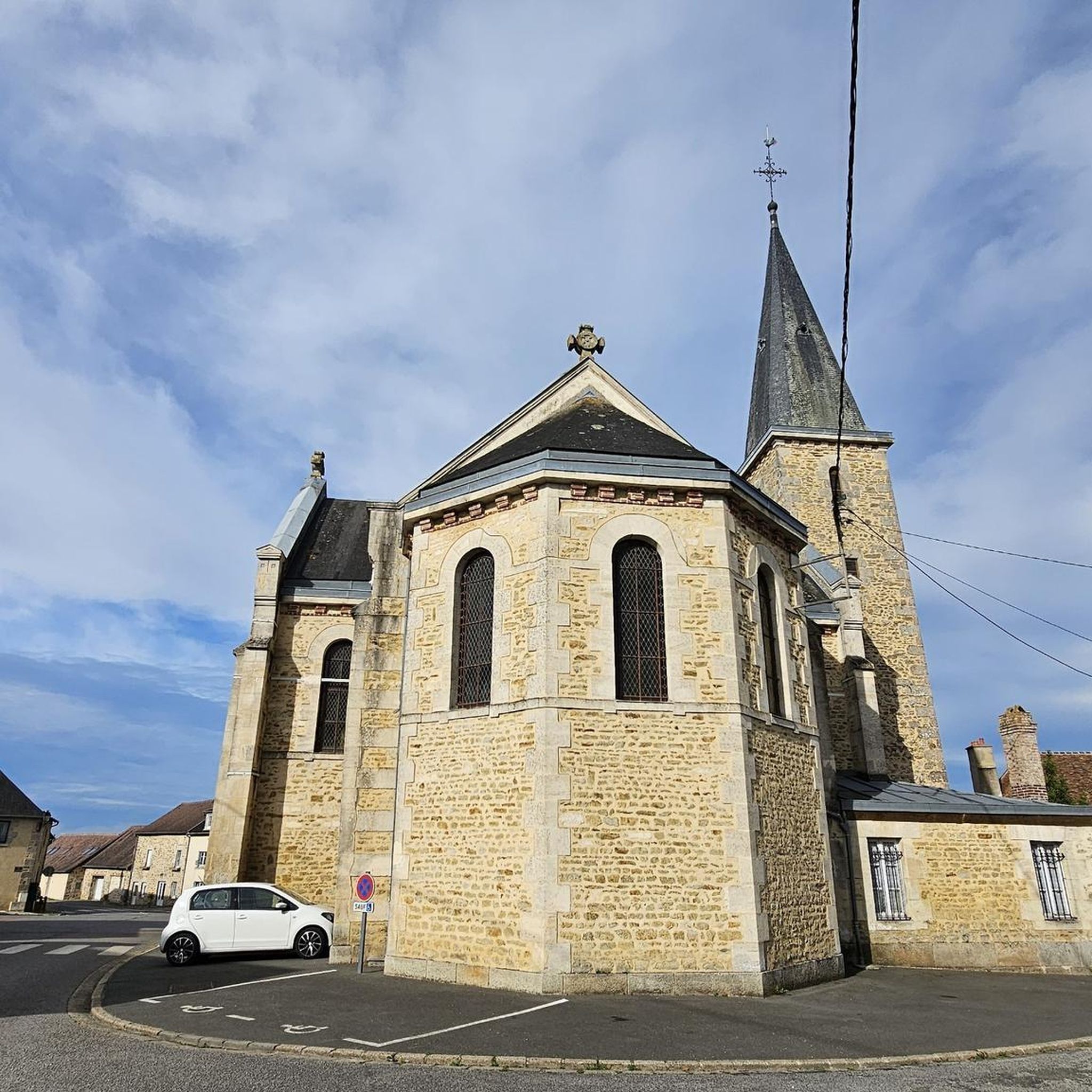
This church is Romanesque in style (12th or 13th century) and was renovated during the Gothic period. Thus, on one side of the nave, there are semicircular arches and on the other, pointed arches. The bell tower dates from the 18th century. The church has a massed plan. The chevet is flat. The sacristy is attached to the chevet. The square bell tower, topped with an octagonal dome, is located on the south facade. On one side of the nave, there are bays. The portal opens under the bell tower. It is decorated with an ogee arch and a coat of arms.
0
0

very varied and pleasant hike
0
0

2 perforations visible on the 12th photo of the Sherman M4A2 "Valois"
0
0
The Chapitrel is the name given to the entrance gate. The period door is in the Renaissance style. This construction had several functions: It was reserved for catechumens who were not allowed to enter the church and served as a warehouse for farmers who sold at the market on Sunday mornings. The saddleback tower dates from 1545. It is 28 m high. It is square and has four levels. Each floor is separated by an external Roussard belt called a "larmier" which overhangs quite widely, preventing water from running off. At the top of the roof are two granite crosses, each topped with a copper weather vane representing a crowned dragon's head.
0
0
Neo-Romanesque church Elongated plan. Single nave. Flat chevet. Small building attached to the chevet. Higher and wider nave than the choir. Bell tower on the facade, topped with a polygonal spire and pierced by a semicircular portal with a trilobed decoration at the level of the tympanum. Semicircular bays. Apse pierced by an oculus.
0
0
The Church of Saint-Pierre-et-Saint-Paul was built in the 12th century, at the initiative of the lords of Mieuxce. It is in the Romanesque style, and is a fine example of the religious architecture of this period in Orléanais. The church suffered damage during the Hundred Years' War and the French Revolution. It was restored in the 19th century. The Church of Saint-Pierre-et-Saint-Paul is a church of modest size, but it is remarkable for its beauty and originality. The exterior of the church is characterized by its Romanesque bell tower, which is topped with an octagonal spire. The main portal is also remarkable, with its sculptures representing scenes from the life of Saint Peter and Saint Paul. The interior of the church is decorated with 12th century frescoes, which are among the oldest in Loiret. The choir is particularly rich, with its 17th century carved wooden altarpiece. The Church of Saint-Pierre-et-Saint-Paul is a must-see for art and history lovers. It is a fine example of Romanesque architecture in Orléanais. The church is open to the public every day. Guided tours are organized on request. Here are some reasons why the Church of Saint-Pierre-et-Saint-Paul is a very interesting visit: The church has a long and rich history, dating back to the 12th century. Its architecture: the church is a fine example of Romanesque architecture in Orléanais. Its frescoes: the 12th century frescoes are a testimony to the religious art of this period. Its altarpiece: the 17th century carved wooden altarpiece is a remarkable work of art. If you are passing through the Mieuxce region, do not hesitate to visit the Church of Saint-Pierre-et-Saint-Paul. You will not be disappointed!
0
0
19th century Sainte-Madeleine Church, housing a painted panel (The Adoration of the Shepherds) from the 16th or 17th century classified as a Historic Monument
0
0
A first church was founded in 1070 by the Bishop of Le Mans, Guillaume de Passavant. The current building consists of a nave with two bays and an elongated choir narrower than the nave. The two aisles are unequal, the northern one being narrower than the southern one. A sacristy has been added to the east of the choir. The bell tower, almost square in plan, is located to the south of the choir, it is topped with a saddleback roof: it is the most authentic element of the whole, despite a very cemented coating. Three small bays with a pointed arch have been opened on the east side, two on the south side. The western facade, restored in the 19th century, has a semicircular portal resting on engaged columns with two Romanesque-style capitals. A tall semicircular window was opened late on the first level of the gable wall. The windows of the side façades are in pointed arches, their flamboyant network could date from the 16th century. The last bay of the choir is lit by a high semicircular window which dates, like the large façade window, from the 19th century. The interior of the church is covered with wooden barrel vaults whose decoration dates from the last century. The main altarpiece and the side altarpieces are of quality; the church has preserved its wooden pews. In 2002, the Sauvegarde de l’Art français granted a sum of €12,000 for the repair of the exterior plasterwork.
0
0
Frequently Asked Questions
What kind of terrain can I expect on road cycling routes around Héloup?
The Héloup region is characterized by gently rolling terrain and rural roads, connecting small villages and historical points of interest. You'll find a mix of open countryside and areas with scattered woodlands, offering varied scenery. Elevation gains are generally moderate, making the area accessible for a range of fitness levels.
Are there road cycling routes suitable for beginners in Héloup?
Yes, Héloup offers a good selection of routes for beginners. Out of over 580 road cycling routes, more than 110 are rated as easy. An example is the Saint Denis Church loop from Arçonnay, an easy 42.8 km trail that offers views of the rural landscape and passes by historical churches.
Are there any longer or more challenging road cycling routes for experienced riders?
Absolutely. While many routes feature moderate elevation, there are over 45 difficult routes and more than 420 moderate routes for experienced cyclists. The Saint Denis Church – Saint Leonard's Church loop from Arçonnay is a moderate 69.1 km path that winds through the countryside with gentle ascents, connecting several local landmarks.
What kind of historical sites or landmarks can I see along the road cycling routes?
Road cycling routes around Héloup often pass by local landmarks such as churches and châteaux. Notable attractions in the wider area include the medieval village of Saint-Cénéri-le-Gérei, the historic Castle of the Dukes of Alençon, and the Saint Mathurin Gate and Chapel.
Are there many loop road bike routes available in Héloup?
Yes, the majority of road cycling routes in Héloup are designed as loops, offering convenient starting and ending points. For instance, the Château les vignes loop from Saint-Germain-du-Corbéis is a popular 39.8 km trail leading through rural roads and past historical estates.
What do other road cyclists enjoy most about cycling in Héloup?
The road cycling routes in Héloup are highly rated by the komoot community, with an average score of 4.2 stars from over 40 reviews. Cyclists often praise the varied scenery, the network of rural roads, and the historical sites encountered along the way, which cater to different ability levels.
How long are the typical road cycling routes in Héloup?
Route lengths vary significantly, but many popular routes range from 30 to 70 kilometers. For example, the Basilique Notre-Dame d'Alençon – Basilica of Our Lady of Alençon loop from Arçonnay is about 34.5 km, while the Saint Martin Church – Château les vignes loop from Saint-Germain-du-Corbéis covers approximately 46.7 km.
Is Héloup a good destination for a road cycling trip with moderate elevation?
Yes, Héloup is an excellent choice for road cyclists looking for moderate elevation gains. The terrain is characterized by gently rolling hills rather than steep climbs, making it enjoyable for a wide range of fitness levels without being overly strenuous.
Are there cafes or places to stop for refreshments along the road cycling routes?
While specific cafes are not listed for every route, the routes often connect small villages. These villages typically offer opportunities for refreshments, allowing cyclists to take a break and experience local hospitality. Planning your route with komoot can help identify potential stops.
What is the best time of year for road cycling in Héloup?
Given the gently rolling terrain and rural setting, spring and autumn generally offer the most pleasant conditions for road cycling in Héloup, with mild temperatures and beautiful scenery. Summer can also be enjoyable, though it's advisable to cycle earlier in the morning or later in the afternoon to avoid the warmest parts of the day.
How many road cycling routes are available in the Héloup area?
There are over 580 road cycling routes available around Héloup, offering a vast selection for cyclists of all abilities. This extensive network ensures you can find a route that matches your desired distance, difficulty, and scenic preferences.
Most popular attractions around Héloup

Get inspired with the komoot mobile app


Explore more
Browse the best Road cycling routes in other regions.
