Attractions and Places To See around Sornay - Top 19
Best attractions and places to see around Sornay include a variety of historical sites and natural features. Sornay, a commune in Saône-et-Loire, France, serves as a gateway to numerous notable landmarks and cultural sites within its surrounding region. The area offers a blend of medieval towns, religious monuments, and significant natural landscapes. Visitors can explore a rich heritage and diverse points of interest, making it a destination for those interested in history and nature.
Best attractions and places to see…
Last updated: May 20, 2026
Saint-Hilaire Gate
Highlight • Historical Site
Translated by Google •
Tip by

Historic Center of Marnay
Highlight • Historical Site
Very prosperous in the Middle Ages, due to its trade and its artisans. There …
Translated by Google •
Tip by

Sign up now to discover places like this
Get recommendations on the best single tracks, peaks, & plenty of other exciting outdoor places.
Sign up for free
Pesmes: Medieval town.
Highlight (Segment) • Other
Former strategic place on the way leading from Gray to Dole, Pesmes knew a turbulent history by the various occupations of which it was the object before becoming French …
Translated by Google •
Tip by

Acey Abbey
Highlight • Religious Site
Translated by Google •
Tip by
Royal House
Highlight • Other
15th - 16th century
Monument
The initial function of this building remains obscure. The Royal House was probably integrated into the city's fortifications, constituting a real barrier between …
Translated by Google •
Tip by
Sign up for free to discover even more attractions around Sornay.
Sign up for free
Already have an account?
Start today with a free account
Your next adventure awaits.
Login or Signup

Tips from the Community

It was through the Saint-Hilaire gate that, in 1477, the French soldiers of Louis XI invaded the town. Using the Trojan Horse ruse, Marshal de Craon brought carts filled with barrels and wheat from the villages of Mutigney and Chassey. The inhabitants of Pesmes allowed the carts to enter, and as soon as they passed through the gate, the soldiers appeared.
0
0
With its imperial bell tower typical of the Franche-Comté region, the Church invites you to travel back in time through its construction where the 13th, 14th and 16th centuries intertwine and offers you a journey through varied artistic influences: Burgundian, Comtois and Champenoise.
0
0


Characterful Comtoise town which was part of the Holy Roman Empire until the treaty of 1678. Very prosperous in the Middle Ages, due to its trade and its artisans. There has been a cloth hall there since the 14th century, after Jeanne de Bourgogne, countess of Franche-Comté and queen of King Philippe V the Long of France, brought weavers from Paris there. From June 14, 1354 and until the Revolution, the bourgeoisie of Marnay had a charter of emancipation which ensured them security and abundance - "anyone who has a house and keeps fire in the village will be bourgeois". This charter allowed residents to administer the city themselves and thus build ramparts and set up the individual gardens that can still be found there today.
0
0

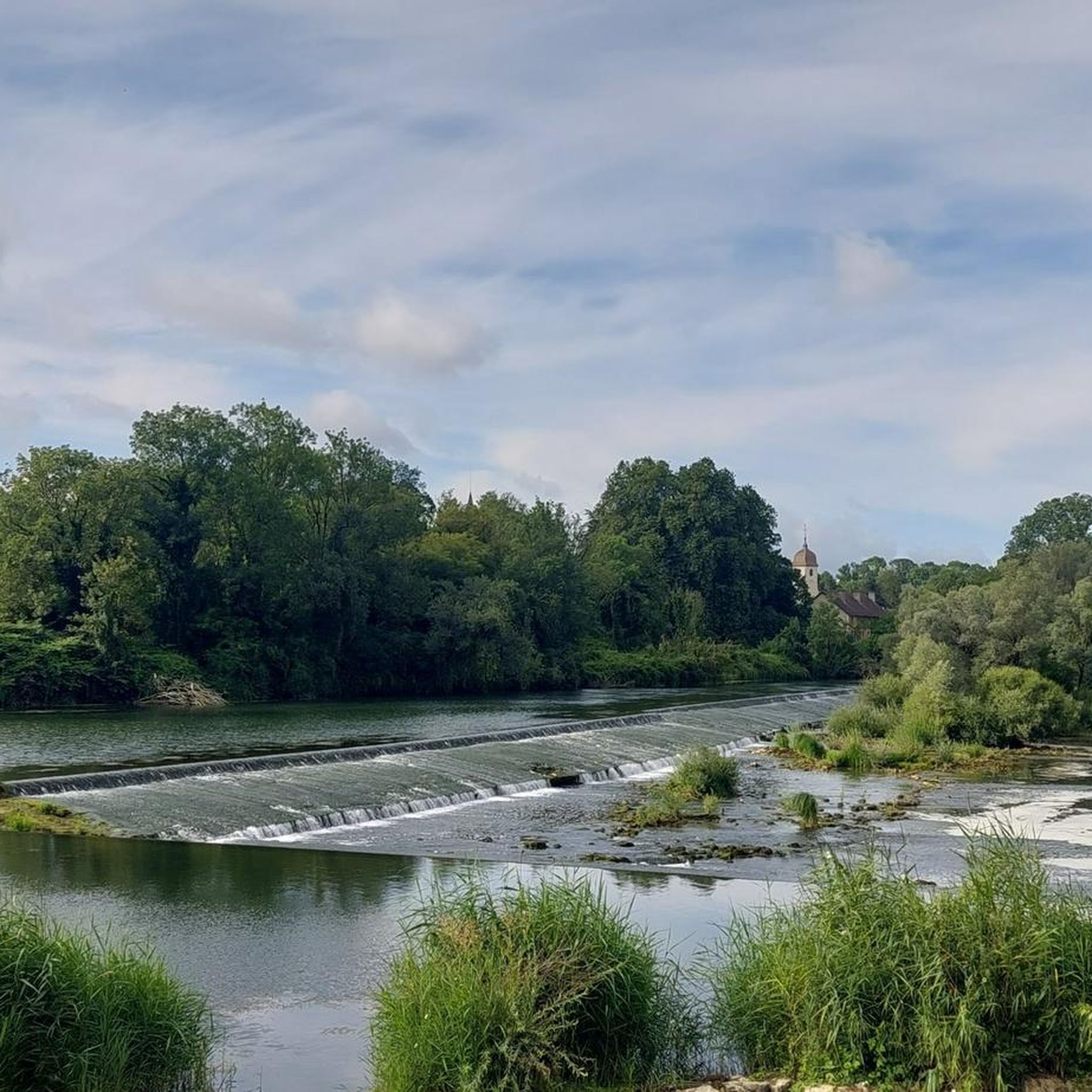
Cistercian abbey founded in 1136, it stands on the banks of the Ognon. The best preserved example of Cistercian architecture in Franche-Comté, it is still occupied by Cistercian-Trappist monks.
1
0

The Saint-Hilaire church originally dates from the 12th century and was remodeled in the late Gothic style in the early 17th century. It is richly decorated: an alabaster altar in the side chapel of d'Andelot (15th century) decorated with Renaissance-style marble, a marble statue of Mary (15th century) by Jean de La Huerta, a triptych (16th century) by Jacques Prévost, furniture, paneling and statues from the 16th to 18th centuries, a pulpit (16th century) by Claude Le Rupt and numerous tombstones. The former priory chapel has also been preserved. A stone cross from the 14th century stands in the cemetery; other stone wayside crosses from this period can be found in the town.
7
0
15th century fortified house Private historical monument Guided tours by appointment from May 1 to September 30 Tel: 03 84 31 23 23
6
0
Royal House 15th - 16th century Monument The initial function of this building remains obscure. The Royal House was probably integrated into the city's fortifications, constituting a real barrier between the border district and the town. This defensive role is suggested by the presence, on the southeast facade (river side), of loopholes and firing points. The large interior volume also suggests that the building was used as a warehouse.
7
0
Frequently Asked Questions
What historical sites can I visit near Sornay?
The region around Sornay is rich in history. You can explore the 16th-century Saint-Hilaire Gate in Pesmes, one of only two surviving gates of the town. The Historic Center of Marnay offers a glimpse into a prosperous medieval Comtoise town. Further afield, consider the UNESCO World Heritage site of the Royal Saltworks of Arc-et-Senans, an 18th-century industrial masterpiece, or the impressive Besançon Citadelle with its Vauban fortifications.
Are there any notable religious buildings or abbeys in the area?
Yes, the area features several significant religious sites. The Acey Abbey, a Cistercian abbey founded in 1136, is considered the best-preserved example of Cistercian architecture in Franche-Comté. You can also visit the 12th-century Romanesque Abbey of Tournus (Abbaye de Saint-Philibert) and the historic Abbaye de Cluny, both within a reasonable distance from Sornay.
Can I explore medieval towns near Sornay?
Absolutely. The Historic Center of Marnay is a characterful Comtoise town known for its medieval prosperity and unique charter of emancipation. Another excellent option is Pesmes: Medieval town., a former strategic location with preserved heritage including the Saint-Hilaire church and charming residences along the Ognon river.
What natural attractions are there around Sornay?
Nature lovers can enjoy the scenic views along the Seille River, a tributary of the Saône. For a more dramatic landscape, the Roche de Solutré, a prominent rock formation, offers hiking opportunities and panoramic vistas. The Cirque du Bout du Monde is another natural amphitheater known for its dramatic cliffs and beauty. Additionally, several remarkable gardens like Parc de l'Etang and Jardin du château du Talmay are open for exploration.
Are there opportunities for hiking or walking near Sornay?
Yes, the region offers various routes for walking and hiking. While Sornay itself is a gateway, you can find numerous trails nearby. For instance, there are several running trails around Sornay, including a moderate 9.5 km loop from Bresilley and a 9.7 km loop around Pagney-Jallerange. You can find more details and routes on the Running Trails around Sornay guide.
What cycling routes are available around Sornay?
Cyclists have options for both mountain biking and gravel biking. For mountain biking, consider routes like the 'Shelter on the Way of St. James. – Historic Center of Marnay loop' which is a moderate 37.3 km ride. Gravel biking enthusiasts can explore routes such as the 'Les Étangs de Noironte – Marnay Dam loop' from Lantenne-Vertière, a moderate 42.3 km journey. More routes are available in the MTB Trails around Sornay guide and the Gravel biking around Sornay guide.
Are there family-friendly attractions near Sornay?
Many of the historical and cultural sites are suitable for families. The Saint-Hilaire Gate, Historic Center of Marnay, and Acey Abbey are all categorized as family-friendly. Exploring medieval towns and abbeys can be an engaging educational experience for children. Additionally, the various gardens in the vicinity offer pleasant outdoor spaces for families.
What is the best time to visit Sornay for outdoor activities?
The best time to visit Sornay for outdoor activities is generally during the spring (April to June) and autumn (September to October) months. During these periods, the weather is typically mild and pleasant, ideal for hiking, cycling, and exploring historical sites without the intense heat of summer or the chill of winter. The natural landscapes are also particularly beautiful during these seasons.
Are there local markets to visit near Sornay?
Yes, several nearby towns host vibrant local markets. Louhans, just 3 km from Sornay, is famous for its Monday market. Tournus, about 22 km away, has a Saturday market, and Lons-le-Saunier, 29 km away, hosts a market on Thursdays. These markets are excellent places to experience local culture and find regional produce.
What do visitors particularly enjoy about the attractions near Sornay?
Visitors appreciate the rich historical and architectural heritage of the region. The Saint-Hilaire Gate is noted for its historical significance as one of Pesmes' last surviving gates. The Acey Abbey is admired for being a beautifully preserved example of Cistercian architecture. The characterful medieval towns like Marnay and Pesmes are also highly regarded for their unique charm and history.
Are there any accessible attractions for visitors with mobility concerns?
While specific accessibility details for all attractions are not always available, many historical centers and natural parks often have paved paths or accessible sections. For instance, the pedestrianized town center of Chalon-sur-Saône might offer easier navigation. It is recommended to check with individual sites like the Royal Saltworks of Arc-et-Senans or the Besançon Citadelle directly for their specific accessibility provisions before visiting.
Are there any lesser-known or 'hidden gem' attractions worth discovering?
Beyond the main highlights, consider exploring the Royal House in Pesmes, a 15th-16th century fortified house with a rich history, offering guided tours by appointment. The various smaller churches like Eglise de Saint Pierre de Brancion and Eglise de Saint Martin in Chapaize also offer unique architectural and historical insights away from the more crowded sites. Additionally, the gardens such as Jardin à la Faulx provide tranquil, less-frequented spots for relaxation.

Get inspired with the komoot mobile app


Explore more
Still not found the Highlight you’re looking for? See guides of the top attractions in other regions:
