Attractions and Places To See around Bellefontaine - Top 20
Attractions and places to see around Bellefontaine, France, offer a diverse range of historical and natural sites. This region, located in the Vosges department, features significant historical landmarks and scenic routes. Visitors can explore a mix of cultural heritage and outdoor activities, including cycling paths and historical fortifications.
Best attractions and places to see around Bellefontaine
- The most popular attractions is Fort du Parmont, a historical site built between 1874 and 1876 as part of the barrier de fer.…
Last updated: July 6, 2026
Intersection of the Voie Verte des Hautes-Vosges
Highlight • Cycleway
More information: de.wikipedia.org/wiki/Bahnzeile_%C3%89pinal%E2%80%93Bussang, fr.wikipedia.org/wiki/Ligne_de_Remiremont_%C3%A0_Cornimont and www .paysderemiremont.fr/voieverte/
Translated by Google •
Tip by

Fort du Parmont
Highlight • Historical Site
And thus a forerunner of the built in 1930 Maginot Line.
Translated by Google •
Tip by

Sign up now to discover places like this
Get recommendations on the best single tracks, peaks, & plenty of other exciting outdoor places.
Sign up for free
Saint-Pierre Abbey of Remiremont
Highlight • Religious Site
Translated by Google •
Tip by

Hérival Priory
Highlight • Other
Translated by Google •
Tip by

Former railway bridge over the Moselle near Remiremont
Highlight • River
Former railway lines and beautiful cycle paths.
More information: de.wikipedia.org/wiki/Bahnzeile_%C3%89pinal%E2%80%93Bussang, de.wikipedia.org/wiki/Remiremont and paysderemiremont.fr /voieverte/
Translated by Google •
Tip by
Sign up for free to discover even more attractions around Bellefontaine.
Sign up for free
Already have an account?
Start today with a free account
Your next adventure awaits.
Login or Signup

Tips from the Community

This is the first bicycle roundabout I've ever seen. But it makes sense.
0
0

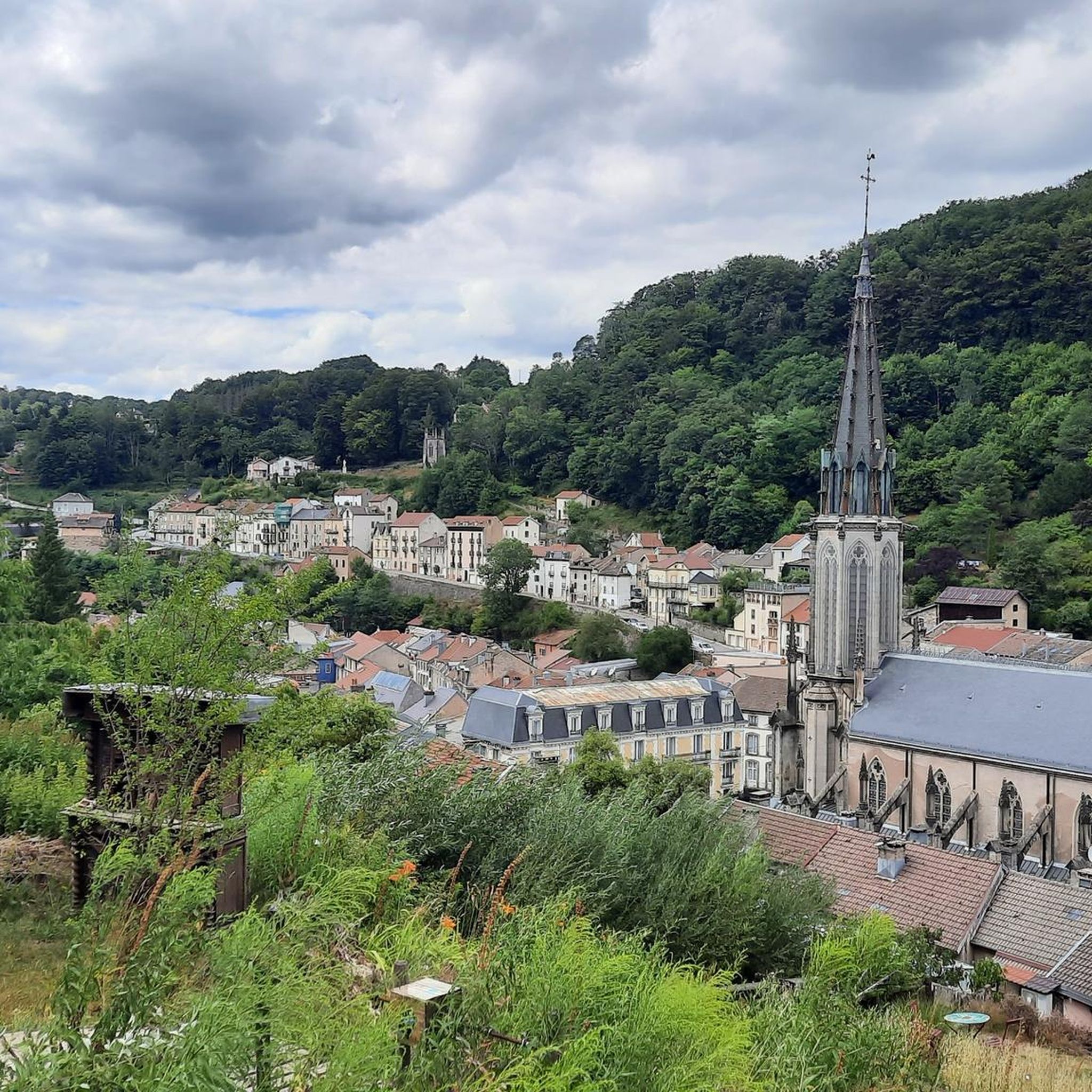
High place in Romarimontan history, the Saint Pierre de Remiremont Abbey Church - built from the 11th century - is the result of the superposition of 2 Romanesque and Gothic churches which are classified as monuments historical records since 1983. The history of the abbey church is closely linked, until the Revolution, to that of the Chapter of Ladies Canonesses. This building, built mainly in the 13th century in its upper part, presents a contrast between the sobriety of the Gothic style nave and the richness of the choir in marble and plasterwork. The underground church, made up of three chapels, dates from the 11th century and presents wall paintings from the 14th and 15th centuries. Thanks to major renovation work from 1988 until the year 2000, the church is in an excellent state of conservation, exterior (roofs redone, facades renovated, etc.) and interior with original colors and simple and simple shapes. purified found. This former church of the Chapter of the Noble Ladies of Remiremont, which became a parish church during the French Revolution, constitutes the center of the canonical district made up of the houses of the canonesses and the abbey palace which today houses the town hall. Its renovation made it possible to highlight wall frescoes from the 14th and 15th centuries in the crypt, as well as original keystones representing magnificent painted suns dated 1495 in the upper part. Excavations have shown the existence, below the Romanesque level, of an earlier construction which would be the Carolingian chapel of the royal domain of Louis the Pious. The building houses many notable elements including one of the city's treasures: the “Statue Notre Dame du Trésor” whose originality is linked to a mixture of Byzantine and Romanesque art. It also houses a 15th century statue of Saint Nicholas carved from Meuse limestone, a copy of a painting by Velázquez “Christ Crucified” as well as a monumental altarpiece in black marble and white limestone which houses the relics. of the saints founder of the Saint-Mont… Built in Vosges sandstone, the Saint-Pierre church has a sober tower with a bulbous bell tower which gives it a characteristic silhouette and the north transept houses a Renaissance-style portal with quality decorations. https://www.tourisme.vosges.fr/decouvre/sites-monuments/885000541-leglise-abbatiale-saint-pierre-remiremont
1
0

The Fort du Parmont was built between 1874 and 1876. It is a structure that is part of the fortifications of eastern France of the Séré de Rivières type. It is located in the municipality of Remiremont and is part of the defensive curtain of the Upper Moselle (Wikipedia). Unfortunately, the fort was closed and we were unable to visit it.
2
0

Here the railway line was expanded to two tracks. This bridge over the Moselle is a witness to this time. One half of the bridge is very well developed as a voie verte, the other half has been left in its original state.
1
0

For the simple reason that we need to know the stories that concern us close to home. THANKS
0
0

A roundabout for cyclists only. . . where else is this? The junction of the Voie Verte des Hautes Vosges railway cycle path was designed very beautifully and lovingly. One branch leads into the valley of the Moselotte to Cornimont, the other in the valley of the young Moselle to its source at Bussang
1
0

A roundabout for cyclists.
1
0

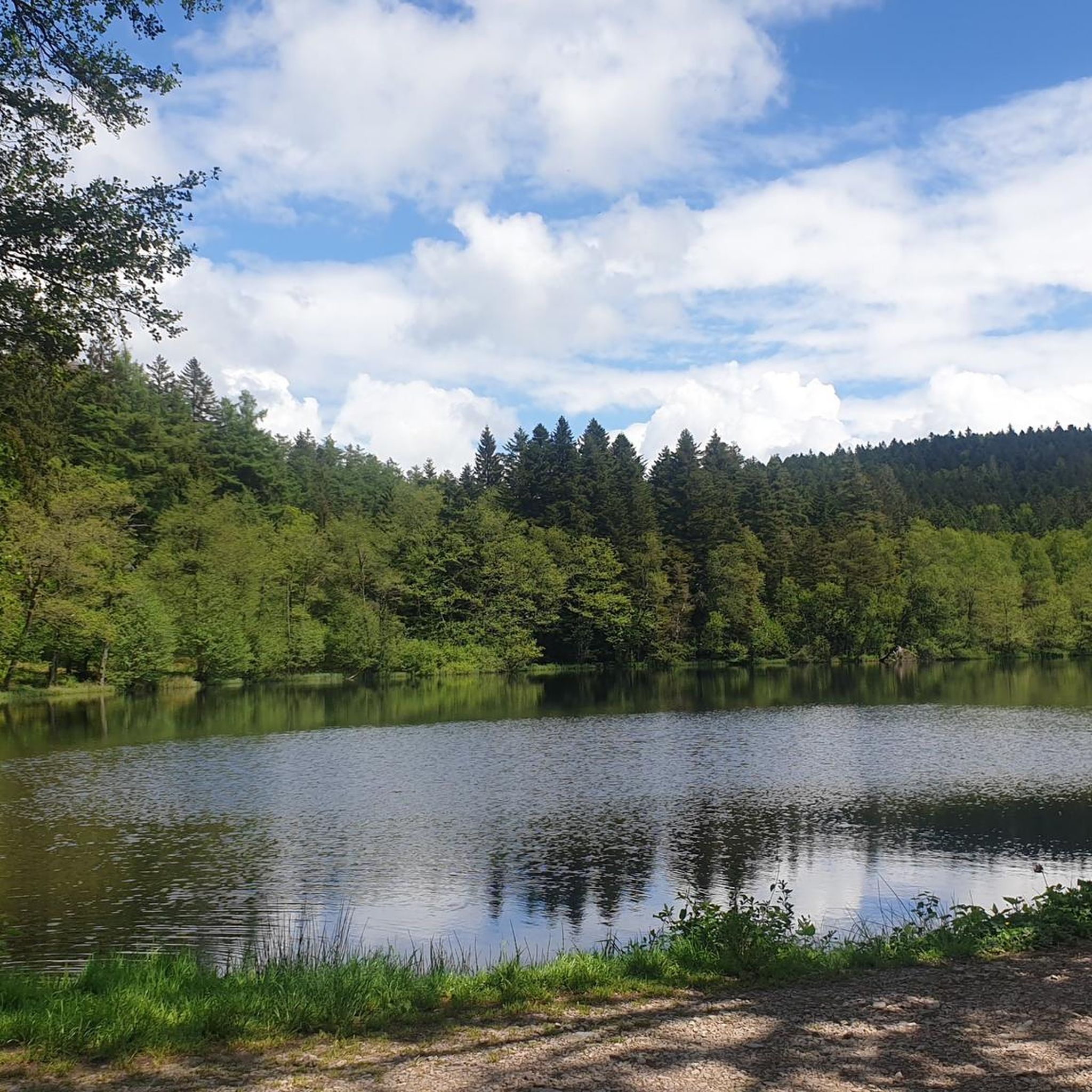
Very quiet road with a fairly random surface. Located in the valley of Combeauté, in Val d'Ajol, the natural site of the meadows of Hérival combines ecological interest and historical heritage. In 1090, the hermit Engidald settled in the valley but it was probably in the 13th century that a larger community of monks took place in the current priory of Hérival. To support themselves, they created a pond for fish farming and the meadows were used for agriculture and medicine (medicinal plants). After the Revolution and the eviction of the monks, the set of buildings that constituted the Priory of Hérival for centuries was abandoned, but traditional agriculture still remained in this remote area. Today, the Priory has become a private property and the surrounding meadows are recognized for their ecological value since they have been listed since 2005 in the inventory of Sensitive Natural Spaces of the Vosges Department. (Source: https://espacesnaturels.vosges.fr/les-ens/31-sites-a-visiter/les-prairies-du-prieure-dherival)
0
0
Frequently Asked Questions
What historical sites can I visit around Bellefontaine?
The region is rich in history. You can explore Fort du Parmont, a significant historical site built between 1874 and 1876 as part of the 'barrier de fer'. Another must-see is Saint-Pierre Abbey of Remiremont, an abbey church with parts dating back to the 11th century, showcasing Romanesque and Gothic styles. Also, consider Hérival Priory, a former monastery combining ecological interest with historical heritage.
Are there cycling routes near Bellefontaine's attractions?
Yes, Bellefontaine is known for its cycling routes. A notable one is the Intersection of the Voie Verte des Hautes-Vosges, a beautifully designed branch of former railway lines now converted into cycle paths. This railway cycle path is one of the longest asphalted ones in Europe, running largely uninterrupted through the Vosges valleys. For more cycling options, check out the Cycling around Bellefontaine guide.
What kind of outdoor activities can I do near these attractions?
Beyond cycling, you can find various outdoor activities. There are numerous MTB Trails around Bellefontaine, with routes ranging from moderate to difficult. If you prefer running, explore the Running Trails around Bellefontaine, which include scenic loops like the 'Forêt domaniale de Thibémont loop'.
What is the significance of Fort du Parmont?
Fort du Parmont was constructed between 1874 and 1876 as a crucial part of the 'barrier de fer' (iron barrier) on the border with Germany. It served as a forerunner to the later Maginot Line, offering insights into 19th-century defensive architecture. The fort is located above the town of Remiremont.
Can I visit Saint-Pierre Abbey of Remiremont?
Yes, Saint-Pierre Abbey of Remiremont is open to visitors. This abbey church, with parts dating from the 11th century, features a blend of Romanesque and Gothic styles. Its underground church contains 14th and 15th-century wall paintings, and the building houses notable elements like the 'Statue Notre Dame du Trésor'.
What is the Voie Verte des Hautes-Vosges?
The Voie Verte des Hautes-Vosges is a railway cycle path that runs through the Vosges region, following the valleys of the Moselle and Moselotte rivers. It's recognized as one of Europe's longest asphalted railway cycle paths, offering a smooth and largely uninterrupted ride. You can find an intersection of this route near Remiremont.
Are there any natural features or scenic viewpoints to enjoy?
While the region is known for its historical sites and cycle paths, you can also appreciate natural beauty. The Hérival Priory is situated in the valley of Combeauté, offering a natural site with ecological interest. Additionally, the Former railway bridge over the Moselle near Remiremont provides a beautiful view of the Moselle river.
What do visitors enjoy most about the attractions around Bellefontaine?
Visitors particularly appreciate the blend of historical significance and outdoor activity opportunities. The historical sites like Fort du Parmont and Saint-Pierre Abbey offer deep dives into the region's past, while the extensive network of cycling and running trails, especially the Voie Verte, provides excellent ways to explore the scenic landscapes. The komoot community has shared over 24 photos and given more than 50 upvotes for these attractions.
Is Hérival Priory still active or just a historical ruin?
Hérival Priory is a former monastery, and while parts of the original building are still present and inhabited, it's recognized for its historical heritage and ecological value. The surrounding meadows are listed in the inventory of Sensitive Natural Spaces of the Vosges Department.
Are there any bridges of interest in the area?
Yes, the Former railway bridge over the Moselle near Remiremont is a notable point of interest. This bridge, which once carried a railway line, now offers beautiful views of the Moselle river and is part of the well-developed cycle paths in the region.
Are the cycling paths around Bellefontaine suitable for all skill levels?
The cycling paths, such as the Voie Verte des Hautes-Vosges, are generally well-maintained and largely asphalted, making them accessible for various skill levels. However, some of the dedicated Cycling around Bellefontaine routes can be quite challenging, with some listed as 'difficult' due to distance or elevation changes. It's advisable to check individual route details for difficulty.
Most popular routes around Bellefontaine
Most popular attractions around Bellefontaine

Get inspired with the komoot mobile app


Explore more
Still not found the Highlight you’re looking for? See guides of the top attractions in other regions:
