Attractions and Places To See around La Mouche - Top 18
Best attractions and places to see around La Mouche are primarily found in the Normandy region of France, near the historic town of Avranches. This area is known for its rich cultural heritage, featuring significant abbeys and historical sites. The landscape includes river valleys and elevated points that offer panoramic views, particularly towards the Mont Saint-Michel Bay. It is a region with 18 hidden gems waiting to be explored.
Best attractions and places to see around La Mouche
- The most popular attractions is Abbaye de La Lucerne, a religious building that showcases Anglo-Norman architecture between Romanesque and Gothic styles. Founded in 1143, this well-preserved abbey is set in the wooded Thar Valley.
- Another must-see spot is Gilbert Bridge over the Sée, a bridge connecting Avranches and Marcey-les-Grèves. This pedestrian and cycle bridge provides a useful crossing over the Sée river, appreciated by cyclists for its gentle ramp.
- Visitors also love Château d'Avranches, a castle built around 950. Located on a rock, it offers views over the bay of Mont-Saint-Michel and the Sée valley.
- La Mouche is known for its historical sites, religious buildings, and viewpoints. The region offers a variety of attractions to see and explore, from ancient abbeys to scenic bridges and castle ruins.
- The attractions around La Mouche are appreciated by the komoot community, with 32 photos shared and 148 upvotes across the highlights.
Last updated: August 24, 2026
Abbaye de La Lucerne
Highlight • Religious Site
Translated by Google •
Tip by

Château d'Avranches
Highlight • Castle
Translated by Google •
Tip by

Sign up now to discover places like this
Get recommendations on the best single tracks, peaks, & plenty of other exciting outdoor places.
Sign up for free
Kirche Notre-Dame-des-Champs
Highlight • Historical Site
Translated by Google •
Tip by
Thomas Becket Square
Highlight • Monument
Translated by Google •
Tip by

Gilbert Bridge over the Sée
Highlight • Bridge
Translated by Google •
Tip by
Sign up for free to discover even more attractions around La Mouche.
Sign up for free
Already have an account?
Start today with a free account
Your next adventure awaits.
Login or Signup



Tips from the Community


At the end of the old town, in the extension of Place Daniel Huet, the old square was reorganized into three areas. To the south of the square, according to the plans of the former Bishop of Avranches, 21 trees with hawthorn stems were planted near a children's playground. Faithful to the plan of the archaeologist who excavated the site in the 1970s, the architect realized the nave of the cathedral with a low granite wall crowned with an oak crossbeam on which one could sit. The tombstone commemorating the penance of King Henri Plantagenêt was replaced in the place of the north portal. A triple arcade in Corten steel 6 meters high symbolizes the main gate of the disappeared building and two faceted masts 33 meters high, the towers. Like sentinels or a signal over the bay, these masts are also and above all enormous lightning rods, which the city did not have. The overhanging forecourt offers a breathtaking panoramic view of the bay and the Sée valley. Free access. https://www.wikimanche.fr/Square_Thomas-Becket_(Avranches)
0
0

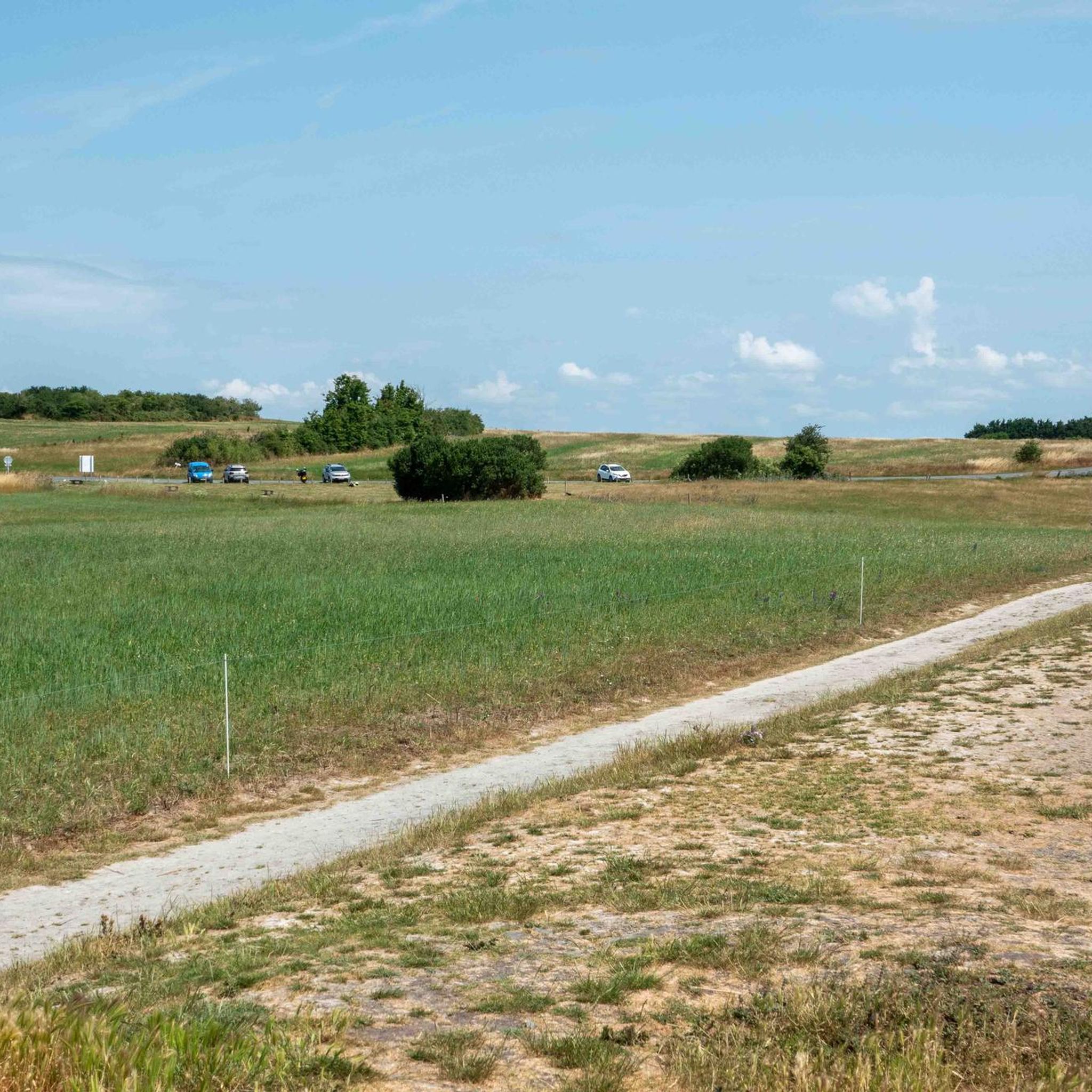
The “Pont Gilbert - Passerelle de la Sée” is a pedestrian and bicycle bridge that connects Avranches and Marcey-les-Grèves. This bridge is located on the site of a historic bridge and has a ramp for a gentle climb and easy crossing to the other side of the river. It is a very useful bridge and recommended by cyclists. The bridge is also one of the highlights in the Vernix region.
4
0

At the site of the historic bridge there is now a very useful pedestrian and cycle bridge with a ramp for gently climbing and crossing to the other side of the small river.
2
0
The old Notre-Dame des Champs church was located, as its name suggests, outside the city, to the south. This very simple church, known from a photo and a few engravings, dates from the end of the 17th century. Having become too small and work becoming necessary, the idea was accepted, around 1855, of constructing a new building, especially after the collapse of the Saint-André cathedral. Plans and an estimate were drawn up by the architect Nicolas Théberge, architect from La Manche and “child of the parish”. We also owe the latter other buildings in the neo-Gothic style such as Saint-Patrice du Teilleul in 1851, Saint-Hilaire-du-Harcouët in 1855, Saint-Pair de Sartilly or Sainte-Croix de Saint-Lô in 1860. However, it was not until April 12, 1863 to witness the laying of the first stone. The "neo-Gothic" style decided on by the architect involves the construction of a building with bold proportions that completely break with those of the modest church that we wish to replace. The means of the city and the parish were insufficient, especially since the reconstruction of Saint-Gervais had been very expensive, and in 1865 the mayor of Avranches and the archpriest traveled to Paris to seek help state finance. This long-requested aid was not finally granted until 1876 and the consecration of the church by Bishop Germain took place on November 13, 1892. The slow construction of the building was marred by many sometimes tragic events such as, in 1868, the death of a twenty-seven-year-old mason who fell from the height of the rose window where he was working. The architect Théberge, who died in 1866, was replaced by Cheftel. Delayed by the First World War, which mobilized all the workforce, the two towers of the facade were completed between 1926 and 1937; at this time, the large organs were also installed, the wind tunnel of which immediately benefited from electricity. In June 1944, the church was seriously damaged by a fire following the bombardment of the city. Restoration work lasted several years and the reopening to worship only took place in February 1962. The church is in the form of a nave with a façade with two towers (unfinished arrows), a projecting transept, and an ambulatory choir with an axial chapel (never built)1. The church had been provided with a set of windows signed Duhamel-Marette, destroyed by the bombings of 1944
0
0
At the end of the old town, in the extension of Place Daniel Huet, the old square has been reorganized into three spaces. To the south of the square, as on the plans of the former bishop of Avranches, 21 trees, hawthorns on stems, have been planted near a children's play area. Faithful to the plan provided by the archaeologist who excavated the site in the 1970s, the architect materialized the nave of the cathedral with a low granite wall topped with an oak crosspiece on which to sit. The funerary slab, which commemorates the penance of King Henri Plantagenêt, has been replaced at the location of the north portal. A triple arcade in Corten steel 6 meters high symbolizes the main door of the building that has disappeared and two faceted masts of 33 meters, the towers. Like watchmen or a signal over the bay, these masts are also and above all formidable lightning rods which the city did not have. In front, overhanging, the forecourt offers a breathtaking panoramic view of the bay and the Sée valley. Free access. https://www.wikimanche.fr/Square_Thomas-Becket_(Avranches)
1
0

This former fortified castle was built in the 10th century to protect the city from Breton attacks. Located on a rock, it offers beautiful views over the bay of Mont-Saint-Michel and the Sée valley.
2
0

Small paved cycle path that spans the Sée with the lock. Quiet and practical, it passes without problem on a road bike.
0
0
Frequently Asked Questions
What kind of attractions can I expect to find around La Mouche?
The area around La Mouche, primarily located in the Normandy region of France near Avranches, is rich in historical and cultural sites. You'll find significant abbeys, ancient castles, and scenic viewpoints. The landscape also offers opportunities for outdoor activities along river valleys.
Are there historical sites to visit near La Mouche?
Yes, the region boasts several notable historical sites. Key attractions include Abbaye de La Lucerne, a well-preserved abbey showcasing Anglo-Norman architecture, and Château d'Avranches, a 10th-century castle offering historical insights and panoramic views. You can also visit Kirche Notre-Dame-des-Champs, a church with a rich history in Avranches, and the Scriptorial d'Avranches, a museum dedicated to Mont Saint-Michel manuscripts.
What are some family-friendly activities in the La Mouche area?
Families visiting La Mouche have several options. The Abbaye de La Lucerne and Château d'Avranches are both listed as family-friendly historical sites. Additionally, the region research mentions the Zoo de Champrepus and Royal Kids, an indoor play area in Saint-Jean-des-Champs, as great options for children.
Can I find places with scenic views around La Mouche?
Absolutely. Château d'Avranches, perched on a rock, offers beautiful views over the bay of Mont Saint-Michel and the Sée valley. Similarly, Thomas Becket Square in Avranches provides a breathtaking panoramic view of the bay and the Sée valley.
Are there opportunities for outdoor activities like cycling or running near La Mouche?
Yes, the area around La Mouche is well-suited for outdoor enthusiasts. You can find numerous routes for cycling and running. For example, there are several running loops from nearby towns like La Haye-Pesnel and Le Tanu. Cyclists can enjoy routes such as the 'Abbaye de La Lucerne – Abbaye de La Lucerne loop' or the 'Jullouville Beach – Saint-Aubin Church loop'. You can explore more options on the Cycling around La Mouche and Running Trails around La Mouche guide pages.
What makes Abbaye de La Lucerne a significant attraction?
Abbaye de La Lucerne is a very beautiful and well-preserved abbey, founded in 1143 in the wooded Thar Valley. It stands as a remarkable example of Anglo-Norman architecture, blending Romanesque and Gothic styles. Visitors appreciate its luminosity, authentic environment, and the extensive restoration work that has made it one of France's most complete examples of medieval Premonstratensian architecture. Your entrance fees contribute directly to its ongoing preservation.
Is the area around La Mouche suitable for mountain biking?
Yes, there are mountain biking trails available near La Mouche. Routes like the 'Abbaye de La Lucerne – Abbaye de La Lucerne loop' from Sartilly-Baie-Bocage or Beauchamps offer varying difficulty levels. The 'Tour du bocage – Tour of the Bocage loop' from Ponts is a more challenging option. Discover more routes on the MTB Trails around La Mouche guide page.
Are there any accessible attractions for visitors with mobility needs?
The Gilbert Bridge over the Sée is noted as wheelchair accessible. This pedestrian and cycle bridge connects Avranches and Marcey-les-Grèves and features a gentle ramp, making it easy to cross the river.
What do visitors particularly appreciate about the attractions around La Mouche?
Visitors frequently praise the historical depth and natural beauty of the region. The Abbaye de La Lucerne is often highlighted for its preservation and serene park. The Château d'Avranches and Thomas Becket Square are loved for their stunning panoramic views, especially towards Mont Saint-Michel Bay. The community has shared 32 photos and given 148 upvotes across the highlights, indicating strong appreciation for the area's charm and historical significance.
What is the best time to visit La Mouche attractions?
While there's no specific data provided, the Normandy region generally offers pleasant weather for exploring historical sites and enjoying outdoor activities from late spring through early autumn (May to September). This period typically provides milder temperatures and more sunshine, ideal for sightseeing and walking.
Are there any unique bridges or architectural features to see?
Yes, the Gilbert Bridge over the Sée is a notable feature. This pedestrian and cycle bridge connects Avranches and Marcey-les-Grèves, providing a practical and scenic crossing over the Sée river, appreciated by cyclists for its gentle ramp.
Can I find any religious buildings of interest in the area?
Certainly. The Abbaye de La Lucerne is a prime example, showcasing impressive Anglo-Norman architecture. Additionally, the Kirche Notre-Dame-des-Champs in Avranches is a significant historical church that was rebuilt after wartime damage, offering a glimpse into the region's religious heritage.
Most popular routes around La Mouche

Get inspired with the komoot mobile app


Explore more
Still not found the Highlight you’re looking for? See guides of the top attractions in other regions:
