Attractions and Places To See around Le Plessis-Lastelle - Top 20
Best attractions and places to see around Le Plessis-Lastelle include a range of historical and architectural sites. This region in Normandy, France, offers opportunities to explore ancient ruins, medieval castles, and religious buildings. The landscape around Le Plessis-Lastelle provides a backdrop for discovering these cultural landmarks.
Best attractions and places to see around Le Plessis-Lastelle
- The most popular attractions is Ruins of Saint-Thomas Church, a historical site that dates back to the 12th century. Its detailed carvings and Gothic…
Last updated: May 21, 2026
La Haye-du-Puits Castle
Highlight • Other
Translated by Google •
Tip by

Abbey of the Holy Trinity of Lessay
Highlight • Religious Site
Translated by Google •
Tip by

Sign up now to discover places like this
Get recommendations on the best single tracks, peaks, & plenty of other exciting outdoor places.
Sign up for free
Abbey Church of the Holy Cross
Highlight • Religious Site
Translated by Google •
Tip by
Eglise Saint Georges
Highlight • Other
Translated by Google •
Tip by

Ruins of Saint-Thomas Church
Highlight • Historical Site
Translated by Google •
Tip by

Sign up for free to discover even more attractions around Le Plessis-Lastelle.
Sign up for free
Already have an account?
Start today with a free account
Your next adventure awaits.
Login or Signup

Tips from the Community

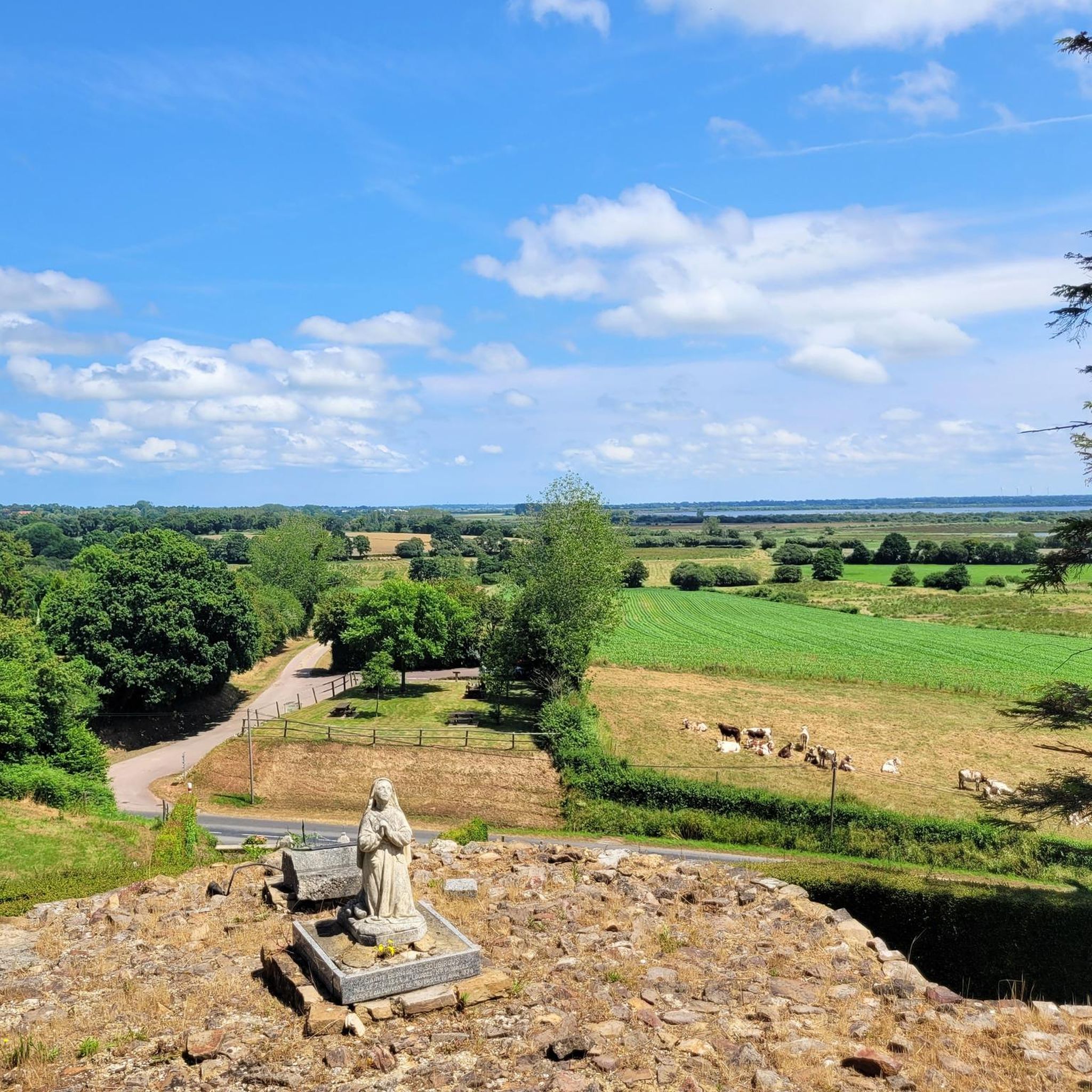
At the ruins of St. Thomas Church, you’ll immerse yourself in the tranquil beauty of this historic site, surrounded by the rolling hills of the Normandy countryside. The church dates back to the 12th century. During your visit, be sure to observe the detailed carvings and remains of the church’s Gothic architecture. The tranquil setting, combined with an air of medieval history, makes these ruins a peaceful and reflective visit as you hike.
2
0

Very simple abbey church from the 12th century. One of the first with cross-ribbed vaults.
0
0

This church was not dedicated to one of the many people who died as martyrs (witnesses of faith) for their Christian beliefs, or who we venerate as blessed or saints because of their exemplary way of life. Rather, this parish has chosen God himself - in the "Holy Trinity" - as its patron saint. According to Christian teaching, we believe in ONE God who exists in THREE persons - God the Father, God the Son (Jesus Christ) and the Holy Spirit. The following description can be found on the EKD (Evangelical Church in Germany) website: "The word tries to express the seemingly impossible, namely that God is three and one at the same time. To understand this, it helps to consider how people have experienced God throughout history: as a creator who loves his world and people like a father loves his children. As a God who became human himself in Jesus Christ, his son, and shared human life. And finally as God who is still present and alive among people in the Holy Spirit.”
0
0

Abbey dating from the 11th Century. Roman style, it is very well preserved, and clearly visible from your bike!
0
0
Norman castle dating from the 11th century. It remains private property, but you can stop and admire its exterior.
0
0

The Château de La Haye-du-Puits is located in the commune of La Haye, in the Manche department, 20 km southeast of Barneville-Carteret. Built in the 11th century by the local lord Tristin, on a mound, it passed to a seneschal of the King of England at the end of the same century. During the Hundred Years' War, on the other hand, the seat of the Barony of The Hague passed to a loyalist of the King of France who was, however, soon stripped of the property... Of this primitive fortress, all that remains is a square keep (5 m on each side), 20 high, housing a staircase and on which we can still see the elements which made it possible to operate the drawbridge, as well as some beginnings of the curtain walls which adjoined it. A more residential manor, from the 16th and 17th centuries, with turrets and vaulted cellars, succeeded the original castle: it is visible on the other side of the street. The interiors of the old keep, listed since 1840, are closed to the public for security reasons but its surroundings are accessible. Information panels have been installed. The nearby manor house with a Renaissance-style door has remained privately owned. Its exterior elements can be observed from the street.
1
0
The church was built in two phases. The apse, the choir, the transept and two bays of the nave with associated vaults were finished when Eudes au Capel died in 1098. The remaining bays followed a few years later. The beautiful Romanesque abbey church was rebuilt with great care after the Second World War. As many original materials as possible were used. Particularly striking are the clean lines of the apse against the flat rear wall with a gable. The squat square bell tower and the slate roofs from La Hague are also worth seeing.
3
0
The church was built in two phases. The apse, the choir, the transept and two bays of the nave with associated vaults were finished when Eudes au Capel died in 1098. The remaining bays followed a few years later. The beautiful Romanesque abbey church was rebuilt with great care after the Second World War. As many original materials as possible were used. Particularly striking are the clean lines of the apse against the flat rear wall with a gable. The squat square bell tower and the slate roofs from La Hague are also worth seeing.
5
0
Frequently Asked Questions
What historical sites can I explore around Le Plessis-Lastelle?
The region offers several significant historical sites. You can visit the Ruins of Saint-Thomas Church, a 12th-century site with Gothic architecture. Another notable spot is the Abbey Church of the Holy Cross, an 11th-century Romanesque building rebuilt after World War II. The Abbey of the Holy Trinity of Lessay also showcases impressive Romanesque architecture from around 1100.
Are there any ancient castles to visit in the area?
Yes, you can see La Haye-du-Puits Castle, a Norman castle dating from the 11th century. While it remains private property, you can admire its exterior, including a square keep and a 16th/17th-century residential manor.
What religious buildings are notable around Le Plessis-Lastelle?
Beyond the abbeys, you can visit Eglise Saint Georges, which features a belfry with four sloping roofs, a 19th-century nave, and a 13th-century rectangular chancel. It also preserves vestiges of its medieval history, including a 12th-century tower.
Are there family-friendly attractions around Le Plessis-Lastelle?
Yes, both the Abbey Church of the Holy Cross and the Abbey of the Holy Trinity of Lessay are considered family-friendly historical sites, offering an engaging way to explore the region's past.
What outdoor activities can I do near the attractions around Le Plessis-Lastelle?
The area offers various outdoor activities. You can explore numerous cycling routes, including road cycling and touring bicycle options, or enjoy running trails. For detailed routes and guides, check out the Road Cycling Routes around Le Plessis-Lastelle, Cycling around Le Plessis-Lastelle, and Running Trails around Le Plessis-Lastelle guides.
Are there cycling routes near these historical sites?
Yes, there are several cycling routes that pass by or near historical sites. For example, you can find routes like the 'Abbey Church of the Holy Cross – Pirou-Plage loop' or the 'Voie Verte in Mont Saint Michel – Ruins of Saint-Thomas Church loop'. You can find more options in the Cycling around Le Plessis-Lastelle guide.
What is the best time to visit Le Plessis-Lastelle attractions?
Normandy generally offers pleasant weather for exploring historical sites from spring through early autumn (April to October). During these months, you'll find comfortable temperatures for walking and sightseeing.
Are there any easy hiking or walking trails near Le Plessis-Lastelle attractions?
While the guide focuses on attractions, the region offers various walking opportunities. Some running routes are of moderate difficulty, such as the 'Étang du Mont Castre loop' (9.3 km) or the 'Running loop from Auvers' (5.3 km). These can be adapted for walks. For more details, refer to the Running Trails around Le Plessis-Lastelle guide.
What architectural styles are prominent in the historical buildings of Le Plessis-Lastelle?
The region prominently features Romanesque and Gothic architectural styles. The Abbey Church of the Holy Cross and the Abbey of the Holy Trinity of Lessay are excellent examples of Romanesque design, while the Ruins of Saint-Thomas Church display detailed Gothic elements.
Can I find circular walks near Le Plessis-Lastelle?
Yes, many of the cycling and running routes in the area are designed as loops, which can be suitable for circular walks. For instance, the 'Étang du Mont Castre loop' is a running trail that forms a circular path. You can explore options in the Running Trails around Le Plessis-Lastelle guide for routes that fit your preference.
What do visitors enjoy most about the attractions around Le Plessis-Lastelle?
Visitors appreciate the tranquil beauty and historical depth of the sites. The detailed carvings and Gothic architecture of the Ruins of Saint-Thomas Church offer a peaceful and reflective experience. The consistent Romanesque style and careful reconstruction of the abbeys, like the Abbey of the Holy Trinity of Lessay, are also highly valued.
Most popular routes around Le Plessis-Lastelle

Get inspired with the komoot mobile app


Explore more
Still not found the Highlight you’re looking for? See guides of the top attractions in other regions:
