The best road cycling routes around Saint-Hilaire-Sur-Erre
4.1
(23)
877
riders
247
rides
Road cycling routes around Saint-Hilaire-Sur-Erre traverse a landscape characterized by the Huisne Valley and the Perche Natural Park. The terrain features a mix of hills and forests, including areas like the Bois des Baronnières and Bois de Beauvais, providing varied backdrops for rides. This region offers undulating topography with both challenging climbs and well-paved, moderate routes.
Best road cycling routes around Saint-Hilaire-sur-Erre
- The most popular road cycling route is Saint Remy Church – Sainte-Gauburge Priory loop from Nogent-le-Rotrou, a…
Last updated: July 4, 2026
8
riders
55.4km
02:28
510m
510m
Moderate road ride. Good fitness required. Mostly well-paved surfaces and easy to ride.
8
riders
39.1km
01:52
400m
400m
Moderate road ride. Good fitness required. Some segments of this route may be unpaved and difficult to ride.

Sign up for free
6
riders
40.0km
01:54
480m
480m
Moderate road ride. Good fitness required. Mostly well-paved surfaces and easy to ride.
6
riders
40.0km
01:52
440m
450m
Moderate road ride. Good fitness required. Mostly well-paved surfaces and easy to ride.
3.0
(1)
3
riders
34.9km
01:35
310m
310m
Moderate road ride. Good fitness required. Mostly well-paved surfaces and easy to ride.
Get access to more routes and recommendations from other explorers.
Sign up for free
Already have an account?
Our route recommendations are based on thousands of hikes, rides, and runs completed by other people on komoot.
Start today with a free account
Your next adventure awaits.
Login or Signup



Tips from the Community

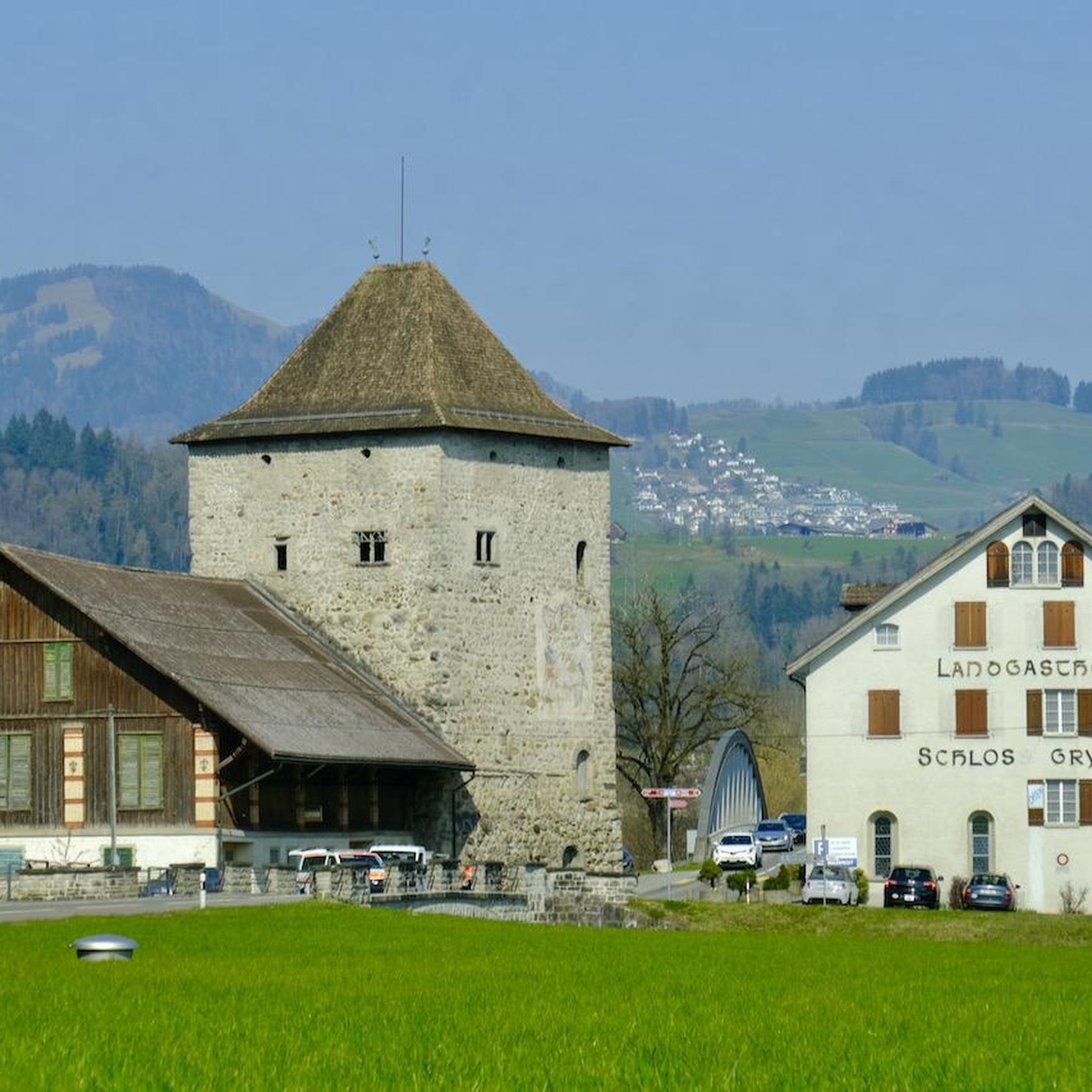
This ancient fortified castle dominates the Huisne Valley at 360° with its imposing keep. The building, with its troubled history, has undergone numerous modifications in its architecture and functions. A visit is essential to understand the complexity of its history and to observe the architectural evolutions.
0
0

The church of Saint-Germain-des-Grois, dedicated to Saint Germain, is a charming church in the canton of Rémalard in the heart of Perche. Built in the Romanesque style with its 12th-century choir, it was considerably enlarged during the 15th and 16th centuries, the periods in which the construction of the side aisles took place. The church was under the jurisdiction of the abbey of Saint-Lomer-de-Blois for its presentation to the parish priest. Its curious exterior volume attracts even more attention as the right wing of a building adjoining the church largely obscures the left side of its façade, in line with the aisle; this construction, moreover, resembles that of an old priory. The building consists of a nave of three bays, flanked by side aisles opening onto the central nave through large arches with a broken profile resting on large circular piers and a choir of one bay in the extension of the central nave ending in a flat chevet. A modest sacristy adjoins the building to the southeast. Outside, the side aisles are covered with successive gables, with the exception of the first bay of the north aisle covered by a square-plan, squat bell tower whose exterior volume, close to that of a bell tower, barely dominates the roof of the building which leans against its base. The three gables covering the right aisle do not follow an identical profile, the slope of the framework and the roof of the first of them, to the west, having been the subject of a significant restoration in the 19th century. At the same time, the two gables of the north aisle were also restored. As for the choir, of smaller volume, it has retained on its north and south sides a cornice with modillions; it constitutes the oldest part of the building. Inside, the nave is covered with a recently restored paneled vault, while the side aisles are vaulted on ribbed vaults, the ribs of which are received by ornate corbels. The church is lit thanks to the large bays with radiating tracery pierced in the walls of the side aisles. Among the notable elements of the furniture, it is worth mentioning the two monumental stone altarpieces which adorn the side altars, works of the 17th and 18th centuries; that of the south aisle houses statues of Saint Sebastian, Saint Joseph and Saint Germain and a finely worked gilded wooden tabernacle from the 17th century, with a dome and small columns. For drainage, the restoration of the masonry, particularly the buttresses, and for the restoration of the lower roof of the bell tower, the Sauvegarde de l’Art français granted a grant of 70,000 F in 1999.
0
0
The Church of Saint-Pierre, under the Ancien Régime, part of the deanery of Bellême, in the diocese of Sées, is located in the heart of the village of Saint-Pierre-la-Bruyère, in the Perche region. This building features a relatively high nave, surmounted by a slate bell tower, extending into a square-plan choir, much lower, flanked by a rectangular chapel to the south. The façade is supported by four powerful buttresses that appear to date from the late Middle Ages. It features a basket-handle lintel entrance door, dating from the late Gothic period. This door replaced a Romanesque doorway whose semicircular arch appears above the Gothic opening. It is surmounted by a pointed window. The northern drip wall is flanked, where it meets the western façade, by a brick staircase turret leading to the attic. The nave was built in the Romanesque period, as evidenced by the small round-arched windows in the upper part of the north drip wall. The bell tower is supported by four posts set within the nave's volume behind the façade wall. The three bays delimited by these posts are covered by a plastered wooden vault, lower than the nave vault, built in the 18th century. The triumphal arch is quite small. It is flanked by two finely crafted stone altarpieces. The choir is adorned with a large stone altarpiece with three sides delimited by four columns, surmounted by a richly decorated cornice crowned with fire pots. The high altar and side altars, in the same style, were built after the episcopal visit of 1706. They are a representative example of the quality of the renovations carried out in Percheron churches in the 17th and 18th centuries. A seigneurial chapel, built in the late 15th or early 16th centuries to the south of the choir, was converted into a sacristy between 1701 and 1706, to satisfy the observations made during the episcopal visitations. The arch opening onto the choir was walled up for this purpose. Aside from the altarpieces, the church contains few furnishings: an 18th-century stone Virgin Mary and a 16th-century baptismal font. The Sauvegarde de l'Art Français (French Art Protection Agency) granted €4,000 in grants in 2005 for the restoration of the roof.
0
0

The priory was founded at the beginning of the 11th century and is dedicated to Saint Gauburge (or Walburge), abbess of a large Bavarian monastery in the 8th century. Originally owned by the lords of Bellême, it passed, from the 12th century, to the Royal Abbey of Saint-Denis-en-France. From the end of the 15th century, it was directly dependent on royal power until the Revolution. An important rural estate, its buildings bear witness to its special status and the magnitude of its revenues. Since 1972, it has housed the headquarters of the Perche Ecomuseum, which bears witness to the peasant life of the Perche and develops a diverse cultural program.
0
0

A must-see that overlooks the valley.
0
0
Church built in the 12th and 16th centuries. Listed apse from the 12th century. 4-storey bell tower. Corner buttress bell with staircase turret. Renaissance portal. Large Gothic window above the portal. 16th century roof and nave. Stone statue of a bishop, 16th century paintings.
0
0
The Saint-Martin church, listed as a Historic Monument, is located in Nocé, Normandy. It was probably built in the 12th century near the ruined and abandoned Nocé castle after the Hundred Years' War. Originally, the church was surrounded by a cemetery that was moved in the 18th century. In the 15th century, the walls were razed and the Romanesque framework of the nave replaced by a new paneled framework. In the 16th century, after the troubles of the Hundred Years' War, the building was modified: a single large roof was built in place of the various previous volumes and the framework was transformed, a new chapel was added against the south facade and a stone bell tower was built to the right of the nave. This tower, square from base to top, stands twenty meters high. The church is composed of a rectangular nave, three bays and a choir with a Romanesque semicircular chevet. A succession of three chapels opens a side aisle separated from the nave by pillars. The chapels are covered with ribbed vaults. A sacristy is fitted out behind the church. Note the altarpiece and the tabernacle in painted and gilded wood with steps, installed in the choir and lit by two bays with tracery, a painting presenting the disciples of Emmaus and one of the Annunciation, as well as a polychrome terracotta statue and a stone statue of Saint Madeleine without forgetting a stone statue of Our Lady of Pity.
0
0

Very beautiful start to the route with an arrival at this magnificent mill
2
0
Frequently Asked Questions
What kind of terrain can I expect on road cycling routes around Saint-Hilaire-Sur-Erre?
The region offers a diverse and undulating landscape, characterized by rolling hills, verdant valleys, and extensive forests like Bellême and Reno-Valdieu. You'll find quiet country roads with minimal traffic, making for a serene cycling experience. The terrain includes both moderate climbs and well-paved sections, suitable for various skill levels.
How many road cycling routes are available in Saint-Hilaire-Sur-Erre?
There are over 240 road cycling routes around Saint-Hilaire-Sur-Erre listed on komoot. This includes a wide range of options, with approximately 35 easy routes, 195 moderate routes, and 14 more challenging routes for experienced cyclists.
Are there any challenging road cycling routes with significant climbs?
Yes, while many routes offer moderate elevation changes, some loops in the Perche region can present significant climbs, with positive altitude differences exceeding 1,000 meters (3,280 feet). For example, the Saint-Germain d'Auxerre Church – Notre-Dame Church loop from Nogent-le-Rotrou features over 500 meters of elevation gain over its 63.6 km distance.
What are some popular moderate road cycling routes in the area?
Many cyclists enjoy the moderate routes here. A popular choice is the Saint Remy Church – Sainte-Gauburge Priory loop from Nogent-le-Rotrou, which is 55.3 km long and offers views over the Huisne Valley. Another favorite is the Saint Ouen Church – Villeray Mill loop from Berd'Huis, a 39.1 km path winding through the rural landscape.
What cultural and historical attractions can I see along the cycling routes?
The routes are dotted with cultural and historical points of interest. You can pass by old manors, traditional mills, and charming villages. Notable attractions include the impressive Nogent-le-Rotrou Castle, which dominates the Huisne Valley, and the historic Notre-Dame Church in Nogent-le-Rotrou. The region also boasts historical buildings like the 11th-century Saint-Hilaire church in Saint-Hilaire-Sur-Erre itself.
When is the best time of year for road cycling in Saint-Hilaire-Sur-Erre?
Spring and autumn are considered the best seasons for road cycling in the region. During these times, you'll experience mild weather and vibrant natural colors, making for a particularly scenic ride. The quiet country roads are enjoyable throughout these seasons.
Are there any family-friendly road cycling routes?
Yes, the region offers options suitable for families. For a shorter, easier ride through varied countryside, consider the Plan d'eau de la Borde loop, which is approximately 11.8 kilometers (7.3 miles) long. Look for routes marked as 'easy' on komoot for more family-friendly options.
What do other road cyclists say about the routes in Saint-Hilaire-Sur-Erre?
The road cycling routes around Saint-Hilaire-Sur-Erre are highly rated by the komoot community, with an average score of 3.98 stars from over 18 reviews. Cyclists often praise the serene environment, the varied terrain, and the well-maintained, quiet country roads that make for an enjoyable experience.
Is there parking available for cyclists in Saint-Hilaire-Sur-Erre or nearby starting points?
While specific parking areas for cyclists are not detailed, many routes, especially those starting from towns like Nogent-le-Rotrou or Berd'Huis, typically have public parking facilities available. It's advisable to check local parking options in your chosen starting village.
Are there any circular road cycling routes?
Yes, many of the road cycling routes in the Saint-Hilaire-Sur-Erre area are designed as loops, allowing you to start and finish in the same location. Examples include the Relais du Roi Saint Louis – Feugerets Castle loop from Berd'Huis and the Saint-Jouin Church of Dancé – Stage 1 of the Véloscénie loop from Berd'Huis, both offering convenient circular journeys.
What is the Perche Regional Natural Park and how does it relate to cycling here?
Saint-Hilaire-Sur-Erre is situated within the historic Perche territory and is adjacent to the Perche Regional Natural Park. This park is a significant draw for nature enthusiasts and cyclists, offering a network of 'Routes tranquilles du Perche' (quiet routes) that are largely on asphalt surfaces, perfect for road bikes. Cycling through the park provides access to its characteristic tranquil countryside, forests, and cultural heritage.
Most popular routes around Saint-Hilaire-Sur-Erre
Most popular attractions around Saint-Hilaire-Sur-Erre

Get inspired with the komoot mobile app


Explore more
Browse the best Road cycling routes in other regions.
