Attractions and Places To See around Yves - Top 20
Best attractions and places to see around Yves, a commune in the Charente-Maritime department of Nouvelle-Aquitaine, France, are characterized by natural beauty and historical significance. The area features coastal environments along the Bay of Yves and is home to the Marais d'Yves Nature Reserve. Historical sites, including ancient priories and fortifications, are present within the commune and its surroundings. Yves serves as a base for exploring the wider region's diverse offerings.
Best attractions and places to see around Yves
- The…
Last updated: May 9, 2026
Châtelaillon Beach
Highlight • Beach
The slope of the beach is gentle and the waves are small to ensure safe swimming. …
Translated by Google •
Tip by

Soubise
Highlight • Settlement
Translated by Google •
Tip by

Sign up now to discover places like this
Get recommendations on the best single tracks, peaks, & plenty of other exciting outdoor places.
Sign up for free
Fort de Fouras
Highlight • Castle
Tip by
Casino JOA de Châtelaillon
Highlight • Structure
Tip by
Fort Vauban
Highlight • Castle
Translated by Google •
Tip by

Sign up for free to discover even more attractions around Yves.
Sign up for free
Already have an account?
Start today with a free account
Your next adventure awaits.
Login or Signup
Tips from the Community

pretty seaside resort, very charming where life is good 🚶🏻♀️🚶♂️😍☀️🏊♀️🏊♂️
0
0

I love the atmosphere of a casino—the excitement, the glowing screens, the feeling that luck is within reach. I used to go to brick-and-mortar gyms, but due to work and other things, I didn't have enough time. I spent a lot of time searching for a regular site until I found https://www.11croco.com/de. I liked the simple interface and the really large selection of slots. Now, whenever I have a free minute, I go there—the thrill is almost like being in a real casino, only without the dress code and waiting lines.
0
0

Overlooking the Grande Plage of Fouras-les-Bains, you cannot miss this gigantic structure: Fort Vauban. From the 11th century, the castellany of Fouras owed its growth to the taxes that the lords of Rochefort levied on boats using the Charente. In the 15th century, in place of the castle, destroyed during the War of Religion, a 30 meter high keep was built to monitor the sea from the top of its terrace. It was during the construction of the Rochefort Arsenal that the keep became the fort we know today. It then becomes a centerpiece of the defense system of the approaches to the Charente in order to prevent entry towards Rochefort.
0
0

Fort Fouras was actually built on the site of a Roman castle. Its purpose is to defend the mouth of the river against invasions. It was in service and actively occupied and used until 1927.
2
0

Small town best known among cyclists for its river shuttle to Rochefort. The town remained for a long time an important crossing point for crossing the Charente between and the ocean, one of the only crossing points of the Charente with the Saint-Savinien ferry between Taillebourg and the ocean, until construction in 1842 of the Tonnay-Charente Suspension Bridge. The ferry was located at the current marina. The first mention of this ferry in the archives dates from 1477 but it existed well before. While the Rochefort lifting span bridge was put into service, the crossing of the Charente on the ferry stopped on February 5, 1967. The two stone slipways on either side of the river, where a road from Rochefort ended on the right bank, are still visible today at the village level and are used for launching boats. A ferry or ferry boat, the Rohan, has been back in service since June 2013 for the summer period. It has a transport capacity of 12 people including the pilot and 11 passengers on foot or by bike (2-3 Euro). At an altitude of 13 meters, on a spur overlooking the Charente which naturally lends itself to defense, there was a castle with a village enclosed by a surrounding wall like on the other bank at Rochefort. The castle is attested from 1092 with a first siege, and its destruction by a first fire. It is one of the first rocky banks encountered coming from the sea, on the left (south) bank of the Charente. On a seal dated 1383 there is this inscription in Latin: “subissia prima urbs insularum est sub borea” which can be translated as: “Soubise is the first town in the lee of the islands”. This is why in 1665, Jean-Baptiste Colbert proposed to the Duke of Rohan to sell his lordship or exchange it with the king to build a war port to arm and repair ships to protect them from attacks. English, but he refused and the project was finally carried out in Rochefort which is further from the estuary with a smaller draft. https://fr.wikipedia.org/wiki/Soubise_(Charente-Maritime)
1
1

This building is improperly called "Fort Vauban" by tourist brochures, while the construction of the original citadel is much earlier than the modification carried out by Vauban. The mouth of the Charente was a strategic site at all times. In Roman times the site of Fouras was on an island and around 58 BC a Roman castrum called “Caesar’s Castle” occupied the site. In the 11th century, the châtellenie of Fouras legally returned to the Rochefort family who obtained the rights to exercise high, medium and low justice, and to tax (toll) boats using the river. In 1305, Philippe le Bel bought Fouras and attached him to the crown, then again conceded this stronghold which would change lord several times, until Jehan II de Brosse, lord of L'Aigle in 1449 (1454?), Who had built the keep from 1480 to 1490. It was the end of the Hundred Years War. During the wars of religion, the strategic position of Fouras allowed him to escape the destruction ordered by Louis XIII for all the strongholds after the capture of La Rochelle. He made it a royal fortress. During the Dutch War (1672 to 1678), Fouras protected the arsenal of Rochefort built in 1666 by defending the mouth of the Charente. From 1689 to 1693, under the supervision of Vauban, François Ferry, engineer of Louis XIV, transformed the old feudal residence into a "fort by the sea". It thickens the walls of the keep and creates, 36 m above the sea, a firing platform for 9 cannons. He reinforced the medieval rampart and gained the sea by building a false braie intended to carry the bulk of the cannons. In 1705 Ferry had barracks built on the current parking lot. It housed the garrison and served as a rampart for the keep. The fort will be equipped with 50 cannons spread over 3 levels of fire: the false braie, the courtyard and the top of the keep, and will have a garrison of 300 to 600 men. Its shape is reminiscent of a warship: the horseshoe structure at the front (bow), the high medieval courtyard (upper deck), the keep (mast) and the ramparts (bridge). Fort de Fouras did not fire a shot, even during the two British attacks on the harbor, in 1757 and 1809. It would remain in service until the arsenal was closed in 1927. The fort and the citadel were classified as a historical monument on March 13, 1987
1
0
The castellany of Fouras returned, in the 11th century, to the Rochefort family who obtained the rights to exercise high, medium and low justice, and to tax boats using the river (toll). In 1305, Philippe le Bel bought Fouras and attached it to the crown, then again granted this fief which changed lords several times, until Jehan II de Brosse, lord of L'Aigle in 1449 (1454?), who built the keep from 1480 to 1490. This is the end of the Hundred Years' War. During the wars of religion, the strategic position of Fouras allowed it to escape the destruction ordered by Louis XIII for all the strongholds after the capture of La Rochelle. He made it a royal fortress. During the Dutch War (1672 to 1678), Fouras protected the Rochefort arsenal built in 1666 by defending the mouth of the Charente. From 1689 to 1693, under the supervision of Vauban, François Ferry, engineer to Louis XIV, transformed the old feudal residence into a "sea fort". He thickened the walls of the keep and created, 36 m above the sea, a firing platform for 9 cannons. He strengthened the medieval rampart and reached out to the sea by building a false bray intended to carry the bulk of the cannons. In 1705, Ferry had a barracks built on the current parking lot. It housed the garrison and served as a rampart for the keep. The fort will be equipped with 50 cannons spread over 3 fire levels: the false braie, the courtyard and the top of the keep, and will have a garrison of 300 to 600 men. Its shape evokes that of a warship: the horseshoe structure at the front (bow), the upper medieval courtyard (upper deck), the keep (mast) and the ramparts (bridge)3. The Fouras fort did not fire a shot, even during the two British attacks on the harbor, in 1757 and 1809. It was kept in service until the arsenal closed in 1927. The fort and the citadel were classified as a historic monument on March 13, 1987.
0
1

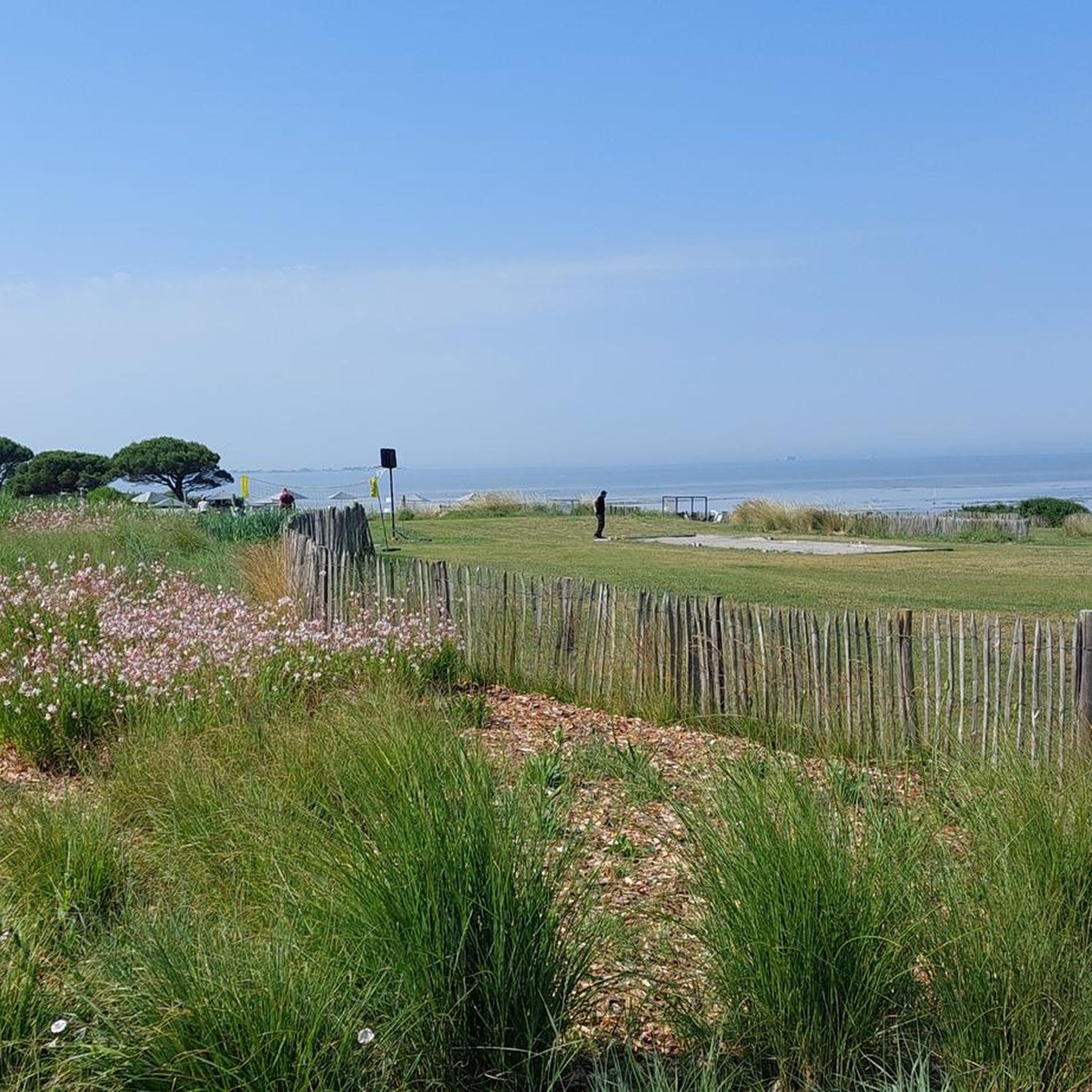
Long beach of fine sand such as is seldom seen on the Atlantic coast. The slope of the beach is gentle and the waves are small to ensure safe swimming. In addition, the beach is supervised in high season. In low season, it is possible to practice sand yachting, canoeing and kite flying: this beach is lively all year round!
2
0
Frequently Asked Questions
What natural attractions can I explore around Yves?
The primary natural attraction is the Marais d'Yves Nature Reserve, a significant site for birdwatching and exploring local flora and fauna. You can also enjoy the coastal environment along the Bay of Yves, known for its oyster and mussel farming. For a relaxing experience, Châtelaillon Beach offers a long stretch of fine sand and safe swimming conditions.
Are there historical sites to visit near Yves?
Yes, the region has several historical points of interest. Within Yves, you can find the Priory of Saint-Etienne Yves, a church with roots in the 12th century. The Château Passage in Le Marouillet, built in the early 17th century, is also notable. Nearby, you can explore impressive fortifications like Fort de Fouras and Fort Vauban, both offering insights into the area's defensive past. The small town of Soubise also holds historical significance as a former important crossing point on the Charente River.
What are some family-friendly activities around Yves?
Many attractions around Yves are suitable for families. Châtelaillon Beach is ideal for safe swimming and sand yachting in the off-season. Historical sites like Fort de Fouras and Fort Vauban are engaging for all ages, offering great views and a glimpse into history. The Marais d'Yves Nature Reserve organizes family-friendly discovery events like birdwatching and butterfly observation.
What kind of outdoor activities can I do near Yves?
The area around Yves is excellent for various outdoor activities. You can enjoy walking, with options like the 'Marche de l'empereur' for fresh air. For more structured activities, there are numerous routes for gravel biking, running, and hiking. You can find detailed routes and guides for gravel biking, running, and hiking around Yves, including coastal paths and trails through natural reserves.
Where can I go for scenic views around Yves?
For scenic views, head to the coastal fortifications. Fort de Fouras and Fort Vauban both offer excellent vantage points overlooking the sea and the Grande Plage of Fouras-les-Bains. The long sandy stretch of Châtelaillon Beach also provides beautiful coastal vistas.
What are some popular nearby towns or destinations to visit from Yves?
Yves is well-situated for exploring the wider region. You can easily reach the seaside resorts of Fouras (5 km) and Châtelaillon-Plage (7 km). The historic town of Rochefort (11 km) is famous for its Corderie Royale. Further afield, La Rochelle (18 km) offers a vibrant harbor and aquarium, while Brouage (19 km) is known for its impressive 17th-century fortifications. You can also take a trip to Île-d'Aix (10 km) for island exploration.
What do visitors particularly enjoy about the attractions around Yves?
Visitors appreciate the diverse experiences available, from the exceptionally long and soft sand of Châtelaillon Beach to the well-preserved historical structures like Fort de Fouras, which offers great views and free entry. The charm of seaside resorts and the rich history of the fortifications are frequently highlighted.
Are there opportunities for wildlife spotting near Yves?
Yes, the Marais d'Yves Nature Reserve is a prime location for wildlife spotting, particularly birdwatching. The reserve is a key site for nature discovery, offering organized tours and events focused on local fauna, including birds and butterflies.
Can I find easy walking trails around Yves?
Absolutely. The region offers several easy walking options. For instance, the 'Marche de l'empereur' is a pleasant walk to enjoy the coastal air. There are also easy hiking routes available, such as the 'Exhibition loop from Châtelaillon-Plage' (2.4 km) and the 'Châtelaillon Beach – Plage de Châtelaillon loop from Châtelaillon-Plage' (3.3 km), perfect for a relaxed stroll. You can find more easy trails in the hiking guide for Yves.
What is the best time of year to visit Yves for outdoor activities?
The coastal climate of Yves makes it enjoyable for outdoor activities for much of the year. Spring and autumn offer pleasant temperatures for walking, cycling, and exploring the nature reserve without the peak summer crowds. Summer is ideal for beach activities and water sports, though it can be busier. Even in low season, activities like sand yachting are possible at Châtelaillon Beach.
Are there any unique cultural experiences related to the local economy in Yves?
Yves is renowned for its oyster and mussel farming activities, which are deeply integrated into the local coastal environment along the Bay of Yves. This offers a unique insight into the region's traditional industries and culinary heritage.
What is the town of Soubise known for?
Soubise is a small town historically known as an important crossing point for the Charente River. Today, it's particularly popular among cyclists for its river shuttle service to Rochefort, offering a convenient and scenic way to cross the river.
Most popular attractions around Yves

Get inspired with the komoot mobile app


Explore more
Still not found the Highlight you’re looking for? See guides of the top attractions in other regions:
