Attractions and Places To See around Chiddes - Top 18
Best attractions and places to see around Chiddes include a blend of historical, natural, and cultural sites within the Bourgogne-Franche-Comté region of France. The village serves as a base for exploring the Morvan Regional Natural Park, offering diverse landscapes and heritage. Visitors can find ancient landmarks, natural features, and cultural experiences in the area. Chiddes itself holds traces of Roman occupation, adding to its historical significance.
Best attractions and places to see around Chiddes
- The most popular attractions is Suin…
Last updated: July 2, 2026
Suin Hill
Highlight • Summit
Translated by Google •
Tip by

Cluny Abbey
Highlight • Historical Site
Translated by Google •
Tip by

Sign up now to discover places like this
Get recommendations on the best single tracks, peaks, & plenty of other exciting outdoor places.
Sign up for free
Château de Gros Chigy
Highlight • Castle
Translated by Google •
Tip by

Dauphine Fountain and Mural
Highlight • Monument
Tip by

Haras Nationaux, Cluny
Highlight • Historical Site
Showing Translation
Tip by

Sign up for free to discover even more attractions around Chiddes.
Sign up for free
Already have an account?
Start today with a free account
Your next adventure awaits.
Login or Signup

Tips from the Community

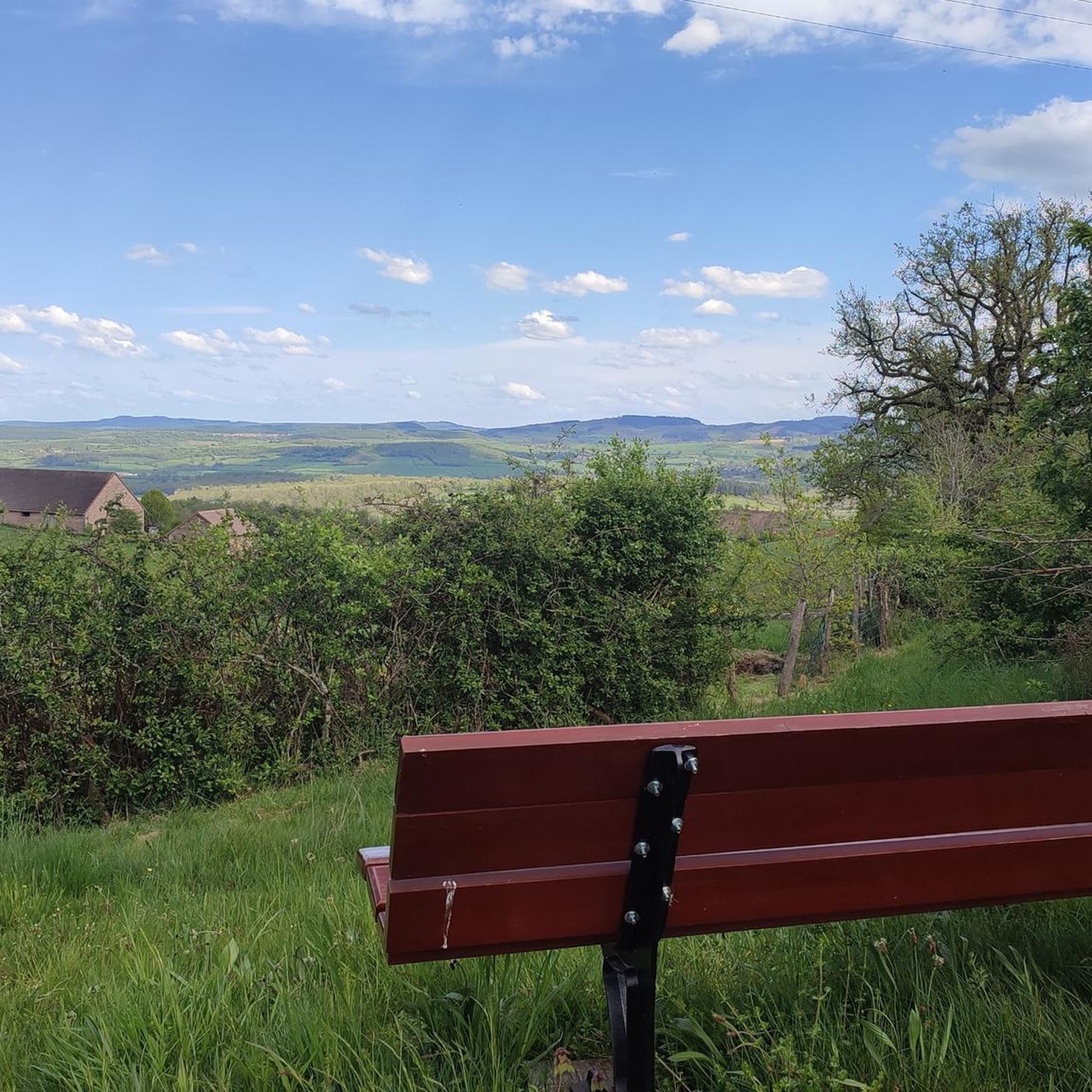
La Butte de Suin is a 593-meter-high viewpoint hill in the Saône-et-Loire department, near the small French municipality of Suin. From the summit, there is an impressive 360-degree panoramic view. In clear weather, you can look far over the hilly landscapes of Southern Burgundy (including the Charolais and Clunysois regions, and as far as Beaujolais). At the summit, there is a striking statue of the Virgin Mary, an orientation table for hikers, and the remains of an old fortress that was used from the Celtic period until the 16th century.
0
0
The large work of art on the narrow building facade directly above the fountain is a monumental, historical sundial (cadran solaire). The faded, artistic lines and Roman numerals show the classic grid system of an old vertical sundial, which the townspeople could use to read the time of day. Such large astronomical mural paintings were widespread in the Burgundy region as well as on the outbuildings of the powerful abbey, in order to synchronize the monastic and urban daily routine.
1
0
The neoclassical fountain directly on the building wall was built in the 18th century and is also known today as Fontaine Prud'hon. It was named in honor of the famous French painter and draftsman Pierre-Paul Prud'hon, who was born in Cluny in 1758. The fountain is integrated into the wall like a "water cabinet" (buffet d'eau) and features a fluted basin on a pedestal. In the past, a lion's head spout fed the basin. Today, a modern tap serves cyclists and pedestrians as a public drinking water source.
1
0
The famous French National Stud Haras National de Cluny in Burgundy was established by decree under Napoleon I in 1806 to secure the army's need for cavalry horses. It thus looks back on over 200 years of equestrian history. It is located in the immediate vicinity and at the foot of the historic Abbey of Cluny. The first breeding stallions were housed in the former stables of the abbey from 1807 onwards. Today, the facility belongs to the Équivallée organization. It serves to promote equestrian sports, hosts riding tournaments and shows, and is a renowned training center (including for animal osteopathy).
1
0
The current complex was built in the 15th century, after a predecessor had been destroyed on the orders of the French king. The irregular quadrilateral encloses a central courtyard. The striking north entrance, visible in the picture, is flanked by two mighty round towers equipped with gun loops (archères-canonniers) and was formerly protected by a drawbridge. The complex has been a listed Monument historique since 1967. Parts of the castle have been restored and are privately used as a charming guest house (Le Gros Chigy Château) for travellers in Burgundy.
1
0

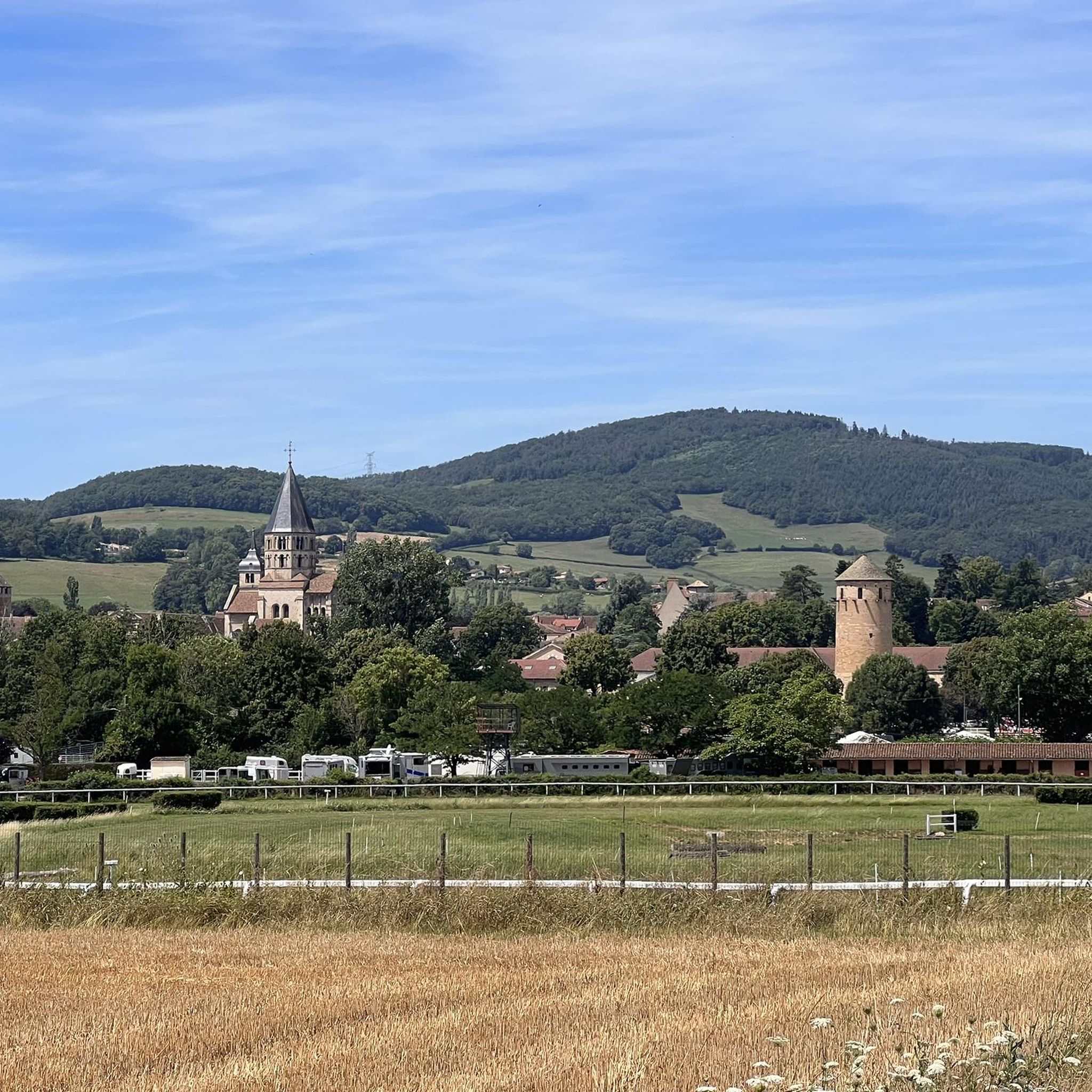
The town of Cluny developed around the Benedictine monastery (Abbey of Cluny) founded in 910. The abbey was the origin and center of the Cluniac reform at the beginning of the 10th century. Cluny reached its peak membership at the beginning of the 12th century with about 400 monks. The last abbey church (Cluny 3) was the world's largest Romanesque basilica and, until the construction of the present-day St. Peter's Basilica in Rome, the largest church in Christendom. The church had seven towers. Although large parts of the structure were destroyed, the remaining relics are absolutely remarkable and make a visit to Cluny an unforgettable experience!
2
0

Founded in 910, Cluny Abbey was a powerful centre of the Benedictine order and influenced the spiritual and cultural life of all of Europe at its height. Today, although much of the abbey was destroyed during the French Revolution, you can still explore the remaining parts of the vast complex, including the majestic bell tower and restored cloister.
2
0

Check the mural above the fountain - a number of profound sayings to do with windows, looks like they're all attributed to Jacques Brel.
2
0
Frequently Asked Questions
What natural attractions can I explore around Chiddes?
The region around Chiddes is rich in natural beauty. You can explore the vast Parc Naturel Régional du Morvan, which offers diverse landscapes and trails. Don't miss Suin Hill, a popular summit offering wonderful panoramic views. Other notable natural spots include La Forêt de Chiddes for hiking, and Mont Charlet, which provides magnificent views from its summit. The Moulin de Bousset, with its unique mill and pond, is also a charming natural feature.
Are there historical sites or cultural landmarks to visit near Chiddes?
Yes, Chiddes and its surroundings are steeped in history. You can visit the impressive Cluny Abbey, once the largest Romanesque church in the world. The Château de Gros Chigy, a 15th-century castle, is another significant historical landmark. Other sites include Mont Beuvray and the Bibracte Museum, which delves into Gallic history, and the medieval Château de Chinon.
What kind of outdoor activities are available around Chiddes?
The area around Chiddes is perfect for outdoor enthusiasts. You can find numerous trails for running, cycling, and hiking. For running, explore routes like the 'Running loop from Sivignon' or 'Running loop from Les Combes' mentioned in the Running Trails around Chiddes guide. Cyclists can enjoy routes such as the 'Étang Dusupoy loop from Donzy-le-National' or the 'Magnificent panoramic view – Suin Hill loop' from the Cycling around Chiddes guide. The Morvan Regional Natural Park also offers extensive trails for all levels.
Are there any family-friendly attractions in the Chiddes area?
Many attractions around Chiddes are suitable for families. Natural sites like Suin Hill offer easy access and green areas for picnicking, with trails of varying lengths. Historical sites such as Cluny Abbey and the Saint-Marcel Church of Cluny provide educational experiences. Exploring the Morvan Regional Natural Park also offers opportunities for family hikes and nature observation.
Where can I find scenic viewpoints around Chiddes?
For breathtaking views, head to Suin Hill, which provides a wonderful panoramic vista of the surrounding countryside, complete with an information board to identify landmarks. Another excellent spot is the summit of Mont Charlet, where an orientation table guides you through a magnificent panoramic view.
What are some notable religious buildings near Chiddes?
The region features several significant religious buildings. The Saint-Marcel Church of Cluny is known for its Romanesque bell tower. The grand Cluny Abbey, though largely in ruins, remains an impressive historical and religious site. Additionally, the Église de Chiddes itself dates back to the 12th century, and the Sainte-Cécile parish church is one of the oldest in the region. Further afield, you can find the Cathédrale Saint Lazare in Autun and the Basilique du Sacré-Cœur in Paray-le-Monial.
Can I find easy walking trails around Chiddes?
Yes, there are several options for easy walks. Suin Hill offers trails starting from 2 kilometers, with some sections on tarmac, making them accessible. The Morvan Regional Natural Park also has numerous trails suitable for all levels, including gentler paths through La Forêt de Chiddes. You can find more details on various walking trails in the Running Trails around Chiddes guide, which includes routes of moderate difficulty.
What is the best time of year to visit Chiddes for outdoor activities?
The Morvan Regional Natural Park, which surrounds Chiddes, is beautiful throughout the warmer months, typically from spring to early autumn. During this period, the weather is generally pleasant for hiking, cycling, and exploring natural sites like Suin Hill and La Forêt de Chiddes. Spring brings lush greenery and wildflowers, while autumn offers vibrant foliage.
Are there any unique or 'hidden gem' attractions in the Chiddes region?
Beyond the well-known sites, Chiddes offers some unique discoveries. The Moulin de Bousset is a rare find, retaining two wheels driving two millstones in separate buildings, along with an pond and waterfall. The local legend of Le Pont du Diable (Devil's Bridge) provides a blend of history and myth. Exploring the workshops of Chiddes' local artisans also offers an authentic glimpse into traditional crafts and unique souvenirs.
What do visitors particularly enjoy about the attractions around Chiddes?
Visitors frequently praise the panoramic views from Suin Hill, noting its easy accessibility and the inviting green areas. The historical significance and impressive architecture of sites like Cluny Abbey and Château de Gros Chigy are also highly appreciated. The overall blend of natural beauty, rich history, and cultural experiences in the Bourgogne-Franche-Comté region makes it a rewarding destination.
Are there any castles or medieval sites to visit?
Absolutely. The region is home to several impressive castles. The Château de Gros Chigy, a 15th-century castle built around a central courtyard, is a prime example. Further afield, the magnificent Château de Chinon offers a deep dive into France's rich medieval history with guided tours available. The Barons Tower in Luzy, dating from the 14th century, also provides a glimpse into the past.
What about Roman history in the Chiddes area?
Chiddes itself holds numerous traces of Roman occupation, with discoveries of medals bearing the effigies of Roman emperors and ancient pottery. While specific Roman ruins within Chiddes might be subtle, the broader region, particularly around Mont Beuvray and the Bibracte Museum, offers significant insights into the Gallic Aedui people and their interactions with the Roman world over 2000 years ago.
Can I find places for wine tasting or local crafts?
Yes, the Bourgogne-Franche-Comté region is renowned for its viticulture. Visitors can indulge in wine-tasting tours at local vineyards to learn about the regional winemaking traditions. Additionally, Chiddes is home to local artisans and craftsmen whose workshops offer an authentic glimpse into traditional crafts, providing opportunities to find unique, locally made souvenirs.

Get inspired with the komoot mobile app


Explore more
Still not found the Highlight you’re looking for? See guides of the top attractions in other regions:
