Attractions and Places To See around Ayette - Top 20
Best attractions and places to see around Ayette include sites reflecting its significant World War I history. This village, located in the Pas-de-Calais department of France, was largely devastated during the war. The area offers a reflective experience, primarily featuring war memorials and historical landmarks. The Cojeul River flows through the valley, forming part of the local landscape.
Best attractions and places to see around Ayette
- The most popular attractions is Scottish Divisions Memorial at the Sunken Lane, a…
Last updated: June 24, 2026
Scottish Divisions Memorial at the Sunken Lane
Highlight • Other
Translated by Google •
Tip by

The Carré des Sources
Highlight • Other
Translated by Google •
Tip by

Sign up now to discover places like this
Get recommendations on the best single tracks, peaks, & plenty of other exciting outdoor places.
Sign up for free
Chapel of Our Lady of La Salette
Highlight • Other
It is a small square building. On the facade is the entrance door. On each …
Translated by Google •
Tip by

Hawthorn Ridge Crater (Battle of the Somme, First World War)
Highlight • Natural Monument
Translated by Google •
Tip by

Sheffield Park Memorial to the Pals Battalions
Highlight • Other
Translated by Google •
Tip by

Sign up for free to discover even more attractions around Ayette.
Sign up for free
Already have an account?
Start today with a free account
Your next adventure awaits.
Login or Signup




Tips from the Community

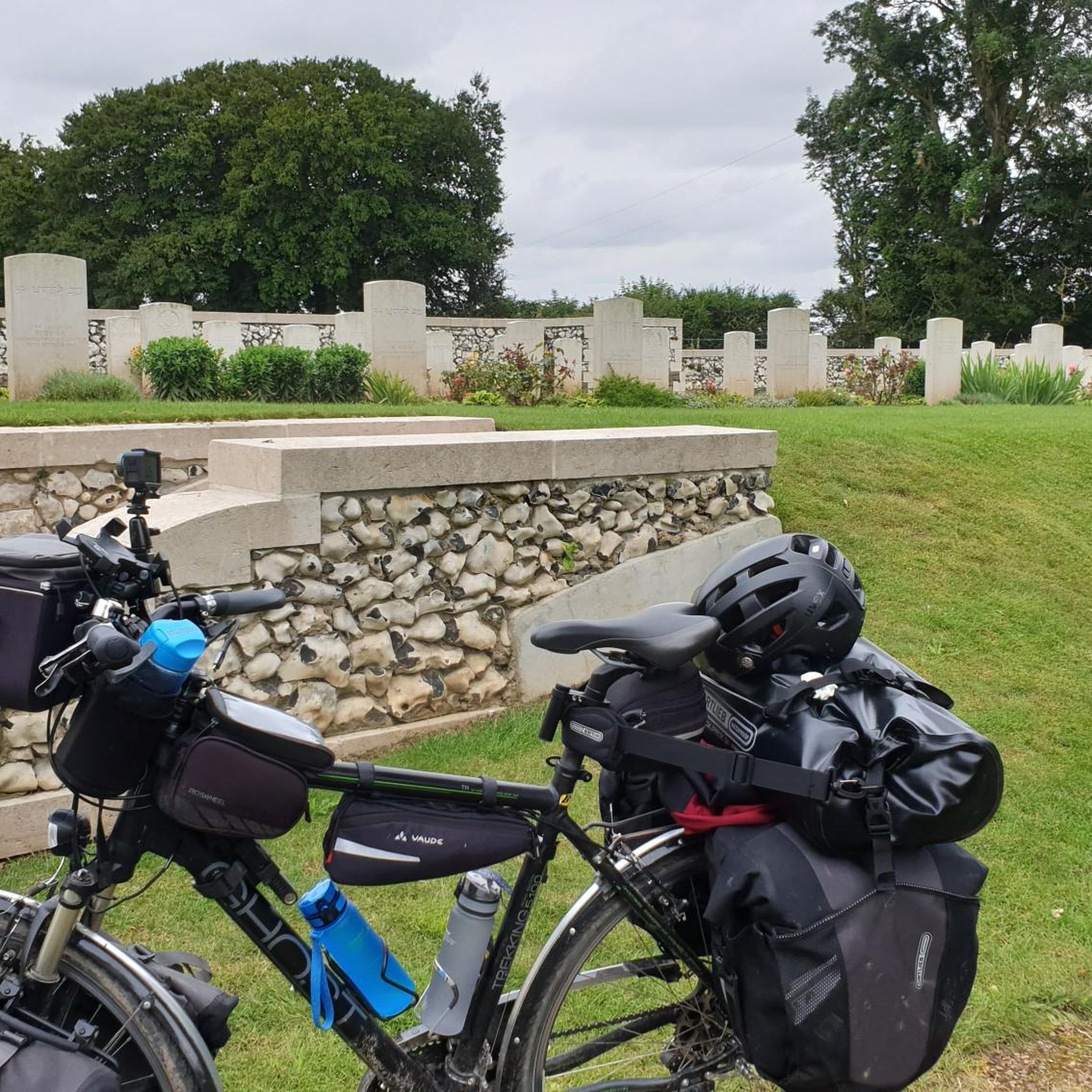
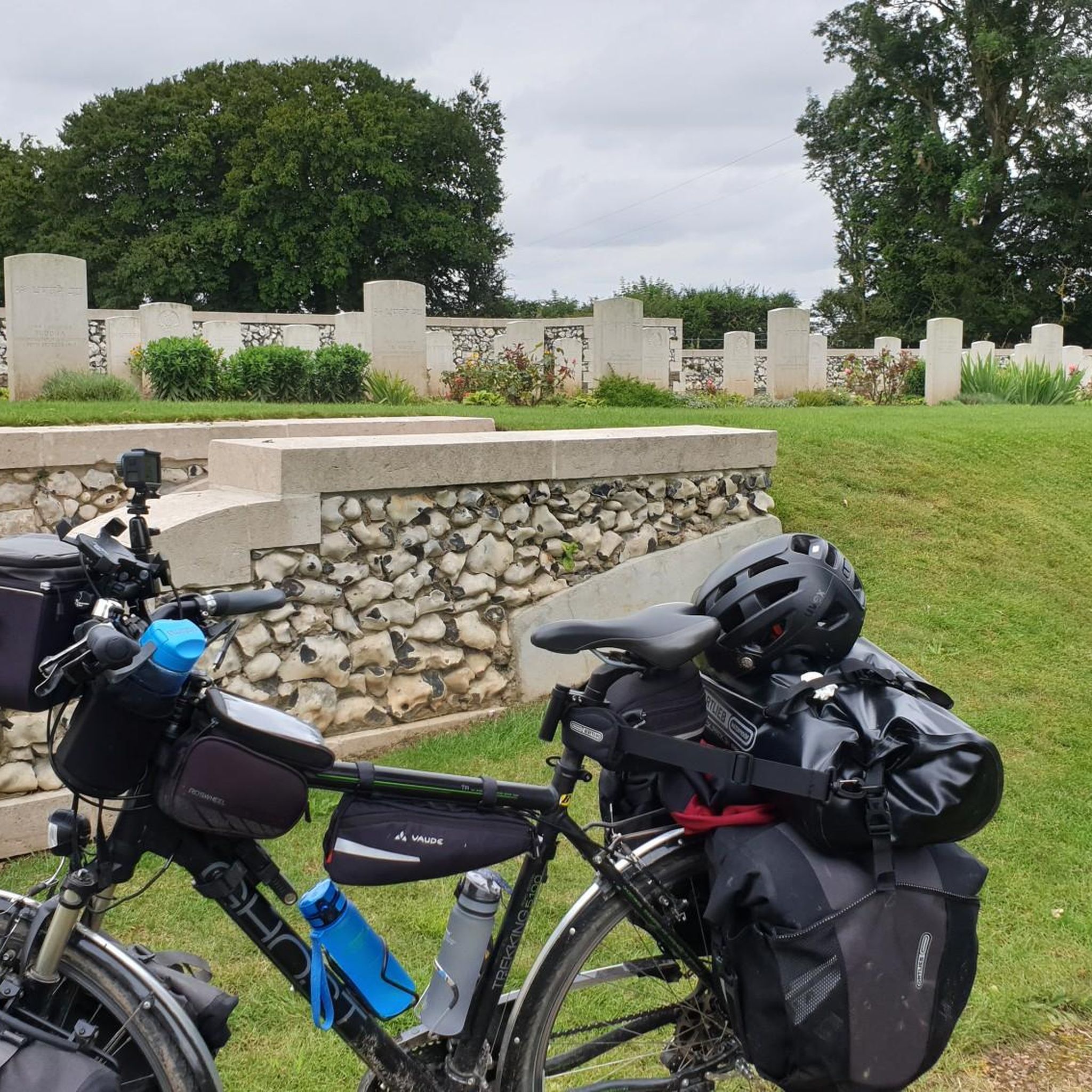
The Sheffield Memorial Park in Hébuterne pays tribute to the men of the 31st Division of the British Army who served in the Pals Battalion and fell in combat in this sector. The Pals Battalions were formed in the autumn of 1914 following recruitment campaigns launched by the War Office. Thousands of volunteers, brothers, cousins, neighbors, friends, and work colleagues enlisted at local recruiting offices at the same time. The regiments were thus composed of soldiers who knew each other very well and thus formed battalions of "friends," the Pals Battalions. During the fighting in the early days of the Battle of the Somme, these Sheffield Pals Battalions fought in the Hébuterne sector. Their objective was to advance east through the German lines and retake the fortified village of Serre.
0
0
The monument to the 8th Argyll and Sutherland Highlanders is a Celtic cross symbolically erected on the embankment of a sunken road, at the spot where the men of this regiment rushed to capture the village of Beaumont-Hamel on November 13, 1916, at the end of the Battle of the Somme. First, on July 1, when it was located in no man's land, exactly equidistant from the British and German trenches, and served as a refuge for so many soldiers wounded during the fighting; then, five days before the end of that same battle, when the village of Beaumont-Hamel was finally captured on November 13, by the men of the 8th Argyll and Sutherland Highlanders, who had rushed from that position. The 8th Argyll and Sutherland Highlanders was a Scottish regiment that fought on several fronts. A reading of the inscriptions engraved on the different sides of the base of this monument tells us this. Thus, this cross is dedicated to the glory of the battalion's glorious dead and to the memory of those who will never return. Its combat losses, throughout the war, amounted to 51 officers and 831 men and non-commissioned officers, including 105 wounded officers and 2,527 men and non-commissioned officers. Finally, a Celtic inscription reveals "it is good to have friends on the day of battle." Mobilized from August 4, 1914, to November 12, 1919, a period of five years and 100 days, the regiment fought from May 1, 1915, to November 11, 1918, in Belgium and France. Until 1918, the 8th Argyll and Sutherland Highlanders belonged to the 51st Division; In 1915, it fought at Richebourg, Festubert and on Thiepval Ridge, which was to leave a sad memory for the British on 1 July 1916 (this is where the memorial to the missing now stands); in 1916, it fought at the Labyrinth, Vimy Ridge, Fourcaux Wood (High Wood), Beaumont-Hamel (there, therefore) and Courcelette; in 1917, it was Roclincourt, Arras, Roeux, Ypres and Cambrai. In 1918, the 8th Argyll and Sutherland Highlanders fought as part of the 61st Division at Saint-Quentin, Holnon Wood, Villéveque, Nesle, Villers-Bretonneux and on the Lys; but also within the 15th division which distinguished itself at Soissons, at Buzancy and in the final advance which would lead to the armistice
0
0

Today the chapel is primarily a pilgrim chapel and resting place with a guest book.
7
0
Chapel built in 1934. The chapel is located outside the village on a hiking trail. It is a small square building. On the facade is the entrance door. On each side are two Corinthian-style pilasters. Above the door is the name of the chapel and above it is a triangular molding. Then we have a cornice. On each side of the wall, a bay in a pointed arch. The roof is a bulbous roof with four sides. The chevet is a regular apse, Inside is a niche where you can see a statue of the Virgin. Just below the Virgin is a small altar. On each side of the walls there are two small shelves.
7
0

Hawthorn Ridge Crater is a mine crater that was exploded during the First World War. This crater, located at the entrance to Beaumont-Hamel in Picardy, France, bears witness to the tragic events that unfolded on July 1, 1916, when British soldiers attacked German fortifications on the ridge. The mine exploded eight minutes too early, allowing the Germans to regain the upper hand and inflict heavy losses on the attackers. You can access the crater via a muddy path between two pastures, and admire the vegetation that has reclaimed the site. You can also learn about the history of the battle and the second explosion which took place on November 13, 1916. The crater is part of a wider network of memorials and cemeteries which commemorate the soldiers who fell on the Somme.
4
0

At the beginning of the 18th century, the flow of the Crinchon (river of about twenty kilometers which flows between Bailleulmont and Saint-Nicolas before flowing into the Scarpe) is weak, irregular and its waters are of poor quality. The city of Arras needs healthy and abundant water for the inhabitants and for the drinking troughs of the cavalry barracks. In 1723, at his request, the springs that gush out in Brétencourt, a hamlet of Rivière, were collected in a reservoir, it is a vast rectangular basin surrounded by brick walls now called "Carré des sources". Its dimensions: 33 m long, 11 m wide and 8 m deep. The works were carried out by the Military Engineering on the orders of the king, who financed them, as recalled by a sandstone sealed in a wall: "In the year 1723, under the reign of Louis XV, the sources of the Crinchon were sought and enclosed in this basin at the expense of the king" Le Carré des sources delivers 64 liters per second of water that is extremely fresh and remarkably clear. The stream thus formed crosses the park of the castle and joins the initial bed of the Crinchon, after a course of 500 m. The flow being capricious, the system was completed by the digging of a few artesian wells, from the end of the 18th century.
1
0

An impressive place, furrowed earth, craters and memorial stones: this is where the British advance against the German position in Serre began in 1916.
2
0
Frequently Asked Questions
What historical sites related to World War I can I visit near Ayette?
Ayette and its surroundings are rich in World War I history. You can visit the Ayette British Cemetery and the Ayette Indian & Chinese Cemetery, both commemorating the diverse forces involved in the war. Additionally, explore the Scottish Divisions Memorial at the Sunken Lane, a Celtic cross dedicated to the 8th Argyll and Sutherland Highlanders, and the Hawthorn Ridge Crater (Battle of the Somme, First World War), a significant mine crater from July 1916.
Are there any natural features or landscapes to explore in Ayette?
While Ayette is primarily known for its historical sites, the Cojeul River flows through the valley, forming part of the local landscape. This 25-kilometer river originates nearby and adds to the reflective atmosphere of the area, particularly around the Ayette British Cemetery.
What kind of cycling routes are available around Ayette?
There are various cycling opportunities around Ayette. For touring cyclists, routes like 'The Carré des Sources – Sunken Road Cemetery loop' offer moderate challenges. Gravel biking options include 'Citadel Paths of Arras – The Citadel loop from Agny'. Road cyclists can find longer, more challenging routes such as 'Ulster Tower – Suzanne Castle loop'. You can find more details on these and other routes on the Cycling around Ayette, Gravel biking around Ayette, and Road Cycling Routes around Ayette guide pages.
What is The Carré des Sources and its historical significance?
The Carré des Sources is an 18th-century reservoir, a large rectangular basin measuring 33 meters long, 11 meters wide, and 8 meters deep. It was constructed to supply fresh and abundant water to the city of Arras, as the local Crinchon river's flow was weak and its waters of poor quality at the time.
Are there any religious or spiritual sites to visit?
Yes, you can visit the Chapel of Our Lady of La Salette. Built in 1934, this small square building is located outside the village on a hiking trail and serves as a pilgrim chapel and resting place, featuring a statue of the Virgin inside.
What is the village of Saint-Léger known for?
Saint-Léger is a village that, like Ayette, was heavily fought over and largely rebuilt after World War I. It features a rebuilt church and a Commonwealth War Graves Commission cemetery. The area saw intense conflict, with the village changing hands multiple times between Allied and German forces.
What can I expect to see at the Scottish Divisions Memorial at the Sunken Lane?
The Scottish Divisions Memorial at the Sunken Lane is a Celtic cross commemorating the 8th Argyll and Sutherland Highlanders. It marks the spot where the regiment advanced to capture Beaumont-Hamel during the Battle of the Somme in 1916. The monument's base is inscribed with details of the regiment's service and losses, offering a poignant reflection on their bravery.
What is the significance of the Hawthorn Ridge Crater?
The Hawthorn Ridge Crater is a powerful reminder of the Battle of the Somme. This mine crater was exploded on July 1, 1916, marking a tragic event where British soldiers attacked German fortifications. It's a natural monument and historical site, now reclaimed by vegetation, and is part of a wider network of memorials in the region.
Are there any attractions suitable for families near Ayette?
While Ayette itself focuses on historical reflection, for a broader range of family-friendly attractions, you might consider visiting the nearby city of Arras. Arras offers options such as Cit-Loisirs and BowlingWorld Arras, which provide entertainment for various ages.
What is the best time to visit Ayette for historical exploration?
The historical sites around Ayette, particularly the war memorials and cemeteries, are accessible year-round. Visiting during spring or autumn offers pleasant weather for walking and exploring the outdoor sites, avoiding the heat of summer or the colder, potentially wetter conditions of winter.
Where can I find more information about the destruction of Ayette during WWI?
Ayette was largely devastated during World War I, with almost all houses destroyed, particularly during the British offensive in April and May 1917 and subsequent bombardments. For historical images and further context on the village's wartime destruction, you may find resources like those at imagesdefense.gouv.fr helpful.
What types of outdoor activities are popular in the Ayette area?
Beyond visiting historical sites, the Ayette area is popular for various cycling activities. You can find numerous routes for touring bicycles, gravel biking, and road cycling, often incorporating historical landmarks and scenic landscapes. These routes cater to different difficulty levels, from easy to difficult.

Get inspired with the komoot mobile app


Explore more
Still not found the Highlight you’re looking for? See guides of the top attractions in other regions:
