Attractions and Places To See around Erny-Saint-Julien - Top 20
Best attractions and places to see around Erny-Saint-Julien include a mix of historical sites and natural features within and near this village in the Pas-de-Calais department of France. The area offers insights into local heritage, with structures like the Château de la famille Cappe De Baillon and natural points such as Le Mont Théles. Visitors can explore a variety of cultural and historical points of interest, providing a comprehensive view of the region's character.
Best attractions and places to see around Erny-Saint-Julien
- The most popular attractions is Moulin Espagnol d'Enquin les Mines, a former water mill built around 1635. It produced flour until 1938 and is now a private residence with a garden, featuring its original water wheel and a dam that forms a waterfall.
- Another must-see spot is Birthplace of Saint Benoît Labre, a religious site dedicated to the patron saint of the marginalized, born in 1748. This small country cottage has become a significant pilgrimage site in Artois, housing objects that belonged to him.
- Visitors also love Amettes, a picturesque village known as the birthplace of Saint Benedict Joseph Labre. It serves as an essential stop on the religious route of the Via Francigena.
- Erny-Saint-Julien is known for its historical landmarks, religious sites, and natural features. The area offers a variety of attractions to see and explore, from ancient mills to significant pilgrimage destinations.
- The attractions around Erny-Saint-Julien are appreciated by the komoot community, with more than 19 upvotes and 14 photos shared by visitors.
Last updated: July 1, 2026
Moulin Espagnol d'Enquin les Mines
Highlight • Other
It is built with brick and stone (white limestone). All that remains of the original building is the north gable (17th century), and also a porch. The water wheel is still in place but it no longer turns. The dam forms a pretty waterfall. A turret was added on the river side. It is a very beautiful private home with a beautiful garden in which you can see a stone fountain.
Translated by Google •
Tip by

Birthplace of Saint Benoît Labre
Highlight • Other
The birthplace of Saint Benoît-Joseph, a small country cottage, has become a major place of pilgrimage in Artois dedicated to his memory bringing together objects that belonged to him.
Translated by Google •
Tip by
Sign up now to discover places like this
Get recommendations on the best single tracks, peaks, & plenty of other exciting outdoor places.
Sign up for free
Amettes
Highlight • Settlement
Translated by Google •
Tip by

Source of the River Lys
Highlight • Other
Tip by

Saint-Léger Church, Cléty
Highlight • Other
Translated by Google •
Tip by
Sign up for free to discover even more attractions around Erny-Saint-Julien.
Sign up for free
Already have an account?
Start today with a free account
Your next adventure awaits.
Login or Signup



Tips from the Community

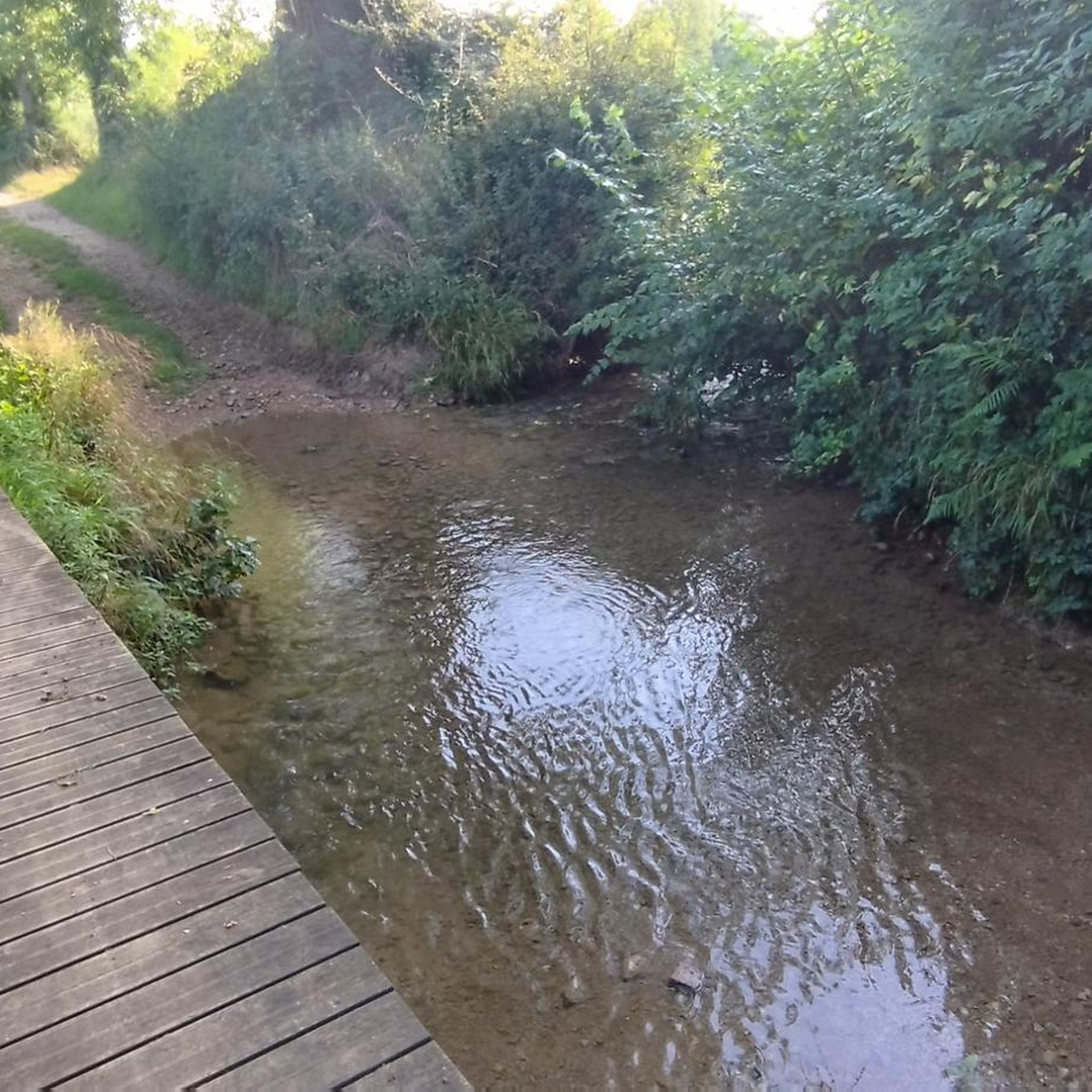
The source of the Leie (French: la source de la Lys) is located in the small French village of Lisbourg, situated in the Pas-de-Calais department in the Hauts-de-France region. The river originates here at an altitude of approximately 115 meters and flows via Aire-sur-la-Lys towards Belgium, eventually flowing into the Scheldt in Ghent after approximately 202 kilometers.
0
0

A very well-known place for pilgrims and a good tavern which recently reopened: LA TABLE DE ST BENOIT.
0
0

This picturesque village owes much of its fame to the birth of Saint Benedict Joseph Labre, born in the village in 1748. It is also an essential stop on the religious route of the Via Francigena.
0
0

The patron saint of the marginalized, Saint Benedict Joseph Labre, was born in 1748 in the picturesque village of Amettes. He is better known as "God's Traveler." A French mendicant pilgrim, he traveled the roads of Europe, from sanctuary to sanctuary until his final stop: Rome. He was canonized in 1881. The birthplace of Saint Benedict Joseph, a small chalet, has become an important pilgrimage site in Artois, dedicated to his memory and housing his belongings.
0
0
The Église St Léger in Cléty is a Catholic church located in the heart of the village, surrounded by a cemetery1. The church is of simple design, with a single nave and a semicircular apse2. It dates from the 16th or early 17th century and has a tower built in 1662 or 16651. The church has a benitier with a basin in brown marble in Louis XV style, a 0.68 m wooden statue from the 16th century of Sainte Anne, the Virgin and the Child Jesus, and a staircase to the top of the tower where a bell can be seen - there used to be two - with a diameter of 1.10 m, cast by Pierre Voulemin in 1678 and donated by Mary, wife of Adrien de Mames (Mametz), lord of Cléty
4
0
Patron saint of the marginalized, Saint Benoît-Joseph Labre was born in the picturesque village of Amettes in 1748. He is better known as the “wanderer of God”. A French beggar pilgrim, he traveled the roads of Europe going from sanctuary to sanctuary until his final stop: Rome. He was canonized in 1881. The birthplace of Saint Benoît-Joseph, a small country cottage, has become a major place of pilgrimage in Artois dedicated to his memory bringing together objects that belonged to him.
1
0
This Spanish mill was built around 1635, on the banks of the Lacquette River. It produced flour until 1938, then milling for livestock. It was bought in 1974 to be transformed into a home. It is built with brick and stone (white limestone). All that remains of the original building is the north gable (17th century), and also a porch. The water wheel is still in place but it no longer turns. The dam forms a pretty waterfall. A turret was added on the river side. It is a very beautiful private home with a beautiful garden in which you can see a stone fountain.
9
0

The Spanish mill of Enquin les Mines is a former water mill which dates from the 17th century and was used to produce flour and animal feed until 1938. It is today a private residence with a beautiful garden and a fountain. You can admire the old brick and stone building, the restored waterwheel and the waterfall created by the dam on the Laquette.
3
0
Frequently Asked Questions
What kind of attractions can I expect to find around Erny-Saint-Julien?
The area around Erny-Saint-Julien offers a diverse mix of historical sites, cultural landmarks, and natural features. You'll find ancient mills, significant religious pilgrimage sites, and picturesque villages, alongside local natural points of interest. Visitors particularly appreciate the blend of heritage and scenic beauty.
Are there any historical or cultural sites worth visiting in the region?
Yes, the region is rich in history. You can visit the Moulin Espagnol d'Enquin les Mines, a former water mill dating back to 1635, now a private residence with its original water wheel. The Birthplace of Saint Benoît Labre in Amettes is a significant pilgrimage site. Additionally, the Saint-Léger Church, Cléty, from the 16th or early 17th century, offers a glimpse into local religious architecture. Within Erny-Saint-Julien itself, the Château de la famille Cappe De Baillon and its chapel are notable landmarks.
What natural points of interest are there to explore?
Nature enthusiasts can discover several local features. The Source of the River Lys is a fascinating spot to see the beginnings of a major river. Within Erny-Saint-Julien, you can find Le Mont Théles, a notable hill, and Le Bois Moïse, a local woodland. The area also features 'les roux lins,' historically known for flax retting, and a diverted river near the château.
Are there family-friendly attractions nearby?
While Erny-Saint-Julien itself is more focused on heritage and natural beauty, families looking for entertainment can visit Dennlys Parc, an amusement park located about 7.4 km away in Dennebroeucq. Other leisure options like Planet'Aire and AQUALYS are also available in Aire-sur-la-Lys, approximately 12-13 km distant.
What outdoor activities can I do near these attractions?
The area around Erny-Saint-Julien is excellent for outdoor activities. You can find numerous routes for road cycling, hiking, and running. For instance, there are moderate to difficult road cycling routes like 'The beautiful hump loop from Enguinegatte' and 'Source of the Lys – Source of the River Lys loop from Erny-Saint-Julien'. Hiking options include 'Delettes loop from Delettes' and 'Small bridge over the laquette loop from Enquin-les-Mines'. You can explore more routes on the dedicated guides for hiking, road cycling, and running trails around Erny-Saint-Julien.
Are there any specific hiking trails recommended for visitors?
Yes, there are several hiking trails suitable for various fitness levels. You can find easy loops like 'Hiking loop from Enquin-les-Mines' (4.6 km) or more moderate options such as 'Delettes loop from Delettes' (9.7 km). For a longer challenge, consider the 'Small bridge over the laquette loop from Enquin-les-Mines' (21.2 km). More details and routes are available in the Hiking around Erny-Saint-Julien guide.
What is Amettes known for?
Amettes is a picturesque village primarily known as the birthplace of Saint Benedict Joseph Labre in 1748. It holds significant religious importance and serves as an essential stop on the Via Francigena, a historic pilgrimage route.
Are there any hidden gems or lesser-known spots to discover?
Beyond the main highlights, exploring the village of Erny-Saint-Julien itself can reveal charming details, such as the cross at a significant crossroads pointing to nearby villages, and the old farm 'la ferme de François Demany.' The historical context of 'les roux lins' where flax was retted, giving the area a reddish color, also offers a unique insight into the region's past.
What are some other notable attractions within a short drive of Erny-Saint-Julien?
Within a short driving distance, you can visit La Coupole Centre D'histoire, a major history museum located 13.3 km away in Helfaut. For nature lovers, the de Saint-Omer Public Garden is about 18 km away. For water activities, Base Nautique de Loisinord, a highly-rated option, is approximately 32.3 km away in Noeux-les-Mines.
What do visitors generally appreciate about the attractions in this area?
Visitors to the attractions around Erny-Saint-Julien often appreciate the historical significance of sites like the Moulin Espagnol and the Birthplace of Saint Benoît Labre. The serene natural settings, such as the Source of the River Lys, also receive positive feedback. The komoot community has shared more than 14 photos and given over 19 upvotes, highlighting the visual appeal and engaging experiences available.
Is there a specific time of year that is best to visit Erny-Saint-Julien for outdoor activities?
While specific seasonal data isn't provided, generally, spring and summer offer the most pleasant weather for outdoor activities like hiking, cycling, and exploring natural features. The region's public gardens and natural landscapes would be particularly vibrant during these months. Autumn can also be beautiful with changing foliage, though temperatures will be cooler.
Most popular routes around Erny-Saint-Julien

Get inspired with the komoot mobile app


Explore more
Still not found the Highlight you’re looking for? See guides of the top attractions in other regions:
