Attractions and Places To See around Vimy - Top 20
Best attractions and places to see around Vimy are primarily shaped by its significant role in World War I. The area features historical landmarks, preserved battlefield landscapes, and cultural sites commemorating the sacrifices made during the war. Vimy Ridge, a strategically important escarpment, offers views of the surrounding countryside. The region provides opportunities to explore historical sites and natural features.
Best attractions and places to see around Vimy
- The most popular attractions is Canadian National Vimy Memorial, a man-made monument that commemorates Canadian soldiers who died in France with no known grave during the First World War. This memorial stands atop Hill 145, the highest point of Vimy Ridge, and features two soaring pylons representing Canada and France.
- Another must-see spot is Notre-Dame-de-Lorette National Cemetery, a historical site and one of the largest military cemeteries in France. This cemetery contains the graves of more than 42,000 soldiers who died during the First World War and includes a basilica, a tower-lantern, and a museum.
- Visitors also love Towards the Canadian trenches of Vimy, a man-made monument offering insight into the preparations for the attack on Vimy Ridge. These preserved trenches and tunnels provide a tangible sense of the conditions soldiers faced and played a crucial role in the success of the attack.
- Vimy is known for its historical sites, man-made monuments, and natural features. Visitors can explore a variety of attractions, from war memorials and cemeteries to preserved trenches and natural marshlands.
- The attractions around Vimy are appreciated by the komoot community, with more than 160 upvotes and 90 photos shared by visitors.
Last updated: August 26, 2026
Canadian National Vimy Memorial
Highlight (Segment) • Monument
Translated by Google •
Tip by

Notre-Dame-de-Lorette National Cemetery
Highlight • Historical Site
In 2014, a memorial ring was placed, bearing the names of almost 580,000 soldiers of different nationalities who lost their lives in Nord-Pas-de-Calais between 1914 and 1918.
Two other buildings have been added to this site: the "living museum" 14-18, located on the Notre-Dame-de-Lorette hill, with more than 2,000 pieces in its collection, and the Historical Center of the Memorial 14-18 , in Souchez, a visitors center where objects, photos and film from that time are displayed.
Translated by Google •
Tip by

Sign up now to discover places like this
Get recommendations on the best single tracks, peaks, & plenty of other exciting outdoor places.
Sign up for free
The Church of Ablain-Saint-Nazaire
Highlight • Historical Site
Showing Translation
Tip by

Marais de Maroeuil
Highlight (Segment) • Natural
Translated by Google •
Tip by
Towards the Canadian trenches of Vimy
Highlight • Monument
Translated by Google •
Tip by
Sign up for free to discover even more attractions around Vimy.
Sign up for free
Already have an account?
Start today with a free account
Your next adventure awaits.
Login or Signup


Tips from the Community

Magnificent memorial. The site as a whole is pleasant and rather touristy.
0
0

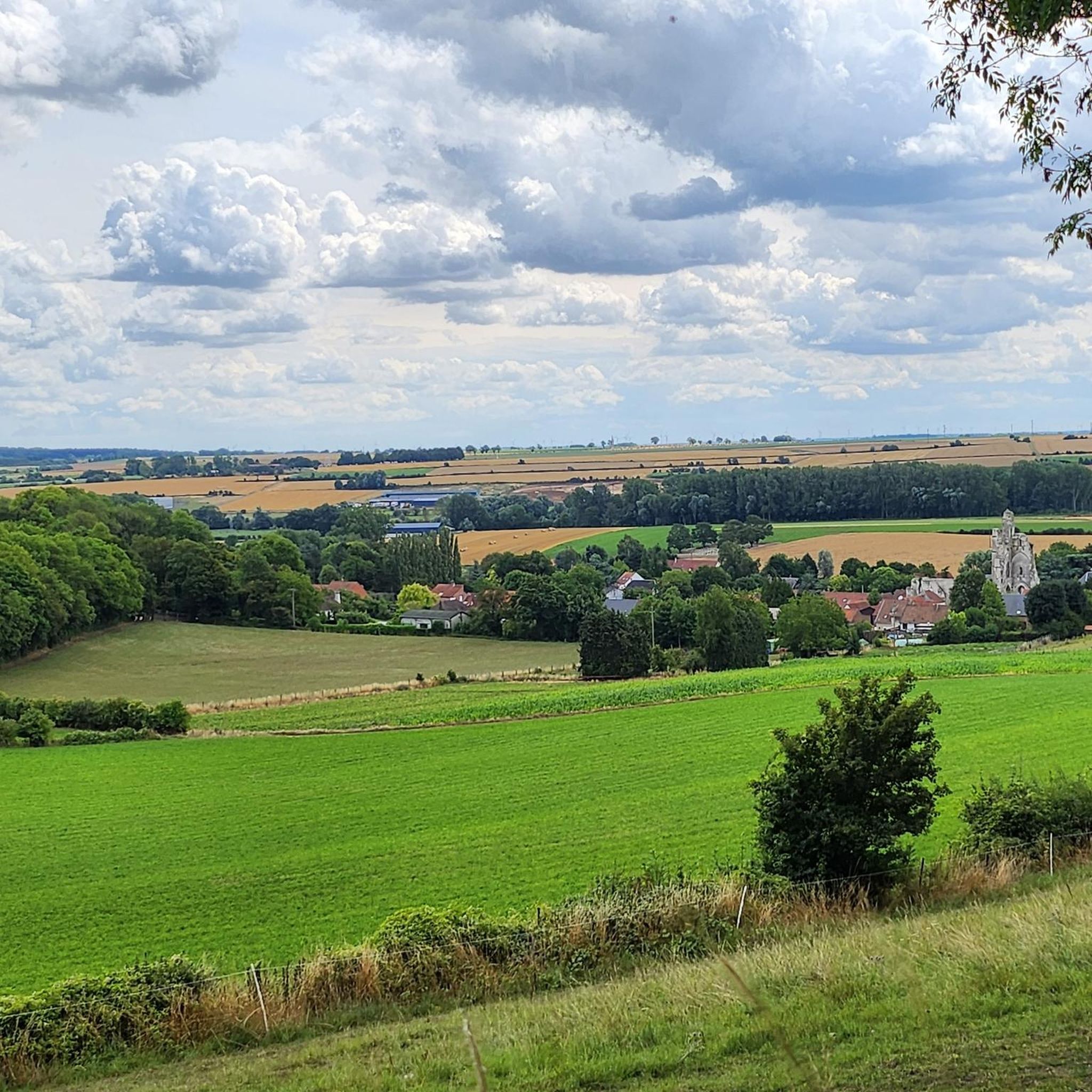
The ruins of the old church of Ablain-Saint-Nazaire are an impressive and symbolic remnant of the First World War. This church, built in the 16th century in flamboyant Gothic style by Jacques Le Caron, was heavily damaged during the fighting in 1915. The ruins have been preserved as a monument to commemorate the horrors of war.
7
0
A remarkable story about the Canadian trenches concerns the preparations for the attack on Vimy Ridge in April 1917. The Canadian divisions used an underground quarry and created additional corridors towards the front. These tunnels and trenches played a crucial role in the success of the attack, with the Canadians managing to retake the strategically important ridge in just three days.
7
0
A remarkable story about the ruins concerns the decision not to rebuild the church after the war. Although the church had been classified as a historical monument in 1908, the Commission for Historical Monuments decided that the ruins should remain as a testimony to the German destruction. Ironically, it was the French guns that had destroyed the church, but the ruins became a symbol of the war and the reconstruction.
6
0
The Nécropole nationale de Notre-Dame-de-Lorette is one of the largest and most impressive military cemeteries in France. Situated on a hill in Ablain-Saint-Nazaire, this cemetery contains the graves of more than 42,000 soldiers who died during the First World War. The cemetery was inaugurated in 1925 and includes a basilica, a tower-lantern and a museum.
7
2

The church dedicated to the Mother of God under the title "Notre-Dame de Lorette" rises in brilliant white and is visible from far away. But the brilliant impression is deceptive, at the latest when the visitor to the site realizes that they are in a huge military cemetery. Around 20,000 individual graves and a further 23,000 victims of war and tyranny buried in ossuaries are deeply disturbing.
3
0
Such places are still very important today as memorials to the countless war dead. "Now, Lord, you let your servant depart in peace, as you have said..." says the so-called "Hymn of Simeon" (Luke's Gospel, Chapter 2, Verse 29). However, the many people buried here did not depart in peace, but became victims of war and an inhuman tyranny. The most important and at the same time everlasting function of the military or honorary cemeteries or war graves is therefore to keep the memory of this suffering alive and - every generation anew (!) - to remind them of the need to maintain peace in the long term.
0
0

This hike takes private paths... To avoid ending up with a complaint filed
1
0
Frequently Asked Questions
What historical sites can I explore in Vimy?
Vimy is rich in World War I history. You can visit the iconic Canadian National Vimy Memorial, which stands atop Hill 145 and commemorates Canadian soldiers. Explore the preserved trenches and tunnels, offering a tangible sense of the conditions soldiers faced. Other significant sites include the Moroccan Division Memorial within the park, and nearby, the solemn Notre-Dame-de-Lorette National Cemetery, one of France's largest military cemeteries, and The ruined church of Ablain-Saint-Nazaire, a symbolic remnant of the war.
Are there opportunities for hiking or walking around Vimy?
Yes, the Vimy area offers several walking and hiking opportunities, particularly around the memorial park and Vimy Ridge itself. You can explore the preserved battlefield landscape with its shell craters and undisturbed sections. For specific routes, consider easy walks like 'The Canadian Memorial of Vimy — loop from Givenchy-en-Gohelle' (5.9 km) or moderate options such as 'Moroccan monument – Canadian Memorial loop from Vimy' (8 km). You can find more details on these and other routes in the Hiking around Vimy guide.
What natural features can I see in the Vimy area?
Beyond its historical significance, Vimy offers natural features that contribute to its unique landscape. The Vimy Ridge itself is a prominent natural escarpment. The memorial park includes a pine tree forest and maple allées, creating a contemplative atmosphere. Additionally, the Marais de Maroeuil, a protected swamp area, is home to diverse flora and fauna, offering a different natural experience nearby.
What is the best time to visit Vimy Ridge?
The Vimy Ridge National Historic Site is generally accessible year-round. Spring and autumn offer pleasant weather for exploring the outdoor sites, with fewer crowds than peak summer months. Summer provides warmer temperatures, ideal for longer walks, but can be busier. Always check local weather forecasts before your visit, especially if planning to spend extended time outdoors.
Are there family-friendly activities in Vimy?
Many of Vimy's historical sites are suitable for families, offering educational experiences. The Canadian National Vimy Memorial and the Vimy Ridge Visitor Education Centre provide interactive exhibits. Exploring the preserved trenches and tunnels, such as the Grange Tunnel, can be a unique and engaging experience for older children. The Towards the Canadian trenches of Vimy highlight is also noted as family-friendly.
Can I find cycling routes near Vimy's attractions?
Yes, the area around Vimy offers various cycling routes. You can find options for touring bicycles and road cycling. For example, the 'Canadian Trail loop from Vimy' is a moderate 38 km touring bicycle route. Road cyclists might enjoy the 'Farbus Hill loop from Thélus' (20.9 km, easy). More routes and details are available in the Cycling around Vimy and Road Cycling Routes around Vimy guides.
Is the Canadian National Vimy Memorial accessible for visitors with mobility challenges?
The Canadian National Vimy Memorial site strives for accessibility. The main monument area and the Visitor Education Centre are generally accessible. However, exploring the preserved trenches and tunnels might involve uneven terrain and stairs, which could be challenging for some visitors. It's advisable to check the official site for the most current accessibility information before your visit.
Where can I learn more about the Battle of Vimy Ridge?
The Vimy Ridge Visitor Education Centre, located within the Canadian National Vimy Memorial Park, is an excellent resource. It features interactive exhibits and artifacts that provide essential context about the battle and Canada's role in World War I. Additionally, the Canadian National Vimy Memorial itself offers interpretive panels and guided tours by student guides who share insights into the history.
Are there any hidden gems or less-known historical sites near Vimy?
While the main memorial is well-known, exploring the broader battlefield landscape can reveal poignant, less-trafficked areas. The preserved trenches and tunnels offer a unique, immersive experience. Also, consider visiting the ruined church of Ablain-Saint-Nazaire, which remains as a powerful, untouched testament to the war's destruction.
What do visitors enjoy most about the Vimy attractions?
Visitors often express profound respect and emotion when experiencing the Vimy attractions. Many are moved by the scale and symbolism of the Canadian National Vimy Memorial and the solemnity of the military cemeteries. The opportunity to walk through preserved trenches and tunnels provides a powerful, immersive connection to history, inviting reflection on the past and the sacrifices made.
Are there cafes or accommodation options near Vimy Ridge?
While the Vimy Ridge National Historic Site itself focuses on remembrance, you can find cafes, pubs, and accommodation in nearby towns. Arras, a larger town close to Vimy, offers a wider range of dining and lodging options. It's recommended to plan your meals and stays in these surrounding communities.
Can I bring my dog to the Vimy Ridge Memorial area?
The policy regarding dogs can vary within historical sites and memorial parks. While some outdoor areas might permit leashed dogs, specific rules may apply to monuments, visitor centers, or preserved trench areas. It's best to check the official website of the Canadian National Vimy Memorial for their current pet policy before your visit.
Most popular attractions around Vimy

Get inspired with the komoot mobile app


Explore more
Still not found the Highlight you’re looking for? See guides of the top attractions in other regions:
