The best road cycling routes around Saulges
5.0
(3)
131
riders
55
rides
Road cycling routes around Saulges are situated in the Mayenne region of France, characterized by green hills, the Erve valley, and limestone cliffs. The terrain offers varied experiences, from gentle riverside paths to more challenging ascents through the Coëvrons hills. Routes often follow quiet departmental roads, providing mostly paved surfaces suitable for road bikes. This landscape provides engaging rides for different fitness levels.
Best road cycling routes around Saulges
- The most popular road cycling route is Notre Dame Church –…
Last updated: May 24, 2026
5
riders
51.9km
02:27
520m
520m
Moderate road ride. Good fitness required. Some segments of this route may be unpaved and difficult to ride.
6
riders
57.9km
02:37
430m
430m
Moderate road ride. Good fitness required. Mostly well-paved surfaces and easy to ride.

Sign up for free
3
riders
Moderate road ride. Good fitness required. Mostly well-paved surfaces and easy to ride.
5
riders
37.2km
01:33
270m
270m
Easy road ride. Great for any fitness level. Mostly well-paved surfaces and easy to ride.
3
riders
39.2km
01:46
300m
300m
Moderate road ride. Good fitness required. Mostly well-paved surfaces and easy to ride.
Get access to more routes and recommendations from other explorers.
Sign up for free
Already have an account?
Our route recommendations are based on thousands of hikes, rides, and runs completed by other people on komoot.
Start today with a free account
Your next adventure awaits.
Login or Signup


Tips from the Community

Parish Church of Saints Peter and Paul. The parish was once part of the archdeaconry of Sablé and was under the jurisdiction of the bishopric of Le Mans. It is only mentioned in texts from the 12th century onwards. The construction of the building, however, predates these first mentions and dates back to the first half of the 11th century. Most of the nave survives from this early church, whose south wall features a narrow, semicircular bay, dressed in red sandstone. The north wall partially collapsed in 1558 and was rebuilt shortly after. To the south, at the junction of the nave and the choir, the bell tower was added in the 12th century. It is a massive tower supported at the corners by buttresses; it is quadrangular in plan and built outside the building. At its summit, this tower features two levels of openings on each side: first, a relatively wide, double-arched bay, surmounted by two narrower, semicircular openings. It is covered with a saddleback roof, a feature found in several surrounding churches. Its eastern face is flanked by an apse housing a chapel dedicated to Saint Louis. A doorway in the tower's west wall, with a lintel carved with an ogee (opened in the late 15th or early 16th century), provides access from the outside. The choir, whose drip walls are built in line with the nave walls, was built in the 13th century on the site of a more modest choir. It features a flat chevet pierced by two narrow pointed-arch windows (blocked during the construction of the altarpiece). The same type of openings are found on its side walls. As with the nave, the main structure is made of sandstone rubble, but for this part, the walls are supported by buttresses with dressed stone glacis. These are joined at their summit by a very crude modillioned cornice, which is particularly visible on the north face. Internally, the building forms an elongated volume, with the choir and nave separated by a thick wall pierced by a double-rolled pointed arch: the nave and choir occupy two-thirds and one-third of the space, respectively. Despite some modest later alterations, the church retains its ancient appearance. The furnishings were largely renewed in the second half of the 18th century. The three limestone altarpieces, built in 1766 at the initiative of the priest Jacques-René Guitton de l'Écluse, are the work of an architect from Précigné (Sarthe) named Lalande. The main altarpiece, placed against the apse wall, is concave in shape. It comprises three bays and retains its ancient statuary: Saint Peter and Saint Paul, patron saints of the church, in the side niches, and Saint Anne and the Virgin Mary in the upper one. The center is occupied by a painting depicting the Adoration of the Magi, a copy after Rubens. The side altars, located at the entrance to the choir, are dedicated to the Virgin and Saint Julian. A wrought iron arch serves as a beam of glory: it is the work of a local marshal, Château. A few years later, in 1785, a new baptismal font was installed, as was a pulpit (Perret, carpenter). In 2004, the Sauvegarde de l'Art français (French Art Protection Agency) granted €4,000 in aid for the repair of the roof and the installation of a lightning rod.
0
0
Church of Saint-Pierre. Auvers, a large village located 8 kilometers from Sablé and the Abbey of Solesmes, is mentioned as early as the 11th century as a priory dependent on the Abbey of La Couture in Mans. The texts seem to establish that its foundation was favored by Guy de Laval and later by his son, Hamon. The original chapel was replaced in the 12th century by a church consecrated by Guillaume Passavent, Bishop of Le Mans, which allows us to date its construction between 1154 and 1187. The priory, after a period of relative prosperity in the 13th century, no longer housed a prior from the 15th century onward. The church served as the parish church, while the priory under its control was transformed and enlarged: part of the 17th-century dwelling still survives in the extension of the south arm of the transept. From the 12th-century church Only the nave remains, as the transept and choir were rebuilt in 1866. The overall silhouette of the building is strongly marked by the contrast between the modest volume of the old nave and the substantial eastern block. The plan is that of a Latin cross with a single nave and transept. The 19th-century alterations consisted of building this transept on the site of the two former chapels of Saint Anne and Saint Michael, creating two apsidal chapels opening onto the arms of this transept, and rebuilding the choir and apse. As a reminder, the chapel of Saint Anne served as a burial place for the lords of Le Plessis, and that of Saint Michael for the lords of La Panne. The bell tower of the old building has been preserved to the north, as has the chapel of Saint Peter to the south, which, attached to the priory, was reserved for religious orders. In plan, the base of the bell tower and the chapel of Saint Peter form, with the new transept, a sort of double transept. The western facade is adorned with a portal that dates back to the early 19th century, surmounted by a window that is likely contemporary. The nave is relatively narrow and elongated, its masonry constructed of small, cubic rubble stones, with roussard sandstone quoins. It is lit to the south by three semicircular bays and two to the north, which were modified in the 19th century. Some of the upper Romanesque openings, which were blocked, are still recognizable on the exterior of the north wall. It is covered with a paneled vault with exposed tie beams. The base of the bell tower has a ribbed vault, with a rather heavy profile. The interest of this building lies in the large collection of mural paintings dating from the 16th century that cover the walls of the nave. These paintings were partially discovered as early as 1903 and the painter Yperman was then commissioned to make copies for the Museum of Comparative Sculpture. In 1948, they were the subject of a classification order, then, in 1973, a study by the Champs-sur-Marne Laboratory. Several cycles can be recognized, notably: on the south wall, the Nativity and the Flight into Egypt, as well as the life of Saint Martin; on the north wall, the Last Judgment and the Sacrifice of Abraham, as well as Saint James the Greater and the legend of Saint Hubert. They also feature numerous miracle-working saints: Saint Europa, who cured dropsy, Saint Apollonia for toothaches, Saint Avertinus of Tours, for headaches, Saint Generated, the object of a popular cult in the region. Some forty years ago, Saint Opportune, Saint Julian of Brioude, Saint Mammès, the "Tale of the Three Dead and the Three Living," and numerous other scenes were still being identified. The poor condition of the framework and roofing led to deterioration of the building's walls, particularly those of the nave: the Sauvegarde de l'Art Français (French Art Protection Agency) awarded a grant of 60,000 francs for this work in 1997.
0
0
The Church of Our Lady of Sablé-sur-Sarthe is believed to have been built in the 15th century. Extensively restored over the centuries, it now boasts a late 18th-century neo-Gothic style, which has helped to highlight its medieval architecture. During the third quarter of the 17th century, the church's high altar was restored, and at the end of the first quarter of the 18th century, three new bells were cast by workshops in Le Mans. Finally, in the mid-18th century, the bell tower was rebuilt, as we can still see it today.
0
0

The Catholic Church - Saints Cyr and Julitte d'Argentré dates from Roman times and is dedicated to Saint Cyr and Saint Julitte, two martyrs of the early Christian church. You can admire the fresco in the vault above the main altar, which features geometric patterns from the 12th century. You can also admire the marble altarpieces from the 17th and 18th centuries, the clock from 1875, the paintings and stained glass windows from the 20th century. The church is open to visitors during Heritage Days which take place every year in September.
2
0
The Etang des Alleux is a lake located in Argentré, France. This lake is known for its many recreational activities and its beautiful natural landscape. You can practice water sports, fish, stroll and relax on the sandy beach. The lake is open to swimmers and has a lifeguard service in summer (July and August). L'Étang des Alleux is an ideal place to escape the noise and stress of the city and enjoy nature.
2
0
If you are looking for a hike combining nature, history and art, you can visit the Caves of Saulges and the prehistory museum. This site offers a unique opportunity to explore the caves and shelters that were occupied by humans around 25,000 years ago, during the Paleolithic period. Some caves are decorated with rock art, such as paintings, carvings and graffiti. You can also visit the Prehistory Museum, which features archaeological collections and interactive exhibits related to prehistoric life in Mayenne. The site is located in the Erve valley, which is a protected natural area with rich biodiversity. The hiking trails allow you to admire the landscapes of the valley and the limestone cliffs. The site is open from April to November. You can check opening hours and prices on the website. Don't forget to bring comfortable shoes, a flashlight and a camera to immortalize your experience.
2
0
The Saint-Cénéré church is a Romanesque church built on a rocky promontory in the village of Saint-Cénéré, in the department of Mayenne. The church dates from the 12th century and has remarkable frescoes from the 12th and 14th centuries. From the church, you can admire the view of the Erve valley and the surrounding countryside. The village of Saint-Céneré is also one of the most beautiful villages in France, with this plan of stone houses, its flower gardens and its bridges over the river. You can wander the streets and learn about local history and culture.
2
0

Frequently Asked Questions
How many road cycling routes are available around Saulges?
There are over 50 road cycling routes available around Saulges, offering a variety of experiences for different skill levels. You'll find a mix of easy and moderate trails to explore the region.
What kind of terrain can I expect when road cycling in Saulges?
Road cycling in Saulges features diverse terrain, from the green hills and picturesque countryside of the Mayenne region to the striking limestone cliffs of the Erve valley. The Coëvrons cycle route, in particular, showcases hilly panoramas, providing engaging rides with constantly changing vistas.
Are there road cycling routes suitable for beginners in Saulges?
Yes, Saulges offers a good selection of routes suitable for beginners. There are 19 easy road cycling routes available, such as the Roadbike loop from Saint-Georges-le-Fléchard, which is 17.2 miles (27.7 km) long and leads through local agricultural landscapes.
What are the typical distances and durations for road cycling routes in Saulges?
Routes vary in distance and duration. Easy routes, like the Roadbike loop from Saint-Georges-le-Fléchard, can be around 17 miles (27 km) and take about 1 hour 11 minutes. Moderate routes, such as the Notre Dame Church – Solesmes Abbey loop from Saulges, can extend to 35.9 miles (57.8 km) and take approximately 2 hours 36 minutes.
Are there any challenging road cycling routes for experienced cyclists in Saulges?
While there are no routes officially graded as 'difficult' in the immediate area, many of the 34 moderate routes offer significant elevation gains and longer distances that can be challenging. For example, the Saint Martin's Church – Saint-Sulpice Church loop from Beaumont-Pied-de-Bœuf covers 43.2 miles (69.6 km) with over 540 meters of ascent, providing a good workout for experienced riders.
What makes road cycling in Saulges unique compared to other regions?
Saulges is unique due to its integration into the 'Coëvrons cycle route,' an 80-kilometer itinerary showcasing hilly panoramas on quiet departmental roads. It also connects to national networks like the Vélofrancette and Véloscénie. The region's blend of historical significance, such as the 'Petite Cité de Caractère' of Saulges, and natural beauty, particularly the Erve valley and its limestone cliffs, offers a distinctive cycling experience.
What do other cyclists say about road cycling in Saulges?
The road cycling routes in Saulges are highly rated by the komoot community, with an average score of 4.7 stars from more than 5 reviews. Cyclists often praise the varied terrain, quiet roads, and the scenic beauty of the Mayenne countryside.
What natural attractions can I see along the road cycling routes in Saulges?
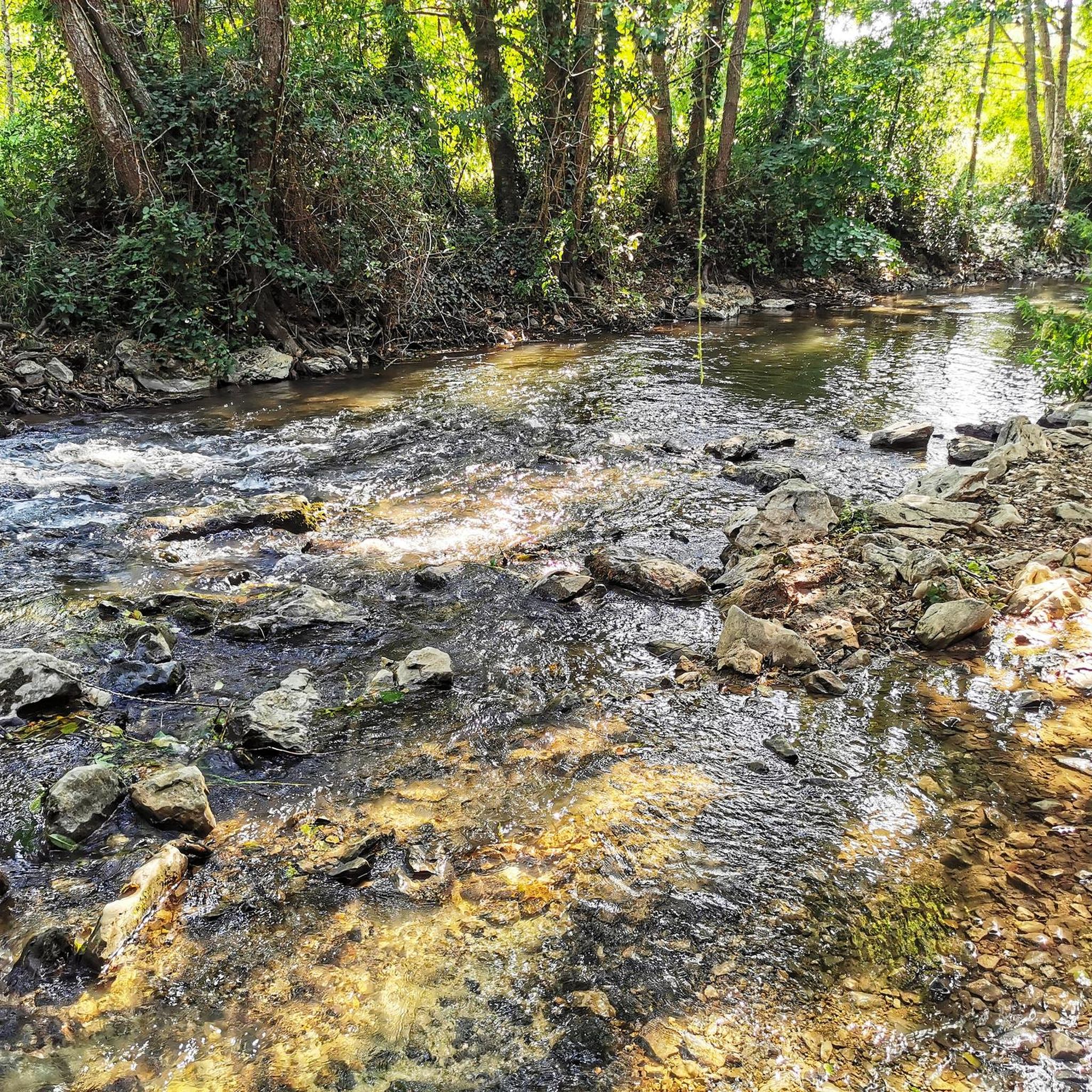
The region is rich in natural beauty. You can cycle through the protected Erve valley, known for its biodiversity and striking limestone cliffs. The Étang de Curécy, a picturesque pond and bird sanctuary, is also accessible. The routes often pass through areas with green hills, forests, and streams, offering serene environments.
Are there any historical landmarks or points of interest to visit while cycling in Saulges?
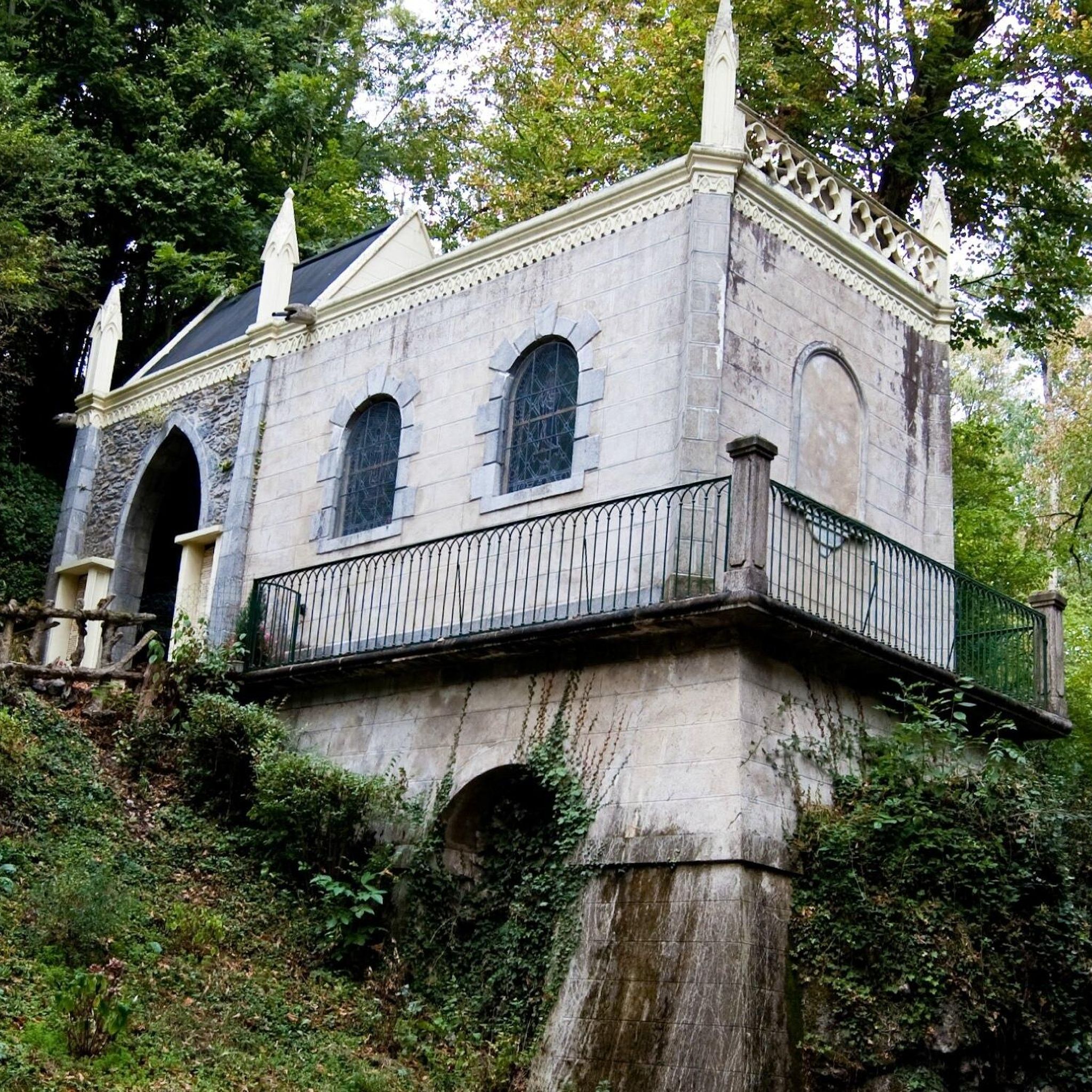
Absolutely. Saulges itself is a 'Petite Cité de Caractère' with historical architecture. You can visit the Saulges Caves and Prehistory Museum, explore the 15th-century Saint-Sylvain Chapel with its panoramic views, or see the beautifully restored Moulin de Gô. The Saint Cénéré Oratory, built over a legendary spring, is another fascinating stop.
Is it possible to connect to larger national cycling networks from Saulges?
Yes, the Coëvrons cycle route, which runs through Saulges, provides convenient connections to larger national cycling networks. These include the Vélofrancette (Caen – La Rochelle) and the Véloscénie (Paris – Le Mont-Saint-Michel), allowing for extended tours and multi-day adventures.
Are there any circular road cycling routes in Saulges?
Many of the road cycling routes in Saulges are designed as loops, allowing you to start and end in the same location. Examples include the Sainte-Suzanne Castle loop from Saint-Georges-le-Fléchard and the Château de Sainte-Suzanne loop from Vaiges, offering convenient round trips through the scenic countryside.
What is the best time of year to go road cycling in Saulges?
The region's green hills and pleasant climate make spring through early autumn ideal for road cycling. During these seasons, you can enjoy comfortable temperatures and lush landscapes. Always check local weather forecasts before heading out.
Are there options for parking when road cycling in Saulges?
Yes, as Saulges is a popular starting point for outdoor activities, you can typically find parking in or near the village center. Many routes also start from other nearby towns and villages, which usually offer public parking facilities suitable for cyclists.
Most popular attractions around Saulges

Get inspired with the komoot mobile app


Explore more
Browse the best Road cycling routes in other regions.
