Attractions and Places To See around Embreville - Top 20
Best attractions and places to see around Embreville are primarily found in the surrounding Somme department of Hauts-de-France. This region is characterized by its coastal proximity, featuring impressive chalk cliffs and the expansive Bay of Somme. Visitors can explore natural monuments and historical sites that reflect the area's geography and past. The landscape offers opportunities to experience both natural beauty and cultural heritage.
Best attractions and places to see around Embreville
- The most popular attractions is Ault Chalk Cliffs,…
Last updated: August 30, 2026
Ault Chalk Cliffs
Highlight • Natural Monument
Translated by Google •
Tip by

Cliffs of Ault
Highlight • Natural Monument
Even if the city has lost its splendor, the site is impressive, because to the north, the plain of …
Translated by Google •
Tip by

Sign up now to discover places like this
Get recommendations on the best single tracks, peaks, & plenty of other exciting outdoor places.
Sign up for free
Panoramic view
Highlight • Other
Translated by Google •
Tip by

Eu Castle
Highlight • Castle
Translated by Google •
Tip by
Ault Coastal Panorama
Highlight • Viewpoint
Tip by

Sign up for free to discover even more attractions around Embreville.
Sign up for free
Already have an account?
Start today with a free account
Your next adventure awaits.
Login or Signup

Tips from the Community

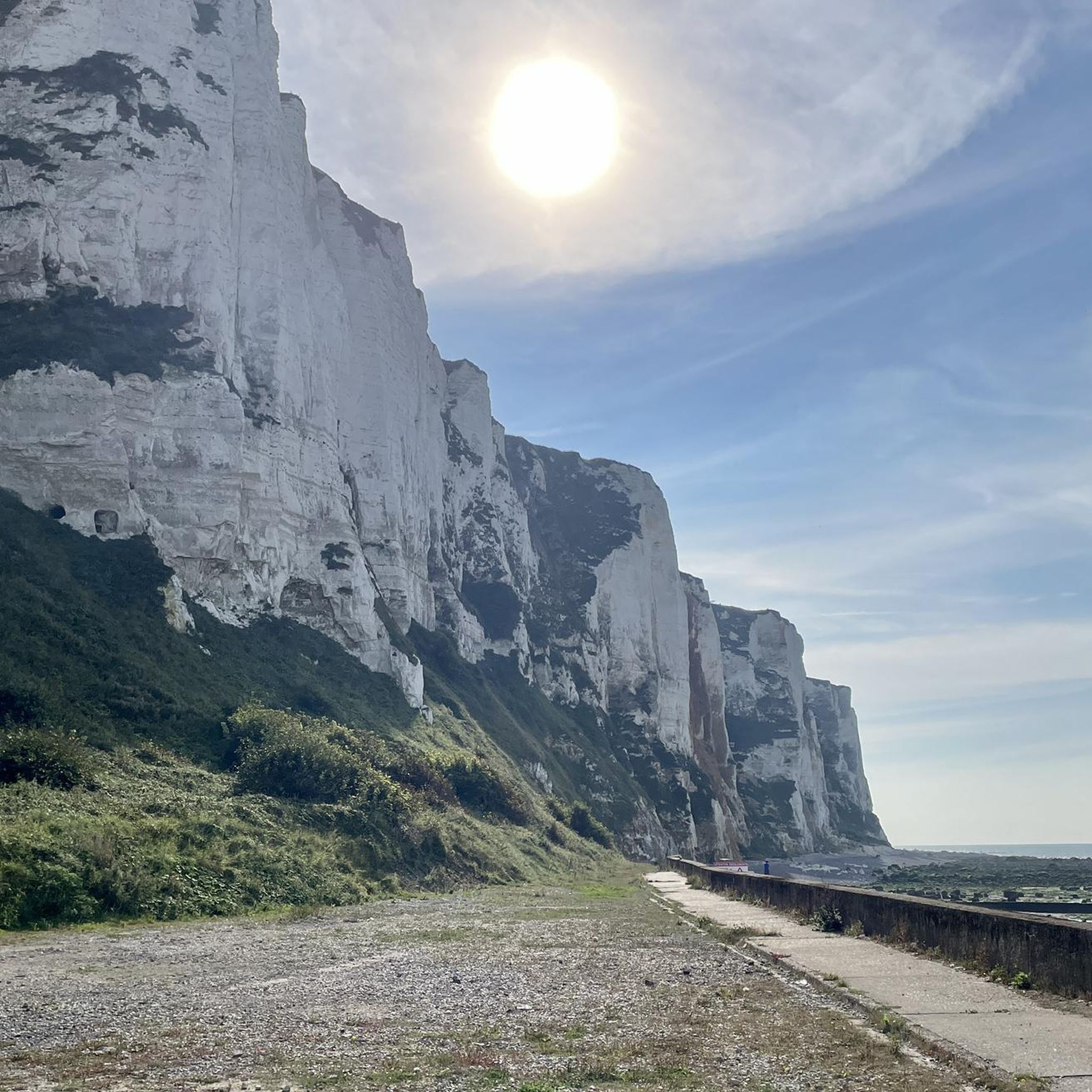
It is wonderful to stroll here, to watch the people with the chalk cliffs in the background
0
0

The cliffs are made of chalk and are impressive to look at.
3
0
Here in Ault begin the chalk cliffs, which stretch all the way to Normandy and repeatedly appear as enormous cliffs.
4
0

The cliffs around the beach of Ault are composed of chalk from the Upper Cretaceous, more precisely from the Turonian and Coniacian (around 83 million years ago to 90 million years ago). They are strewn with flint nodules which highlight the subhorizontal stratification planes (the formation of flint has already been discussed in Discovery of the geology of the cliffs of Étretat, presentation of an excursion from the beach of Tilleul (Antifer) to the Porte d'Amont (Étretat Nord)). The relative proportion of chalk and flint is around 90-95% chalk to 5-10% flint. Flint horizons are stratigraphic markers. On the cliffs of Ault, the regular flint band called Seven Sisters is recognizable and characterizes the boundary between the Middle Coniacian and the Upper Coniacian (around 87 million years ago). The boundary between the lower and middle Coniacian is marked by the Shoreham 2 marl level, which is more difficult to identify. These lithostratigraphic markings allow in particular the correlation of distant deposits, such as between the Normandy and Picardy coasts, or between the French and English coasts.
3
0
The cliffs surrounding Ault beach are made of Upper Cretaceous chalk, more precisely from the terminal Turonian and Coniacian (approximately 83 Ma to 90 Ma). They are dotted with flint nodules that highlight the sub-horizontal stratification planes (the formation of flint has already been discussed in À la découverte géologique des falaises d'Étretat, presentation of an excursion going from Tilleul beach (Antifer) to Porte d'Amont (Étretat Nord)). The relative proportion between chalk and flint is approximately 90-95% chalk for 5-10% flint. The flint horizons are stratigraphic markers. On the cliffs around Ault, the regular band of flint called Seven Sisters is recognizable and characterizes the limit between the Middle Coniacian and the Upper Coniacian (approximately 87 Ma). The boundary between the Lower and Middle Coniacian is marked by the Shoreham 2 marl level, which is more difficult to identify. These lithostratigraphic markers allow in particular the correlation of distant deposits, such as for example between the Normandy and Picardy coasts, or between the French and English coasts.
3
0
The cliffs around the beach of Ault are composed of chalk from the Upper Cretaceous, more precisely from the Turonian and Coniacian (around 83 million years ago to 90 million years ago). They are strewn with flint nodules which highlight the subhorizontal stratification planes (the formation of flint has already been discussed in Discovery of the geology of the cliffs of Étretat, presentation of an excursion from the beach of Tilleul (Antifer) to the Porte d'Amont (Étretat Nord)). The relative proportion of chalk and flint is around 90-95% chalk to 5-10% flint. Flint horizons are stratigraphic markers. On the cliffs of Ault, the regular flint band called Seven Sisters is recognizable and characterizes the boundary between the Middle Coniacian and the Upper Coniacian (around 87 million years ago). The boundary between the lower and middle Coniacian is marked by the Shoreham 2 marl level, which is more difficult to identify. These lithostratigraphic markings allow in particular the correlation of distant deposits, such as between the Normandy and Picardy coasts, or between the French and English coasts.
2
0

The cliffs are worth a visit from above and below.
2
1

Ault is a beautiful place. Beautifully laid out paths above and below the impressive cliffs. The town center is perfect for relaxing. There are a few cafes and bistros for when you get a little hungry. There are benches everywhere where you can sit and enjoy a few minutes of peace and the wonderful views.
1
0
Frequently Asked Questions
What natural attractions can I explore around Embreville?
The region around Embreville is known for its impressive coastal landscapes. You can visit the Ault Chalk Cliffs, which mark the beginning of the Normandy cliffs and offer stunning views of the English Channel. These cliffs are made of Upper Cretaceous chalk and feature flint nodules. The wider Cliffs of Ault also provide an impressive natural monument, with the plain of the Bay of Somme extending to the north.
Are there any historical or cultural sites to visit near Embreville?
Yes, the area offers significant historical and cultural sites. You can explore Notre-Dame and Saint-Laurent, a Gothic church in the nearby town of Eu, known for its architectural features like numerous buttresses and a carved oak organ from 1614. Another notable site is Eu Castle, a historical castle that served as a royal residence and now houses the town hall and the Musée Louis-Philippe.
What outdoor activities are available around Embreville?
The region around Embreville is excellent for various outdoor activities. You can find numerous routes for cycling, running, and gravel biking. For example, there are cycling tours like the 'Eu Castle – Architecture balnéaire loop' and running trails such as the 'Marais de Gousseauville loop'. Explore more options on the Cycling around Embreville, Running Trails around Embreville, and Gravel biking around Embreville guide pages.
Are there family-friendly attractions in the Embreville area?
While specific family-focused activities are not detailed for Embreville itself, historical sites like Eu Castle can be engaging for families interested in history. The natural landscapes, such as the Ault Chalk Cliffs, offer scenic walks that can be enjoyed by families, though some areas may require supervision due to cliff edges.
Where can I find scenic viewpoints near Embreville?
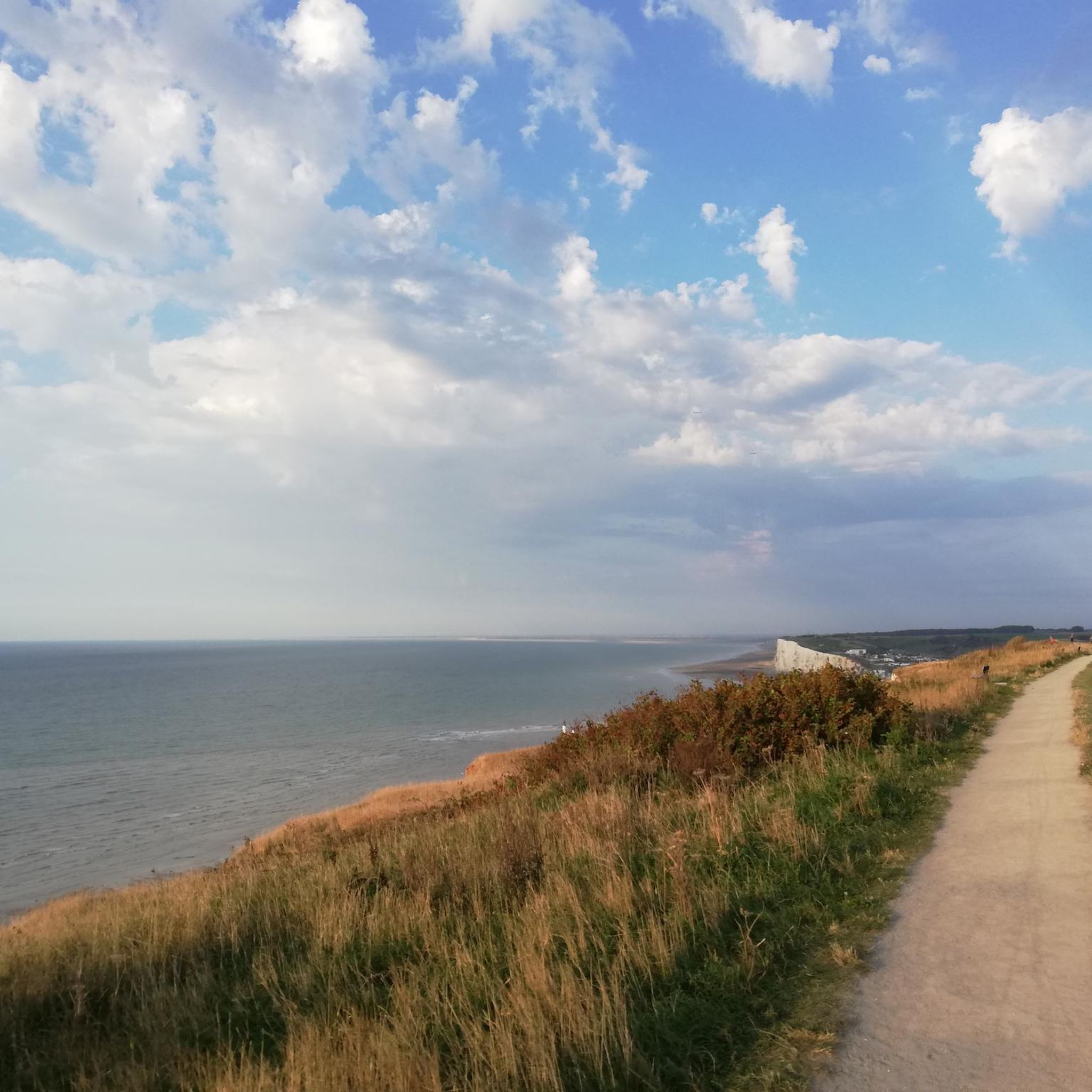
For scenic viewpoints, the Panoramic view near Ault is highly recommended. It offers breathtaking vistas along the cliffside, with benches available to enjoy the scenery. The Ault Chalk Cliffs themselves provide numerous spots for impressive views over the English Channel and the surrounding coastline.
What do visitors enjoy most about the attractions around Embreville?
Visitors particularly appreciate the natural beauty of the coastal areas, especially the impressive Ault Chalk Cliffs. The historical significance and architectural details of sites like Notre-Dame and Saint-Laurent and Eu Castle are also highly valued. The region's blend of natural monuments and cultural heritage is a major draw, as evidenced by over 100 photos and 280 upvotes from the komoot community.
Are there any easy hiking or walking trails near Embreville?
While specific 'easy' hiking trails are not detailed for Embreville, the coastal paths along the Ault Chalk Cliffs offer opportunities for walks with amazing views. For dedicated walking routes, you can explore the 'Marais de Gousseauville loop from Longroy' which is an easy running route, suggesting it could also be suitable for a leisurely walk. More options can be found on the Running Trails around Embreville guide page.
What is the significance of the Ault Chalk Cliffs?
The Ault Chalk Cliffs are a significant natural monument because they mark the beginning of the Normandy cliffs. They are composed of Upper Cretaceous chalk with distinctive flint nodules, showcasing unique geological formations. The village of Ault itself is nestled in a valley protected by the Bois de Cise, offering an exceptional geographical location overlooking the English Channel.
Can I find cycling routes that include historical sites?
Yes, several cycling routes in the area incorporate historical sites. For instance, the 'Eu Castle – Architecture balnéaire loop' is a moderate cycling route that passes by Eu Castle. You can find more routes that combine outdoor activity with cultural exploration on the Cycling around Embreville guide page.
What kind of architecture can I expect to see in the region?
The region features notable architectural examples, particularly Gothic. The Notre-Dame and Saint-Laurent church in Eu is a prime example, built between the 12th and 13th centuries, with intricate buttresses, turrets, and pinnacles. Eu Castle also showcases historical architecture, having been built in the 16th century and renovated multiple times, reflecting different periods of design.
Are there any hidden gems for outdoor activities near Embreville?
While not explicitly 'hidden,' the extensive network of routes for gravel biking offers a chance to explore less-traveled paths. Consider routes like 'Strada biancha Picarda – Eastern end of Falaises d'Albâtre, Ault coastal panorama loop' for a unique perspective on the coastal landscape. These routes can be found on the Gravel biking around Embreville guide page.
Most popular routes around Embreville
Most popular attractions around Embreville

Get inspired with the komoot mobile app


Explore more
Still not found the Highlight you’re looking for? See guides of the top attractions in other regions:
