The best road cycling routes around Neuville-Ferrières
5.0
(44)
1,164
riders
83
rides
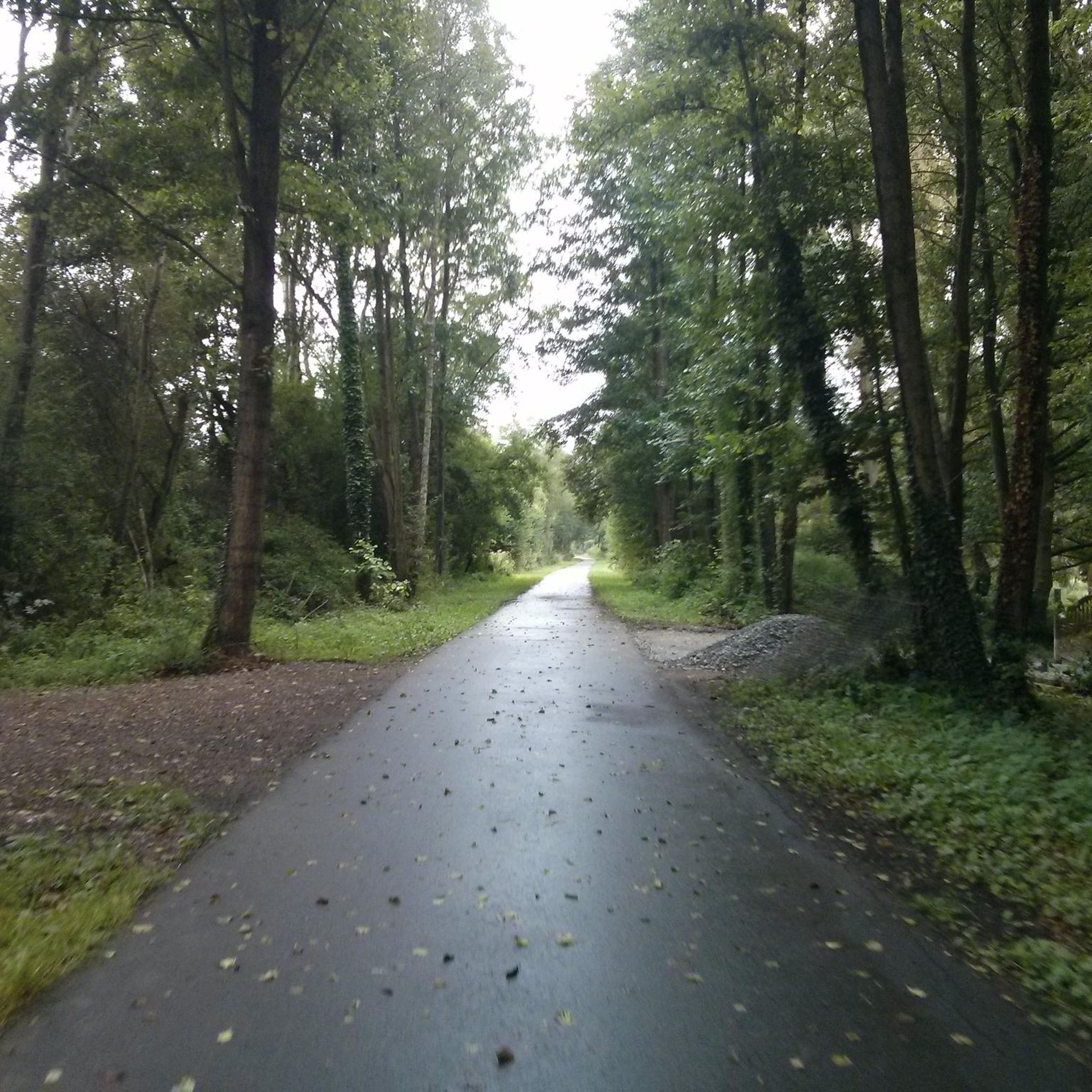
Road cycling around Neuville-Ferrières is characterized by its rolling countryside and agricultural landscapes, typical of the Pays de Caux and Pays de Bray regions. The terrain is notably hilly, with altitudes ranging from 80 to 229 meters, offering varied challenges for cyclists. The area is intersected by the Béthune river and its affluents, contributing to scenic routes through river valleys. A significant feature is L'Avenue Verte, a converted railway line providing nearly 30 miles (50 km) of relatively flat cycling.
…Last updated: July 2, 2026
5.0
(4)
58
riders
Easy road ride. Great for any fitness level. Mostly well-paved surfaces and easy to ride.
5
riders
Easy road ride. Great for any fitness level. Mostly well-paved surfaces and easy to ride.

Sign up for free
4
riders
Moderate road ride. Good fitness required. Mostly well-paved surfaces and easy to ride.
5.0
(1)
4
riders
Easy road ride. Great for any fitness level. Mostly well-paved surfaces and easy to ride.
7
riders
13.3km
00:32
30m
30m
Easy road ride. Great for any fitness level. Mostly well-paved surfaces and easy to ride.
Get access to more routes and recommendations from other explorers.
Sign up for free
Already have an account?
Our route recommendations are based on thousands of hikes, rides, and runs completed by other people on komoot.
Start today with a free account
Your next adventure awaits.
Login or Signup

Tips from the Community


A seemingly simple church with a very original structure composed of a concrete shell reinforced with nested ceramic cylinders (forming the catenary profile of the vault).
1
0

Today the sign was unfortunately painted over in white 🥲
0
0

Church with an elongated plan. A nave preceded by a bell tower with a polygonal spire surmounting the gable of the main façade, finished with a flat chevet and topped with a long-span slate roof. The elevations are in brick, rendering and stone, with each bay materialized by a semicircular bay and buttresses.
0
0
Listed as a Historic Monument, the Notre-Dame church is a very interesting building that expresses some very characteristic features of the architecture of the Norman School, particularly in the Gothic choir attributed to the 13th century. The bell tower-porch has a late 15th century portal with an ogival arcade that frames an openwork tympanum. Above the portal is built a flamboyant style rose window. The nave, flanked by two side aisles, was built in the 13th century, but was extensively remodeled in the 16th and 17th centuries. It has an interior elevation on 3 levels. All that remains of the primitive Romanesque church is the base of the old lantern tower. Visible only from the outside, it is located at the crossing of the transept. The church has some singularities: -The sepulchre dating from the 15th century, representing Christ stretched out on a shroud, Nicodemus, Joseph of Arimathea, Saint John the Evangelist, the Virgin Mary and Mary Magdalene. -The stained glass windows are attributed for the most part to Édouard Didron, a great Parisian master glassmaker.
0
0

Accessible only by mountain bike or gravel.
0
0

The Fontaine aux Dames wash house, purchased by the town hall in 1998, has undergone a complete restoration. The original building being in ruins, a reconstruction was carried out according to a Brayon washhouse model in the year 2000: low brick wall, oak frame and roofing in traditional local tiles. The wash house houses a ceramic work “the monument to the unknown lover” which we owe to the Brayon artists Jacques and Juliette Damville; This monument pays tribute to women for the role they played during the First World War.
1
0

The town of Neufchâtel is one of the martyr towns that suffered significant destruction during the 2nd World War. However, the city center which is a little away from the Avenue Verte deserves a little detour. Around the church, whose foundations date back to the 12th century, there are still a few old houses, the oldest of which, dating from the 16th century, now houses a museum.
0
0
Frequently Asked Questions
What kind of terrain can I expect when road cycling around Neuville-Ferrières?
The region offers a diverse landscape for road cyclists. You'll find rolling countryside and agricultural areas, typical of the Pays de Caux and Pays de Bray. The terrain is notably hilly, with altitudes ranging from 80 to 229 meters, providing varied challenges. Additionally, L'Avenue Verte, a converted railway line, offers nearly 50 kilometers of relatively flat cycling for more relaxed rides.
How many road cycling routes are available in the Neuville-Ferrières area?
There are over 80 road cycling routes available around Neuville-Ferrières. These routes cater to various skill levels, with 23 easy routes, 55 moderate routes, and a few more challenging options.
Are there any easy road cycling routes suitable for beginners or families?
Yes, there are several easy routes. For instance, the Town of Neufchâtel-en-Bray loop from Neufchâtel-en-Bray is an easy 13.3 km route with minimal elevation gain, perfect for a relaxed ride. The L'Avenue Verte also provides a largely flat and accessible option for all skill levels.
What historical landmarks or points of interest can I see along the cycling routes?
You can encounter several interesting sites. The Mesnières-en-Bray Castle is a notable historical landmark that some routes pass by. The village of Neuville-Ferrières itself features a 13th-century church of Notre-Dame and the ruins of a feudal castle. The Avenue Verte, a cycle path built on an old railway line, is also a significant feature of the region.
Are there any circular road cycling routes in the area?
Yes, many routes are designed as loops. For example, the Town of Neufchâtel-en-Bray – Saint-Martin Church loop from Neufchâtel-en-Bray is a popular 34 km circular route. Another option is the Brasserie Sainte Beuve – Town of Neufchâtel-en-Bray loop from Neufchâtel-en-Bray, which covers 45.7 km through varied countryside.
What do other road cyclists enjoy most about cycling in Neuville-Ferrières?
The road cycling routes in Neuville-Ferrières are highly rated by the komoot community, with an average score of 4.9 stars from over 40 reviews. Cyclists often praise the varied terrain, from the flat sections of L'Avenue Verte to the challenging hilly landscapes, and the scenic river valleys that contribute to a diverse and enjoyable riding experience.
What is the best time of year to go road cycling in Neuville-Ferrières?
The temperate oceanic climate of the region, with relatively cool summers and mild, wet winters, makes it pleasant for outdoor activities throughout the year. Spring and autumn generally offer ideal conditions with moderate temperatures and beautiful scenery, while summer provides longer daylight hours.
Are there any routes that pass through natural features like forests or rivers?
Yes, the region is characterized by its natural beauty. The territory extends across the Béthune river and is bordered by its affluents, the Canche and the Philbert, offering scenic routes through river valleys. You can also find natural areas like Le Puits Merveilleux, Eawy Forest, which might be accessible from some cycling routes.
Is there parking available for cyclists near the routes?
While specific parking locations for cyclists are not detailed, areas like Neufchâtel-en-Bray, a central hub for many routes, typically offer public parking facilities. It's advisable to check local parking options in towns and villages before your ride.
Can I find cafes or places to stop for refreshments along the routes?
The routes often pass through or near villages and towns like Neufchâtel-en-Bray, where you can find cafes, bakeries, and other establishments for refreshments. The Brasserie Sainte Beuve – Town of Neufchâtel-en-Bray loop even mentions a specific brasserie in its name, indicating potential stops.
Are there any particularly challenging road cycling routes for experienced riders?
Yes, while many routes are easy or moderate, the 'very hilly' terrain with altitudes up to 229 meters offers opportunities for more challenging rides. There are 3 routes specifically graded as 'difficult' in the area, providing significant elevation gains for advanced cyclists seeking a workout.
What is the average distance of road cycling routes in Neuville-Ferrières?
The routes vary in length, but many fall within a range suitable for a good day's ride. For example, popular routes include the Town of Neufchâtel-en-Bray – Saint-Martin Church loop at 34 km and the Brasserie Sainte Beuve – Town of Neufchâtel-en-Bray loop at 45.7 km, offering substantial distances for exploration.
Most popular attractions around Neuville-Ferrières

Get inspired with the komoot mobile app


Explore more
Browse the best Road cycling routes in other regions.
