Attractions and Places To See around Aincreville - Top 14
Best attractions and places to see around Aincreville include historical sites and natural landscapes in the Meuse department of France. This small commune offers a glimpse into rural French life, with the surrounding region providing access to significant World War I memorials and the natural beauty of the Meuse River valley. The area's geography features undulating countryside, shaped by geological processes, supporting diverse ecosystems and offering opportunities for outdoor recreation.
Best attractions and places to see around Aincreville
- The most…
Last updated: July 1, 2026
Pershing Bridge of Dun-sur-Meuse
Highlight • Bridge
The upper town was largely destroyed during the First World War.
This bridge over the …
Translated by Google •
Tip by

Meuse-Argonne American Cemetery
Highlight • Other
Translated by Google •
Tip by

Sign up now to discover places like this
Get recommendations on the best single tracks, peaks, & plenty of other exciting outdoor places.
Sign up for free
Murvaux
Highlight • Settlement
Translated by Google •
Tip by
Church of Our Lady of Good Guard
Highlight • Other
Translated by Google •
Tip by
Montfaucon American Monument
Highlight • Other
Translated by Google •
Tip by
Sign up for free to discover even more attractions around Aincreville.
Sign up for free
Already have an account?
Start today with a free account
Your next adventure awaits.
Login or Signup




Tips from the Community

This impressive American WWI memorial was dedicated in 1937 to commemorate the victory of the American First Army during the Meuse-Argonne Offensive (26 September – 11 November 1918). The 54-metre-high Doric granite column, designed by John Russell Pope, is topped by a statue symbolising liberty. The monument stands on the hill of Montfaucon, where a medieval monastery once stood and where the Americans achieved a strategic victory in 1918.
9
0
Tips: Climb the 234 steps to the viewing platform for a panoramic view of the former battlefield. Read the inscriptions at the foot of the monument with the names of the participating divisions.
1
0
This impressive American WWI memorial was dedicated in 1937 to commemorate the victory of the American First Army during the Meuse-Argonne Offensive (26 September – 11 November 1918). The 54-metre-high Doric granite column, designed by John Russell Pope, is topped by a statue symbolising liberty 1 2. The monument stands on the hill of Montfaucon, where a medieval monastery once stood and where the Americans achieved a strategic victory in 1918.
1
0
Dun-sur-Meuse is a French commune in the Meuse department, in the Lorraine region. During the First World War, the upper city was largely destroyed. This bridge over the Meuse is one of the most beautiful monuments of this type in France. There are bronze balustrades on both sides of the bridge, with designs in the center and engraved plaques. It reminds French citizens and others, who will cross the bridge for years to come, of the passage of the Meuse. The crossing of the Meuse by the 5th Division was commanded by General John Pershing.
6
0
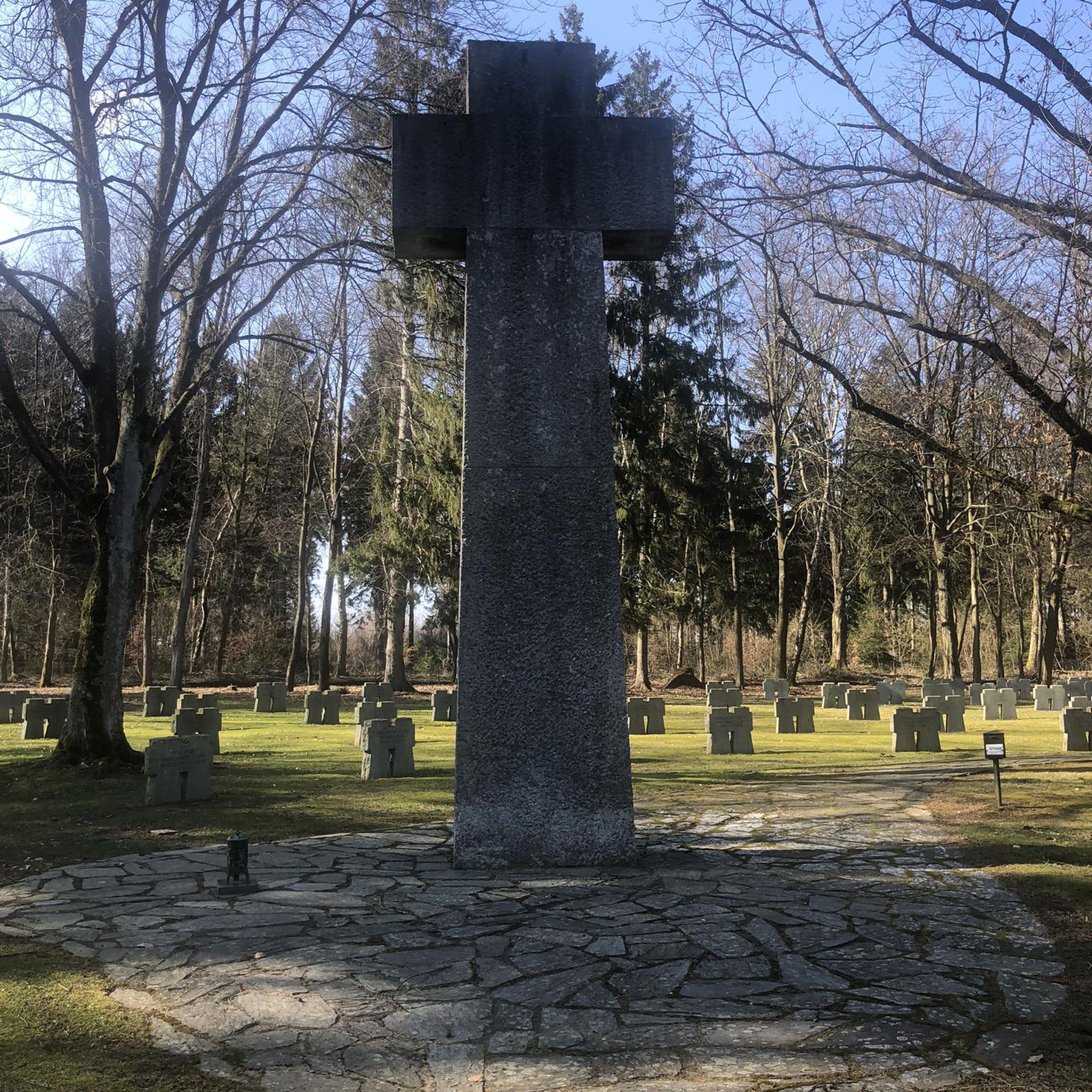
The American military cemetery in Romagne-sous-Montfaucon contains the graves of 14,246 soldiers who died during the First World War in northwest France. It is the largest American military cemetery in Europe. The cemetery site is located in the old front line of the Meuse-Argonne offensive that took place between September 26 and November 11, 1918. The plot of land was used as a cemetery on October 14, 1918 after it had been occupied by the American forces just before. 32nd Infantry Division. The site was given on permanent loan to the US by the French government. The 14,246 graves are spread over eight fields. There are lime trees surrounding the fields, the fields themselves are covered with grass. Each grave has its own stone. For Jewish graves, the top of the stone is shaped like a Star of David. The text on each stone states the soldier's name, rank, division, state and date of death. Of the 14,246 graves, 486 soldiers have not been identified. The stones of the unidentified soldiers bear the text: Here rests in honored glory an American soldier known but to god. On the south side of the cemetery is a memorial building, designed by the architectural firm York and Sawyer from New York. The center of the memorial gives access to a chapel containing the flags of the US and the other allied countries. The stained glass windows show the insignia of the various divisions that operated in the region. The two loggias outside the chapel display the names of 954 missing soldiers. The visitors building is located on the north side of the cemetery. There is a book here in which a visit can be registered. The entrance to the cemetery, both on the west and east sides, is 'guarded' by two white towers with the American eagle on top. There is a large pond in the middle of the site. The maintenance and management of the cemetery is the responsibility of the American Battle Monuments Commission.
5
0
Murvaux is a small village in the Meuse, in the Grand Est region. It has a rich history and beautiful nature. Here are some places of interest to visit in Murvaux: *The church of Murvaux: This church dates from the 12th century and has a Romanesque style. It is a historical monument since 1926. You can admire the beautiful stained glass windows, the wooden altar and the bell tower. *The Murvaux laundry service: This is an old public wash house that used to be used by the villagers to wash their clothes. It was built in the 19th century and has a stone roof. It is located on the edge of a stream and surrounded by greenery. *The old presbytery of Murvaux: This is a large stone house that used to be the residence of the village's parish priest. It was built in the 18th century and has a typical Lorraine architecture. It is now a private residence, but you can still see it from the outside.
6
0
Located within the fortification built from the 10th century overlooking the town, this massive church was built in 1346 by the Lords of Apremont. After centuries of conflict, it remains today the only surviving monument in the upper town. Classified as a historical monument, this jewel of ogival architecture has an organ case and rich 18th century furniture, as well as two masterful sculptures by the contemporary artist Ipoustéguy: the "Death of Bishop Neumann" and the "Christ" . This building is part of the European “Open Churches” network.
5
0
It was built in 1346 in the upper town and has been listed as a monument since 1920. It is in the radiant gothic style. The church contains furniture also classified as a historical monument: a tombstone on the north wall (classified MH in 1913), a wooden organ case from the 17th century, badly damaged during the First World War (classified as M.H. in 1913), an 18th-century wooden altarpiece, located in the Chapel of the Dead in the south wall; a Virgin and Child is set up in the central niche and we also see a pelican opening its belly to feed its young (listed as M.H. in 1913), an 18th century wooden pulpit (classified M.H. in 1936). a marble and bronze sculpture of Ipoustéguy Death of Bishop John Neumann, created in 1976 and installed in 2001.
6
0
Frequently Asked Questions
What significant World War I historical sites can I visit near Aincreville?
The region around Aincreville is rich in WWI history. You can visit the Meuse-Argonne American Cemetery, which is the largest American military cemetery in Europe. Another important site is the Pershing Bridge of Dun-sur-Meuse, commemorating a significant American military feat. Further afield, you can explore the Douaumont Ossuary and the Verdun War Memorial, both poignant reminders of the Battle of Verdun.
Where can I learn more about the American involvement in WWI near Aincreville?
For a deeper understanding of American involvement, visit the Meuse-Argonne American Cemetery, which honors soldiers from the Meuse-Argonne Offensive. Additionally, the Montfaucon American Monument stands as an impressive memorial to the victory of the American First Army during this offensive.
Are there any historical churches or traditional villages to explore?
Yes, you can visit the Church of Our Lady of Good Guard, a Gothic Rayonnant style church built in 1346, located in the nearby upper town. The small village of Murvaux also offers a glimpse into traditional village life with its 12th-century Romanesque church and old public wash house.
What kind of outdoor activities are available around Aincreville?
The undulating countryside and natural settings of the Meuse department offer various outdoor activities. You can find numerous opportunities for hiking, running, and road cycling. For detailed routes, explore the guides for Hiking around Aincreville, Running Trails around Aincreville, and Road Cycling Routes around Aincreville.
Are there hiking opportunities near Aincreville?
Absolutely. The area provides several hiking trails, ranging from easy to moderate difficulty. Popular options include a hiking loop from Dun-sur-Meuse, the Hindenburg Line loop from Romagne-sous-Montfaucon, and the Lac Vert loop from Dun-sur-Meuse. You can find more details and routes in the Hiking around Aincreville guide.
Can I find cycling routes in the Aincreville area?
Yes, there are several road cycling routes available. You can explore longer rides like the Verdun Citadel loop from Romagne-sous-Montfaucon or shorter scenic loops such as the Beautiful view loop from Romagne-sous-Montfaucon. Discover more options in the Road Cycling Routes around Aincreville guide.
What natural features define the landscape around Aincreville?
Aincreville is situated within the Meuse department, characterized by its undulating countryside and the significant presence of the Meuse River. The region's landscape is shaped by complex geological processes, supporting diverse ecosystems and offering picturesque natural settings for exploration.
Are there family-friendly attractions or activities suitable for children?
While Aincreville itself is a small, traditional commune, many of the historical sites like the Pershing Bridge of Dun-sur-Meuse and the village of Murvaux are suitable for families interested in history and local culture. The natural landscapes also offer opportunities for family walks and outdoor exploration, depending on the children's age and interests.
What is the local culture like in Aincreville itself?
Aincreville offers a glimpse into authentic rural French life. Its charm lies in its untouched village atmosphere, characterized by community life, agricultural practices, and efforts to maintain cultural continuity. Visitors can experience local culture through traditional arts and crafts, and community celebrations, though these are not daily occurrences.
What is the best time of year to visit Aincreville for outdoor activities?
The Meuse department experiences seasonal variations. Spring and autumn generally offer pleasant temperatures for hiking and cycling, with lush greenery or vibrant fall colors. Summer can also be suitable, though it might be warmer. Winter can be cold, but offers a different, quieter experience of the landscape.
What do visitors typically enjoy most about the attractions near Aincreville?
Visitors appreciate the profound historical significance of the WWI memorials and battlefields, finding them poignant and educational. The natural beauty of the Meuse River valley and the opportunity to experience authentic rural French life in a tranquil setting are also highly valued.
Are there any specific viewpoints or scenic spots to discover?
While specific viewpoints within Aincreville are not highlighted, the Montfaucon American Monument stands on the hill of Montfaucon, offering commanding views of the surrounding area, which was strategically important during WWI. The undulating countryside of the Meuse department generally provides many scenic vistas.

Get inspired with the komoot mobile app


Explore more
Still not found the Highlight you’re looking for? See guides of the top attractions in other regions:
