The best road cycling routes around Yermenonville
4.3
(95)
1,589
riders
227
rides
Road cycling routes around Yermenonville are situated within the Eure-et-Loir department, characterized by diverse landscapes. The region features rolling hills and winding country lanes, alongside flatter plains. Cyclists can encounter varied terrain, from the agricultural areas of Beauce to the more undulating sections near the Eure River. This provides a range of gradients and scenic backdrops for road cycling.
Best road cycling routes around Yermenonville
- The most popular road cycling route is Lavoir de Soulaires – Château de Maintenon loop…
Last updated: May 21, 2026
4.2
(11)
325
riders
59.9km
02:26
300m
300m
Moderate road ride. Good fitness required. Mostly well-paved surfaces and easy to ride.
4.7
(3)
136
riders
92.4km
03:53
510m
510m
Moderate road ride. Good fitness required. Some segments of this route may be unpaved and difficult to ride.

Sign up for free
4.0
(1)
26
riders
9.64km
00:25
60m
60m
Easy road ride. Great for any fitness level. Mostly well-paved surfaces and easy to ride.
3.0
(1)
11
riders
60.2km
02:34
330m
330m
Moderate road ride. Good fitness required. Mostly well-paved surfaces and easy to ride.
3.0
(1)
6
riders
59.2km
02:26
350m
350m
Moderate road ride. Good fitness required. Mostly well-paved surfaces and easy to ride.
Get access to more routes and recommendations from other explorers.
Sign up for free
Already have an account?
Our route recommendations are based on thousands of hikes, rides, and runs completed by other people on komoot.
Start today with a free account
Your next adventure awaits.
Login or Signup


Tips from the Community

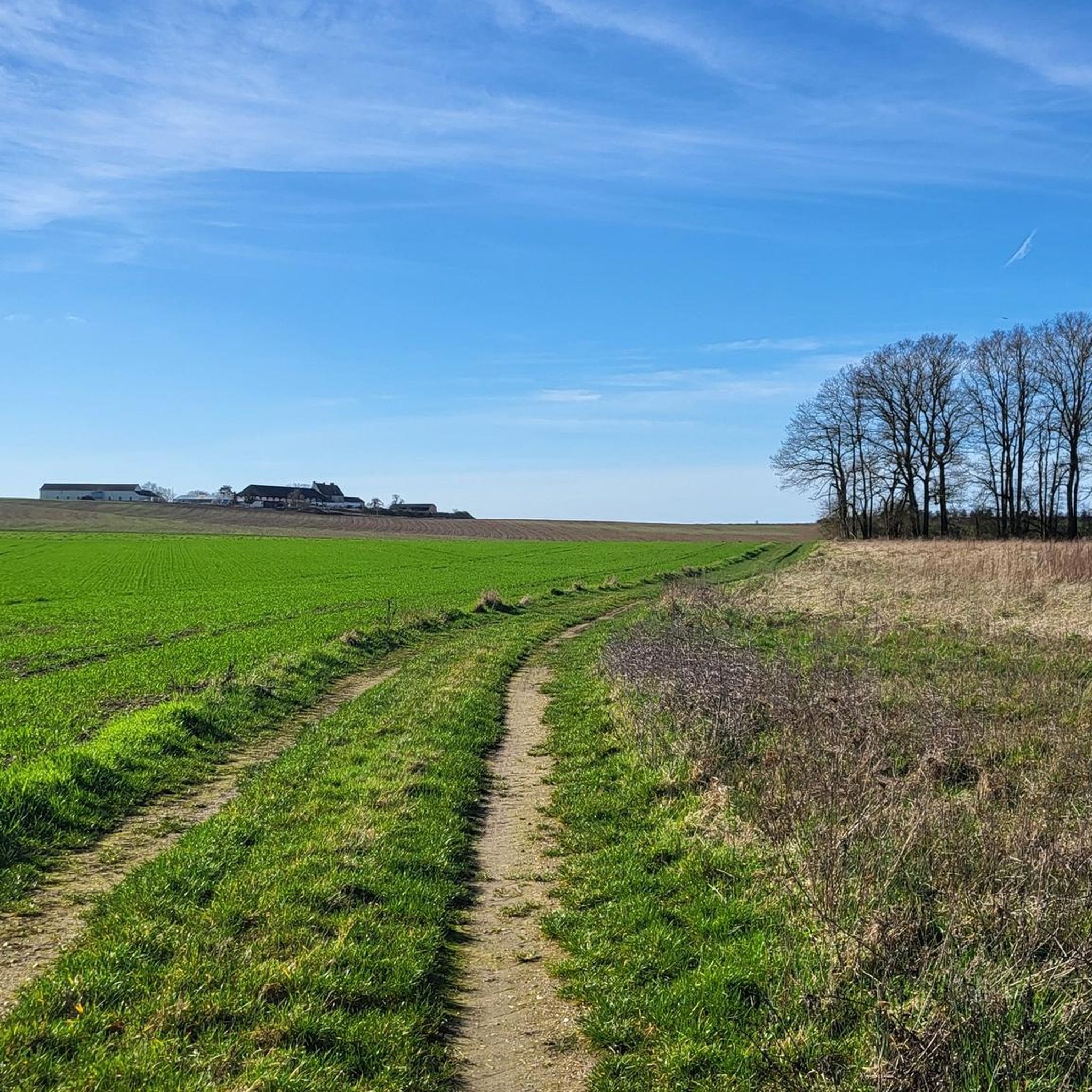
Very nice route, 3/4 of which is in the forest. The few roads used are very quiet. The advantage of this route, if you like, is that it can easily be transformed into a mountain bike route. Just look to the right or left of the cycle path and there is a single track. Have a good trip to all those who wish to take it.
0
0

The Saint-Léger church of Houx is a religious monument located in the commune of Houx, in the Centre-Val de Loire region. Although its existence is attested, the available sources do not specify either its period of construction or the architectural or historical details associated with it. This type of building, typical of small French towns, often plays a central role in local life, both spiritually and communally. In the Centre-Val de Loire, parish churches like Saint-Léger of Houx were historically essential gathering places for the inhabitants. They served not only for religious services, but also for social or civic events. Their presence generally reflects the medieval or modern organization of the villages, where the church constituted a major geographical and identity landmark.
0
0
Saint-Martin Church. This extremely modest church consists of a four-bay nave extended by a three-sided apse to the east and a sacristy to the north. It is built of rubble block, with sandstone buttresses and shell limestone surrounds. Although its history is poorly documented, it is likely that an earlier 16th-century church was enlarged and modified in the 18th and early 19th centuries. Externally, its elevation is punctuated by a short timber-framed bell tower erected in 1889-1890 above the western bay of the nave. The western façade is late: it features an 18th-century arched doorway, with the first level lit by three unequal pointed-arch windows, an addition made in 1820. On the south façade, a stone cornice runs under the roof, while a drip edge stringcourse is located one meter above the ground. Two of the apse windows were blocked during the installation of the great altarpiece. In 1890, when the spire was moved, the first bay of the nave underwent some modifications: the western wall was lined internally with another wall in which three large arches were cut; in the space thus delimited, two chapels were created on the ground floor, on either side of the entrance door, and a small gallery on the first level, while a staircase provided access to the bell tower. The interior of the church was furnished and decorated in the late 18th century. and during the Restoration: the Visitation altarpiece (1815-1820) dates from this period. Some statues, including four wooden evangelists, came from the old tabernacle. Statues of Saint Martin and Saint James were placed in the side niches of the altarpiece. The Sauvegarde de l'Art français (French Art Protection Agency) contributed €30,490 to the roofing work on the building in 2002.
1
0
According to tradition, the church choir covers the remains of an older building, possibly dating back to the 6th century, which was built to house the saint's body. According to current knowledge, the commune of Saint-Piat (Sanctus Piatus in Latin) officially appeared in 1087, mentioned in a charter of the Nottonville Priory (Eure-et-Loir), on which it depended. The current building was rebuilt during the time of Francis I, as suggested by the date 1535 engraved on two buttresses of the apse and the date 1542 engraved on a piece of wood from the vault. This is according to a study by the SAEL (Eure-et-Loir Archaeological Society). The three-sided apses, the dripstone towers (horizontal members projecting from a wall), and the sculpted roof structures are a testament to the importance of the reconstructions carried out in the department during the 16th century. The church of Saint-Piat is one of them. While the church has not been officially recognized, it nevertheless contains objects that have attracted attention both for their antiquity and quality, but not always for good reason. Their artistic value, far from attracting only religious or aesthetic interest, has also aroused a covetousness that, unfortunately, remains for some of them. Fortunately, those still in place are carefully cared for and offer the curious a story to discover, a beauty to slowly ponder as they progress toward the choir.
0
0

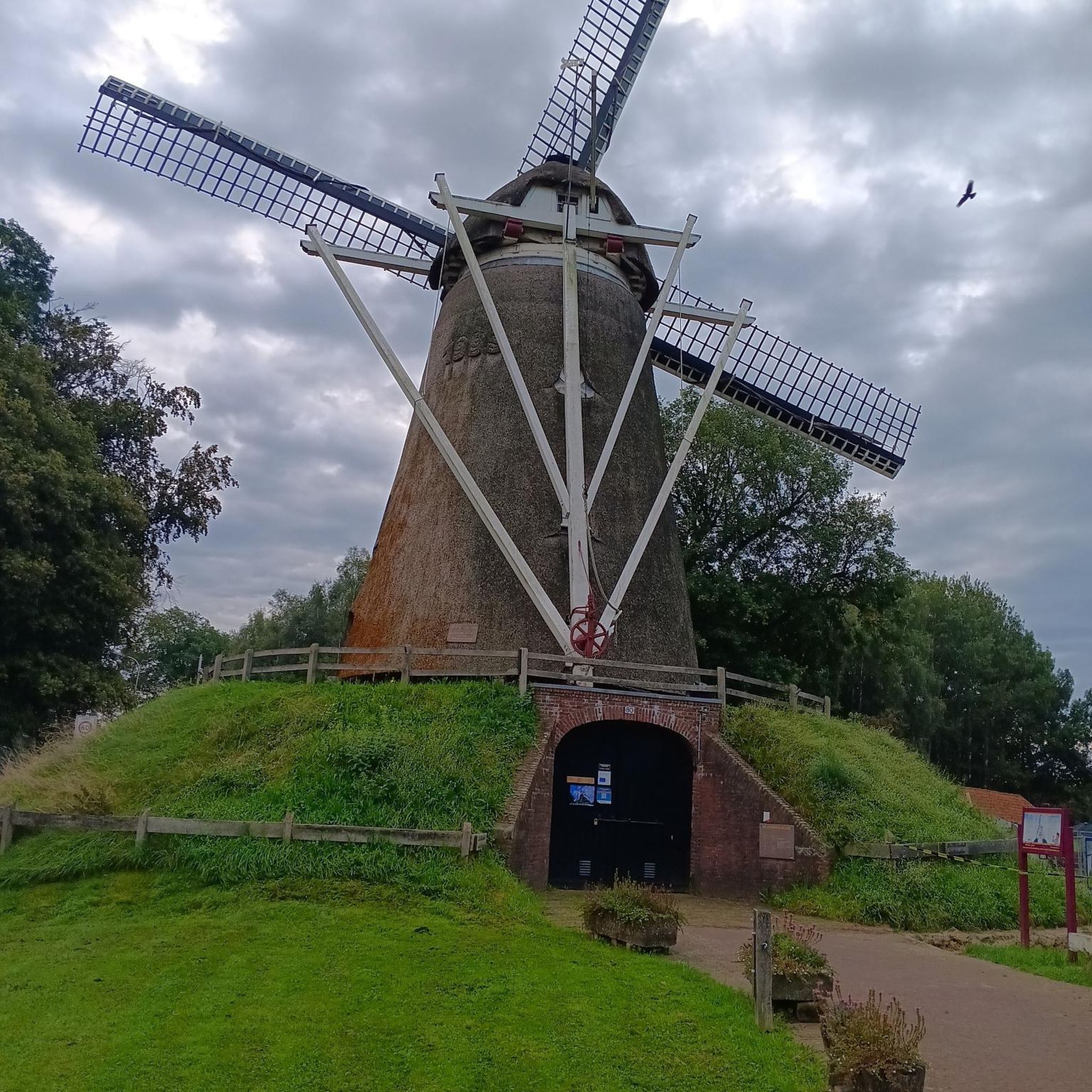
Many centuries ago, our ancestors discovered the possibility of harnessing the power of the elements—which, while helpful and useful on the one hand, could also be a threat as untamed forces of nature—for various purposes, thus eliminating the need for human or animal muscle power. Mills like these are a good example of the human engineering skills of earlier generations: The heavy millstones used to grind grain or press oil, for example, could be powered by wind or—as in this case—water.
0
0

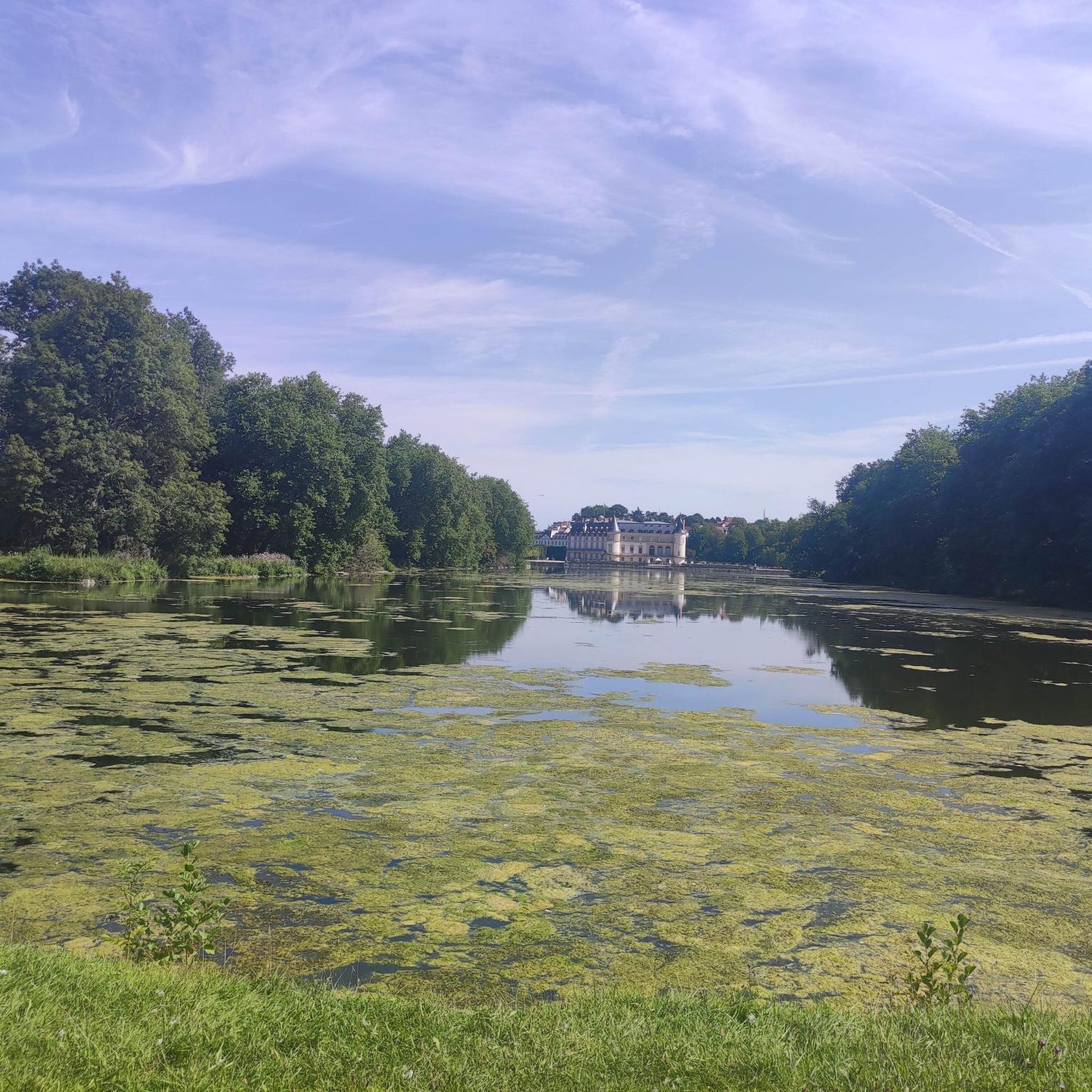
Don't be surprised if you spot flamingos 🦩 on the banks of the pond. They're still there, despite the park being closed for many years.
0
0

The cathedral is the seat of the bishop of the Roman Catholic diocese of Chartres
6
0

Bench, greenery, river and shade for a bite to eat or a break.
0
0
Frequently Asked Questions
How many road cycling routes are available around Yermenonville?
There are over 200 road cycling routes available around Yermenonville. The komoot community has mapped 216 routes, offering a wide variety of options for different skill levels and preferences.
What kind of terrain can I expect on road cycling routes near Yermenonville?
Road cycling around Yermenonville offers diverse terrain. You'll find a mix of rolling hills and winding country lanes, especially in areas like the Perche Regional Natural Park. There are also flatter plains, characteristic of the Beauce region, providing varied gradients and scenic backdrops for your rides.
Are there routes suitable for beginners or families?
Yes, the Yermenonville area offers routes suitable for beginners and families. There are 74 easy routes available. An example is the Armenonville Church – Armenonville church loop from Yermenonville, which is 15.7 miles (25.2 km) long and leads through local villages and fields.
What are some challenging road cycling routes around Yermenonville?
While most routes are moderate, there are 3 difficult routes available for those seeking a challenge. For a longer, moderate ride with significant elevation, consider the Rambouillet Castle – Château de Maintenon loop from Boigneville, which is 58.2 miles (93.6 km) with an elevation gain of 1,704 feet (519 meters).
Can I find circular road cycling routes in the Yermenonville area?
Yes, many of the road cycling routes around Yermenonville are circular. For instance, the popular Lavoir de Soulaires – Château de Maintenon loop from Yermenonville is a 35.7-mile (57.5 km) circular route that passes by historical landmarks.
What historical landmarks or natural features can I see along the cycling routes?
The region is rich in historical and natural features. Along your rides, you might encounter sites like the Maintenon Castle, the Saint-Piat Mill, or the Saint Peter's Church in Épernon. The broader Eure-et-Loir department also features diverse landscapes, including the Eure River banks and parts of the Perche Regional Natural Park.
Are there any particularly scenic viewpoints for road cyclists?
While specific viewpoints are not detailed, the Eure-et-Loir region is known for its 'beautiful countryside' with 'rolling hills carved by winding country lanes'. Routes along the Veloscenic, which passes through the area, offer varied scenery threading through 'patchwork countryside between quaint villages and historic towns', providing many picturesque moments.
What do other cyclists say about road cycling in Yermenonville?
The road cycling routes around Yermenonville are highly rated by the komoot community, with an average score of 4.3 stars from over 90 reviews. Cyclists often praise the varied terrain, charming villages, and the opportunity to explore historical sites and natural beauty.
When is the best time of year to go road cycling in Yermenonville?
The Eure-et-Loir region generally offers pleasant conditions for cycling from spring through autumn. These seasons provide comfortable temperatures and vibrant landscapes, making it ideal to explore the countryside and historical sites. Always check local weather forecasts before heading out.
Is there information on parking or public transport access for these routes?
While specific parking areas for each route are not detailed in the guide, many routes start from villages like Yermenonville or Saint-Piat, where local parking may be available. For broader regional information on cycling and transport, you might find resources on the local tourism board's website, such as tourisme28.com/en/cycling/.
Are there any amenities like cafes or places to stay along the routes?
The routes often pass through charming villages and historic towns, which typically offer local amenities such as cafes, restaurants, and accommodation options. Exploring towns like Maintenon or Épernon, which are often on or near cycling paths, will provide opportunities for refreshments and breaks.
Are there any lesser-known or 'hidden gem' routes worth exploring?
While the guide highlights popular routes, the Eure-et-Loir department is dotted with 'many cycle routes and tracks' that traverse diverse landscapes. Exploring the komoot map for routes starting from smaller hamlets or those venturing into the less-traveled parts of the Perche Regional Natural Park could reveal unique and quieter cycling experiences.
Most popular routes around Yermenonville
Most popular attractions around Yermenonville

Get inspired with the komoot mobile app


Explore more
Browse the best Road cycling routes in other regions.
