Attractions and Places To See around Bécordel-Bécourt - Top 20
Best attractions and places to see around Bécordel-Bécourt include sites reflecting its history and rural character. This commune in the Somme department of northern France features landmarks primarily related to World War I, alongside a historic castle and a rebuilt church. The area is characterized by an unspoiled natural setting, offering a poignant connection to historical events. Visitors can explore notable landmarks and memorials.
Best attractions and places to see around Bécordel-Bécourt
- The most popular attractions is Vaux Viewpoint,…
Last updated: July 6, 2026
Newfoundland Memorial
Highlight • Other
Translated by Google •
Tip by

Lochnagar Crater
Highlight • Monument
Translated by Google •
Tip by

Sign up now to discover places like this
Get recommendations on the best single tracks, peaks, & plenty of other exciting outdoor places.
Sign up for free
Thiepval Memorial
Highlight • Viewpoint
Translated by Google •
Tip by
Scottish Divisions Memorial at the Sunken Lane
Highlight • Other
Translated by Google •
Tip by

Vaux Viewpoint
Highlight • Other
Translated by Google •
Tip by
Sign up for free to discover even more attractions around Bécordel-Bécourt.
Sign up for free
Already have an account?
Start today with a free account
Your next adventure awaits.
Login or Signup


Tips from the Community

Officially part of the Historial de la Grande Guerre, the Thiepval Museum is located near the impressive Thiepval Memorial and offers an in-depth look at the Battle of the Somme of 1916. Opened in 2016 to mark the centenary of this bloody battle, the museum comprises seven thematic areas, each highlighting a different aspect of the war. One of the highlights is the 60-metre-long panoramic comic strip by artist Joe Sacco, which vividly depicts the events of 1 July 1916. Visitors will gain insight not only into the military strategies, but also into the human suffering and the culture of remembrance surrounding the missing of the Somme.
5
0
The Cratère de Lochnagar, an impressive war memorial, was created by a huge mine blown up by the British Royal Engineers on 1 July 1916, as part of the Battle of the Somme. The explosion marked the beginning of the battle and left a crater 90 metres in diameter and 25 metres deep. Interestingly, the crater was named after Lochnagar Street, the trench from which the tunnel was dug. The crater is now a preserved site of remembrance and a religious service is held there every year on 1 July in memory of those who died.
8
0
An interesting anecdote is that the monument was inaugurated in 1932 by the Prince of Wales and the French President Albert Lebrun. The monument consists of a series of arches supported by sixteen massive square pillars, on which the names of the missing soldiers are engraved. At the foot of the monument is a Franco-British military cemetery with 600 graves: 300 French and 300 British soldiers.
6
0
The Parc Mémorial de Thiepval is an impressive war memorial that commemorates the 72,337 missing British and South African soldiers who died during the Battle of the Somme in World War I. Designed by Sir Edwin Lutyens, the memorial is considered one of the greatest British monumental works of the twentieth century. The park also includes a visitor centre, opened in 2004, and the Jardins de la Paix, where visitors can reflect and enjoy the serene surroundings. Every year on 1 July, remembrance ceremonies are held to honour the victims of the Battle of the Somme.
8
0

The monument to the 8th Argyll and Sutherland Highlanders is a Celtic cross symbolically erected on the embankment of a sunken road, at the spot where the men of this regiment rushed to capture the village of Beaumont-Hamel on November 13, 1916, at the end of the Battle of the Somme. First, on July 1, when it was located in no man's land, exactly equidistant from the British and German trenches, and served as a refuge for so many soldiers wounded during the fighting; then, five days before the end of that same battle, when the village of Beaumont-Hamel was finally captured on November 13, by the men of the 8th Argyll and Sutherland Highlanders, who had rushed from that position. The 8th Argyll and Sutherland Highlanders was a Scottish regiment that fought on several fronts. A reading of the inscriptions engraved on the different sides of the base of this monument tells us this. Thus, this cross is dedicated to the glory of the battalion's glorious dead and to the memory of those who will never return. Its combat losses, throughout the war, amounted to 51 officers and 831 men and non-commissioned officers, including 105 wounded officers and 2,527 men and non-commissioned officers. Finally, a Celtic inscription reveals "it is good to have friends on the day of battle." Mobilized from August 4, 1914, to November 12, 1919, a period of five years and 100 days, the regiment fought from May 1, 1915, to November 11, 1918, in Belgium and France. Until 1918, the 8th Argyll and Sutherland Highlanders belonged to the 51st Division; In 1915, it fought at Richebourg, Festubert and on Thiepval Ridge, which was to leave a sad memory for the British on 1 July 1916 (this is where the memorial to the missing now stands); in 1916, it fought at the Labyrinth, Vimy Ridge, Fourcaux Wood (High Wood), Beaumont-Hamel (there, therefore) and Courcelette; in 1917, it was Roclincourt, Arras, Roeux, Ypres and Cambrai. In 1918, the 8th Argyll and Sutherland Highlanders fought as part of the 61st Division at Saint-Quentin, Holnon Wood, Villéveque, Nesle, Villers-Bretonneux and on the Lys; but also within the 15th division which distinguished itself at Soissons, at Buzancy and in the final advance which would lead to the armistice
0
0


The largest Newfoundland memorial in Europe. 30 hectare site with preserved trenches
1
0

Just off the road to Bapaume, is the site of the grand mine. At 7am on the 1st July 1916 the biggest explosion in history cause this hole o e of several that marked the start of the Battle of the Somme. Well worth a visit.
0
0
Frequently Asked Questions
What historical sites related to World War I can I visit around Bécordel-Bécourt?
The area is rich in WWI history. You can explore the Newfoundland Memorial, a park with preserved trenches, cemeteries, and memorials. Another significant site is the Lochnagar Crater, a massive crater from a mine explosion at the start of the Battle of the Somme. Don't miss the impressive Thiepval Memorial, commemorating missing soldiers, and the Scottish Divisions Memorial at the Sunken Lane.
Are there any natural viewpoints or scenic spots in the area?
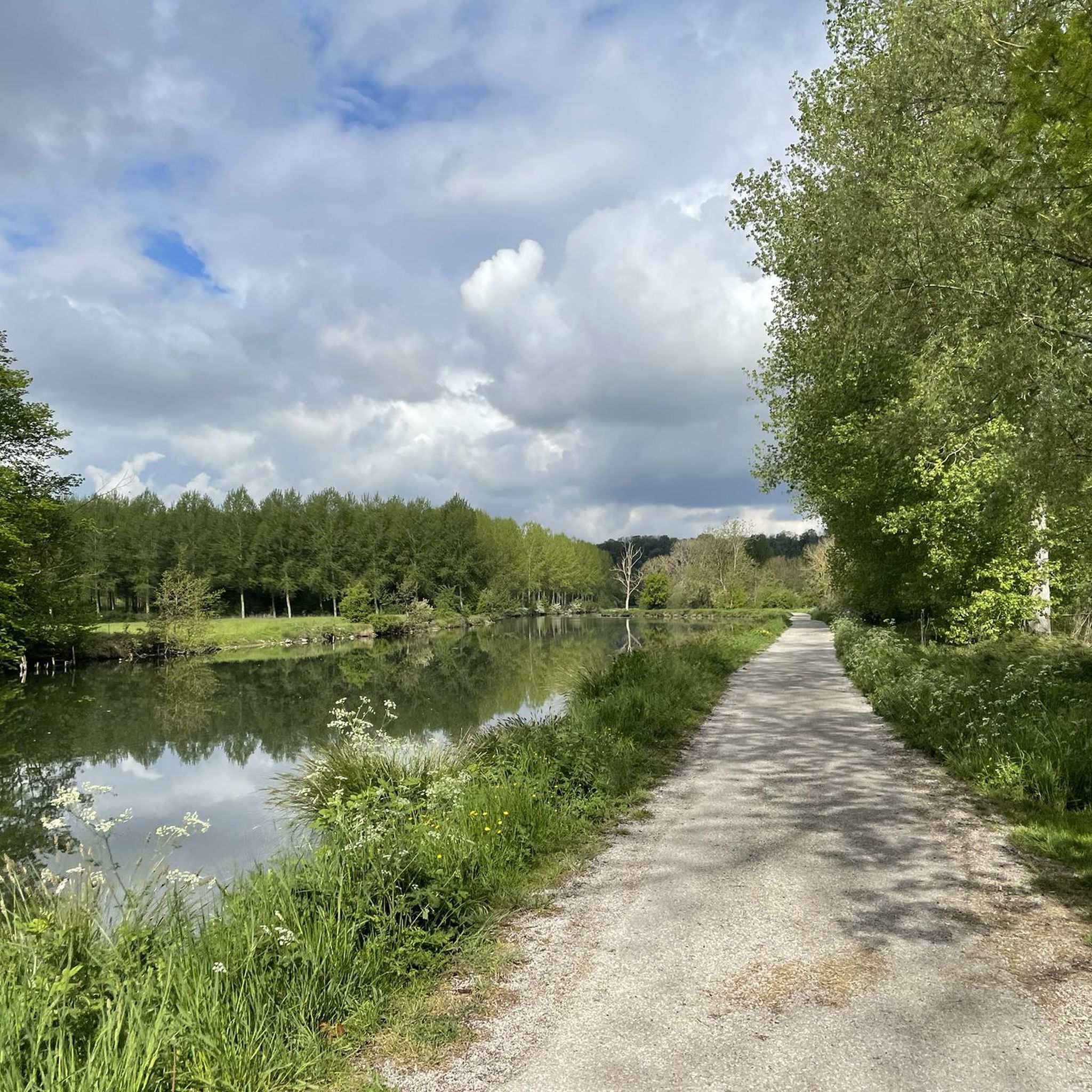
Yes, the Vaux Viewpoint offers an exceptional panorama of the ponds, marshes, and meanders of the upper Somme valley, showcasing the region's unspoiled natural setting.
What cycling routes are available near Bécordel-Bécourt?
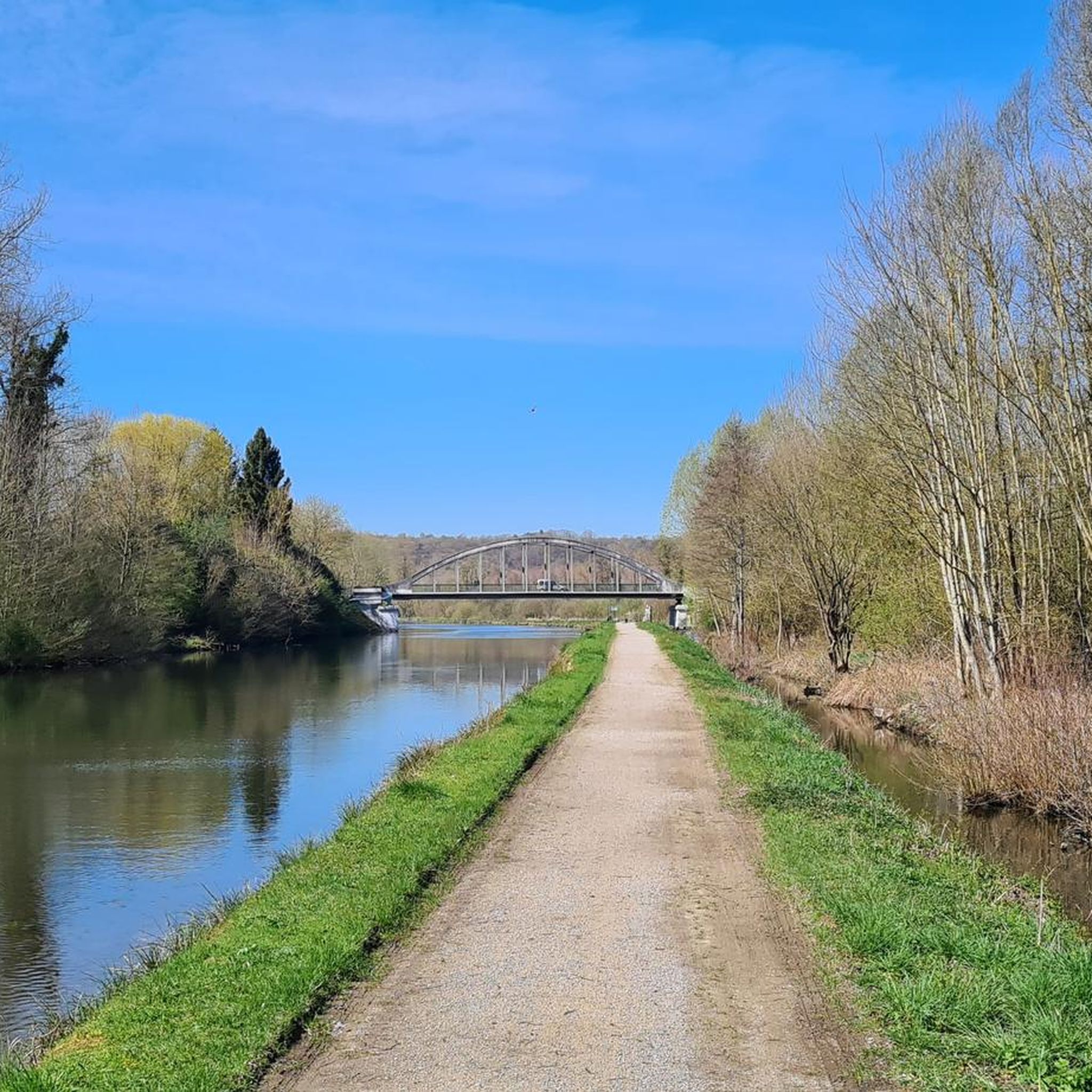
You can find several cycling routes, mostly of moderate difficulty. Popular options include the 'Towpath Along the Somme River' loops and a route connecting the Newfoundland Memorial and Thiepval Memorial. For more details, check the Cycling around Bécordel-Bécourt guide.
Are there mountain biking trails around Bécordel-Bécourt?
Yes, there are mountain biking trails ranging from easy to difficult. You can explore routes like 'Aveluy nymph loop' or more challenging ones such as 'Beaumont-Hamel trails'. Discover more in the MTB Trails around Bécordel-Bécourt guide.
What running trails can I find near Bécordel-Bécourt?
Runners can enjoy various trails, including the 'Fricourt Salient and Lochnagar Crater Loop' and routes around the 'Somme Trench Museum'. Most are of moderate difficulty. Find detailed information in the Running Trails around Bécordel-Bécourt guide.
Is the Lochnagar Crater accessible for visitors?
Yes, the Lochnagar Crater is a preserved site of remembrance. You can tour the crater on a walk and find information panels detailing its history. Annual commemoration ceremonies are also held there.
What is the significance of the Thiepval Memorial?
The Thiepval Memorial commemorates the 72,337 missing British and South African soldiers who died during the Battle of the Somme in World War I. It features a visitor center, the Jardins de la Paix, and a Franco-British military cemetery.
What can I expect to see at the Newfoundland Memorial?
At the Newfoundland Memorial, you can explore preserved trenches, cemeteries, and memorials dedicated to the Royal Newfoundland Regiment. A notable feature is the caribou statue overlooking the battlefield. The park is open daily and entry is free.
Are there any family-friendly attractions in Bécordel-Bécourt?
Many of the historical sites, such as the Thiepval Memorial and Lochnagar Crater, are considered family-friendly, offering educational experiences about World War I history in an outdoor setting.
What is the Church of St. Waast?
The Church of St. Waast in Bécordel-Bécourt was completely destroyed during the First World War but was meticulously rebuilt in 1925, standing as a symbol of the village's resilience and history.
Can I visit Castle Bécourt?
Castle Bécourt, along with its chapel and surrounding park, offers a glimpse into the region's past. While it's a historic landmark, specific visitor access details may vary.
Are there military cemeteries in Bécordel-Bécourt?
Yes, Bécordel-Bécourt is home to British military cemeteries from World War I. These include Dartmoor Cemetery, established in August 1915 with 768 Commonwealth burials, and Bécourt Military Cemetery, which contains 713 Commonwealth casualties from 1914-1918.
Most popular routes around Bécordel-Bécourt
Most popular attractions around Bécordel-Bécourt

Get inspired with the komoot mobile app


Explore more
Still not found the Highlight you’re looking for? See guides of the top attractions in other regions:
