Attractions and Places To See around Denonville - Top 8
Attractions and places to see around Denonville, located in the Eure-et-Loir department of northern France, offer a blend of historical landmarks and natural areas. This commune features significant historical sites such as a notable château and an ancient church. The region is also part of a Natura 2000 site, providing habitat for various plain bird species.
Best attractions and places to see around Denonville
- The most popular attractions is Carrousel de Baronville, a former model farm and marquis' stables built in 1882. It was used for both agricultural and equestrian purposes, hosting horse racing training and competitions.
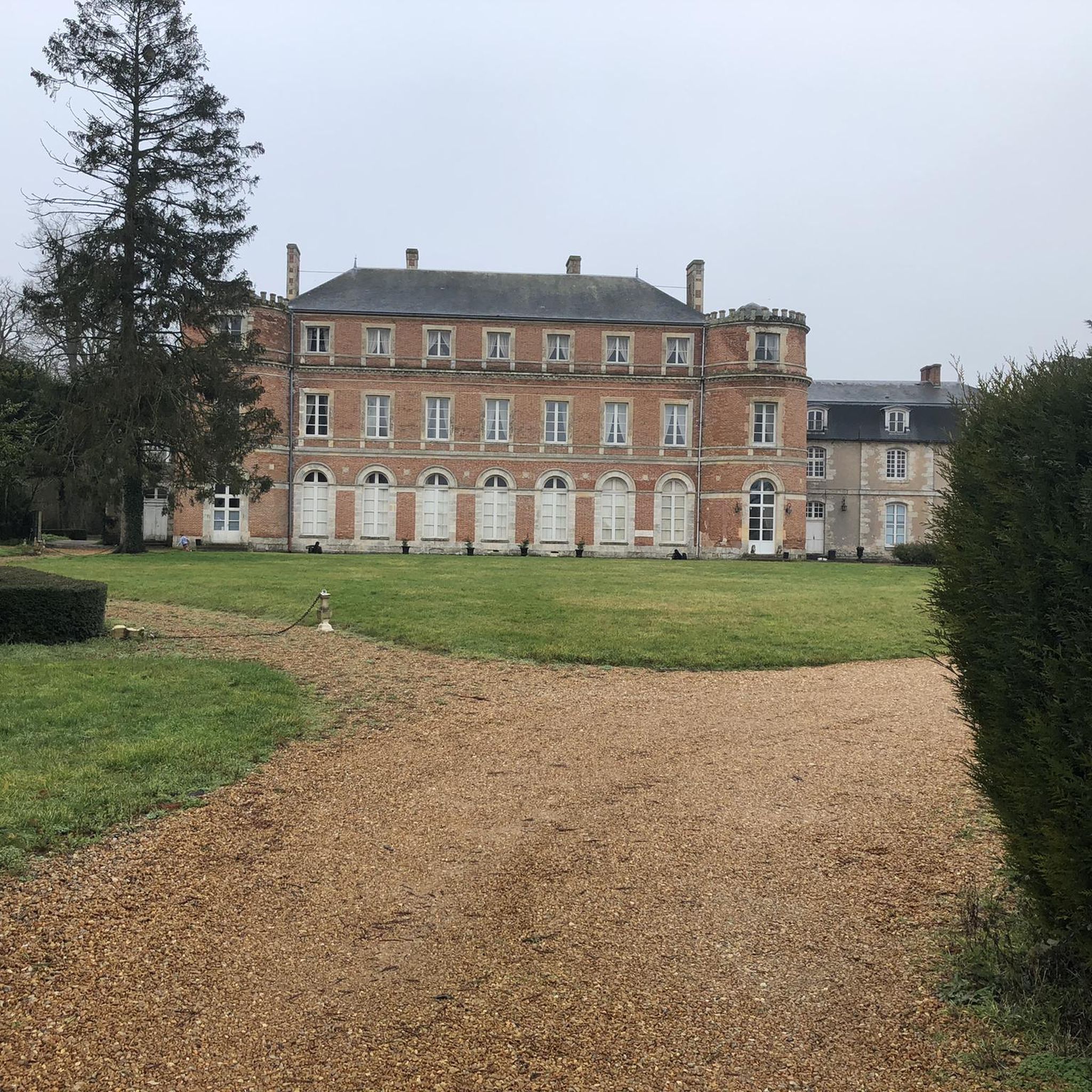
- Another must-see spot is Château de Denonville, a castle that displays a singular silhouette in pink brick. Its history dates back to Roman times, with the current neoclassical structure rebuilt around 1770 while preserving earlier elements.
- Visitors also love Saint-Léger Church, a historical church with a nave, aisle, bell tower, and seigneurial chapel. A first church was built in the late 11th and early 12th centuries, with modifications and additions made in subsequent centuries.
- Denonville is known for its historical landmarks and cultural sites. These include fortified castles, ancient churches, and unique architectural structures.
- The attractions around Denonville are appreciated by the komoot community, with 17 upvotes and 11 photos shared across the highlights.
Last updated: May 26, 2026
Château de Denonville
Highlight • Castle
Translated by Google •
Tip by

Carrousel de Baronville
Highlight • Other
Translated by Google •
Tip by
Sign up now to discover places like this
Get recommendations on the best single tracks, peaks, & plenty of other exciting outdoor places.
Sign up for free
Scarecrow Sculpture of Béville-le-Comte
Highlight • Monument
Translated by Google •
Tip by
Saint-Léger Church
Highlight • Other
A first church was built in the late 11th and early 12th centuries by Étienne de Denonville. It was modified in the 16th century by Pierre de Hémard. A seigneurial chapel was built shortly after the death of Jacques de Hémard, Lord of Denonville, in 1559. On the old vault, in 1658, one could still see "the coat of arms and blazons of the Hémard family, which are six sable burels, around which are the hat and cords of a cardinal from the family." The vault was rebuilt by the Brisay family in 1722. A project to extend the church was considered in 1755 but never carried out. The north aisle was built in 1770.
Translated by Google •
Tip by

Saint Martin's Church
Highlight • Other
At the beginning of the 17th century, significant ornamental donations were added, as well as two altars in the side aisles dedicated to Saint Sebastian and the Virgin Mary.
Major renovations were carried out in the 19th century: the choir vaults were completely rebuilt in 1859.
The stained-glass windows date from 1871. A baptistery outside the building was built to the north of the first bay of the nave.
The bays above each altar are built in the neo-Gothic style.
The original decoration, dating from the 16th to 18th centuries, consisting of geometric elements in red, yellow, and black, has recently been restored. It is a tempera painting on a sand and lime plaster. It adorns the elevations and the vaults of the two lower sides.
Translated by Google •
Tip by
Sign up for free to discover even more attractions around Denonville.
Sign up for free
Already have an account?
Start today with a free account
Your next adventure awaits.
Login or Signup


Tips from the Community

The bell tower and nave were erected in 1150 to house the relics of Saint Martin. The choir and side aisles date from 1519. At the beginning of the 17th century, significant ornamental donations were added, as well as two altars in the side aisles dedicated to Saint Sebastian and the Virgin Mary. Major renovations were carried out in the 19th century: the choir vaults were completely rebuilt in 1859. The stained-glass windows date from 1871. A baptistery outside the building was built to the north of the first bay of the nave. The bays above each altar are built in the neo-Gothic style. The original decoration, dating from the 16th to 18th centuries, consisting of geometric elements in red, yellow, and black, has recently been restored. It is a tempera painting on a sand and lime plaster. It adorns the elevations and the vaults of the two lower sides.
0
0
The nave consists of a main nave and an aisle to the north. A bell tower is located to the south, as well as a seigneurial chapel. The choir consists of a straight bay and a semicircular apse. A first church was built in the late 11th and early 12th centuries by Étienne de Denonville. It was modified in the 16th century by Pierre de Hémard. A seigneurial chapel was built shortly after the death of Jacques de Hémard, Lord of Denonville, in 1559. On the old vault, in 1658, one could still see "the coat of arms and blazons of the Hémard family, which are six sable burels, around which are the hat and cords of a cardinal from the family." The vault was rebuilt by the Brisay family in 1722. A project to extend the church was considered in 1755 but never carried out. The north aisle was built in 1770.
0
0

Nice curiosity at the exit of Béville-le-Comte which has proclaimed itself the scarecrow capital of the world.
0
0
Built in 1882 by the Marquis Armand de Pomereu d'Aligre, to be the "model farm" of Baronville, as well as the marquis' stables, this complex was subsequently constantly used for both agricultural and equestrian purposes. Used as the “Baronville Horse Riding Club” during the 1980s and 1990s, it was the setting for horse racing training and competitions welcoming personalities from the equestrian or artistic world, such as Jean Rochefort.
0
0

The only interesting thing in Beauce.
1
0

At the entrance to the village of Belleville le Conte, a pretty original sculpture with a small hut offers a charming welcome.
1
0
Failing to see the castle of the same name, the Carrousel gives you a good image of the architecture of the Castle.
0
0
today, the castle and its round towers display a singular silhouette in pink brick in the village. Its history dates back to the invasion of the Romans who set up a farm there to supply Rome with wheat. Over the years this farm was fortified then, during the wars of religion, it became a fortified castle surrounded by defensive moats. Raised to the rank of Marquisate by Louis XIV, the castle was abandoned. Very degraded, in 1760, the decision was taken to ask the architect Liégeon to rebuild, on the foundations, a simple residence, integrated into the outbuildings of the thirteenth century. During the revolution, the property was confiscated and then bought back from the National Property.
1
0
Frequently Asked Questions
What historical landmarks can I visit in Denonville?
Denonville is rich in history, featuring several significant landmarks. You can explore the impressive Château de Denonville, known for its unique pink brick silhouette and history dating back to Roman times. Another notable site is the Saint-Léger Church, which has roots in the late 11th and early 12th centuries and has undergone various modifications over the centuries.
What is the history behind the Château de Denonville?
The Château de Denonville has a long and fascinating history. Originally a Roman farm supplying wheat, it was later fortified and transformed into a castle during religious wars. Though abandoned and degraded after being elevated to a Marquisate by Louis XIV, it was rebuilt in a neoclassical style around 1770 by architect Liégeon, who preserved its original four round towers. Today, it is registered as a Historical Monument.
Are there other notable historical churches in the area besides Saint-Léger Church?
Yes, in addition to the Saint-Léger Church, you can also visit Saint Martin's Church. Its bell tower and nave were erected in 1150, with the choir and side aisles dating from 1519. It features beautiful stained-glass windows from 1871 and recently restored 16th to 18th-century geometric decorations.
What is the significance of the Carrousel de Baronville?
The Carrousel de Baronville is a historical complex built in 1882 by the Marquis Armand de Pomereu d'Aligre. It served as a 'model farm' and the marquis' stables, used for both agricultural and equestrian purposes. It even hosted horse racing training and competitions, welcoming notable figures from the equestrian and artistic worlds.
What natural areas can I explore around Denonville?
Denonville is part of a significant natural area, the Natura 2000 site known as 'Beauce et vallée de la Conie.' This protected area is crucial for characteristic plain bird species during their breeding season, including the Eurasian stone-curlew, larks, calandra larks, buntings, and Grey Partridge. It offers opportunities for wildlife spotting and enjoying the local ecosystem.
Are there opportunities for hiking or cycling near Denonville?
Absolutely! The region around Denonville offers various routes for outdoor enthusiasts. You can find several hiking trails, such as the easy 'Château de Denonville loop from Denonville' (2.1 km). For cyclists, there are options like the 'Château de Denonville loop from Auneau' (18.1 km) or the 'Carrousel de Baronville – Château de Denonville loop from Denonville' (29.5 km). You can find more details on these and other routes in the Hiking around Denonville and Cycling around Denonville guides.
Can I find mountain biking trails in the Denonville area?
Yes, there are mountain biking opportunities near Denonville. You can explore trails like the 'Château de Denonville loop from Denonville' (18.1 km, easy) or more challenging options such as the 'Notre-Dame de l'Ouÿe – Medieval town of Dourdan loop from Sainville' (48.8 km, moderate). For a comprehensive list of routes, check out the MTB Trails around Denonville guide.
Are there any family-friendly attractions or activities around Denonville?
For families, a unique and charming stop is the Scarecrow Sculpture of Béville-le-Comte. This original sculpture with a small hut offers a delightful welcome to the village, which has proclaimed itself the 'scarecrow capital of the world.' Additionally, the easy walking and cycling routes mentioned earlier can be suitable for families.
When is the best time to visit Denonville for outdoor activities?
The Eure-et-Loir region generally experiences pleasant weather for outdoor activities from spring through early autumn (April to October). During these months, temperatures are milder, and rainfall is typically lower, making it ideal for exploring historical sites, hiking, and cycling. Summer offers the warmest weather, while spring and autumn provide beautiful scenery with fewer crowds.
What do visitors enjoy most about the attractions around Denonville?
Visitors particularly appreciate the rich historical context and unique architecture of the area. The Château de Denonville's distinctive pink brick and ancient origins are often highlighted. The Carrousel de Baronville is noted for offering a good glimpse into the region's architectural heritage. The historical churches also provide a deep dive into local culture and history.
Is Denonville accessible by public transport?
Denonville is a small commune, and public transport options may be limited. It is generally recommended to travel by car to fully explore the attractions and surrounding natural areas at your own pace. For specific public transport inquiries, it's best to check local Eure-et-Loir transport schedules.
Where can I find parking when visiting attractions in Denonville?
For the main attractions like the Château de Denonville and the Saint-Léger Church, parking is typically available within the village or in designated areas nearby. As Denonville is a small village, finding parking is generally not a major issue, especially compared to larger towns. Look for local signs or available street parking.
Are there any cafes or restaurants directly in Denonville?
As a small commune, Denonville may have limited dining options directly within the village. It's advisable to check local listings for current cafes or restaurants. For a wider selection, you might consider visiting nearby larger towns in the Eure-et-Loir department.

Get inspired with the komoot mobile app


Explore more
Still not found the Highlight you’re looking for? See guides of the top attractions in other regions:
