The best cycling routes around Saint-Savin
4.1
(73)
566
riders
66
rides
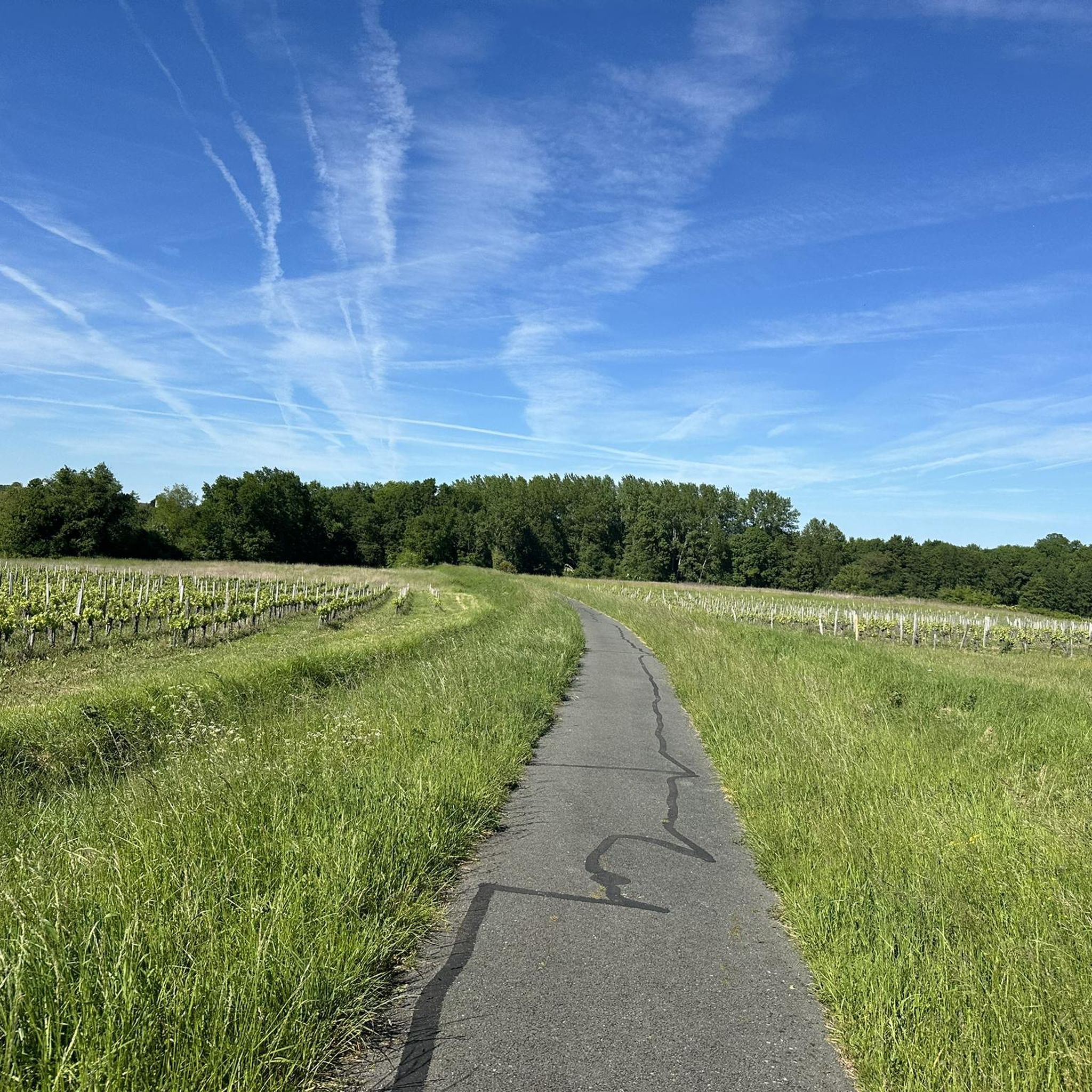
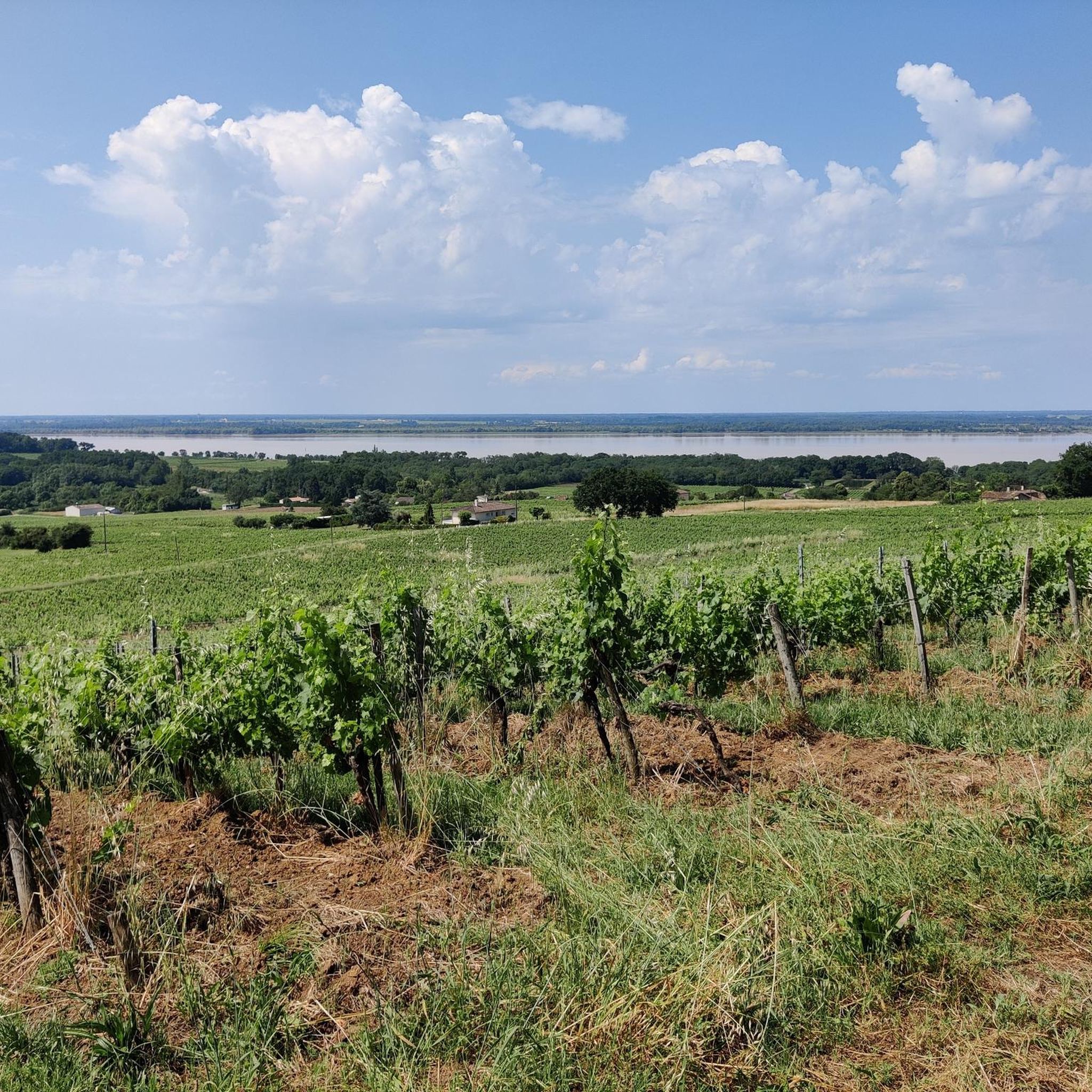
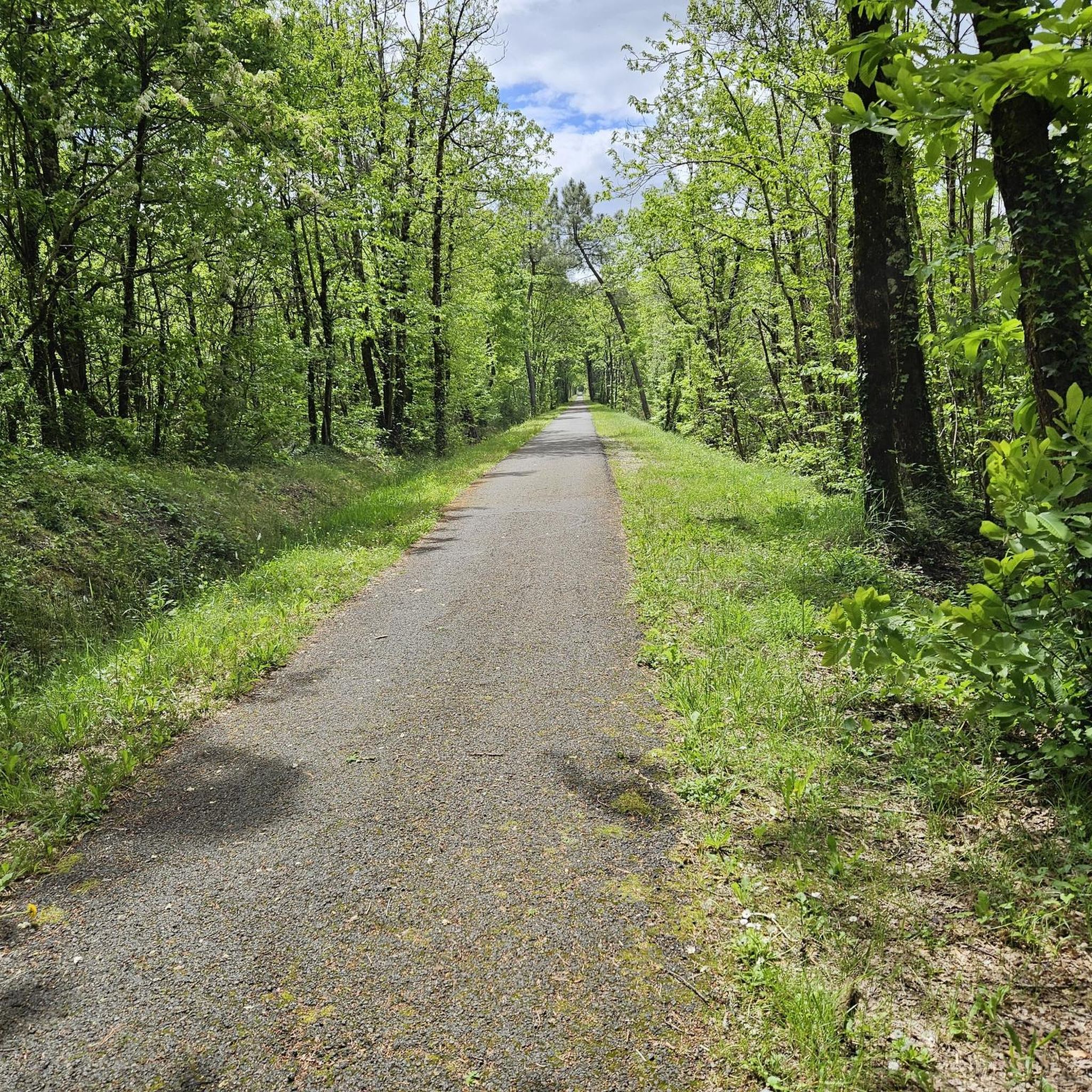
Touring cycling routes around Saint-Savin (Gironde) traverse a landscape characterized by gentle rolling hills, river valleys, and agricultural areas, including vineyards. The region features a mix of open countryside, woodlands, and serene lakes such as Lac de la Blanche and Étang de Robinson. Elevation changes are generally moderate, offering accessible routes for various skill levels.
Best touring cycling routes around Saint-Savin
- The most popular touring cycling route is Voie verte de 21,5 kilomètres – La voie verte loop from Saint-Mariens…
Last updated: June 29, 2026
3.0
(2)
7
riders
35.3km
02:08
190m
190m
Moderate bike ride. Good fitness required. Mostly paved surfaces. Suitable for all skill levels.
4.0
(1)
4
riders
40.4km
02:32
400m
400m
Moderate bike ride. Good fitness required. Mostly paved surfaces. Suitable for all skill levels.

Sign up for free
1.0
(1)
5
riders
11.8km
00:43
90m
90m
Easy bike ride. Great for any fitness level. Mostly paved surfaces. Suitable for all skill levels.
5.0
(1)
6
riders
31.4km
02:10
170m
170m
Moderate bike ride. Good fitness required. Mostly paved surfaces. Suitable for all skill levels.
4.0
(1)
4
riders
42.5km
02:32
290m
290m
Moderate bike ride. Good fitness required. Mostly paved surfaces. Suitable for all skill levels.
Get access to more routes and recommendations from other explorers.
Sign up for free
Already have an account?
Our route recommendations are based on thousands of hikes, rides, and runs completed by other people on komoot.
Start today with a free account
Your next adventure awaits.
Login or Signup


Tips from the Community

Former covered outdoor halls, now used for events
1
0

This neo-Gothic church was built to replace the dilapidated church of the Recollect Fathers, a men's convent founded in 1627. In the 19th century, the church wanted to encourage a revival of Catholic worship; it encouraged the construction of new religious buildings in Gironde. Thus, in 1856, the Saint-Géronce church was consecrated. Due to lack of space, its apse was oriented towards the south, contrary to what the liturgy provided. The organ, which has its original construction from 1861, is remarkable. Mass is celebrated there every Sunday morning at 10:00 a.m.
0
0
The commune is the result of the merger of three parishes: Prignac (on the road to Blaye), Marcamps (further north, on the hillsides above the Moron Valley), and Cazelle (further south, descending towards the Dordogne). The three churches still exist. In addition, there is the former chapel of the priory of Lurzine, not far from the village of Prignac. During the French Revolution, the parish of Saint-Pierre de Prignac formed the commune of Prignac, and its annex, Saint-Michel de Marcamps, formed the commune of Marcamps. The parish of Saint-Félix de Cazelles and its annex, Sainte-Quitterie de Magrigne, formed the commune of Cazelles. In the year 12, the commune of Cazelles was annexed to that of Prignac, which became Prignac-et-Cazelles. In 1965, the commune of Marcamps was annexed to that of Prignac-et-Cazelles, which became Prignac-et-Marcamps.
1
0

The Château de Thau is very old and known since the 12th century. It belongs to the defense line of the Côte Girondine. Set slightly back from the shore, it dominates the ebb and flow without showing itself, like a carpet behind thick groves. Here and there, the name of Thau comes and goes at the bend of a manuscript but it is at the beginning of the 1400s that historians find traces of the successive owners - the Math family, from 1400 to 1480, - the Sudre family 1540 , the Hague, then the President of the Parliament of Bordeaux, Louis de Grimard owned everything between 1680 and 1700… In 1700 we know the state of the place: “vast lower rooms, all well furnished and the walls decorated with vast series of tapestries”. Today, the Albert Schweitzer family owns and administers the estate which is the flagship of Gauriac. Facing the Médoc, a few steps from the Gironde estuary, 41 hectares of vineyards are planted with 40% Cabernet Sauvignon and 60% Merlot, on silty-limestone soil and extend over the Bourgeais region. The excellent geographical location allows the vineyard to benefit from favorable maturity criteria.
3
0
The small port of Plassac is typical of the esteys of the Gironde estuary. It is in the heart of the ancient village with a Gallo-Roman villa. A Terra Aventura route, combining hiking and discovery, allows you to get to know Plassac better. During your visit, you can also admire mosaics displayed in the alleys of the village: they were created by the inhabitants and by the Babylon Mosaic workshop-boutique. A stepped earthen dike made it possible to shape the current configuration of the port, making it possible to create 44 places reserved for pleasure craft. A rocky groyne protects the entrance to the port. 22 gangways provide access to the boats and boaters can benefit from a water tap, electrical outlets and a light point. https://www.bbte.fr/equipements-de-loisirs/port-de-plassac/
3
0
Built in the second half of the 19th century in neo-Gothic style, the Saint-Pierre de Prignac church is one of several places where Mgr Donnet, appointed cardinal in 1852, allowed dilapidated churches to be destroyed to build more modern ones. This is how Saint-Felix de Cazelles and Saint-Pierre de Prignac, small 12th century chapels were partly destroyed and their apses resold. The new Saint-Pierre church was built in 1871 at a place called Plantier-neuf, and it was J. Hosteing who was the architect. Its architectural design with its spire is the perfect illustration of its 19th century Girondine churches. The beautiful stone pulpit, monolith, the magnificent font of Saint-Félix de Cazelles and the ancient Virgin of Saint-Michel de Marcamps can be found inside. http://www.prignacetmarcamps.fr/tourisme-et-patrimoine/eglise-saint-pierre
5
0
Frequently Asked Questions
How many touring cycling routes are available around Saint-Savin?
There are over 60 touring cycling routes around Saint-Savin, offering a diverse range of options for cyclists. These routes are highly rated by the komoot community, with an average score of 4.1 stars from over 50 reviews.
What kind of terrain can I expect on touring cycling routes in Saint-Savin?
The region around Saint-Savin is characterized by gentle rolling hills, river valleys, and agricultural areas, including vineyards. You'll find a mix of open countryside, woodlands, and serene lakes. While elevation changes are generally moderate, some routes venture into the Pyrenean foothills, offering more challenging ascents.
Are there any challenging touring cycling routes for experienced riders?
Yes, Saint-Savin offers several challenging routes. For instance, the Voie verte de 21,5 kilomètres – La voie verte loop from Saint-Mariens - Saint-Yzan is a difficult 98.1-mile (157.8 km) trail that follows a greenway, providing a long-distance cycling experience. Another difficult option is the Saint-Géronce Church – Bourg Citadel loop from Saint-Christoly-de-Blaye, a 40.1-mile (64.5 km) trail through historical sites and rural landscapes.
Are there any family-friendly touring cycling routes in the area?
While specific family-friendly routes are not detailed in the provided data, the region's greenways, such as the Blaye-Etauliers cycle path (part of the V80 or Canal des Deux Mers à Vélo route), are generally suitable for all ages and offer peaceful exploration of local heritage, including vineyards. The overall moderate elevation changes in many areas also make them accessible for families.
What natural attractions can I see along the touring cycling routes?
Many routes offer scenic views of natural features. For example, the View of the Lac de la Blanche – Orangerie de Montendre loop from Bussac provides stunning vistas of Lac de la Blanche, a natural area of ecological interest. You can also explore routes around Étang de Robinson, another tranquil lake. The wider region is part of the Hautes-Pyrénées department, offering glimpses of the majestic Pyrenean mountain range and charming valleys like the Vallée des Gaves.
Are there historical landmarks or points of interest to visit while cycling?
Absolutely. The region is rich in history. The Saint-Géronce Church – Bourg Citadel loop from Saint-Christoly-de-Blaye takes you through historical sites. You might also encounter landmarks like the Château Pontet d'Eyrans or the Moulin du Grand Puy de Lansac. The famous Saint-Savin Abbey, a UNESCO World Heritage site, is also a significant cultural highlight in the area, known for its preserved frescoes.
Are there any circular touring cycling routes around Saint-Savin?
Yes, many of the touring cycling routes around Saint-Savin are designed as loops. Examples include the Voie verte de 21,5 kilomètres – La voie verte loop from Saint-Mariens - Saint-Yzan, the View of the Lac de la Blanche – Orangerie de Montendre loop from Bussac, and the Étang de Robinson loop from Bussac, all offering convenient circular journeys.
What is the best time of year for touring cycling in Saint-Savin?
The region is generally pleasant for cycling through much of the year. Spring and autumn offer mild temperatures and beautiful scenery, ideal for exploring the vineyards and valleys. Summer can be warm but is still popular, especially for routes near lakes or shaded woodlands. Winter options are available, though some higher Pyrenean routes might be less accessible.
What do other touring cyclists enjoy most about cycling in Saint-Savin?
The area is highly rated by the komoot community, with an average score of 4.1 stars. Reviewers often praise the diverse terrain, from gentle rolling hills to scenic river valleys and tranquil lakes. The mix of open countryside, woodlands, and the opportunity to discover historical sites and charming villages are frequently highlighted as enjoyable aspects of touring cycling here.
Are there any routes that pass by castles or historic buildings?
Yes, several routes offer glimpses of historical architecture. The Thau Castle – Port of Plassac loop from Saint-Christoly-de-Blaye is a moderate route that includes a castle. Additionally, the Saint-Géronce Church – Bourg Citadel loop from Saint-Christoly-de-Blaye will lead you past significant historical sites, including the Bourg Citadel and Saint-Géronce Church.
What are some moderate touring cycling routes suitable for a day trip?
For a moderate day trip, consider the View of the Lac de la Blanche – Orangerie de Montendre loop from Bussac, which is 29.9 miles (48.1 km) long and offers scenic views. Another excellent option is the Thau Castle – Port of Plassac loop from Saint-Christoly-de-Blaye, a 40.1-mile (64.5 km) route that takes you through historical sites and rural landscapes.
Most popular routes around Saint-Savin
Most popular attractions around Saint-Savin

Get inspired with the komoot mobile app


Explore more
Browse the best Cycling routes in other regions.
