Attractions and Places To See around Tronchoy - Top 18
Attractions around Tronchoy, a commune in the Yonne department of the Bourgogne-Franche-Comté region, offer a range of historical, cultural, and natural sites. This area serves as a gateway to diverse landscapes, including rivers and canals, alongside a rich architectural heritage. The region is known for its historical significance and natural features.
Best attractions and places to see around Tronchoy
- The most popular attractions is Towpath of the Canal de Bourgogne, a trail that runs alongside the historic Canal de…
Last updated: June 23, 2026
Towpath of the Canal de Bourgogne
Highlight (Segment) • Trail
Translated by Google •
Tip by

Fosse Dionne and the town of Tonnerre
Highlight • Historical Site
Translated by Google •
Tip by

Sign up now to discover places like this
Get recommendations on the best single tracks, peaks, & plenty of other exciting outdoor places.
Sign up for free
Notre-Dame Church
Highlight • Religious Site
Translated by Google •
Tip by

Saint Peter's Church
Highlight • Other
Translated by Google •
Tip by
Hôtel-Dieu de Tonnerre
Highlight • Historical Site
The Hôtel-Dieu was donated by Margaret of Burgundy and built from …
Translated by Google •
Tip by
Sign up for free to discover even more attractions around Tronchoy.
Sign up for free
Already have an account?
Start today with a free account
Your next adventure awaits.
Login or Signup


Tips from the Community

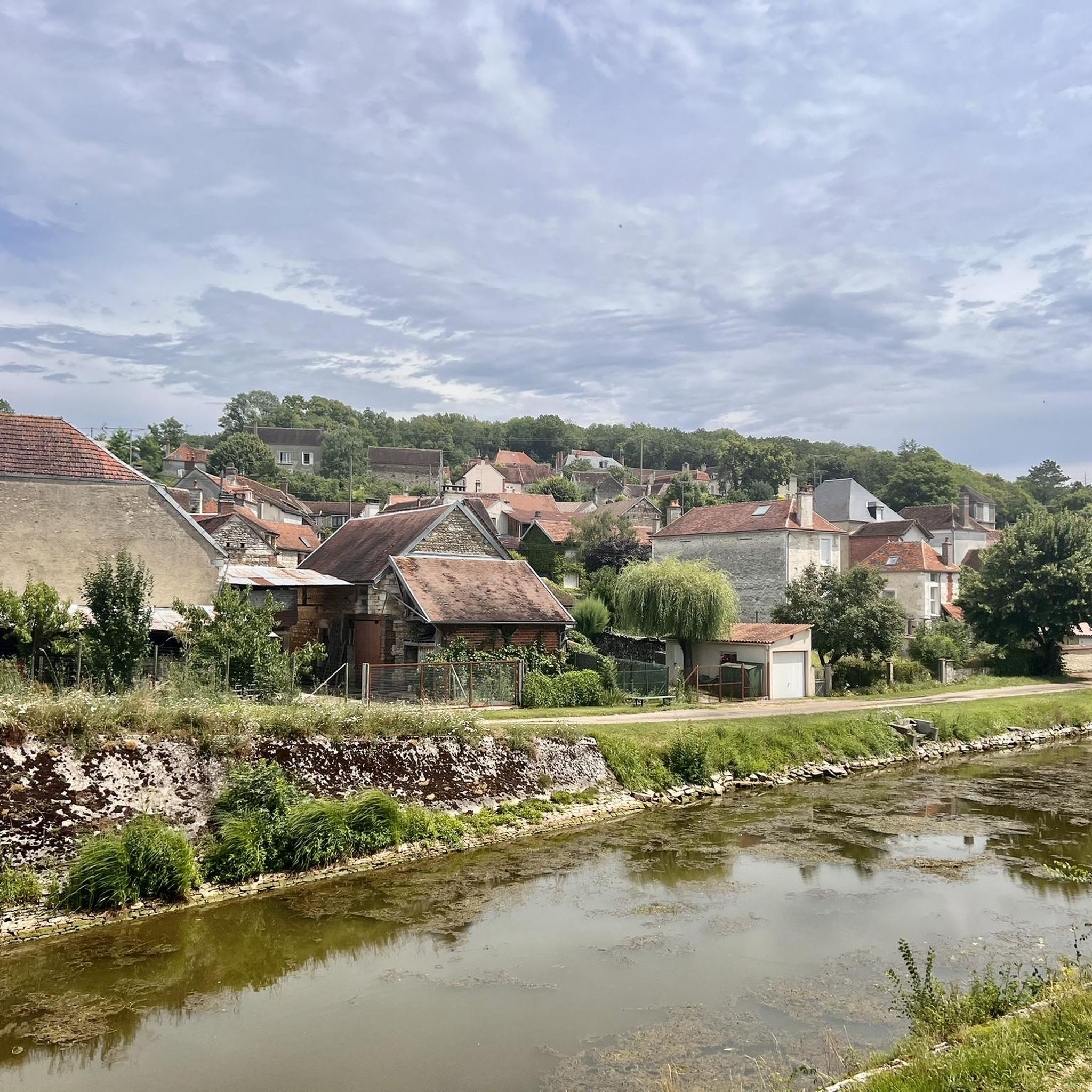
A "chemin de halage", in German "treidelpfad", which runs alongside the waterway right next to the bed of the river or canal, was an indispensable part of the transport infrastructure in earlier times. Before ships could move using motor power, horses ran along the bank and pulled the ship against the current. This was called "treideln", and that is how the "treidelpfad" got its name. Where these paths directly on the bank have been preserved, they are now popular with hikers and cyclists.
1
0

The Dionne pit is a karst source called the Vauclusian source, located in the city center of Tonnerre. It is fed by the infiltration of precipitation into the surrounding limestone plateau as well as by the losses of at least one river. The Dionne pit is remarkable for its flow and the size of its hydrogeological network which extends to more than 40 km. His presence is at the origin of the creation of the city of Tonnerre. An elaborate washhouse was built around the spring in the 18th century. Wikipedia
0
0

A real must-see - this round wash house around a turquoise green source is unique in its kind and well worth the detour.
0
0
The church in Tonnerre was dedicated to Saint Peter / “Saint-PIERRE”. Simon, nicknamed Peter (the word means "rock"), was a fisherman on the Sea of Galilee when he - together with his brother Andrew - was called by Jesus Christ to be "fishers of men". According to Catholic understanding, he is the supreme apostle, and the two millennia-long line of popes - currently Francis - are his successor. On statues and paintings, Peter is almost always depicted with two keys in his hand; this attribute refers to the biblical saying in Matthew: “I will give you the keys of the kingdom of heaven; Whatever you bind on earth will be bound in heaven, and whatever you loose on earth will be loosed in heaven” (Chapter 16, verse 19). Saint-Pierre is - together with Saint-Paul - also known as the “Princes of the Apostles”, their common feast day in the saints' calendar is on June 29th.
0
0

The Hotel Dieu is the work of Marguerite de Bourgogne. it is the longest medieval hospital in Europe. It was built in the XIII century.
0
1
The mystery of this pit is complete. The city was built around it.
0
2
We enjoyed a remarkable guided tour.
0
0

We were there in the morning and the church was still closed. The building from the outside and the beautiful view of the city from there made up for it.
3
0
Frequently Asked Questions
What are some notable historical sites near Tronchoy?
The area around Tronchoy is rich in history. You can visit the Fosse Dionne and the town of Tonnerre, a unique karst spring surrounded by an 18th-century washhouse. Also in Tonnerre is the Hôtel-Dieu de Tonnerre, a medieval hospital founded in 1293. Other significant sites include Notre-Dame Church and Saint Peter's Church in Tonnerre, and the impressive Château de Tanlay, located about 12.9 km away.
Are there natural attractions to explore around Tronchoy?
Yes, the region offers several natural points of interest. The Fosse Dionne in Tonnerre is a remarkable turquoise-green karst spring. The Yonne department, where Tronchoy is located, is known for its diverse landscapes, including rivers and canals. The Towpath of the Canal de Bourgogne offers a scenic route alongside the historic waterway, perfect for enjoying the natural surroundings.
What outdoor activities can I do near Tronchoy?
The area around Tronchoy is excellent for outdoor activities, especially cycling. You can explore various routes, such as the 'Burgundy Canal and Tonnerrois Vineyards Loop' or the 'Tonnerre – Château de Tanlay loop'. For more options, check out the dedicated guides for MTB Trails around Tronchoy, Road Cycling Routes around Tronchoy, and Cycling around Tronchoy.
Are there family-friendly activities or attractions in the Tronchoy area?
Many attractions near Tronchoy are suitable for families. The Towpath of the Canal de Bourgogne is ideal for easy walks or bike rides. The Fosse Dionne and the town of Tonnerre offer an interesting historical and natural site that can engage children. Historical buildings like the Hôtel-Dieu de Tonnerre and Notre-Dame Church can also be educational for older children.
What is the best time to visit Tronchoy for outdoor activities?
The Bourgogne-Franche-Comté region, including Tronchoy, generally experiences pleasant weather from spring to early autumn, making these seasons ideal for outdoor activities like cycling and walking. The Yonne department is known for its diverse landscapes, which are particularly beautiful during these months. Always check local weather patterns closer to your visit for the most accurate conditions.
Can I find hiking trails directly around Tronchoy?
While Tronchoy itself is a small locality, the surrounding Yonne department offers numerous opportunities for walking and hiking. The Towpath of the Canal de Bourgogne is a popular choice for easy walks. For more challenging trails, you can explore routes in the wider Tonnerre region. Consider checking the MTB Trails around Tronchoy guide, as many MTB routes can also be adapted for hiking.
Are there any vineyards or local produce to visit near Tronchoy?
Yes, the Yonne department is part of Burgundy, a region famous for its wines. You can visit the Vignoble Dampt Freres, a vineyard located about 9.7 km from Tronchoy, to experience local viticulture. The region is also known for gastronomic specialties like beef bourguignon and Comté cheese, which you might find in local markets or restaurants.
What do visitors enjoy most about the attractions around Tronchoy?
Visitors particularly appreciate the unique historical and natural blend of the area. The Fosse Dionne is often highlighted as a 'real must-see' for its unique appearance and historical significance. The Hôtel-Dieu de Tonnerre is praised for being 'very well preserved and well explained,' offering a journey back in time. The scenic Towpath of the Canal de Bourgogne is enjoyed by hikers and cyclists alike for its tranquil beauty.
Is public transport available to reach attractions near Tronchoy?
Tronchoy is a small commune, so public transport options might be limited. However, the nearby town of Tonnerre, which hosts several key attractions like the Fosse Dionne and Hôtel-Dieu de Tonnerre, is more accessible. It's advisable to check local bus services or consider driving for flexibility when visiting attractions further afield, such as Château de Tanlay or Pontigny Abbey.
Are there any viewpoints near Tronchoy offering scenic views?
While specific named viewpoints directly in Tronchoy are not highlighted, the Saint Peter's Church in Tonnerre, with its tall silhouette dominating the Armançon valley, offers beautiful views of the city from its location. The diverse landscapes of the Yonne department, particularly along the Canal de Bourgogne, also provide many picturesque spots.
What are the accessibility considerations for attractions like La Fosse Dionne and Hôtel-Dieu de Tonnerre?
Access to the Fosse Dionne is generally free and open, located in the city center of Tonnerre. The Hôtel-Dieu de Tonnerre is a historic building, and while efforts are made for accessibility, visitors with mobility concerns should check their official website for specific information regarding access to all areas. The Towpath of the Canal de Bourgogne is generally flat and suitable for various mobility levels.
Are there options for accommodation or dining in Tronchoy or nearby?
Tronchoy is a small village, so dining and accommodation options might be limited directly within the commune. However, the nearby town of Tonnerre offers more choices for restaurants, cafes, and hotels. You can also find guesthouses and bed and breakfasts in the surrounding area, providing a charming regional experience.
Most popular routes around Tronchoy

Get inspired with the komoot mobile app


Explore more
Still not found the Highlight you’re looking for? See guides of the top attractions in other regions:
