Attractions and Places To See around Romagne-Sous-Montfaucon - Top 20
Best attractions and places to see around Romagne-Sous-Montfaucon are primarily centered on its historical significance, particularly concerning World War I. Located in the Meuse department of France, the area offers a range of sites dedicated to this period. Visitors can explore various memorials and cultural sites that reflect the events of the Great War. The landscape incorporates elements designed for reflection, including tree-lined parks and a lake.
Best attractions and places to see around Romagne-Sous-Montfaucon
- The most popular attractions is…
Last updated: July 2, 2026
Pershing Bridge of Dun-sur-Meuse
Highlight • Bridge
The upper town was largely destroyed during the First World War.
This bridge over the …
Translated by Google •
Tip by

Meuse-Argonne American Cemetery
Highlight • Other
Translated by Google •
Tip by

Sign up now to discover places like this
Get recommendations on the best single tracks, peaks, & plenty of other exciting outdoor places.
Sign up for free
Sergeant York trail
Highlight • Other
Tip by

War monument
Highlight • Other
Erected in 1927 by the state of Pennsylvania, this neoclassical monument honors the American soldiers from Pennsylvania who helped liberate Varennes in 1918. Designed in …
Translated by Google •
Tip by
Deutscher Soldatenfriedhof
Highlight • Other
Translated by Google •
Tip by
Sign up for free to discover even more attractions around Romagne-Sous-Montfaucon.
Sign up for free
Already have an account?
Start today with a free account
Your next adventure awaits.
Login or Signup


Tips from the Community

In his address on Remembrance Day in 2015, then-President Joachim Gauck expressed some thoughts that I would like to offer visitors to this war cemetery/military cemetery for reflection: "This... is our shared hope: that the memory of the suffering of war will not breed revenge, but will lead more and more people and nations to seek a way out in peaceful coexistence. Just as European integration succeeded in becoming the great peace project of our continent. (...) That military cemeteries, as Albert Schweitzer once said, may finally become the great preachers of peace. Then, as we have experienced, reconciliation over the graves will be possible. Then peace can be lasting. We all share this responsibility."
2
0

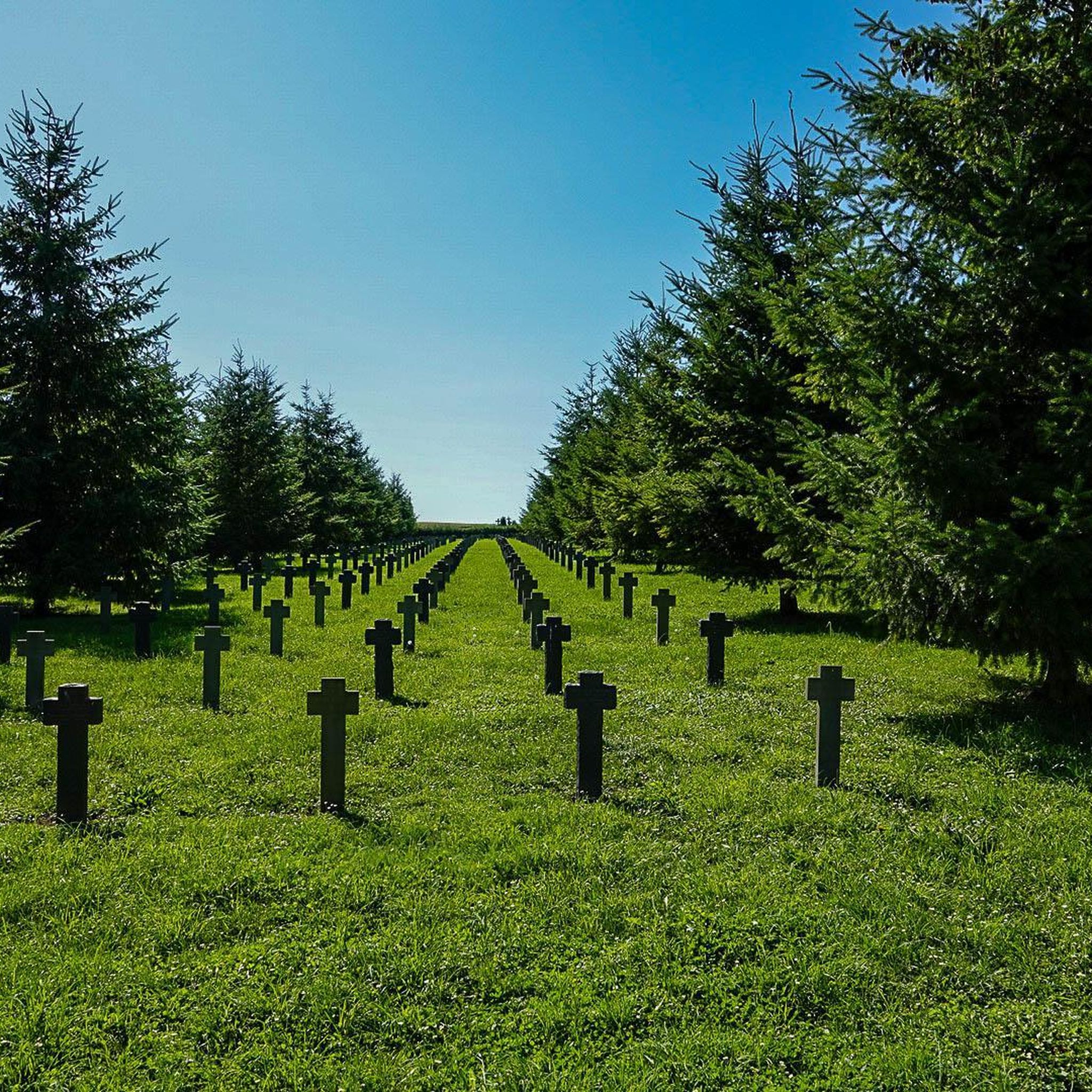
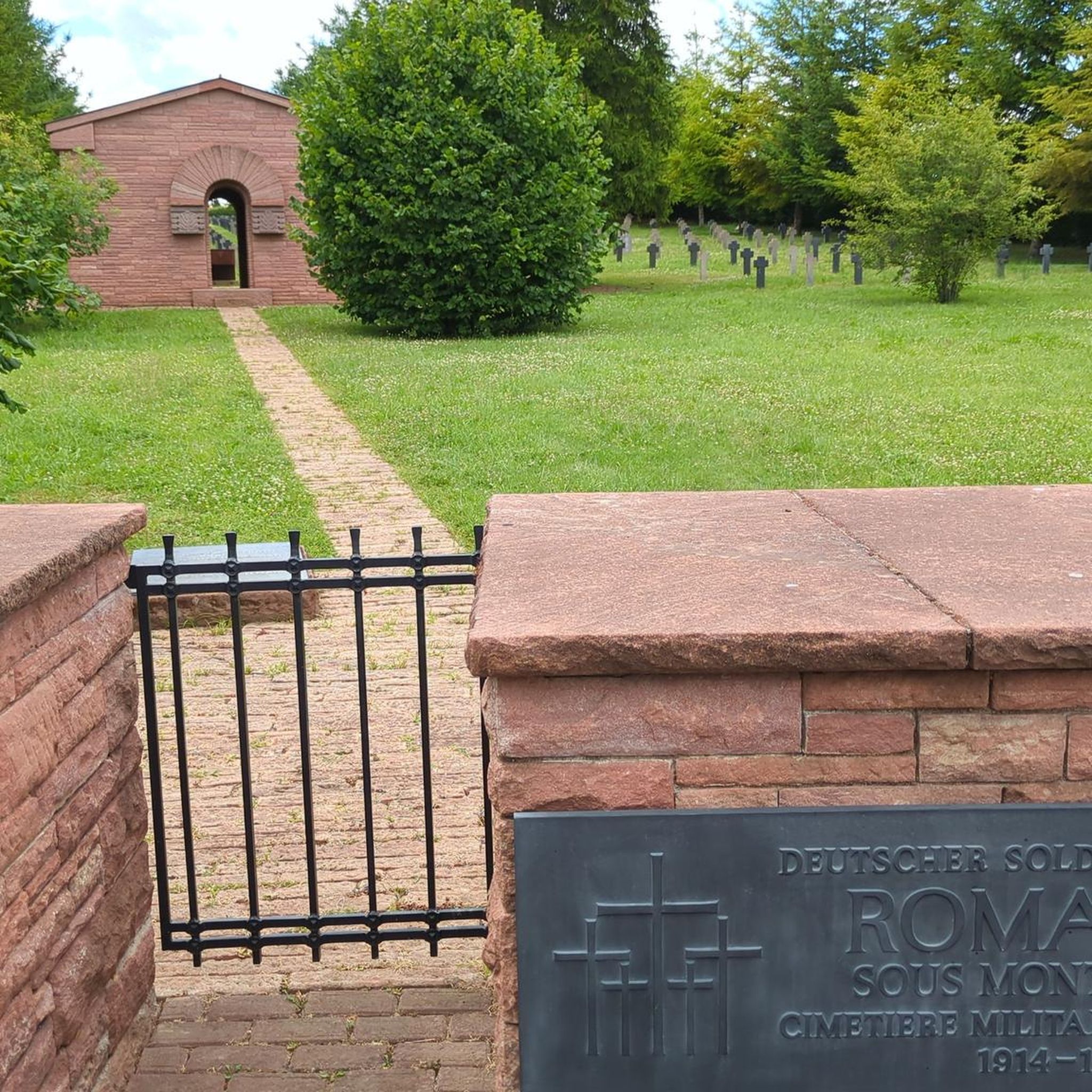
This serene cemetery contains 1,111 individual graves of German soldiers who died in the Argonne Forest during the First World War. Created in November 1915, it is the only German cemetery in the region that has been largely preserved in its original state. Of particular note is the gravestone of Commander Baron von Müllenheim-Rechberg, who died in 1916, and the monument to the 27th Landwehr Regiment. Since 2023, the site has been part of the UNESCO World Heritage as part of the World War I Memorial Sites.
9
0
Mémorial de Pennsylvania – Varennes-en-Argonne Erected in 1927 by the state of Pennsylvania, this neoclassical monument honors the American soldiers from Pennsylvania who helped liberate Varennes in 1918. Designed in the Greek style, the monument offers impressive views over the Aire Valley and bears the words of President Wilson: “The right is more precious than peace”.
7
0
Dun-sur-Meuse is a French commune in the Meuse department, in the Lorraine region. During the First World War, the upper city was largely destroyed. This bridge over the Meuse is one of the most beautiful monuments of this type in France. There are bronze balustrades on both sides of the bridge, with designs in the center and engraved plaques. It reminds French citizens and others, who will cross the bridge for years to come, of the passage of the Meuse. The crossing of the Meuse by the 5th Division was commanded by General John Pershing.
6
0
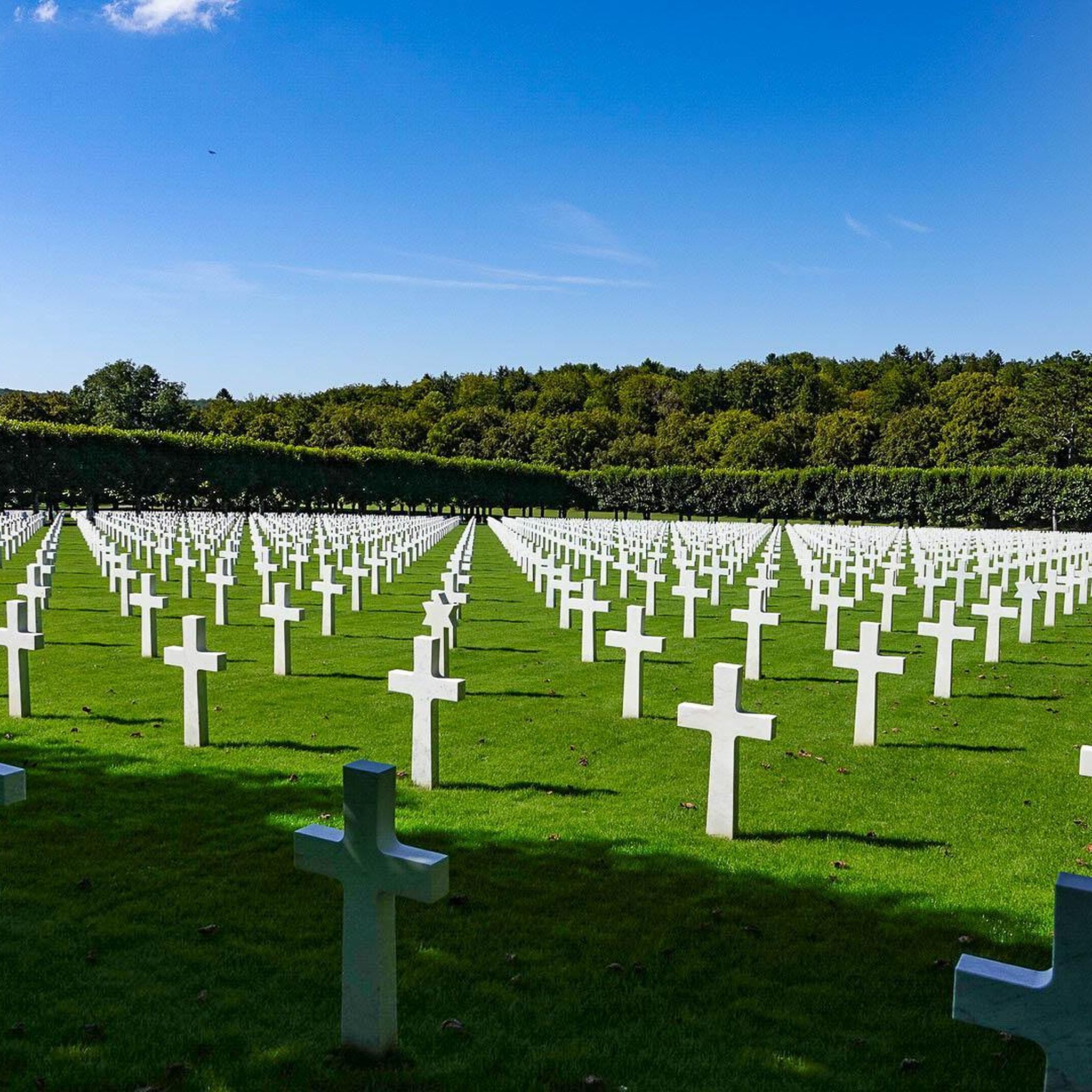
The American military cemetery in Romagne-sous-Montfaucon contains the graves of 14,246 soldiers who died during the First World War in northwest France. It is the largest American military cemetery in Europe. The cemetery site is located in the old front line of the Meuse-Argonne offensive that took place between September 26 and November 11, 1918. The plot of land was used as a cemetery on October 14, 1918 after it had been occupied by the American forces just before. 32nd Infantry Division. The site was given on permanent loan to the US by the French government. The 14,246 graves are spread over eight fields. There are lime trees surrounding the fields, the fields themselves are covered with grass. Each grave has its own stone. For Jewish graves, the top of the stone is shaped like a Star of David. The text on each stone states the soldier's name, rank, division, state and date of death. Of the 14,246 graves, 486 soldiers have not been identified. The stones of the unidentified soldiers bear the text: Here rests in honored glory an American soldier known but to god. On the south side of the cemetery is a memorial building, designed by the architectural firm York and Sawyer from New York. The center of the memorial gives access to a chapel containing the flags of the US and the other allied countries. The stained glass windows show the insignia of the various divisions that operated in the region. The two loggias outside the chapel display the names of 954 missing soldiers. The visitors building is located on the north side of the cemetery. There is a book here in which a visit can be registered. The entrance to the cemetery, both on the west and east sides, is 'guarded' by two white towers with the American eagle on top. There is a large pond in the middle of the site. The maintenance and management of the cemetery is the responsibility of the American Battle Monuments Commission.
5
0


Alvin Cullum York (December 13, 1887 – September 2, 1964), also known as Sergeant York, was one of the most decorated United States Army soldiers of World War I.[1] He received the Medal of Honor for leading an attack on a German machine gun nest, gathering 35 machine guns, killing at least 25[2] enemy soldiers and capturing 132 prisoners. York's Medal of Honor action occurred during the United States-led portion of the Meuse-Argonne Offensive in France, which was intended to breach the Hindenburg line and force the Germans to surrender. He earned decorations from several allied countries during WWI, including France, Italy and Montenegro.
0
0

Dun-sur-Meuse is a French commune located in the department of Meuse, in the Lorraine region. The upper town was largely destroyed during the First World War. This bridge over the Meuse is one of the most beautiful monuments of this type in France. There are bronze balustrades on both sides of the bridge, with designs in the center and inscribed plaques. It reminds French citizens and others, who will cross the bridge for years to come, of the passage of the Meuse. The crossing of the Meuse by the 5th Division was commanded by General John Pershing. It was one of the most brilliant military exploits of the American army on French territory.
2
0
Frequently Asked Questions
What historical sites related to World War I can I visit in Romagne-Sous-Montfaucon?
Romagne-Sous-Montfaucon is rich in World War I history. You can visit the Meuse-Argonne American Cemetery, the largest American military cemetery in Europe, which serves as the final resting place for 14,246 soldiers. Another significant site is the Deutscher Soldatenfriedhof, a German cemetery with 1,111 graves, largely preserved in its original state and part of the UNESCO World Heritage. Additionally, the Musée Romagne 14-18 offers unique collections and exhibitions about the Great War.
Are there any monuments or memorials commemorating the American involvement in World War I?
Yes, several important monuments commemorate American involvement. The Meuse-Argonne American Cemetery features a memorial building, chapel, and loggias listing missing soldiers. You can also see the Pershing Bridge of Dun-sur-Meuse, which commemorates the crossing of the Meuse by the 5th Division commanded by General John Pershing. The War monument, erected by the state of Pennsylvania, honors American soldiers who helped liberate Varennes in 1918.
What natural features can I expect to see around the attractions?
While not distinct natural parks, the Meuse-Argonne American Cemetery incorporates natural elements designed for reflection. It features a superb tree-lined park and a peaceful lake populated with water lilies, offering a contemplative atmosphere amidst the historical significance.
Are there any family-friendly attractions in the area?
The historical sites, particularly the Meuse-Argonne American Cemetery, can be educational for older children and families interested in history. The visitor center at the cemetery provides historical reconstructions and period footage to explain the offensive and daily lives of soldiers, which can be engaging. The Pershing Bridge of Dun-sur-Meuse is also listed as family-friendly.
What outdoor activities, like hiking or cycling, can I do near Romagne-Sous-Montfaucon?
The area around Romagne-Sous-Montfaucon is suitable for various outdoor activities. You can find several routes for cycling, gravel biking, and running. For cycling, explore routes like the 'Beautiful path – War monument loop from Cornay' or the 'Romagne-sous-Montfaucon – War monument loop from Romagne-sous-Montfaucon' by visiting the Cycling around Romagne-Sous-Montfaucon guide. For gravel biking, consider routes like 'Autry Campsite – Continue from Condé to Servon loop from Chatel-Chéhéry' in the Gravel biking around Romagne-Sous-Montfaucon guide. Running enthusiasts can find trails such as the 'Château de Cornay loop from Chatel-Chéhéry' in the Running Trails around Romagne-Sous-Montfaucon guide.
Is there a specific trail dedicated to Sergeant York?
Yes, there is a Sergeant York trail nearby. This trail is associated with Alvin Cullum York, one of the most decorated United States Army soldiers of World War I, known for his actions during the Meuse-Argonne Offensive.
What is the best time of year to visit Romagne-Sous-Montfaucon?
The Meuse-Argonne American Cemetery is accessible all year, allowing for visits in any season. However, for comfortable exploration of outdoor sites and trails, spring (April-May) and autumn (September-October) generally offer pleasant weather with milder temperatures and beautiful scenery.
How much time should I allocate to visit the main attractions?
To fully appreciate the historical significance and explore the main sites like the Meuse-Argonne American Cemetery and the Musée Romagne 14-18, it is recommended to allocate at least a full day. If you plan to include nearby monuments and outdoor activities, you might consider a two-day visit.
Are there any hidden gems or lesser-known historical sites worth exploring?
Beyond the major cemeteries and museums, Romagne-Sous-Montfaucon also has the rebuilt Église Saint-Michel, which was destroyed during the Meuse-Argonne Offensive, and a small 20th-century oratory dedicated to Jesus. These offer a glimpse into the local resilience and faith amidst the historical context.
What do visitors enjoy most about the attractions in Romagne-Sous-Montfaucon?
Visitors often express deep appreciation for the solemnity and historical depth of the sites. The Meuse-Argonne American Cemetery is particularly noted for its peaceful atmosphere, meticulous upkeep, and the poignant stories it tells. The educational value of the museums and the impressive scale of the memorials leave a lasting impact on those who visit.
Is parking available at the main attractions?
Yes, the Meuse-Argonne American Cemetery has a visitor building on its north side, and parking facilities are typically available for visitors to such significant sites. For other attractions like the Musée Romagne 14-18, parking can usually be found within the village.
Are the attractions wheelchair accessible?
The Meuse-Argonne American Cemetery is generally designed with accessibility in mind, featuring paved paths and facilities. However, it's always advisable to check specific accessibility details with individual sites, especially for older or smaller historical locations, as terrain can vary.
Most popular routes around Romagne-Sous-Montfaucon

Get inspired with the komoot mobile app


Explore more
Still not found the Highlight you’re looking for? See guides of the top attractions in other regions:
