The best cycling routes around Le Gué-De-Longroi
4.5
(233)
1,266
riders
60
rides
Touring cycling routes around Le Gué-De-Longroi traverse a varied landscape within the Eure-et-Loir department of France. The region features a mix of open fields, rolling hills, and picturesque woodlands, often following the serene Eure River valley. Cyclists can expect to encounter agricultural lands and diverse countryside, providing changing backdrops for rides.
Best touring cycling routes around Le Gué-De-Longroi
- The most popular touring cycling route is Maintenon Castle – Maintenon loop from Gallardon, a 17.3 miles (27.9 km) trail that…
Last updated: July 2, 2026
4.5
(2)
9
riders
25.9km
01:30
120m
120m
Easy bike ride. Great for any fitness level. Mostly paved surfaces. Suitable for all skill levels.
5.0
(2)
5
riders
35.1km
02:08
180m
180m
Moderate bike ride. Good fitness required. Mostly paved surfaces. Suitable for all skill levels.

Sign up for free
5.0
(1)
7
riders
Easy bike ride. Great for any fitness level. Mostly paved surfaces. Suitable for all skill levels.
5
riders
53.5km
03:05
190m
190m
Moderate bike ride. Good fitness required. Mostly paved surfaces. Suitable for all skill levels.
3
riders
43.4km
02:33
220m
220m
Moderate bike ride. Good fitness required. Mostly paved surfaces. Suitable for all skill levels.
Get access to more routes and recommendations from other explorers.
Sign up for free
Already have an account?
Our route recommendations are based on thousands of hikes, rides, and runs completed by other people on komoot.
Start today with a free account
Your next adventure awaits.
Login or Signup

Tips from the Community

According to tradition, the church choir covers the remains of an older building, possibly dating back to the 6th century, which was built to house the saint's body. According to current knowledge, the commune of Saint-Piat (Sanctus Piatus in Latin) officially appeared in 1087, mentioned in a charter of the Nottonville Priory (Eure-et-Loir), on which it depended. The current building was rebuilt during the time of Francis I, as suggested by the date 1535 engraved on two buttresses of the apse and the date 1542 engraved on a piece of wood from the vault. This is according to a study by the SAEL (Eure-et-Loir Archaeological Society). The three-sided apses, the dripstone towers (horizontal members projecting from a wall), and the sculpted roof structures are a testament to the importance of the reconstructions carried out in the department during the 16th century. The church of Saint-Piat is one of them. While the church has not been officially recognized, it nevertheless contains objects that have attracted attention both for their antiquity and quality, but not always for good reason. Their artistic value, far from attracting only religious or aesthetic interest, has also aroused a covetousness that, unfortunately, remains for some of them. Fortunately, those still in place are carefully cared for and offer the curious a story to discover, a beauty to slowly ponder as they progress toward the choir.
0
0

The current remains are those of the 15th-century gate and its barbican or artillery boulevard. The earliest remains on the site date back to the 1st century, with the remains of an ancient domus, a street, and its wooden gutter. The first Guillaume Gate was built around 1185; a wall can still be seen a little further along Rue de la Porte Guillaume. Source: https://journals.openedition.org/cem/14214?lang=en
0
0

The views are always astonishing when arriving in Gallardon: a church in the shape of a truncated cathedral, and an improbable old tower that does not seem able to defy time.
0
0

Chartres en Lumières returns for a 21st edition, illuminating 21 sites seven evenings a week from April 13, 2024 to January 5, 2025. For the 2024 season, Chartres en Lumières includes in its program the Saint-Aignan church, which is preparing its grand return, and the façade of the Departmental Council, Place Châtelet, where the Eurelian heritage will be honored. With Chartres en Lumières, immerse yourself in a magical, colorful universe and discover, in an atypical way, the must-sees in the heart of the city of Chartres from dusk to 1 a.m. (11:30 p.m. from October 27).
1
0

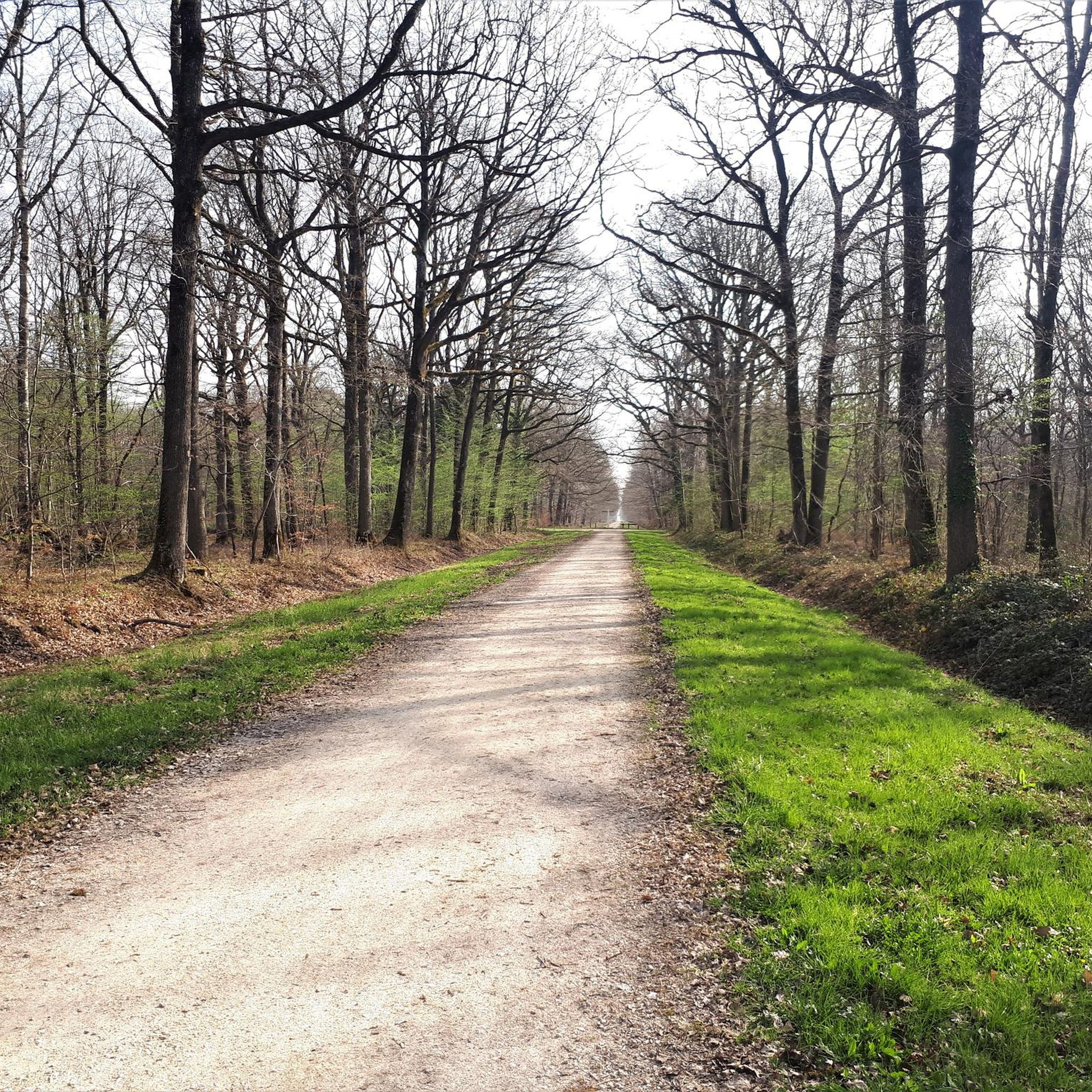
it's a route with very few vehicles so you can relax more to have fun
0
0

A medieval building has shaped the city's skyline for centuries: the cathedral's two towers reaching towards the sky can be seen from a long way away. This early example of Gothic architecture not only shaped Chartres itself, but was also a model for many other church buildings for a long time, not only in France, but also spread beyond its borders to other countries.
2
0

The Fontaine du Breuil wash house, an essential break ✨
1
0

The Moulin de Saint-Piat is a water mill located on the Eure and dating from the 11th century where it was once used for the production of flour and the extraction of oil. You can admire the architecture of the mill, which was extended in 1865, and enjoy the view of the river and the nearby church. The mill is also a good place for birdwatching, as you may be able to see herons, kingfishers and ducks along the water.
4
0
Frequently Asked Questions
How many touring cycling routes are available around Le Gué-De-Longroi?
There are over 50 touring cycling routes available around Le Gué-De-Longroi, offering a diverse range of options for cyclists. The komoot community has explored these routes over 700 times, giving them an average rating of 4.5 stars.
What kind of terrain can I expect on touring cycling routes in Le Gué-De-Longroi?
The terrain around Le Gué-De-Longroi is varied, featuring a mix of open fields, rolling hills, and picturesque woodlands. Many routes follow the serene Eure River valley, offering changing backdrops of agricultural lands and diverse countryside.
Are there easy touring cycling routes suitable for beginners in Le Gué-De-Longroi?
Yes, a significant number of routes are suitable for beginners. Out of the over 50 touring cycling routes, 30 are classified as easy. An example is the Lavoir de Soulaires – Saint-Piat Mill loop from Gallardon, an easy 33.2 km path offering views of the Eure river and local heritage sites.
What historical landmarks or attractions can I see along the cycling routes?
Many routes pass by historical and cultural points of interest. For instance, the Maintenon Castle – Maintenon loop from Gallardon takes you past historical landmarks. You can also discover attractions like the Saint-Piat Mill, the Saints Peter and Paul Church in Gallardon, or the Lavoir de Soulaires. The iconic Chartres Cathedral is also within cycling distance from the area.
Can I cycle along the Eure River?
Yes, the Eure River is a prominent feature of the region's cycling network. Dedicated routes along the Eure valley, including greenways, offer safe, non-motorized paths through diverse countryside, past lakes, and through forests. The Lavoir de Soulaires – Saint-Piat Mill loop from Gallardon is one such route that offers views of the Eure river.
Are there any longer touring cycling routes near Le Gué-De-Longroi?
For those seeking longer rides, routes like the Chartres – the Guillaume Gate loop from Gallardon cover a distance of over 53 km. The Eure-et-Loir department also integrates with long-distance itineraries such as the Véloscénie and sections of the Way of Saint Jacques de Compostelle by bike.
Are the touring cycling routes in Le Gué-De-Longroi suitable for families?
Many of the routes around Le Gué-De-Longroi are classified as easy, making them suitable for families. The region's greenways along the Eure River provide safe, non-motorized paths away from traffic, which are ideal for family outings. Always check the specific route details for distance and elevation to ensure it matches your family's ability.
What is the best time of year for touring cycling in Le Gué-De-Longroi?
The spring and autumn months generally offer the most pleasant conditions for touring cycling in Le Gué-De-Longroi, with milder temperatures and beautiful scenery. Summer can also be enjoyable, but it's advisable to start earlier in the day to avoid the midday heat. Always check local weather forecasts before heading out.
Are there circular touring cycling routes available?
Yes, many of the touring cycling routes in the area are designed as loops, allowing you to start and end at the same point. Examples include the Gallardon is worth a visit – L'Épaule de Gallardon loop from Gallardon, which covers 29 km through varied countryside, and the Church of Gallardon – Gallardon is worth a visit loop from Saint-Symphorien-le-Château.
Where can I find information about public transport or parking near the cycling routes?
While specific parking and public transport details for individual trailheads are not provided here, Le Gué-de-Longroi is well-integrated into the regional network. For detailed information on public transport options to reach starting points or parking facilities, it's best to consult local tourism resources such as tourisme28.com or tourisme-seine-eure.com.
What is the difference between touring cycling and mountain biking in this region?
Le Gué-de-Longroi and the Eure-et-Loir department are primarily known for their touring cycling routes, which are generally suited for road bikes or hybrid bikes on paved roads, greenways, and well-maintained paths. While there might be some unpaved sections, dedicated mountain biking (VTT) trails with technical terrain are less common. The focus here is on scenic, accessible routes for exploring the countryside and historical sites.
Most popular routes around Le Gué-De-Longroi
Most popular attractions around Le Gué-De-Longroi

Get inspired with the komoot mobile app


Explore more
Browse the best Cycling routes in other regions.
