Attractions and Places To See around Vaux-Lavalette - Top 15
Best attractions and places to see around Vaux-Lavalette blend historical grandeur with natural beauty in the Charente department of France. The region features a mix of ancient castles, Romanesque churches, and unique natural sites like peat bogs and walking paths. Visitors can explore a landscape characterized by rolling hills and charming villages, offering a diverse range of historical and outdoor experiences. This area provides opportunities for discovering local flora, significant architectural heritage, and cultural points of interest.
Best attractions and…
Last updated: June 24, 2026
Château de la Mercerie
Highlight • Castle
Translated by Google •
Tip by

Château de Villebois-Lavalette
Highlight • Castle
Translated by Google •
Tip by
Sign up now to discover places like this
Get recommendations on the best single tracks, peaks, & plenty of other exciting outdoor places.
Sign up for free
Notre-Dame Church of Charmant
Highlight • Religious Site
Translated by Google •
Tip by
Saint-Eutrope Church of Montmoreau
Highlight • Religious Site
Translated by Google •
Tip by

Village of Charmant
Highlight • Other
Translated by Google •
Tip by

Sign up for free to discover even more attractions around Vaux-Lavalette.
Sign up for free
Already have an account?
Start today with a free account
Your next adventure awaits.
Login or Signup


Tips from the Community

The Notre-Dame de Charmant church dates from the end of the 11th century. It is Romanesque and has a remarkable bell tower, in an octagonal pyramid. This bell tower, destroyed by a storm, was rebuilt in 1843. Inside, some beautiful murals remain, including one of the Assumption. Two crosses pattées sculpted on its facade to the left of the portal may suggest that it was a Templar possession in the 13th century. https://fr.wikipedia.org/wiki/%C3%89glise_Notre-Dame_de_Charmant https://monumentum.fr/monument-historique/pa00104282/boisne-la-tude-eglise-notre-dame
0
0
The title suggests an unusual village; it is not. It is an isolated village composed of old houses without any particular style. In my eyes, the only points of interest are the church (which you can't walk around and which doesn't offer much in terms of its exterior facade), the chapel near the cemetery (very basic, you just walk around it without leaving more cultured) and the castle which offers accommodation as a bed and breakfast. The village as a whole is not essential, like the town hall building: bland, aged with a poorly preserved authenticity.
0
0
Primitive in style, built in the 11th or 12th century, the Saint-Eutrope church was built on the site of a previous place of worship. It was first a perpetual vicariate dependent on the abbey of Cluny. The building was restored and modified at the end of the 19th century by the architect Paul Abadie who mainly had the bell tower remodeled by adding a second floor, consisting on each side of three bays with two arches on a straight foot and topped with a fairly high pyramidal spire. It has a wooden frame covered in slate. Shortly before the storm of 1999, some work was carried out in order to restore its former character, in particular the unvaulted nave, thus revealing the original wooden frame. This work made it possible to uncover a small door leading to the outside located to the left of the nave and near the choir. Door that can be found in many Romanesque churches (such as the church of Montmoreau). The location of these doors is said to evoke the lance thrust to the heart that Christ received on the cross. This opening was transformed into a niche to house the statue of the Virgin and Child Jesus. The bell tower houses two bells: the first weighs 110 kg and dates from 1725, the second weighs 375 kg and dates from 1890. The exterior staircase leading to the bell tower is very special. It is of the self-supporting type: that is to say that each step sealed in the wall rests partially on the previous one. There are two other staircases of this type in the town. https://www.montmoreau.fr/index-module-orki-page-view-id-115.html
0
0

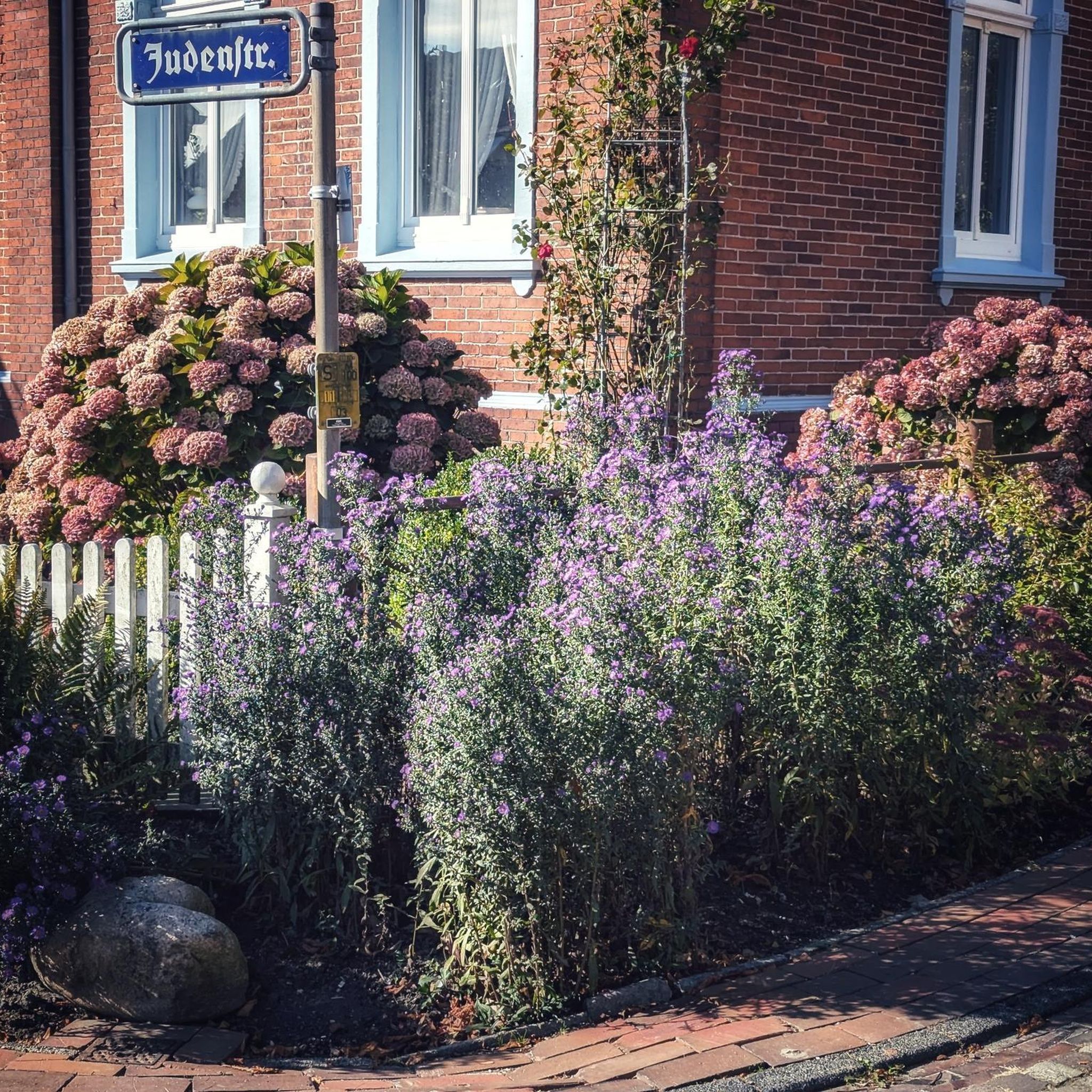
A small Charentais village with nothing in particular until we discover the "priest's garden", a garden maintained and preserved by the inhabitants around the church.
0
0

The Notre-Dame parish church dates from the end of the 11th century. It is Romanesque and has a remarkable bell tower, in an octagonal pyramid. This bell tower, destroyed by a storm, was rebuilt in 1843. Inside, some beautiful murals remain, including one of the Assumption. Two crosses pattée carved on its facade to the left of the portal may suggest that it was a Templar possession in the 13th century.
2
0

The extraordinary history of this grandiose residence began in 1924, in the heart of a small 19th century manor (to the left of the current façade): the troubadour castel of La Mercerie was then acquired by Alphonse and Raymond Réthoré. From then on, the two brothers, dreaming of the great Versailles, devoted all their resources to enlarging and embellishing the building. The work undertaken is commensurate with the ambition that drives it. Outside, colonnades and balusters in white stone soon extend the first building. the cut stone increases the gigantism and the rigor of a facade with a perfect rhythm. Inside, nothing is too beautiful for La Mercerie, Raymond brings back from his travels furniture and paintings, chandeliers and precious woods, marbles from Italy, azulejos from Portugal etc. He returns from Italy with a painter sculptor who will carry out on the spot the most monumental decorations with the assistance of the inhabitants of the country. The treasures are piling up, but 30 years of work will not be enough to complete the colossal project. The collections are dispersed during auctions in June 1987. When the two brothers died, the castle fell into oblivion, until the mobilization of the inhabitants of the town, who decided to found an association to safeguard this unique and prestigious heritage. The Béruges room, the central living room, the Vernet living room, the vestibule, the mahogany gallery and the large Azulejos gallery, each more impressive than the last, now fully conquers the visitor eager for cultural discoveries. A short tour of the belvedere of the castle allows you to admire it from the height. In the park of the castle, the rose garden and the arboretum can be visited by little train. The little train is random due to the health context and will be reserved for people with reduced mobility and children, and mainly on Sundays.
0
0

Pretty castle in height after a climb from Angoulême
1
0
Villebois-Lavalette castle is a real citadel overlooking the village of Villebois-Lavalette. Surrounded by a fortress with seven towers, it stands between Charente and Périgord. A medieval atmosphere floats at its approach. This medieval castle more than a thousand years old, with exceptional architecture, overlooks a charming village labeled "Small City of Character" and "capital of Cornuelle". In 1980, this old citadel was crumbling under ivy, brambles and time, a dynamic was set in motion for its restoration for 18 years. In 2000, Mr. Norbert FRADIN, promoter and patron from Bordeaux passionate about heritage and its preservation, became the owner. He is working to restore it to give it back its superb appearance, its impressive enclosure bristling with seven towers finally reveals its secrets. Something to delight all curious young and old, as well as history lovers.
1
0
Frequently Asked Questions
What natural attractions can I explore around Vaux-Lavalette?
The region offers unique natural features such as the Chemin des orchidées, an 8 km walking path in Vaux-Lavalette itself, perfect for discovering local flora. You can also visit the Little Lion Tourbières / Site Naturel des Tourbières, which are natural peat bogs offering unique ecological interest.
Are there any notable castles or historical residences to visit?
Yes, you can explore the grand Château de la Mercerie, known as the 'Petit Versailles Charentais' with its 220-meter long facade and 50-hectare park. Another must-see is the medieval Château de Villebois-Lavalette, a thousand-year-old citadel overlooking the village of Villebois-Lavalette.
Which historical churches are worth visiting in the area?
The region is rich in historical churches. Don't miss the Notre-Dame Church of Charmant, an 11th-century Romanesque church with a remarkable octagonal bell tower and murals. The Saint-Denys Church of Montmoreau, a 12th-century Romanesque church on the Via Turonensis, also retains much of its original appearance. Additionally, the Saint-Étienne Church of Courgeac offers a glimpse into early Romanesque architecture.
Is there a unique underground church nearby?
Absolutely! The magnificent Subterranean Monolithic Church of Saint-Jean in Aubeterre-sur-Dronne is hewn directly into the rock, offering a striking example of troglodyte architecture. The village of Aubeterre-sur-Dronne itself is recognized as one of France's 'Most Beautiful Villages'.
What charming villages can I explore around Vaux-Lavalette?
Beyond the attractions, you can visit the picturesque village of Villebois-Lavalette, known for its medieval ambiance and a 17th-century covered market hall. Aubeterre-sur-Dronne is another 'Most Beautiful Village' of France, and Charmant also offers a pleasant Charente experience.
Are there opportunities for hiking or walking near Vaux-Lavalette?
Yes, the region is excellent for walking. Besides the Chemin des orchidées in Vaux-Lavalette, you can find numerous trails. For more options, explore the cycling routes around Vaux-Lavalette which often include paths suitable for walking.
What cycling routes are available for different skill levels?
The area offers a variety of cycling routes. For mountain biking, you can find moderate to difficult MTB trails, including a 26.8 km loop from Vaux-Lavalette. Road cyclists can enjoy easy to moderate routes like the 17.6 km Château de Vendoire loop. General cycling options, such as the 41.5 km Villebois-Lavalette Exploration Loop, are also available for touring bicycles.
What do visitors particularly enjoy about the attractions around Vaux-Lavalette?
Visitors appreciate the blend of historical grandeur and natural beauty. The Château de la Mercerie is admired for its dazzling facade and extensive park with rare trees. The Château de Villebois-Lavalette is loved for its exceptional architecture and medieval atmosphere. The Romanesque churches, like Saint-Denys Church of Montmoreau, are noted for their preserved original appearance and intricate details.
Are there any local markets to experience the regional culture?
Yes, several nearby towns host vibrant markets throughout the week. You can find markets in Mareuil (Tuesdays), Riberac (Tuesdays & Fridays), Chalais (Mondays), La Couronne (Saturdays), and Angoulême (daily except Mondays). These markets are great for experiencing local life and finding regional produce.
Are there family-friendly attractions or activities in the area?
Many attractions are suitable for families. The Château de Villebois-Lavalette is considered family-friendly, offering an engaging historical experience. Exploring charming villages like Aubeterre-sur-Dronne and Villebois-Lavalette, or enjoying the Chemin des orchidées, also provides enjoyable outings for all ages.
What is the general terrain and landscape like around Vaux-Lavalette?
The landscape around Vaux-Lavalette is characterized by rolling hills and charming villages, offering a diverse range of historical and outdoor experiences. You'll find a mix of lush green settings, particularly around sites like the Château de la Mercerie, and unique ecological areas such as the peat bogs.

Get inspired with the komoot mobile app


Explore more
Still not found the Highlight you’re looking for? See guides of the top attractions in other regions:
