Attractions and Places To See around Boisgasson - Top 15
Best attractions and places to see around Boisgasson include historical landmarks and cultural sites. This former commune, now part of Vald'Yerre, offers a glimpse into its past through notable architectural structures. The area features historic castles and churches, set within a rural landscape typical of the Centre-Val de Loire region.
Best attractions and places to see around Boisgasson
- The most popular attractions is View of Montigny-le-Gannelon Castle, a castle that offers a viewpoint from the bridge crossing the Loir.…
Last updated: May 17, 2026
Château de Montigny-le-Gannelon
Highlight • Castle
Montigny-le-Gannelon Castle dates from the Renaissance period; it was redesigned …
Translated by Google •
Tip by

View of Montigny-le-Gannelon Castle
Highlight • Castle
Translated by Google •
Tip by

Sign up now to discover places like this
Get recommendations on the best single tracks, peaks, & plenty of other exciting outdoor places.
Sign up for free
Saint George's Church
Highlight • Other
Translated by Google •
Tip by

Saint-Jean-Baptiste Church of Courtalain
Highlight • Religious Site
Translated by Google •
Tip by

Saint Hilaire Church
Highlight • Other
Translated by Google •
Tip by
Sign up for free to discover even more attractions around Boisgasson.
Sign up for free
Already have an account?
Start today with a free account
Your next adventure awaits.
Login or Signup



Tips from the Community

Placed under the patronage of Saint Hilaire, this parish was given by Gannelon de Montigny, lord of the place, to the abbey of Marmoutier around 1042. Its reconstruction probably dates from this period; it then became a priory. The church has a rectangular nave ending in a choir with a flat chevet. An examination of the masonry easily reveals two distinct periods of construction: the Romanesque period and the Renaissance. Built of flint rubble with rendering, the western part of the building appears to date from the 11th or 12th century. A limestone cornice supported by rather crude corbels underlines the base of the roof. To the south, two narrow Romanesque windows flared inwards light the nave. To the north, the bays were later reworked and enlarged. On this same side, a Romanesque doorway was walled up; It allowed the church to connect with a building whose traces of detachment remain. The bell tower was built to the north of the Romanesque nave, extending the western façade. The absence of a connection between the east and west walls of the bell tower and the north wall of the nave clearly indicates that it is an entirely later construction. However, its crowning is much later, as evidenced by its cornice, whose molding is in the classical style. Flanked by obliquely angled buttresses, it is covered with a saddleback roof. The eastern half of the church appears to be an extension built during the Renaissance period. Its ogee-shaped cornice and the decoration of the eastern gable, as well as the moldings of the buttress bands, attest to this dating. A vast rectangular choir then appears to have replaced a semicircular Romanesque apse; the eastern gable and the southern and northern façades were then pierced with networked bays. In the lower part of the north façade, projecting ashlars appear to have supported the roof of a lean-to building. To the south, a sacristy was built in the 19th century. Inside, the entire building is covered with a paneled vault with exposed tie beams and kingposts. The 18th-century high altar is surmounted by an Assumption of the Virgin inspired by Murillo's. For the restoration of the roofs and façades, the Sauvegarde de l'Art Français (French National Art Protection Agency) awarded a grant of €30,490 in 2001.
0
0
The 12th century church of Saint Jean-Baptiste de Courtalain, already repaired in 1592, was rebuilt in 1809, increased by an aisle in 1838, then by a remarkable porch bell tower topped with a twelve meter spire. height, thanks to the generosity of the Montmorency family, owner of the castle. It is to Guillaume Davaugour and Perette de Baïf, his wife, that we attribute the erection of the Courtalain chapel into a parish church; The church is located in the immediate perimeter of the castle. The entire building is partly covered with flat tiles for the roof of the nave, the bell tower, the staircase turret; the three cut sides of the apse and the lower north side are covered in natural slate. Inside the nave is a Mutin Cavaillé Coll organ dating from 1936. It contains several interesting paintings.
0
0
Before the 13th century there were two parishes, Saint-Sauveur and Saint-Gilles, in 1300 the bishop of Chartres united them into one by a charter of Berchères, because of the smallness of the two parishes. The church dates from the beginning of the 17th century. Rebuilt on the foundations of an old Romanesque church, its originality comes from its bell tower with saddle roof, its caquetoire and its paneled vault redone in 2003. At the initiative of the Prince Duke of Montmorency-Laval, it has contained the reliquary of Sainte-Félicité since 1838. Saint Félicité, whose relics are in Montigny-le-Gannelon, is a martyr whose life is unknown, whose body was taken from the sacred cemeteries of Rome. We have his body, the skull, the bones of his arms, fingers and feet. They were removed from the Saint-Cyriaque cemetery in 1828 and placed in their respective places on a body artistically modeled in wax and measuring more than 1.40 meters in length. A magnificent chase, of the shape and size of an altar tomb, all furnished with glazing and embellished with gilding received this precious deposit. Pope Leo XII donated it to the Duke of Laval, then Charles X's ambassador to Rome. On his death, he bequeathed it by will to the church of Montigny-le-Gannelon where the old historic castle of Laval-Montmorency is located. The venerated hunt is now placed under the main altar of which it forms the tomb.
0
0

Almost nothing is reliably known about the life of Saint George (Saint-GEORGES), to whom the church of Cloyes-sur-le-Loir was dedicated, but the veneration of his person goes back to early Christianity. A martyr identified with George is said to have lived in the third century. However, the legend of St. George as a dragon slayer is well known and widespread; he is usually depicted - in paintings or as a statue - as the conqueror of the monster, often as a knight on horseback. The memorial day of the very popular George - he is, among other things, patron of the English kingdom - in the calendar of saints is April 23rd.
2
0

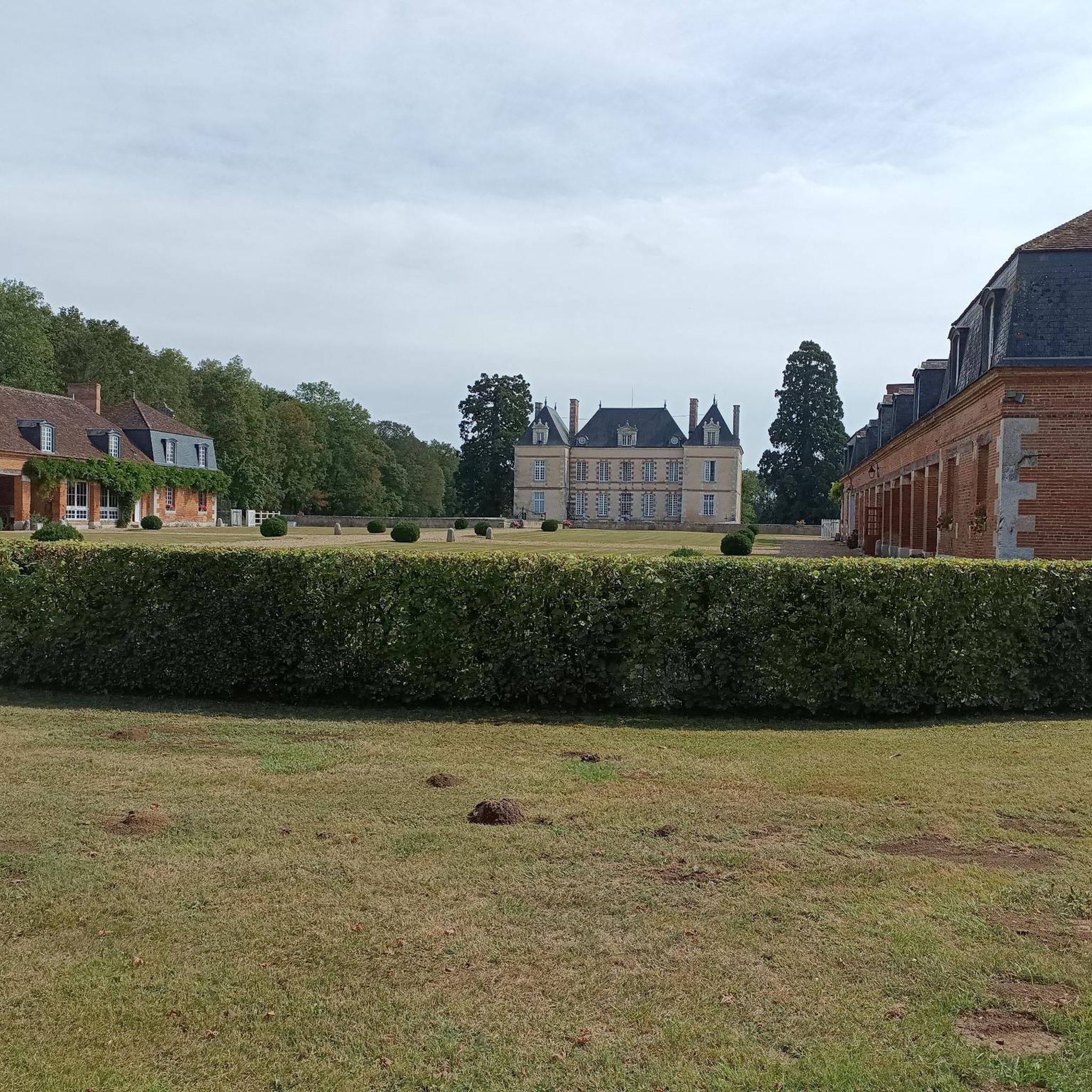
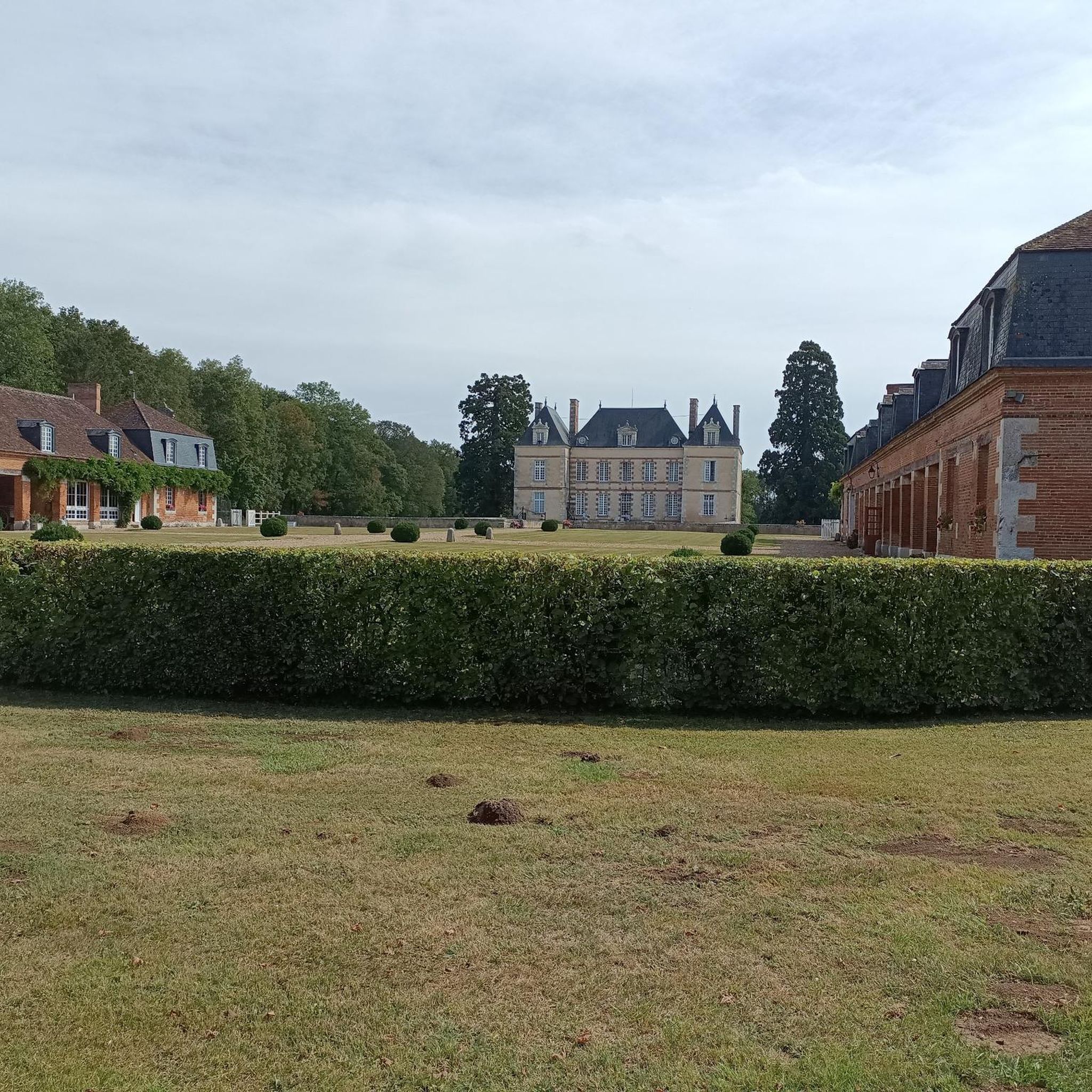
The bridge that crosses the Loir at Montigny-le-Gannelon offers a beautiful viewpoint below the castle. The splendid facades of this Renaissance-style building are clearly visible. A feast for the eyes.
2
0


The Saint-Georges church in Cloyes-sur-le-Loir is beautifully situated. And you look at everything. If you are not careful, you overlook the oversized scallop shell. The tip here will help you. Look at the photos!
1
0
The church of Saint-Sauveur-Saint-Gilles and the castle of Montigny-le-Gannelon Montigny-le-Gannelon are wonderful. You just have to go over the mountain. Montigny-le-Gannelon Castle dates from the Renaissance period; it was redesigned during the course of a restoration in the 19th century Neo-Gothic.
1
0
Frequently Asked Questions
What historical landmarks can I visit in Boisgasson itself?
Boisgasson, now part of Vald'Yerre, is home to several significant historical landmarks. The most prominent is the Château de Villemesle, a historic castle with origins dating back to 1403, largely rebuilt in the mid-17th century. You can also visit the Église Notre-Dame, which houses an 18th-century eagle lectern and a bell from 1783, both classified historical monuments. Additionally, the Croix de Cimetière de Boisgasson (Cemetery Cross) is another listed historical monument.
What is the history behind Château de Villemesle?
The Château de Villemesle has a rich history, first mentioned as the 'mote de Villemesle' in 1403. The current structure was primarily built in the mid-17th century, with 18th-century additions. It was notably rebuilt by René des Loges in 1665, reportedly following plans by André Le Nôtre. The castle, including its facades, roofs, 18th-century salon woodworks, and 17th-century staircase, was partially listed as a historical monument in 1992. It is privately owned and also serves as an event venue. You can find more information about its history on Wikipedia or Châteaudun Tourisme.
Are there any notable churches to see around Boisgasson?
Yes, the area around Boisgasson features several historically significant churches. You can visit Saint Hilaire Church, which dates back to the 11th or 12th century and showcases distinct Romanesque and Renaissance construction periods, including an 18th-century high altar. Another is Saint George's Church in Cloyes-sur-le-Loir, known for its historical significance and the widespread legend of Saint George as a dragon slayer. Also, consider the Saint-Jean-Baptiste Church of Courtalain, a 12th-century church rebuilt and expanded over centuries, featuring a remarkable porch bell tower.
What outdoor activities are available near Boisgasson?
The rural setting around Boisgasson offers various outdoor activities. You can explore numerous routes for hiking, cycling, and running. For detailed options, check out the guides for Hiking around Boisgasson, Cycling around Boisgasson, and Running Trails around Boisgasson.
Are there hiking trails suitable for different skill levels near Boisgasson?
Yes, you'll find hiking trails for various skill levels. For example, the 'Cloyes-sur-Loir loop from Cloyes-sur-le-Loir' is an easy 7.6 km route, while the 'Montigny-le-Gannelon Castle Loop' is a moderate 8 km trail. For more options, including moderate and difficult routes, refer to the Hiking around Boisgasson guide.
Can I go cycling around Boisgasson?
Absolutely. The region provides several cycling routes, ranging from moderate to difficult. You can find extensive options like the 'Meslay Castle – The Loir loop from Fontaine-Raoul' (93.9 km, difficult) or 'The Loir – Feudal Castle of Fréteval loop from Cloyes-sur-le-Loir' (81.7 km, moderate). Explore these and more in the Cycling around Boisgasson guide.
Are there opportunities for running near Boisgasson's attractions?
Yes, there are several running trails available. You can choose from easy routes like the 'Running loop from Montigny-le-Gannelon' (4.3 km) or more challenging ones such as the 'Romainville Castle loop from Montigny-le-Gannelon' (19.3 km, difficult). For a full list of options, consult the Running Trails around Boisgasson guide.
What do visitors particularly enjoy about the attractions near Boisgasson?
Visitors appreciate the historical depth and architectural beauty of the region. The View of Montigny-le-Gannelon Castle is particularly popular for its splendid facades visible from the bridge crossing the Loir, offering a 'feast for the eyes.' The historical churches, with their distinct construction periods and preserved interiors, also receive positive feedback for their cultural significance and serene atmosphere.
When is the best time of year to visit Boisgasson's attractions?
The best time to visit Boisgasson and its surrounding attractions is generally during the spring (April to June) and autumn (September to October). During these seasons, the weather is typically mild and pleasant for exploring historical sites and enjoying outdoor activities like hiking and cycling. The rural landscape is also particularly picturesque with blooming flowers or autumn foliage.
Are there any less-known or 'hidden gem' attractions worth exploring?
While the main attractions are well-regarded, the charm of Boisgasson lies in its quiet, rural setting and smaller historical elements. Beyond the prominent Château de Villemesle and the main churches, exploring the local village of Boisgasson itself, with its listed Cemetery Cross and traditional architecture, can offer a more intimate glimpse into the region's heritage away from larger crowds.
Are any attractions in Boisgasson wheelchair accessible?
Many historical sites, including castles and older churches, often present accessibility challenges due to their age and original construction. While specific accessibility information for each site is not always readily available, it is generally advisable to contact individual venues like the Château de Villemesle directly for the most accurate and up-to-date information regarding wheelchair access.

Get inspired with the komoot mobile app


Explore more
Still not found the Highlight you’re looking for? See guides of the top attractions in other regions:
