The best road cycling routes around Coudray-Au-Perche
4.0
(28)
822
riders
251
rides
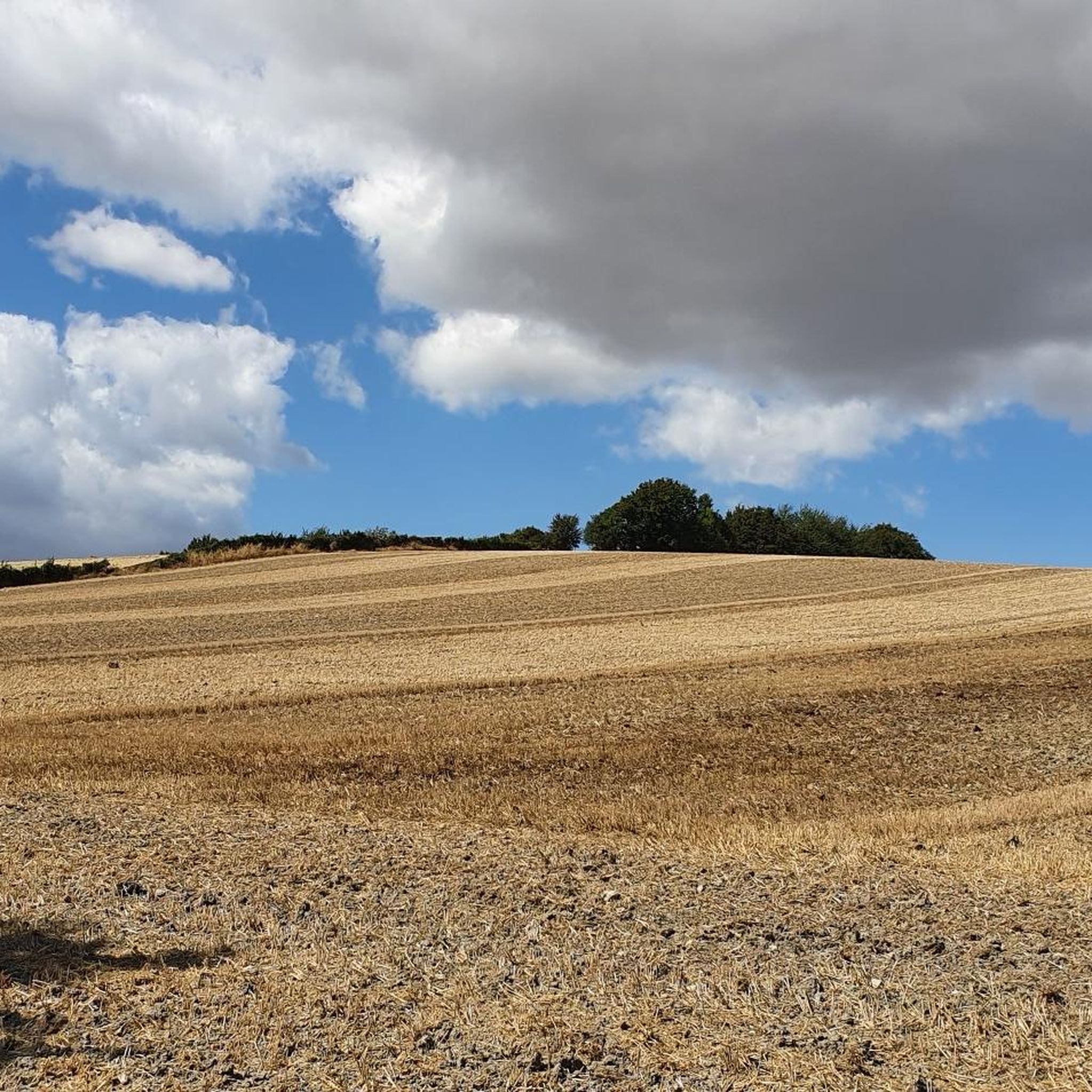
Road cycling routes around Coudray-Au-Perche traverse the Perche Natural Regional Park, characterized by its "bocage" countryside. The region features gentle forest hills, green valleys, and a network of quiet, scenic roads. Elevations range from 136 meters to 276 meters, providing varied terrain for cyclists. This landscape includes hedged farmlands, dense forests, and tranquil rivers, offering a picturesque backdrop for rides.
Best road cycling routes around Coudray-Au-Perche
- The most popular road cycling route is Mill – Feugerets Castle loop from Souancé-au-Perche…
Last updated: November 4, 2026
7
riders
Easy road ride. Mostly well-paved surfaces and easy to ride.
8
riders
34.9km
01:33
300m
300m
Easy road ride. Mostly well-paved surfaces and easy to ride.

4.3
(3)
5
riders
25.8km
01:10
160m
160m
Easy road ride. Mostly well-paved surfaces and easy to ride.
4
riders
33.1km
01:28
350m
350m
Moderate road ride. Good fitness required. Mostly well-paved surfaces and easy to ride.
2
riders
41.2km
01:54
380m
380m
Moderate road ride. Good fitness required. Mostly well-paved surfaces and easy to ride.
Get access to more routes and recommendations from other explorers.
Already have an account?
Our route recommendations are based on thousands of hikes, rides, and runs completed by other people on komoot.
Start today with a free account
Your next adventure awaits.


Tips from the Community

The construction of the church of Coudray en Perche dates back to the 12th century, but the 16th century saw its enlargement by the addition of a higher choir with a stone vault. The interior is distinguished by the nave's inverted ship-hull structure with its painted ceiling and four equally painted beautiful beams. Also noteworthy are the stone baptismal fonts with their scaly wooden lid, which bears a sculpted angel's head. All the windows were remodeled as was often the custom in the Renaissance. In the 19th century, a gallery was built for the children of the sisters' school. Above, admire the stained glass window "Let the little children come to me." The opening of the chancel window led to the modification of the main altarpiece, due to the generosity of the Prince of Henin, owner of the Château de Montgraham. The pretty stained glass window, which thus descends into the middle of the altarpiece, relates to the story of the church's patron saint: it is a depiction of Jesus handing the keys to Saint Peter.
0
0
The church of Saint-Georges de Souancé is a vast edifice 34 m long. Built in the 16th century, perhaps on an older edifice, it was remodelled several times in the 19th century: notably in 1862 with the addition of a sacristy and a small chapel, while in 1894 the openings in the nave were enlarged and the choir vault was redone. The plan of the church consists of a nave of four bays, a choir bay of the same width, and a pentagonal apse. The bell tower, of square plan, is connected by a narrow passage to the nave. The sacristy, built in the 19th century, communicates with the choir bay; finally, the adjoining chapel opens onto the right part of the apse. The exterior silhouette of the edifice, situated on a steep slope, is dominated by the pointed gable of the apse. The bell tower, 21 m high, is topped by a four-sided roof. The first two levels could date from the 13th century, as suggested by the thickness of its walls, the arrangement of the slightly projecting buttresses, the narrow arched windows, long since blocked up. A strongly projecting band externally marks the separation of these two levels. Only the last storey, which houses the bells, is pierced by high windows; it is built slightly set back from the base of the tower, the setback being highlighted by a stone chamfer. The gable of the west facade, slightly less high than that of the choir, has, like it, a very pointed profile. It is finished with a rondel and crochets. The flamboyant-style portal is of a fairly common design: the depressed arch, flanked by two pilasters, is surmounted by a volute with acanthus leaves. A pointed arch window with two lancets opens in the gable wall, in the same axis as the portal. Two thick corner buttresses were probably built in the 16th century. The Count of Souancé states that the windows opened in the side walls last century replaced older semi-circular windows. Inside the edifice, the nave is covered with a wooden ceiling, referred to as "bardeaux" at the beginning of the century, while the 16th-century choir is vaulted with ogival cross vaults. The study of the stained glass windows and the coats of arms of the Le Breton, lords of Vilandry, the Souancé and Montdoucet, which appear on the keystones of the first two bays of the choir, seem to establish that the construction, begun around 1520, was completed before 1542. The stained glass windows of the choir tell the life of Saint George, patron saint of the church. After being subjected to poorly documented dismantling, they were reassembled in disorder during the 19th century. However, classified in 1907, they were re-leaded in 1923, a restoration that justified the award in 1926 of a prize of 5,000 F granted by the Académie des Inscriptions et Belles-Lettres from the Pellechot legacy. The Count of Souancé, a correspondent of this Academy, requested and obtained, in 1930, the inscription of the choir and bell tower of the church in the supplementary inventory, then, in 1935, the protection of the facade and of the wooden ceiling covering the nave. This protection was justified by the desire to prevent ill-conceived restorations from compromising the work that had just been completed by the architect of the Historical Monuments, Maunoury. The Count of Souancé recalled the unfortunate interventions that had previously been carried out in the edifice: widening of the nave windows, opening of reinforced concrete dormer windows in the tower roof, and, even more serious, the removal of the wall paintings uncovered in 1874, during the change of the altar. La Sauvegarde de l'Art français granted in 2002 a contribution of €7,000 for the sanitation works of the edifice and for the restoration of the bell tower. These works had been deferred for six years.
0
0
In the Middle Ages, Saint-Avit-au-Perche was a priory of the abbey of Saint-Calais, founded by Avit's companion. Today's church dates from the very beginning of the 12th century. It consists of a five-bay nave ending in a semicircular apse. It is covered with chestnut shingles. Several original windows remain; others have been reworked (including the first window, on the north side). This can be seen in the shape of the keystones. A walled-up side door to the south can be seen from the outside. It has an enormous mitre lintel. Inside, it has been transformed into a niche housing Our Lady of Lourdes. The apse is flanked by projecting buttresses. Those at the corners of the façade are from the 15th century. The western portal in a pointed arch is a 15th-century renovation that was completely redone at the end of the 20th century.
0
0
The Saint-Lubin church, built on a sloping site, is a vast building with juxtaposed constructions, bearing witness to renovations and additions up to the 19th century, the oldest distinguished by the presence of grison, the most recent by limestone and flint. The sanctuary was ceded in 1077 by the monks of Saint-Denis de Nogent-le-Rotrou to the monks of the Saint-Père de Chartres abbey. Built in the 11th-12th century, the nave extended by a semi-circular apse is the oldest part of the church, in Romanesque style. In the thickness of the north walls of the nave are still visible the grison bonds which bear witness to the original openings. The building was considerably enlarged in the 15th and 16th centuries by the construction of a large transept, formed of two chapels, and a south aisle forming an alignment of gables attached to the slopes decorated with leafy motifs and finished with chimeras. The construction of the north aisle, just begun, was not finished. On the outside, on the west wall of the chapel, we can see the beginning of a first bay (stone arch and walls removed that remained unfinished). On the gable of the north transept, the walled door can be seen from the pointed arch and the ornate pinnacles, characteristic of the end of the 15th century. In the center, two animals present a coat of arms. On each side of the door, niches with canopies once housed statues. Above, we can still see a coat of arms presented by two bearded figures and probably surmounted by God the Father. According to local tradition, all or part of the extensions were due to the generosity of Florimont Robertet, who owned the barony of Brou from 1509 until his death in 1527, and it was because of this that the work was interrupted. Occupied by the revolutionaries, the building became a ten-day temple in 1794; it was finally returned to worship in 1802. Burnt down by lightning in 1813, the upper part of the bell tower, which was a slender spire, was replaced by the construction of a square limestone tower pierced with louvers. On the southern part of the bell tower, a turret provides access to the bells. In the southern part of the nave, a door, now blocked and highlighted by a basket-handle arch topped with a pinnacle, provided access to the cemetery that once surrounded the church. The building can boast of having preserved very uniform oak furniture, most of which was made in the second half of the 18th century.
0
0
From its source to its confluence with the Ozanne, the Sainte-Suzanne covers 19.2 km and crosses 5 communes. From upstream to downstream: Authon-du-Perche; Beaumont-les-Autels; Coal pits; Les Altars-Villevillon; A glass.
0
0
the Saint-André church dates from the 11th century; it was a priory then dependent on the abbey of St.-Calais, but the current building was completely rebuilt around the walls and framework of the old building. The project was carried out in 1877. The construction of a transept, enlarged windows and a stone bell tower completely modified the old monument. The environment has also changed a lot. All traces of the old cemetery, transferred outside the village at the beginning of the 18th century, have disappeared. The furniture includes a stone baptistery, a statue of the Virgin and Child, a confessional and a Louis XV period bench. The beautiful wooden tabernacle decorated with a statue of Saint Lubin comes from the church which was located a few kilometers away, in Saint-Lubin-des-Cinq-Fonts, and of which only the choir, which has become a chapel, remains today. .
0
0
Saint John the Baptist is considered the pivotal figure of the Bible, between the Old and New Testaments: the last of the Prophets, he is the precursor of Christ, the messenger who announces Him... His mother - Elizabeth, is related to Mary and both women meet while they are both expecting their son. We can only refer to the Gospel of Luke (1, 39-45) which powerfully depicts this touching scene, and which the Church has celebrated every year since the 13th century under the name of Visitation (May 31). Jean, as an adult, will lead the harsh life of an ascetic in the desert. He preaches, teaches prayer and proposes a baptism of conversion, while announcing the coming of “one more powerful than he… who will no longer baptize only in water, but in the Holy Spirit…” He himself will baptize Jesus.
0
0

This 16th century church is distinguished by its two naves of different inspiration. The north nave is Romanesque while the south nave is Renaissance style.
0
0
Frequently Asked Questions
How many road cycling routes are available around Coudray-Au-Perche?
There are over 240 road cycling routes in the Coudray-Au-Perche area, offering a wide variety of options for different skill levels and preferences.
What is the best time of year for road cycling in the Perche Regional Natural Park?
The mild weather and vibrant colors of spring and autumn make these seasons particularly recommended for road cycling in the Perche Regional Natural Park. The region's diverse landscapes are especially beautiful during these times.
What kind of terrain can I expect on road cycling routes around Coudray-Au-Perche?
The region is characterized by its 'bocage' countryside, featuring undulating landscapes with gentle forest hills and green valleys. You'll find a mix of challenging ascents and enjoyable descents on countless small country roads with very little traffic, offering a serene riding experience.
Are there easy road cycling routes suitable for beginners or families?
Yes, there are 33 easy road cycling routes around Coudray-Au-Perche. A good option for a more relaxed ride is the Roadbike loop from Authon-du-Perche, which is 25.8 km long and has moderate elevation changes.
What historical sites or attractions can I see along the road cycling routes?
Many routes pass by historical and cultural sites. You can explore landmarks such as Nogent-le-Rotrou Castle, the Notre-Dame Church in Nogent-le-Rotrou, and the Saint-André Church of Saintigny. The Saint-Denis Church – Thiron Abbey loop from Trizay-Coutretot-Saint-Serge specifically leads through historical sites and hedged farmlands.
Are there any circular road cycling routes in the area?
Yes, many of the road cycling routes around Coudray-Au-Perche are designed as loops. For example, the popular Mill – Feugerets Castle loop from Souancé-au-Perche is a 82.2 km circular route, and the Sainte-Suzanne stream – Saint John the Baptist Church loop from Authon-du-Perche is a 50.5 km loop.
What do other road cyclists enjoy most about cycling in Coudray-Au-Perche?
The road cycling routes in Coudray-Au-Perche are highly rated by the komoot community, with an average score of 4.0 stars from over 20 reviews. Cyclists often praise the tranquil roads, the picturesque 'bocage' countryside, and the varied terrain that offers both scenic beauty and engaging rides.
Are there any particularly scenic viewpoints along the routes?
The region's rolling hills and diverse landscapes offer numerous scenic spots. You can find a lovely stretch through the fields that provides expansive views. The gentle elevation changes, such as those around the 'collines de Ceton,' also contribute to picturesque vistas.
What are the typical distances and durations for road cycling routes here?
Routes vary significantly in length and duration. You can find shorter rides like the Roadbike loop from Authon-du-Perche at 25.8 km (approx. 1 hour 11 minutes), up to longer tours like the Mill – Feugerets Castle loop from Souancé-au-Perche, which is 82.2 km and typically takes around 3 hours 25 minutes.
Are there any routes that pass by castles or châteaux?
Yes, several routes offer views of historical castles. The Mill – Feugerets Castle loop from Souancé-au-Perche passes by historical castles. Another option is the Montmirail Castle – Château de Montmirail loop from Authon-du-Perche, which is a 41 km route featuring these impressive structures.
Is parking readily available for road cyclists in the area?
While specific parking spots aren't detailed for each route, the region's small towns and villages, such as Authon-du-Perche or Souancé-au-Perche, typically offer public parking options where you can start your ride. Given the rural nature, finding parking is generally not an issue.
Most popular routes around Coudray-Au-Perche
Most popular attractions around Coudray-Au-Perche

Get inspired with the komoot mobile app


Explore more
Browse the best Road cycling routes in other regions.
