The best road cycling routes around Saint-Denis-D'Authou
4.3
(22)
394
riders
93
rides
Road cycling routes around Saint-Denis-D'Authou traverse the varied landscapes of the Eure-et-Loir department, situated within the Perche Regional Natural Park. The region features rolling countryside, tranquil ponds, and lush forests, offering a mix of terrain for cyclists. Routes often include significant elevation changes, providing both invigorating climbs and enjoyable descents through a preserved natural setting.
Best road cycling routes in Saint-Denis-D'Authou
- The most popular road cycling route is Notre-Dame Church – Saint-Denis Church loop from Coudreceau, a 28.2 miles…
Last updated: November 2, 2026
4.8
(4)
38
riders
31.3km
01:26
330m
340m
Moderate road ride. Good fitness required. Mostly well-paved surfaces and easy to ride.
10
riders
54.3km
02:18
410m
410m
Moderate road ride. Good fitness required. Mostly well-paved surfaces and easy to ride.

6
riders
64.8km
02:39
390m
390m
Moderate road ride. Good fitness required. Mostly well-paved surfaces and easy to ride.
7
riders
43.3km
01:55
390m
390m
Moderate road ride. Good fitness required. Mostly well-paved surfaces and easy to ride.
6
riders
29.8km
01:14
200m
200m
Easy road ride. Mostly well-paved surfaces and easy to ride.
Get access to more routes and recommendations from other explorers.
Already have an account?
Our route recommendations are based on thousands of hikes, rides, and runs completed by other people on komoot.
Start today with a free account
Your next adventure awaits.

Tips from the Community

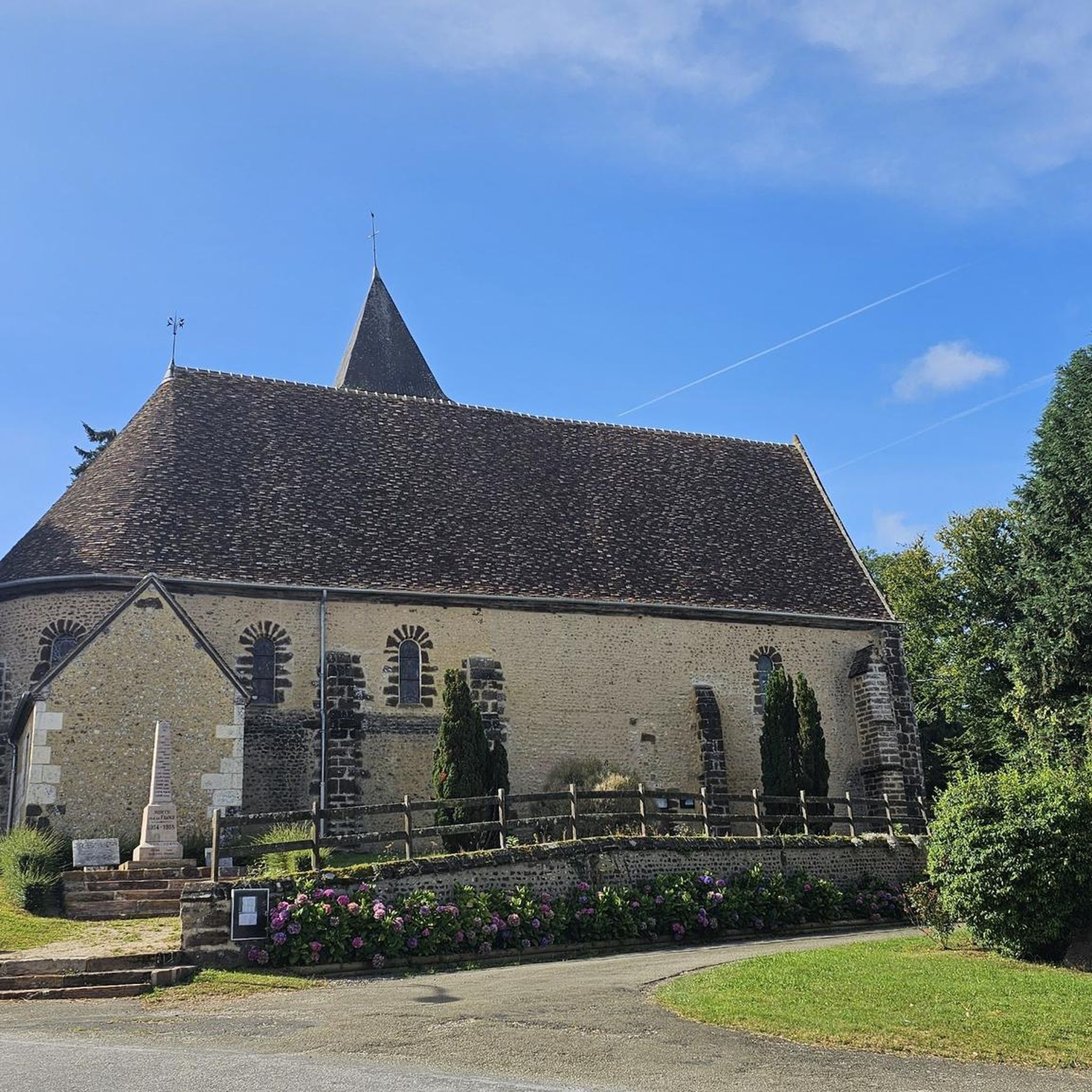
The construction of the church of Coudray en Perche dates back to the 12th century, but the 16th century saw its enlargement by the addition of a higher choir with a stone vault. The interior is distinguished by the nave's inverted ship-hull structure with its painted ceiling and four equally painted beautiful beams. Also noteworthy are the stone baptismal fonts with their scaly wooden lid, which bears a sculpted angel's head. All the windows were remodeled as was often the custom in the Renaissance. In the 19th century, a gallery was built for the children of the sisters' school. Above, admire the stained glass window "Let the little children come to me." The opening of the chancel window led to the modification of the main altarpiece, due to the generosity of the Prince of Henin, owner of the Château de Montgraham. The pretty stained glass window, which thus descends into the middle of the altarpiece, relates to the story of the church's patron saint: it is a depiction of Jesus handing the keys to Saint Peter.
0
0
The church of Saint-Georges de Souancé is a vast edifice 34 m long. Built in the 16th century, perhaps on an older edifice, it was remodelled several times in the 19th century: notably in 1862 with the addition of a sacristy and a small chapel, while in 1894 the openings in the nave were enlarged and the choir vault was redone. The plan of the church consists of a nave of four bays, a choir bay of the same width, and a pentagonal apse. The bell tower, of square plan, is connected by a narrow passage to the nave. The sacristy, built in the 19th century, communicates with the choir bay; finally, the adjoining chapel opens onto the right part of the apse. The exterior silhouette of the edifice, situated on a steep slope, is dominated by the pointed gable of the apse. The bell tower, 21 m high, is topped by a four-sided roof. The first two levels could date from the 13th century, as suggested by the thickness of its walls, the arrangement of the slightly projecting buttresses, the narrow arched windows, long since blocked up. A strongly projecting band externally marks the separation of these two levels. Only the last storey, which houses the bells, is pierced by high windows; it is built slightly set back from the base of the tower, the setback being highlighted by a stone chamfer. The gable of the west facade, slightly less high than that of the choir, has, like it, a very pointed profile. It is finished with a rondel and crochets. The flamboyant-style portal is of a fairly common design: the depressed arch, flanked by two pilasters, is surmounted by a volute with acanthus leaves. A pointed arch window with two lancets opens in the gable wall, in the same axis as the portal. Two thick corner buttresses were probably built in the 16th century. The Count of Souancé states that the windows opened in the side walls last century replaced older semi-circular windows. Inside the edifice, the nave is covered with a wooden ceiling, referred to as "bardeaux" at the beginning of the century, while the 16th-century choir is vaulted with ogival cross vaults. The study of the stained glass windows and the coats of arms of the Le Breton, lords of Vilandry, the Souancé and Montdoucet, which appear on the keystones of the first two bays of the choir, seem to establish that the construction, begun around 1520, was completed before 1542. The stained glass windows of the choir tell the life of Saint George, patron saint of the church. After being subjected to poorly documented dismantling, they were reassembled in disorder during the 19th century. However, classified in 1907, they were re-leaded in 1923, a restoration that justified the award in 1926 of a prize of 5,000 F granted by the Académie des Inscriptions et Belles-Lettres from the Pellechot legacy. The Count of Souancé, a correspondent of this Academy, requested and obtained, in 1930, the inscription of the choir and bell tower of the church in the supplementary inventory, then, in 1935, the protection of the facade and of the wooden ceiling covering the nave. This protection was justified by the desire to prevent ill-conceived restorations from compromising the work that had just been completed by the architect of the Historical Monuments, Maunoury. The Count of Souancé recalled the unfortunate interventions that had previously been carried out in the edifice: widening of the nave windows, opening of reinforced concrete dormer windows in the tower roof, and, even more serious, the removal of the wall paintings uncovered in 1874, during the change of the altar. La Sauvegarde de l'Art français granted in 2002 a contribution of €7,000 for the sanitation works of the edifice and for the restoration of the bell tower. These works had been deferred for six years.
0
0
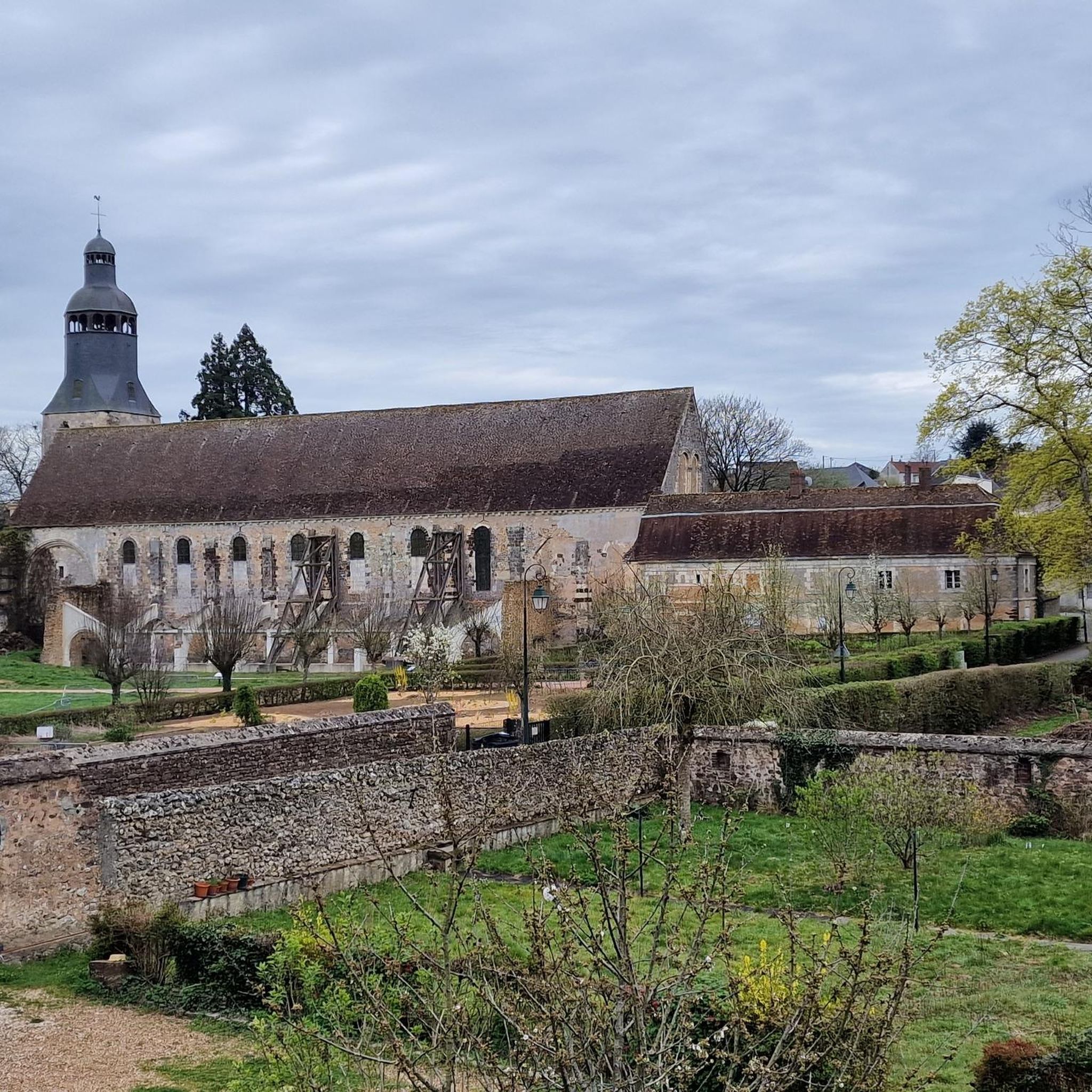
The building's foundations date back to the 12th century, when it was dependent on the abbey of Thiron-Gardais. The interior houses a remarkable set of three Baroque altarpieces from the 17th century (around 1650), recently restored.
0
0

Magnificent ceiling with the possibility of lighting it up
0
0

This ancient fortified castle dominates the Huisne Valley at 360° with its imposing keep. The building, with its troubled history, has undergone numerous modifications in its architecture and functions. A visit is essential to understand the complexity of its history and to observe the architectural evolutions.
0
0
The inhabitants of Margon can admire the church of Notre-Dame du Mont-Carmel, proudly dominating the old town on its rocky spur, at the corner of two green valleys. It was later given an aisle during the 16th century, but its Romanesque portal has been preserved. It reigns benevolently over the old cemetery which surrounds it and which has recently been enlarged due to the increase in the population of the commune.
0
0

A must-see that overlooks the valley.
0
0
Frequently Asked Questions
How many road cycling routes are available around Saint-Denis-D'Authou?
There are over 85 road cycling routes available around Saint-Denis-D'Authou, offering a wide range of options for different skill levels and preferences.
What kind of terrain can I expect when road cycling in Saint-Denis-D'Authou?
The region around Saint-Denis-D'Authou, nestled within the Perche Regional Natural Park, features diverse terrain. You can expect rolling countryside, tranquil ponds, and lush forests. Many routes include significant elevation changes, providing both invigorating climbs and enjoyable descents.
Are there easy road cycling routes for beginners in Saint-Denis-D'Authou?
Yes, Saint-Denis-D'Authou offers several easy road cycling routes suitable for beginners. For instance, the Villeray Mill – mill loop from Coudreceau is an easy 27.2-mile (43.8 km) trail that takes you through the local rural landscape.
Are there challenging routes for experienced road cyclists?
Absolutely. While the area offers many moderate routes, the varied terrain with significant elevation changes means experienced cyclists can find challenging sections. The region's commitment to preserving natural environments ensures a rich and undisturbed setting for more demanding rides.
What historical sites or landmarks can I see along the road cycling routes?
You can incorporate visits to several historical sites and landmarks. Notable attractions include the Château de Frazé and the Thiron-Gardais Abbey Gardens. Many routes also pass through charming villages and past historical churches like Saint Martin Church.
Are there scenic viewpoints or natural features to enjoy while cycling?
Yes, the Perche Regional Natural Park offers beautiful natural features. Cyclists can enjoy a lovely stretch through the fields, cycle through shaded sections in the forest, and pass by tranquil ponds, all contributing to a picturesque cycling experience.
Where can I find parking for road cycling in Saint-Denis-D'Authou?
As Saint-Denis-D'Authou is a rural area, parking is generally available in or near the village centers, especially around starting points for routes. Many routes begin from villages like Coudreceau or Thiron-Gardais, where you can typically find suitable parking spots.
Is public transport available to reach road cycling starting points?
Public transport options directly to specific road cycling starting points in Saint-Denis-D'Authou may be limited due to its rural nature. It is advisable to check local bus schedules or consider driving to a central village like Coudreceau or Thiron-Gardais, which serve as common starting points for many routes.
Are there cafes or places to stop for refreshments along the routes?
The broader Perche region is dotted with picturesque villages, offering opportunities for breaks and experiencing local culture. While specific cafes on every route aren't guaranteed, planning your ride to pass through these villages will provide chances for refreshments and local hospitality.
What do other road cyclists enjoy about the routes in Saint-Denis-D'Authou?
The road cycling routes in Saint-Denis-D'Authou are highly rated by the komoot community, with an average score of 4.3 stars from over 20 reviews. Cyclists often praise the varied terrain, the beautiful rolling countryside, and the peaceful atmosphere of the Perche Regional Natural Park.
Are there circular road cycling routes available?
Yes, many of the road cycling routes around Saint-Denis-D'Authou are designed as loops. For example, the Notre-Dame Church – Saint-Denis Church loop from Coudreceau and the Vichères Church – Notre Dame Church loop from Coudreceau are popular circular options.
What is the best time of year for road cycling in Saint-Denis-D'Authou?
The best time for road cycling in Saint-Denis-D'Authou is generally from spring through early autumn. During these seasons, the weather is typically mild, and the natural landscapes of the Perche Regional Natural Park are at their most vibrant, offering pleasant conditions for exploring the routes.
Most popular attractions around Saint-Denis-D'Authou

Get inspired with the komoot mobile app


Explore more
Browse the best Road cycling routes in other regions.
