Attractions and Places To See around Loigny-La-Bataille - Top 6
Best attractions and places to see around Loigny-La-Bataille include historical sites related to the Franco-Prussian War of 1870, alongside rural landmarks. The area features a museum dedicated to the conflict, battlefields, and commemorative churches. Visitors can explore a landscape marked by significant historical events and architectural heritage.
Best attractions and places to see around Loigny-La-Bataille
- The most popular attractions is Château de Cambray, a castle with parts dating back to the 17th and 18th centuries. The estate was acquired…
Last updated: July 1, 2026
Château de Cambray
Highlight • Castle
Translated by Google •
Tip by

Lignerolles Mill
Highlight • Viewpoint
Translated by Google •
Tip by

Sign up now to discover places like this
Get recommendations on the best single tracks, peaks, & plenty of other exciting outdoor places.
Sign up for free
Saint-André Church of Patay
Highlight • Religious Site
In the 7th century, the Benedictine abbey of Bonneval created a priory-curate. Its existence is confirmed by a bull from Pope Gregory second half of the 16th century.
Translated by Google •
Tip by

Saint Peter's Church
Highlight • Other
Translated by Google •
Tip by
Artenay Mill
Highlight • Monument
Translated by Google •
Tip by
Sign up for free to discover even more attractions around Loigny-La-Bataille.
Sign up for free
Already have an account?
Start today with a free account
Your next adventure awaits.
Login or Signup
Popular around Loigny-La-Bataille


Tips from the Community

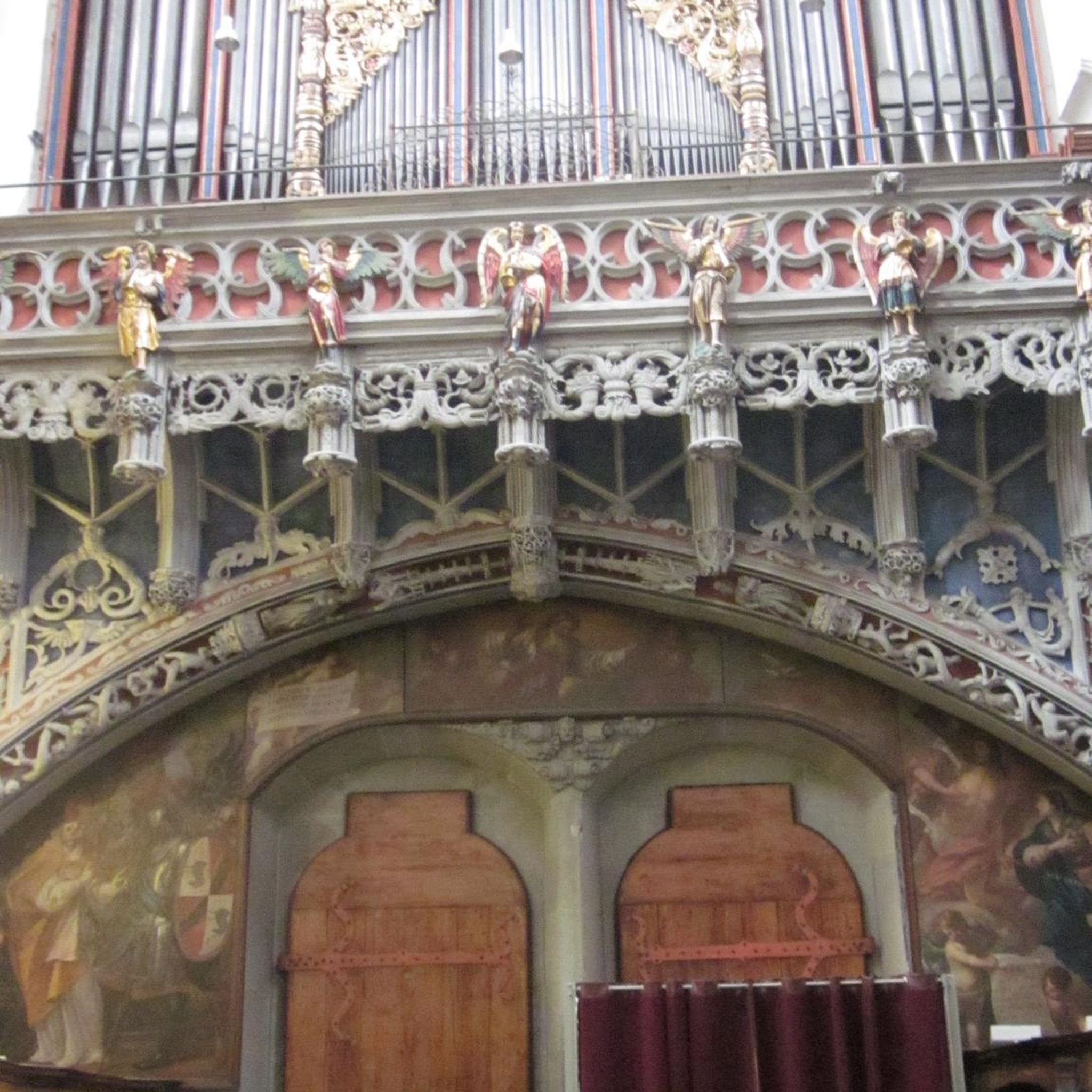
Formerly, the church was the presentation of the abbot of Bonneval because the Saint-Florentin abbey had a priory in Cormainville. A walled arcade, still visible to the south of the choir, represents an ancient communication between the church and the priory. The building was registered as a historic monument in 1927.
0
0
The Saint André church (13th-15th-16th centuries) In the 7th century, the Benedictine abbey of Bonneval created a priory-curate. Its existence is confirmed by a bull from Pope Gregory second half of the 16th century. In 1793 the church was desecrated and transformed into wine and spirits warehouses. In 1801, the church was returned to worship and changed diocese: from the diocese of Chartres, to which it belonged before the Revolution, it passed to the diocese of Orléans, notably for reasons of distance: Chartres is 48 km from Patay then that Orléans is only 27 km away. The church is 30 m long and 17 m wide. The oldest parts are located near the large porch (13th century). One of the pillars of the nave is decorated with a vestige of Danse Macabre from the mid-15th century. A small masonry door on the right communicated with the old priory, of which ruins remain to the south of the church. The choir dates from the 14th century; the apse wall was decorated with paintings at the end of the 19th century, the chapels were then redeveloped and equipped with new stained glass windows. The keystones of the large nave were made from casts taken from the figurines which adorn the Thesis Room of the University of Orléans, built in 1411. The bell tower, located to the north of the choir, would be an old watchtower. Its pinnacles and eight openings were made after the Wars of Religion. The four bells were melted in 1868. The largest was cracked by a Prussian shell in 1870 and was recast in 1871. Since that year, Ernestine (809 kg, 1 m 12 in diameter at the base, sounding the F), Gabrielle (550 kg, 0.981 m in diameter, sounding the ground), Anne (398 kg, 0.573 m in diameter) and Marie (222 kg, 0.724 m in diameter, sounding the C) give rhythm to the daily life of the small town of Patay, old Beauceron railway junction. On August 15, 1944, an ammunition train was blown up at Patay station. The station was blown up, except for the carriage shed, and all the windows in the town were shattered. Luckily, a providential storm limited the damage. The only two stained glass windows that survived the explosion are those on the right side aisle which date from 1930 and relate the communion of Joan of Arc in the Patay church in 1429. The church was listed as a Historic Monument in 1925 by decree of October 6, 1925.
0
0

If you are looking for a unique and historic hiking destination in the Loiret, you can visit the Moulin d'Artenay, a stone windmill dating from 1849. This impressive monument, which stands 16 meters high high and has wings 22 meters long, is one of the rare examples of this type in the Beauce region. You can visit the interior of the mill and discover its machinery, its production of fine flour and the life of the millers. You can also admire a collection of old agricultural equipment at the neighboring farm. The Moulin d'Artenay is open to the public every third Sunday of the month from April to September, from 2 p.m. to 6 p.m. Don't miss this opportunity to discover an element of local heritage.
2
0
The Moulin de Lignerolles is one of the last pivotal windmills in the Loiret department. Built in 1848, this wooden mill belonged to Louis-Joseph Soulas, famous painter and director of the Orléans School of Fine Arts. You can admire the restored mill and its ingenious mechanism, as well as the panoramic view of the plain. The mill is open to the public on Sundays from 2:30 p.m. to 6 p.m., and also hosts various events throughout the year, such as a flea market, concerts and exhibitions. Visiting the Moulin de Lignerolles is an excellent way to discover the heritage and charm of the Beauceron countryside.
2
0

The Cambray orangery is part of the Cambray estate acquired by François Lambert, squire and adviser to the king, auditor in his chamber of accounts, on March 28, 1575 from the nobleman of Oinville, lord of Puiset. The place called Cambray, Combarius under the Romans, was to be a camp. Combrée also means "bushy places", or Cambray is located along the Conie, bordered by reedbeds. The 2 wings of the rear facade were built at the end of the 17th century, beginning of the 18th century by Jacques Lambert, private master of water and forests of the Duchy of Orléans. We note that they were built after the other parts of the castle, with a different aspect of construction, stone on the one hand and bricks around the windows on the other.
0
0
Frequently Asked Questions
What historical sites related to the Franco-Prussian War can I visit in Loigny-La-Bataille?
Loigny-La-Bataille is rich in history from the Franco-Prussian War of 1870. You can visit the Musée de la Guerre 1870, which offers an immersive experience with period objects and tactical displays. The actual Battlefield of Loigny can be explored by car, bike, or on foot, with augmented reality features to visualize the 1870 clashes. Key points include the Bois des Zouaves and the Croix de Sonis. Additionally, the Église Saint-Lucain houses the tombs of General de Sonis and General de Charette, along with an ossuary for fallen soldiers.
What can I expect at the Museum of the War of 1870?
The Musée de la Guerre 1870 provides an immersive and interactive experience detailing the Franco-Prussian War. It features a collection of objects from the period, such as helmets, uniforms, rifles, and shells. Visitors can retrace army movements on tactical tables and enjoy an immersive spectacle that transports them to the heart of the battle of December 2, 1870. The museum is generally open from March 1 to November 1. For more details on opening hours, you can check their official website: cheminsdememoire.gouv.fr.
Are there any notable churches or religious buildings to visit?
Yes, Loigny-La-Bataille and its surroundings feature significant religious buildings. The Église Saint-Lucain, reconstructed after the war, is a votive church with a crypt holding the remains of key battle figures and soldiers. Nearby, you can also visit Saint Peter's Church, registered as a historic monument in 1927, which features a walled arcade that once connected to a priory. Another historical church is the Saint-André Church of Patay, dating from the 13th-16th centuries, which was listed as a Historic Monument in 1925.
What unique historical landmarks or viewpoints are there?
Beyond the battle sites, you can explore other unique historical landmarks. The Lignerolles Mill, built in 1848, is one of the last pivotal windmills in the Loiret department, offering panoramic views of the plain and showcasing its ingenious mechanism. Another impressive monument is the Artenay Mill, a stone windmill from 1849, where you can discover its machinery and a collection of old agricultural equipment.
Can I visit any castles or châteaux in the area?
Yes, the area features historical estates. You can visit Château de Cambray, a castle with parts dating back to the 17th and 18th centuries. Its orangery is a notable feature, and the estate has a history stretching back to 1575. The Château de Goury is also mentioned as another point of interest in connection with Loigny-La-Bataille.
What outdoor activities can I do near these attractions?
The region around Loigny-La-Bataille offers various outdoor activities, particularly cycling and running. You can find several routes for different sports. For running, explore options like the 'La Puce loop from Orgères-en-Beauce' or 'Running loop from Cormainville' which are typically moderate difficulty. Cyclists can enjoy routes such as the 'Forêt domaniale d'Orléans par le moulin de Lignerolles' for a more challenging ride, or easier options like the 'Bike loop from Fontenay-sur-Conie'. Road cyclists have routes like 'Saint Martin Church – Saint-Sulpice Church loop from Patay'. You can find more details on these routes in the Running Trails around Loigny-La-Bataille, Cycling around Loigny-La-Bataille, and Road Cycling Routes around Loigny-La-Bataille guides.
How much time should I allocate for visiting the attractions?
The time needed depends on your interests. For the Battlefield of Loigny, you can explore the full route by car in about 30 minutes, by bike in 1.5 hours, or on foot in 4 hours. Visiting the Musée de la Guerre 1870 might take a couple of hours. If you plan to see multiple historical sites, churches, and mills, a full day or even two would allow for a more comprehensive experience.
Are there family-friendly attractions in Loigny-La-Bataille?
Yes, several attractions are suitable for families. The Battlefield of Loigny, with its augmented reality features, can be an engaging way for older children to learn about history. The Lignerolles Mill and Artenay Mill offer interesting insights into historical technology and panoramic views, which can be enjoyable for all ages. The Saint-André Church of Patay is also listed as family-friendly.
When is the best time to visit Loigny-La-Bataille?
The Musée de la Guerre 1870 is generally open from March 1 to November 1, making spring, summer, and early autumn ideal for visiting the museum. These seasons also offer pleasant weather for exploring the Battlefield of Loigny on foot or by bike, and for enjoying outdoor activities like cycling and running. The Lignerolles Mill is open to the public on Sundays from 2:30 p.m. to 6 p.m., and the Artenay Mill every third Sunday of the month from April to September, so planning your visit during these times is recommended for mill enthusiasts.
What do visitors enjoy most about Loigny-La-Bataille?
Visitors appreciate the deep historical significance of Loigny-La-Bataille, particularly its connection to the Franco-Prussian War. The immersive experience at the Musée de la Guerre 1870 and the ability to explore the actual battlefield are highly valued. The unique historical mills, such as the Lignerolles Mill, are also popular for their heritage and panoramic views. The area's blend of historical sites, churches, and traditional mills offers a variety of attractions to explore.
Are there any specific memorials or commemorative plaques to see?
Yes, throughout the village and battlefield, you will find numerous markers of the past. These include commemorative plaques on burned farms, shell fragments embedded in house walls, and a stone marking the altar's location in the original, destroyed church. These memorials offer poignant reminders of the battle's impact on the area.
Most popular routes around Loigny-La-Bataille

Get inspired with the komoot mobile app


Explore more
Still not found the Highlight you’re looking for? See guides of the top attractions in other regions:
