The best road cycling routes around Nottonville
4.5
(3)
72
riders
29
rides
Road cycling around Nottonville is characterized by its gently rolling terrain and open countryside, making it suitable for various skill levels. The region features a network of well-maintained rural roads connecting charming villages and historical sites. Elevations are generally low, with no significant climbs, providing a smooth cycling experience. This landscape offers a mix of agricultural views and quiet routes away from heavy traffic.
Best road cycling routes around Nottonville
- The most popular road cycling route is Roadbike loop from…
Last updated: July 2, 2026
6
riders
55.5km
02:16
250m
250m
Moderate road ride. Good fitness required. Mostly well-paved surfaces and easy to ride.
7
riders
13.5km
00:31
30m
30m
Easy road ride. Great for any fitness level. Mostly well-paved surfaces and easy to ride.

Sign up for free
6
riders
64.5km
02:31
220m
220m
Moderate road ride. Good fitness required. Mostly well-paved surfaces and easy to ride.
5.0
(2)
3
riders
39.8km
01:37
150m
150m
Easy road ride. Great for any fitness level. Mostly well-paved surfaces and easy to ride.
3
riders
72.5km
02:55
270m
270m
Moderate road ride. Good fitness required. Mostly well-paved surfaces and easy to ride.
Get access to more routes and recommendations from other explorers.
Sign up for free
Already have an account?
Our route recommendations are based on thousands of hikes, rides, and runs completed by other people on komoot.
Start today with a free account
Your next adventure awaits.
Login or Signup
Popular around Nottonville


Tips from the Community

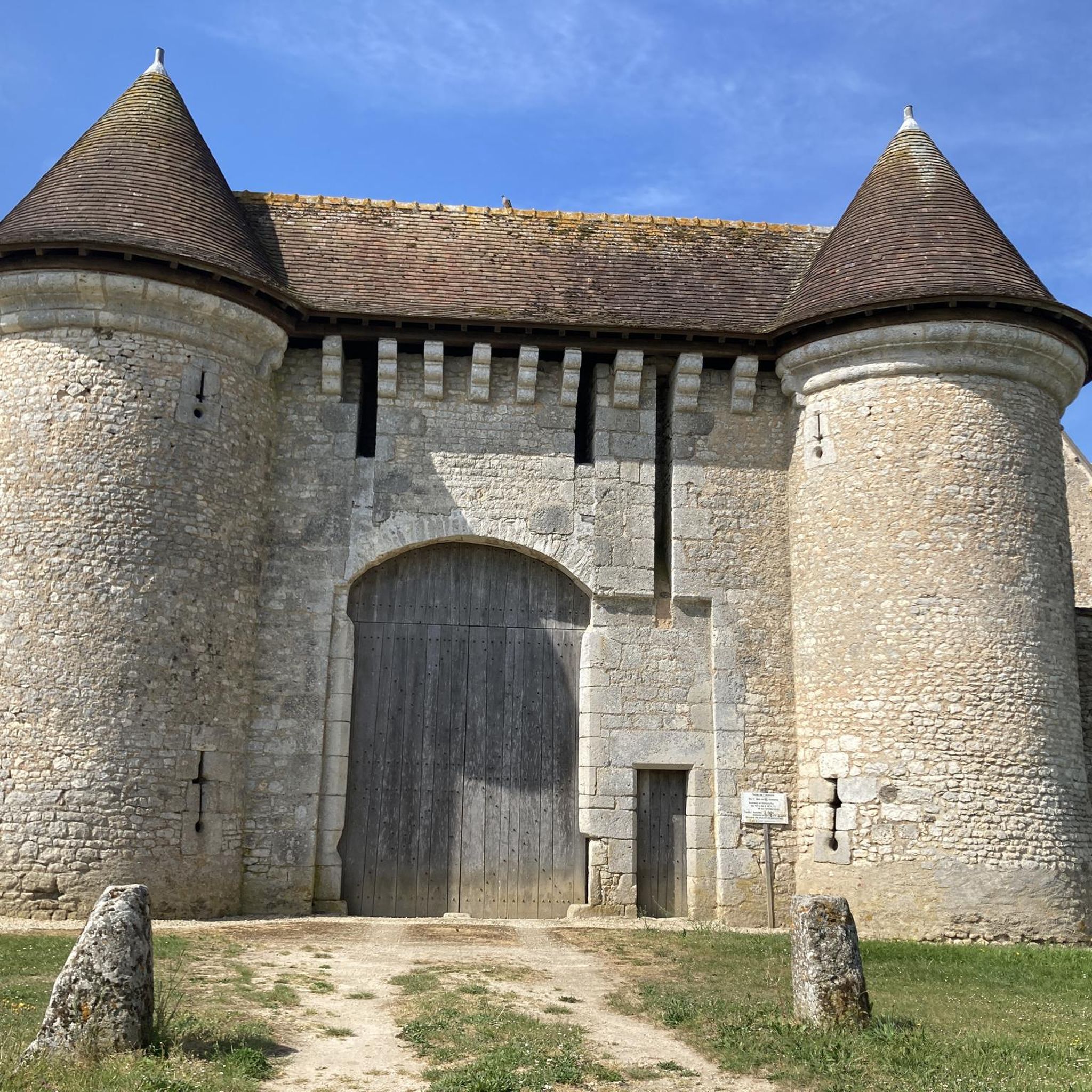
The imposing structure known as the "Château de Chateaudun" that reveals itself to visitors here is, of course, also available in other sports in the komoot system. For the corresponding hiking highlight, you'll find further relevant information and additional photos under the tips. If you're interested, see =>> https://www.komoot.com/de-de/highlight/936307
0
0


The Henri Ey Hospital Center is a departmental public health establishment, specialized in psychiatry, which provides a mission of prevention and reception, care, aftercare and reintegration in mental health in Eure-et-Loir. It provides care in adult, child and adolescent psychiatry, as well as a medico-social activity in the field of geriatrics and psychological and mental disabilities.
0
0
The Saint-André church burned down in the middle of the 19th century. The priest, forced to celebrate mass in a barn, opened a subscription in 1864, the church was rebuilt in 1865, according to the original plan, plus a transept. Bell tower-porch.
0
0
Saint-Pierre-et-Saint-Paul Church is a Romanesque building that underwent some modifications following the partial destruction of the village during the war of 1870. The oriented nave ends with a semi-circular apse and adjoins, to the north, a side aisle. Access is located in the southwest part of the nave, protected by a long canopy. A sacristy was built outside the work and communicates directly, to the south, with the apse. The aisle opens onto the nave by two large arcades. At the entrance to the choir, stand two columns with primitive capitals intended to receive an arch that was probably never built. The nave and the choir are covered with a paneled vault. Two pointed arch bays light the nave to the south. The windows of the apse and the aisle are semicircular. The west gable also includes a semicircular bay. On this side of the church, the arch of the old portal, now walled up, is still visible. An oculus has been pierced in its upper part. The roof is made of slate, as is the bell tower, erected on the western part of the roof. Inside, the decor is especially remarkable for the wall paintings from the 12th and 13th centuries that were discovered in 1939, behind the altarpiece of the sanctuary, by Father Moriceau, the parish priest. Some of them are illegible, others have been perfectly identified. These are the scenes depicting the Descent from the Cross, the Holy Women at the Tomb, the Baptism of Christ, and the Meal at Herod's. Like those in the church of Lutz-en-Dunois and the chapel of Yron in Cloyes, these wall paintings are characteristic of the artistic creation of the upper Loir Valley in the Romanesque period. For the restoration of the plaster and the renovation of the south facade of the church and the porch, the Sauvegarde de l’Art français granted a subsidy of 35,000 F in 1998.
0
0

Porte de Boisville Its ogival portal opens into a thick quadrangular massif where there was a room for operating the portcullis. We can still see the groove in the thickness of the walls. On the left and right two small funnel-shaped spaces allowed the defenders to observe and repel the enemies who appeared on the bridge. The gate was topped by a building serving as a guardhouse which was demolished in 1761. The guarding of these doors and their keys was in the troubled times of the Hundred Years' War the subject of concern for the inhabitants and also a source of quarrels and trials between the city and the abbey. This gate is preceded by a bridge of 5 stone arches, the one adjoining the gate was built in 1774 and replaced a drawbridge which defended the entrance.
0
0

Bonneval, nicknamed the little Venice of Beauce
0
0

At the gates of the Loir valley coming from Paris, between Chartres and Blois, the Château de Châteaudun raises its proud and massive silhouette to the eyes of the visitor who approaches it from the north. Property of Jean, bastard of Orléans, Count of Dunois and companion of Joan of Arc, it was a solid fortress before becoming a pleasant princely residence. Overlooking the Loir by more than 60 meters, Châteaudun Castle offers a succession of elements of medieval, Gothic and Renaissance architecture of exceptional authenticity. Clinging to its rocky promontory, the 12th century “big tower” is one of the tallest and best preserved dungeons in France. In the 15th century, Jean Dunois undertook work and transformed the castle, demolishing part of the fortifications. He made the old medieval castle a comfortable and bright residence and endowed it with a Sainte-Chapelle. In the following century, his descendants, the lords of Longueville, completed the construction of the chapel and enlarged the castle with the Longueville wing. The Dunois wing and the Longueville wing have two sumptuous staircases with loggias, one with flamboyant decor and the other from the Renaissance period. Château de Châteaudun also houses a remarkable collection of Flemish and French tapestries from the 16th and 17th centuries. The visit is completed by a medieval-inspired garden exploring the relationships between cuisine and medicine in the Middle Ages, while a hanging garden reveals a garden of idleness and relaxation, unique in the Central Region.
1
0
Frequently Asked Questions
How many road cycling routes are available around Nottonville?
There are over 25 road cycling routes around Nottonville, offering a variety of options for different skill levels. The region's gently rolling terrain and well-maintained rural roads make it ideal for exploring.
Are there road cycling routes suitable for beginners in Nottonville?
Yes, Nottonville is very welcoming for beginners. The region features many easy routes with low elevations and smooth roads. For instance, the Little Bridge of Vouvray – Bonneval loop from Dancy is an easy 39.8 km (24.7 miles) trail that takes you through open fields and charming villages.
What kind of terrain can I expect on road cycling routes in Nottonville?
Road cycling around Nottonville is characterized by gently rolling terrain and open countryside. You'll find a network of well-maintained rural roads connecting charming villages and historical sites, with generally low elevations and no significant climbs, providing a smooth cycling experience.
Are there any longer or more challenging road cycling routes in the area?
While the region is known for its gentle terrain, there are moderate routes for those seeking a longer ride. The Bonneval – Porte de Boisville loop from Sancheville is a moderate 72.5 km (45.0 miles) route that offers a good distance challenge through varied landscapes.
What historical sites or landmarks can I see along the road cycling routes?
Many routes pass by charming villages and historical points of interest. You might encounter places like Bonneval, known for its medieval gate, or the picturesque Little Bridge of Vouvray. The Château de Châteaudun – Church of Bonneval loop from Nottonville specifically features historical landmarks.
Are there many loop routes for road cycling in Nottonville?
Yes, Nottonville offers a good selection of loop routes, which are popular for their convenience. An example is the Bonneval – Church of Bonneval loop from Moléans, an easy 31.7 km (19.7 miles) ride that allows you to start and finish in the same location.
What is the best time of year for road cycling in Nottonville?
The gently rolling terrain and open countryside of Nottonville are enjoyable throughout much of the year. Spring and autumn generally offer pleasant temperatures and beautiful scenery, while summer provides longer daylight hours. The well-maintained roads are suitable for cycling in most conditions, though checking local weather is always recommended.
Are the road cycling routes in Nottonville suitable for families?
Given the region's gently rolling terrain and numerous easy routes, many of Nottonville's road cycling paths are suitable for families. The low elevations and quiet rural roads provide a safe and enjoyable environment for cyclists of all ages.
What do other cyclists say about road cycling in Nottonville?
The road cycling routes in Nottonville are highly rated by the komoot community, with an average score of 4.7 stars. Cyclists often praise the quiet rural roads, the charming villages, and the smooth, gently rolling terrain that makes for an enjoyable ride.
Are there any cafes or places to stop for refreshments along the routes?
The routes often connect charming villages, which typically offer opportunities for refreshments. While specific cafes aren't listed, exploring these villages will likely reveal local establishments where you can take a break and refuel.
Is parking available near the road cycling routes in Nottonville?
As many routes start from or pass through villages like Nottonville, Sancheville, Dancy, or Moléans, you can generally find public parking options within these settlements. It's advisable to check specific village amenities for designated parking areas.
Can I reach the road cycling routes using public transport?
While specific public transport links directly to every trailhead may vary, the region's network of rural roads and connection to villages suggests that some routes might be accessible via local bus services or regional trains to larger towns nearby. Planning your journey in advance with local transport providers is recommended.
Most popular attractions around Nottonville

Get inspired with the komoot mobile app


Explore more
Browse the best Road cycling routes in other regions.
