Top 9 Castles around Peltre
Castles near Peltre, a commune in the Moselle department of France, provide a glimpse into the region's historical past. While the Château de Crépy within Peltre is a private property not accessible to the public, the surrounding area features several notable historical sites. The landscape of the Lorraine region offers a setting for these structures, many of which are remnants of medieval fortifications or later architectural developments. These sites reflect the historical significance of the area, particularly its strategic location.
Best castles around Peltre
- The most popular castles is Porte des Allemands, a historical site and castle that served as the main entrance to the city of Metz from the east. It is the only one of 17 medieval city gates of the Metz city wall that has been preserved.
- Another must-see spot is Porte des Allemands and Metz Cathedral, a historical site and religious building. Metz offers a historic old town center, a Gothic cathedral, and promenades overlooking architectural features.
- Visitors also love Fort Saint-Quentin, a historical site. This fortification group is located northwest of Metz and was part of the first fortified belt around the city.
- Peltre is known for fortified gates, historical sites, and private châteaux. The area offers a variety of historical structures to explore, from medieval city defenses to 19th-century fortifications.
- The castles around Peltre are appreciated by the komoot community. The guide features 98 photos and has received 213 upvotes from visitors.
Last updated: May 11, 2026
Porte des Allemands and Metz Cathedral
Highlight • Historical Site
Translated by Google •
Tip by

Porte des Allemands
Highlight • Historical Site
Wiki: de.wikipedia.org/wiki/Deutsches_Tor_(Metz)
Translated by Google •
Tip by

Sign up now to discover places like this
Get recommendations on the best single tracks, peaks, & plenty of other exciting outdoor places.
Sign up for free
Fort Saint-Quentin
Highlight (Segment) • Historical Site
The fortified group of forts known as Saint-Quentin belongs to the first fortified belt of Metz designed during Second French Empire by Napoléon III. The first fortified belt consists of Fort Saint-Privat (1870), Fort de Queuleu (1867), Fort des Bordes (1870), Fort de Saint-Julien (1867), Fort Gambetta, Déroulède, Fort Decaen, Fort de Plappeville (1867) and St. Quentin (1867), most of them unfinished or in skeletal form in 1870, when the Franco-Prussian War began. During the annexation, Metz oscillate between a German garrison of 15,000 and 20,000 men at the beginning of the period[1] and will exceed 25,000 men just before the First World War,[2] gradually becoming the premier stronghold of the German Reich.
Tip by

Fort de Queuleu
Highlight (Segment) • Historical Site
Translated by Google •
Tip by

Ferme de la Haute-Bevoye
Highlight • Castle
Translated by Google •
Tip by

Sign up for free to discover even more castles around Peltre.
Sign up for free
Already have an account?
Start today with a free account
Your next adventure awaits.
Login or Signup

Tips from the Community

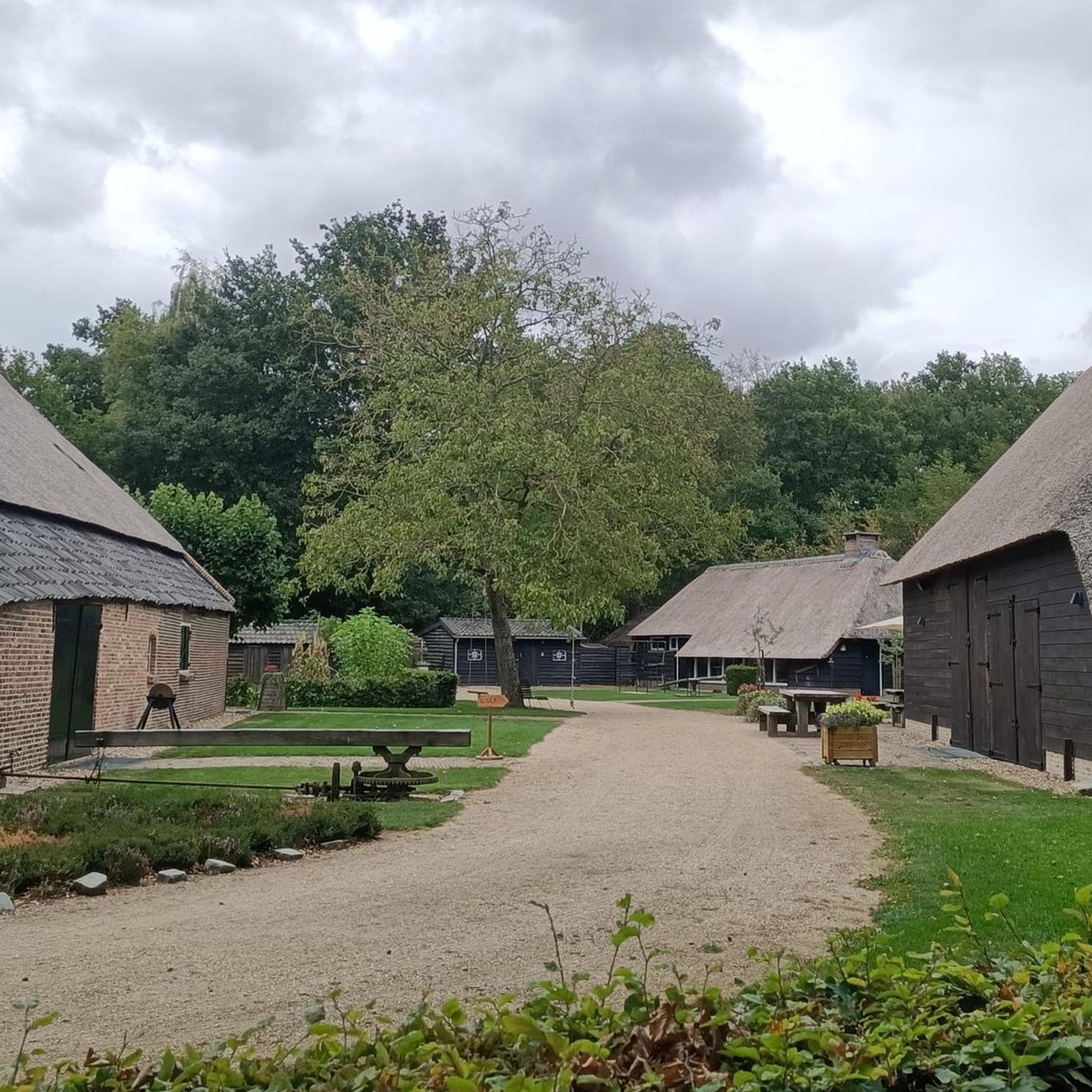
Two farms were located on the old path between Metz and Peltre, the Haute Bévoye and the Basse Bévoye. The Haute Bévoye, on a hill, is a fortified farm documented from the early 14th century. In 1404, it belonged to "Jehan Xaippey", i.e. Jean de Raigecourt, known as Xappel; 12 cattle and 8 horses were raised there at the time. In addition to an 18th-century dwelling and farm buildings, the layout of the medieval castle remains legible, with four rectangular wings surrounded by a moat; two wings and three towers recall the initial state. https://melodi.univ-lorraine.fr/s/projet-cite-de-metz/item/2973
1
0

The fort is still maintained as a historical memorial. The inner fortress is actually more of a small park - with playgrounds and picnic areas. The still recognizable building ruins serve as a refuge for bats. The very extensive area around it is surrounded by hiking trails, the fortress walls and, above all, the deep defensive ditch are always present.
2
0

Of the original 17 city gates, only the German Gate in the east remains. Named after the former hospital of the Teutonic Order, which stood nearby, it was built as an entrance to the city on a bridge over the Seuille River. A medieval structure straight out of a picture book.
6
1

Always worth a bike tour! In the old town area, however, you should keep an eye on the ground. The cobblestones are very rough in places and have deep, wide cracks.
1
0

beautiful walk starting from the Col de Lessy
1
0

Impressive and well-preserved gate of the medieval city fortifications on the Seille.
6
0

"...One of the sights in Metz that really impressed me was the German Gate (Porte des Allemands). It is an imposing city gate that looks like a small castle with its massive towers and double gate. It was built in the 13th century and was part of the city wall that..." Find out more about the sights of Metz in my blog post: 👉 https://www.netreisetagebuch.de/metz-sehenswuerdigkeiten/
5
1
Frequently Asked Questions
What historical sites and castles can I visit near Peltre?
While the Château de Crépy in Peltre is private, you can explore several significant historical sites and fortifications nearby. Notable options include the Porte des Allemands, a medieval city gate in Metz, and the extensive Fort Saint-Quentin, part of Metz's first fortified belt.
Is the Château de Crépy in Peltre open to the public?
No, the Château de Crépy in Peltre is a private property and is not open for public visits. It was rebuilt in 1873 on the site of an older castle and is currently owned by the Brothers of the Christian Schools.
Are there any family-friendly historical sites or castles to visit near Peltre?
Yes, the Porte des Allemands in Metz is considered family-friendly. Its historical significance as a medieval city gate and bridge over the Seille offers an engaging experience for all ages. Additionally, the broader historic landmarks in Metz, including its old town and cathedral, provide a rich environment for family exploration.
What kind of outdoor activities can I do near these historical sites?
The area around Peltre and Metz offers various outdoor activities that can be combined with historical site visits. You can find numerous cycling routes, including touring bicycle, road cycling, and mountain biking trails. For example, there are routes like the 'Mercy Castle – Pange Castle loop' for touring bikes or the 'Moyen Bridge – Metz Cathedral loop' for mountain biking. You can find more details on these routes in the Cycling around Peltre guide, Road Cycling Routes around Peltre guide, and MTB Trails around Peltre guide.
What is the significance of the Porte des Allemands?
The Porte des Allemands (German Gate) in Metz is a highly significant medieval city gate. It is the only one of 17 original city gates of the Metz city wall that has been preserved. It served as the main entrance to Metz from the east and functioned as a bridge over the Seille river from the 13th to the early 20th century, showcasing the evolution of military architecture.
Can I visit Pange Castle?
Pange Castle, an 18th-century classicist castle, is still family-owned. While the building itself is not always open to the public, its splendid gardens are often accessible. It is entrusted to an association aiming to make it a house of arts, encounters, and cultures. It's advisable to check their website for current visiting information.
What makes Metz a good destination for history enthusiasts near Peltre?
Metz, located near Peltre, is an excellent destination for history enthusiasts due to its rich past and diverse architecture. It features a beautiful old town center, a Gothic cathedral, and numerous historical sites like the Porte des Allemands and Fort Saint-Quentin. The city's history, including its changing affiliations between German and French empires, is reflected in its buildings and offers a unique architectural blend.
What do visitors enjoy most about the historical sites around Peltre?
Visitors frequently appreciate the historical depth and architectural diversity of the sites around Peltre, particularly in Metz. The preserved medieval structures like the Porte des Allemands, the grandeur of the Metz Cathedral, and the extensive fortifications like Fort Saint-Quentin are often highlighted. The blend of French and German influences in Metz's architecture is also a popular point of interest.
Are there any specific historical sites that combine religious and military history?
Yes, the Porte des Allemands and Metz Cathedral highlight this combination. The Porte des Allemands itself was named after the adjacent former hospital of the Teutonic Order. The Metz Cathedral, a prominent Gothic structure, stands as a testament to the region's religious heritage, while the nearby fortifications speak to its military past.
How much time should I plan for visiting these historical sites?
The time required varies depending on the site. For a comprehensive visit to the Porte des Allemands and the Metz city center, including the Cathedral, you could easily spend half a day to a full day. Exploring a larger fortification like Fort Saint-Quentin might take a few hours. If you plan to combine multiple sites or include outdoor activities, consider dedicating a full day or more to the region.
When is the best time of year to visit the castles and historical sites near Peltre?
The spring (April-June) and autumn (September-October) months generally offer the most pleasant weather for exploring the historical sites and engaging in outdoor activities around Peltre. Temperatures are mild, and the natural scenery is often at its best. Summer can also be enjoyable, though it may be warmer and more crowded, especially in Metz.
Most popular attractions around Peltre

Get inspired with the komoot mobile app


Explore more
Looking for the best castles somewhere else? Discover other guides around Peltre:
