The best road cycling routes around Feings
4.7
(22)
500
riders
264
rides
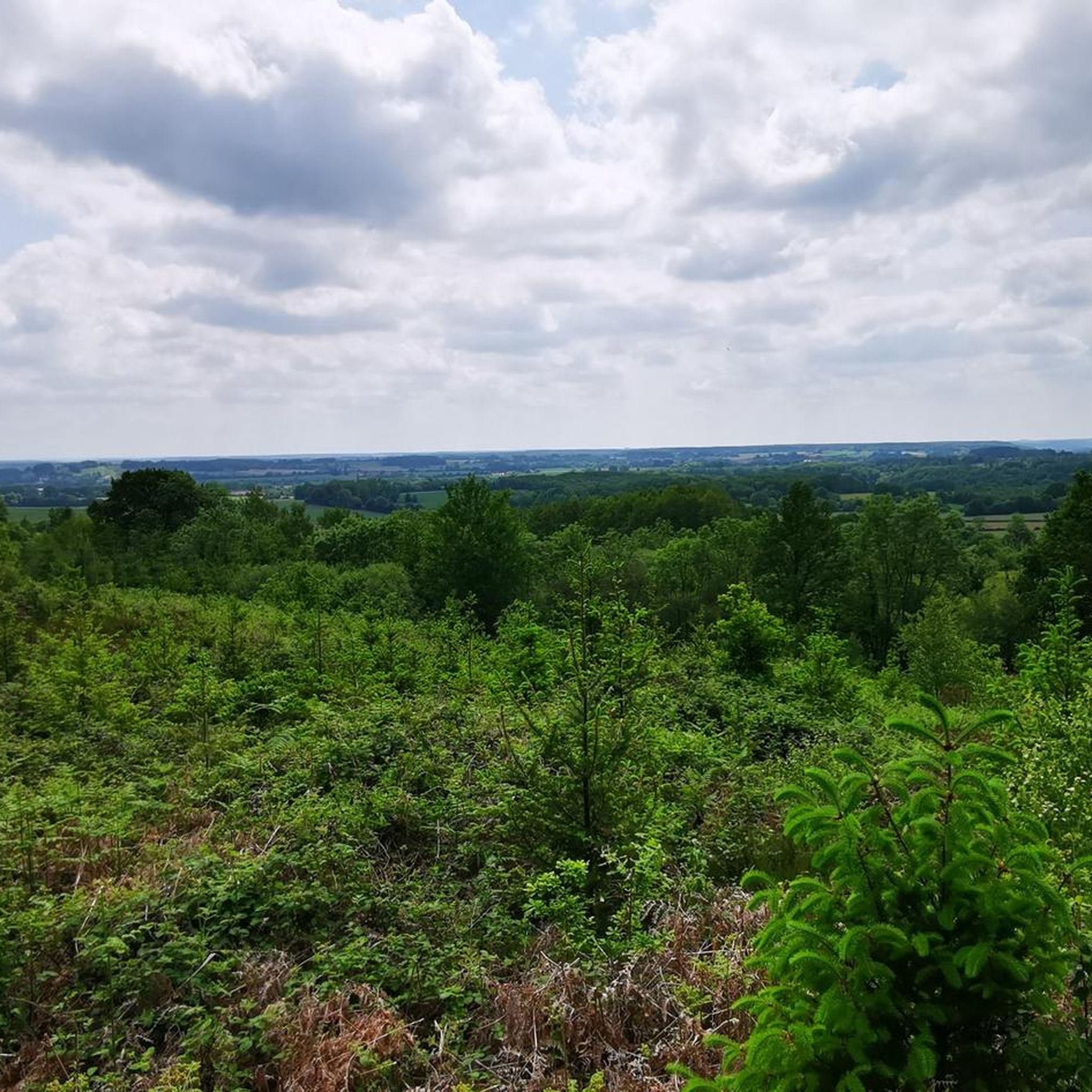
Road cycling routes around Feings traverse the rolling hills and verdant landscapes of the Perche Natural Regional Park. The region features a mix of forests and agricultural land, offering varied scenery for rides. Roads often present undulating gradients, providing engaging cycling experiences. This area provides diverse terrain suitable for road cyclists.
Best road cycling routes around Feings
- The most popular road cycling route is Soligny-la-Trappe Abbey – Conturbie Pond loop from Mortagne-au-Perche, a 33.9 miles (54.5 km) trail that…
Last updated: July 2, 2026
5.0
(1)
8
riders
34.1km
01:30
220m
220m
Easy road ride. Great for any fitness level. Mostly well-paved surfaces and easy to ride.
8
riders
54.5km
02:36
460m
460m
Moderate road ride. Good fitness required. Mostly well-paved surfaces and easy to ride.

Sign up for free
5.0
(1)
5
riders
58.4km
02:49
670m
670m
Moderate road ride. Good fitness required. Mostly well-paved surfaces and easy to ride.
5.0
(1)
4
riders
Easy road ride. Great for any fitness level. Mostly well-paved surfaces and easy to ride.
5
riders
Moderate road ride. Good fitness required. Mostly well-paved surfaces and easy to ride.
Get access to more routes and recommendations from other explorers.
Sign up for free
Already have an account?
Our route recommendations are based on thousands of hikes, rides, and runs completed by other people on komoot.
Start today with a free account
Your next adventure awaits.
Login or Signup

Tips from the Community

The original Marian shrine "La Salette," which is referred to in this patronal feast, is located in the French Alps (Grenoble district) and is an important Marian shrine, even if it has not achieved the same level of fame as other pilgrimage sites honoring the Mother of God—such as Lourdes in the French Pyrenees or Fatima in Portugal. The hiking highlight "La Salette" can be found on komoot at the following link =>> https://www.komoot.com/de-de/highlight/1861054
0
0

Church built in the 18th century 18th century altarpiece listed as a Historic Monument. A bell tower-porch marks the entrance to the façade. It has a portal. A triplet of louvres is located on each side, under the polygonal spire. Brick buttresses support the side walls and alternate with semicircular bay windows. The nave is unique, with enclosed pews. The paneled vault is barrel-shaped with transverse arches. The choir is adorned with a large altarpiece.
0
0
In the center of Randonnai, the 16th-century Saint-Malo church, enlarged in 1836, houses several works classified as Historic Monuments, including a classical altarpiece with paintings of Saint Andrew and Saint Sebastian. Funeral slabs serve as threshold steps. Inside, a plaque commemorates the departure of Pierre Tremblay (whose birthplace is in La Filonnière) in 1647 for New France. He is the ancestor of the Tremblays of Quebec and North America.
0
0
Since 1823, the commune's territory has united the former parish of La Trinité, which was under the bishopric of Chartres, and that of Beaulieu, under the bishopric of Evreux, located on either side of the Avre River, which marked the separation. The tall brick bell tower-porch was added in the 19th century to the older nave (15th-16th centuries?), rectangular in plan, whose wooden vault rests on an exposed roof frame. This modest rural church houses, as a counterpart to the Curé d'Ars, a 15th-century polychrome stone Virgin of exceptional artistic quality. The two sculpted doors of the sacristy come from La Trinité, as well as the engraved "flat tomb" attached to the nave wall. It dates from the 15th century. and the inscriptions are difficult to decipher: Jean Fillon, wearing a canon's hood and a chasuble, his hands clasped and his feet resting on two small dogs, is depicted in a Gothic setting with two angels, silhouettes of altar boys, and canons. Near the baptismal font decorated with three fleurs-de-lis is a large painting of Saint Gilles the hermit, with the doe lying at his feet. A beautiful series of stained-glass windows from the early 20th century illustrate scenes from the New Testament, and two others show Joan of Arc at the king's coronation in Reims, then taking communion in her prison before being led to the stake.
0
0
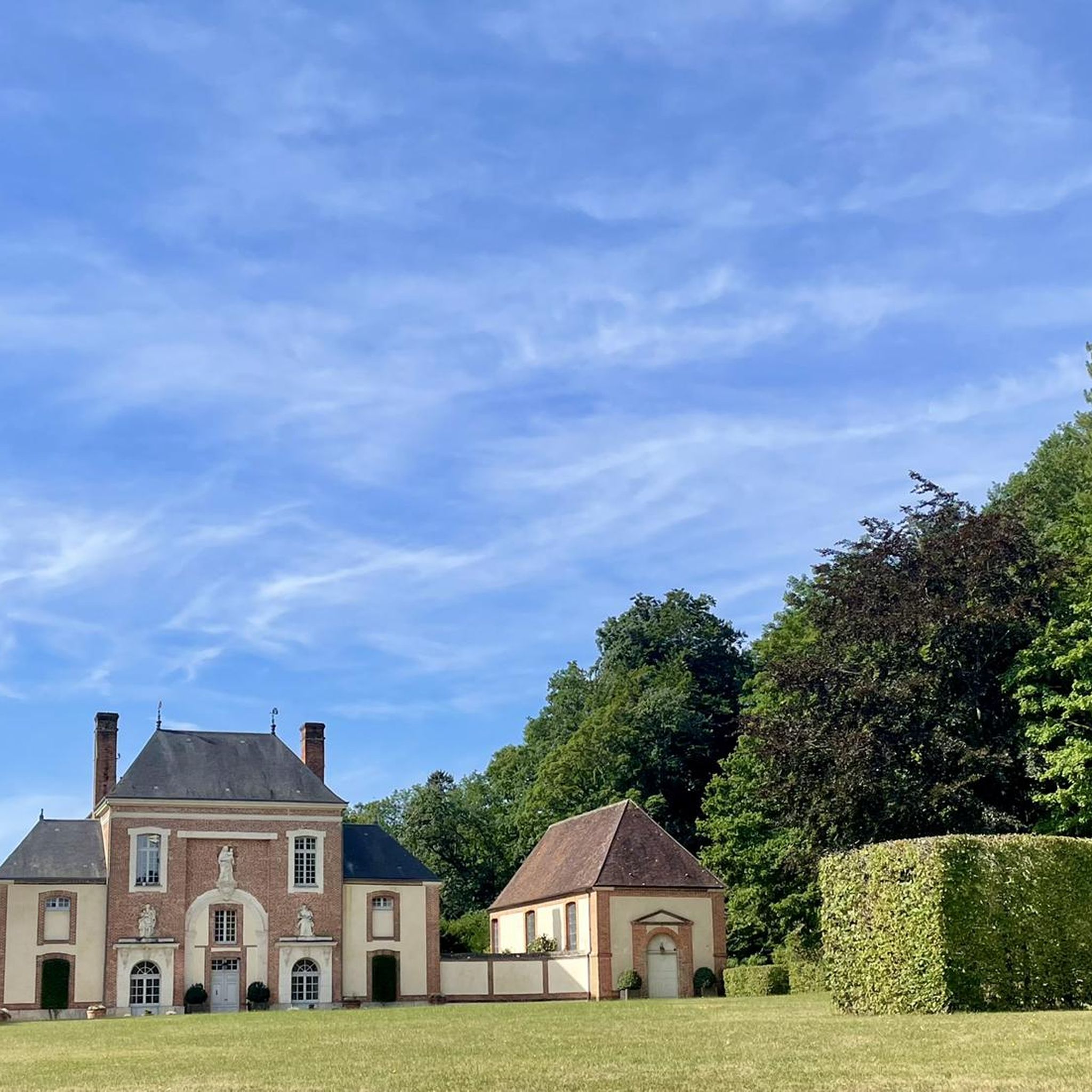
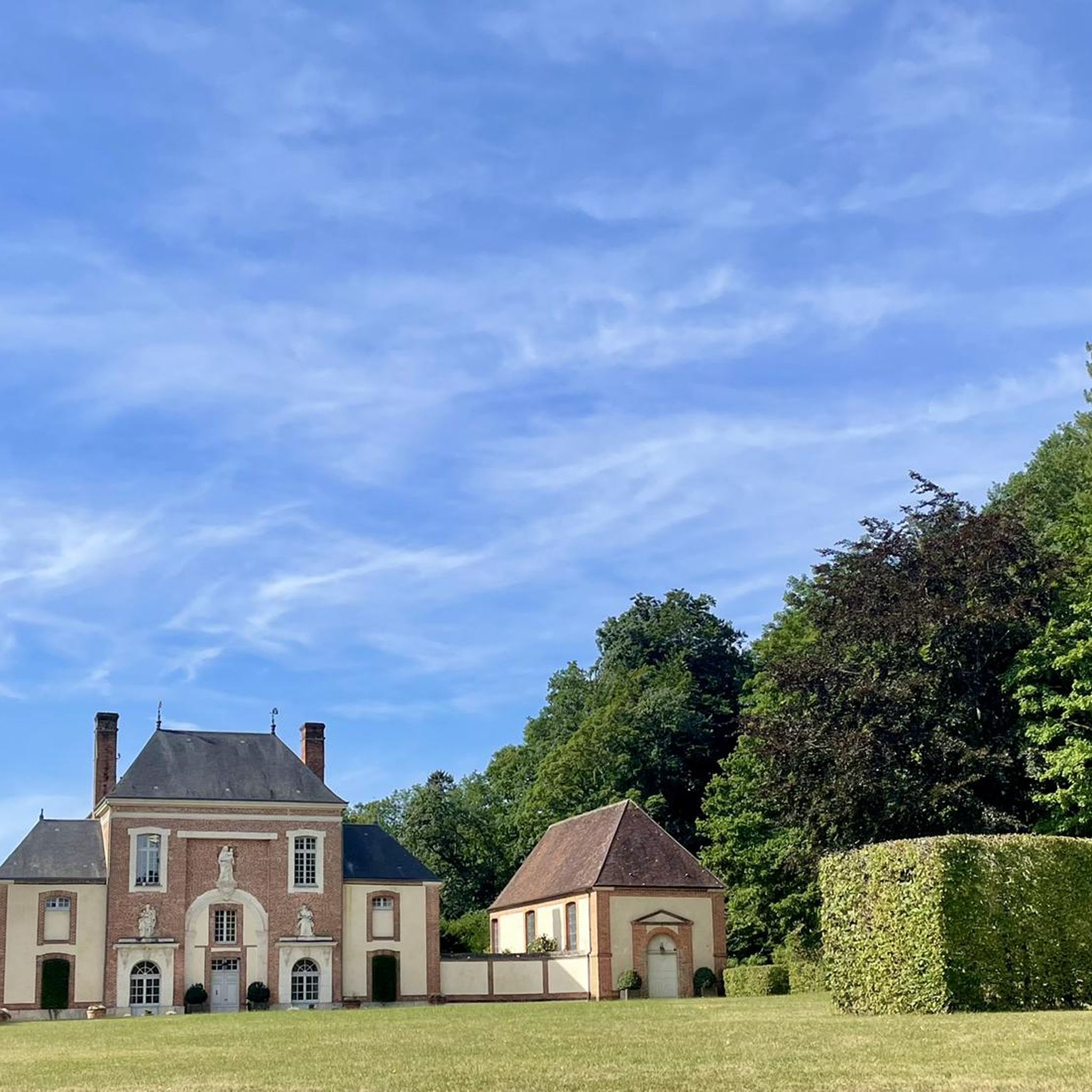
The church is closely inserted between the castle park and the houses of the village, which presents a harmonious ensemble of buildings from the 18th and early 19th centuries, combining flint and brick with lime plaster tinted with ochre. You have to step back a little to see its apse, the foundation of which probably dates back to the Romanesque period. Next to the entrance gable, dressed in Grison rubble, the bell tower was built in 1867 (according to the inscription preserving the names of the mason Gelin and the carpenter Hallier, with those of the priest, Abbot Porcher, the mayor, Viscount des Brosses, and the municipal councilors). The nave is extended by a rounded apse, with thick walls pierced by widely splayed semicircular openings, between which are placed the statues of Saint Sebastian, the Virgin and Child, Saint Michael and the dragon, and a holy bishop. On the "perque" (or beam of glory), a large Christ surrounded by the Virgin and Saint John. The transverse chapel, on the right, from the 15th or 16th century, vaulted with ribs resting on four pendentives with a central key carved like lace, was the seat of the brotherhoods. It houses the more recent statues of Saint Sebastian, the Virgin, Saint Michael and a holy bishop. The seigneury of Chennebrun, which belonged successively to Saint-Simon de Courtomer (1650), Caumont de la Force (1670), Grimoard de Beauvoir (1688), Laval Montmorency (1714), d'Espinay Saint-Luc (1765), etc., was acquired during the Restoration by Jacques-Alexandre Giroult des Brosses, whose father had been mayor of Dreux in 1771. In the seigneurial chapel on the left, inscriptions recall the names and dates of the members of this family linked for more than four generations to the life of the commune. We are grateful to them for having admirably maintained the castle, whose 18th century façade and the entrance to the park are visible from the gate. Their coat of arms appears on the stained glass window of this chapel, where we recognize in the center those of a Laval-Montmorency, Lord of Chennebrun, knight of honor of the Duchess of Orléans, master of the cavalry camp, who died in 1757, as indicated by his funerary slab on the threshold. The numerous 19th century stained glass windows with the names of the donors are worth seeing in detail. The one in the center, in the choir, lifts us to the sky with Our Lady of the Assumption. The statue of Mary, patron saint of Chennebrun, never ceases to watch over her church.
0
0

I am delighted to see and see again the basilica of "La chapelle Montligeon" and I am proud to have been the doctor of this charming village. In the year 2000 and following after 40 years of general medicine in Paris. R.G. Dean of the "couch of doctors".
0
0
From very humble beginnings, a significant sanctuary with a very unusual patronage has emerged in La Chapelle-Montligeon, one I've never encountered anywhere else: The church here, with the papal distinction of "Basilica Minor," is not one of the usual churches dedicated to Our Lady, but rather specifically to "Our Lady, the Liberator of Souls in Purgatory." The present pilgrimage church was built at the turn of the 19th and 20th centuries, as the previous building had become far too small for the pilgrims who came here.
0
0

Nestled on hillsides painted with ochre, yellow, or pink sand, limestone, and lights, Mortagne-au-Perche is a must-see for anyone wanting to explore Le Perche. A favorite holiday resort of the Counts of Perche and their wives, Mortagne-au-Perche has managed to preserve its monuments and historical heritage. This medieval town brimming with character is recommended for exploring by bike or on foot.
0
0
Frequently Asked Questions
What kind of terrain and scenery can I expect on road cycling routes around Feings?
Road cycling routes around Feings primarily traverse the rolling hills and verdant landscapes of the Perche Natural Regional Park. You'll encounter a diverse mix of forests and agricultural land, providing varied scenery and engaging rides with undulating gradients.
How many road cycling routes are available around Feings, and what are their difficulty levels?
The Feings area offers over 250 road cycling routes. These include 25 easy routes, over 210 moderate routes, and 23 more challenging options, ensuring there's something for every skill level.
What do other road cyclists enjoy most about cycling in Feings?
The area is highly rated by the komoot community, with an average score of 4.7 stars from over 20 reviews. Cyclists often praise the varied terrain, the mix of forests and agricultural land, and the engaging rides through the Perche Natural Regional Park.
Are there any notable landmarks or historical sites along the road cycling routes near Feings?
Yes, several routes pass by significant points of interest. For example, the Soligny-la-Trappe Abbey – Conturbie Pond loop from Mortagne-au-Perche offers views of the countryside and passes by historical sites. You might also encounter the impressive Basilica of Our Lady of Montligeon or the charming town of Mortagne-au-Perche.
Are there any family-friendly road cycling routes in the Feings area?
While many routes feature rolling hills, there are 25 easy road cycling routes available around Feings that are suitable for families or those looking for a more relaxed ride. These routes typically have less elevation gain and cover shorter distances.
Can I find circular road cycling routes around Feings?
Yes, many of the road cycling routes around Feings are designed as loops. Examples include the popular Tourouvre solar road – Conturbie Pond loop from Mortagne-au-Perche and the Porte Saint Denis – Saint Germain de Loisé loop from Mortagne-au-Perche, which lead through rolling hills and open fields.
What is the best time of year for road cycling in the Feings region?
The Perche Natural Regional Park, where Feings is located, is beautiful throughout the warmer months. Spring and autumn offer pleasant temperatures and vibrant scenery, while summer provides longer daylight hours. Always check local weather conditions before heading out.
Are there options for advanced road cyclists seeking a challenge?
Absolutely. For advanced road cyclists, there are 23 difficult routes around Feings. These routes typically feature more significant elevation gains and longer distances, providing a good challenge through the region's undulating terrain.
Where can I find parking for road cycling routes near Feings?
Many routes start from towns like Mortagne-au-Perche, which offer public parking facilities. It's advisable to check the starting point of your chosen route on komoot for specific parking recommendations.
Are there any specific routes that offer a good mix of scenery and historical interest?
The Soligny-la-Trappe Abbey – Conturbie Pond loop from Mortagne-au-Perche is a moderate 34.3-mile route that offers scenic views of the countryside and passes by historical points of interest, making it a great option for those seeking both natural beauty and cultural insights.
What are some of the longer road cycling routes available?
For longer rides, consider routes like the Porte Saint Denis – Saint Germain de Loisé loop from Mortagne-au-Perche, which spans 36.3 miles (58.4 km) and takes approximately 2 hours 49 minutes to complete, leading through rolling hills and open fields.
Can I find routes that are suitable for beginners in road cycling?
Yes, beginners can choose from 25 easy road cycling routes around Feings. An example is the Notre-Dame Church – Beaulieu War Memorial loop from Mortagne-au-Perche, an easy 26.6-mile (42.7 km) route with manageable elevation.
Most popular attractions around Feings

Get inspired with the komoot mobile app


Explore more
Browse the best Road cycling routes in other regions.
