The best cycling routes around Baslieux-Sous-Châtillon
4.5
(129)
1,046
riders
74
rides
Touring cycling routes around Baslieux-Sous-Châtillon navigate a landscape characterized by the Marne river valley and surrounding vineyards. The terrain features gentle rolling hills interspersed with more pronounced ascents, typical of the Champagne region. This area offers a mix of riverside paths and routes through agricultural land, providing varied cycling experiences.
Best touring cycling routes around Baslieux-Sous-Châtillon
- The most popular touring cycling route is Town Hall – View to Champagne De Castellan loop from Mareuil-le-Port, a 32.4 miles (52.2 km)…
Last updated: May 8, 2026
4.7
(12)
63
riders
52.2km
03:11
320m
320m
Moderate bike ride. Good fitness required. Mostly paved surfaces. Suitable for all skill levels.
4.6
(9)
56
riders
23.6km
01:21
50m
40m
Easy bike ride. Great for any fitness level. Mostly paved surfaces. Suitable for all skill levels.

Sign up for free
3.0
(1)
9
riders
55.9km
03:39
750m
750m
Hard bike ride. Very good fitness required. Mostly paved surfaces. Suitable for all skill levels.
20
riders
42.8km
02:38
330m
330m
Moderate bike ride. Good fitness required. Mostly paved surfaces. Suitable for all skill levels.
12
riders
39.8km
02:40
580m
580m
Hard bike ride. Very good fitness required. Mostly paved surfaces. Suitable for all skill levels.
Get access to more routes and recommendations from other explorers.
Sign up for free
Already have an account?
Our route recommendations are based on thousands of hikes, rides, and runs completed by other people on komoot.
Start today with a free account
Your next adventure awaits.
Login or Signup

Tips from the Community

A whole row of statues along the Marne, although they are slowly due for a new coat of paint
0
0

The Holy Father known as Pope Urban II was born here around 1035. His name is known as Odon de Lagery, also Eudes de Châtillon, or Otton de Châtillon. He joined the Benedictine Order named after Benedict of Nursia (OSB for the Latin "Ordo Sancti Benedicti") and became prior of the highly important Cluny Abbey. In 1088, he was elected pope, taking the name Urban II. As the supreme shepherd of the Roman Catholic Church, he supported the Reconquista in Spain and the First Crusade in support of Byzantium. His theological reasoning was based on the second chapter of the Old Testament Book of Daniel, which describes a turning point in history. He died in 1099. His feast day in the calendar of saints is July 29, the recorded date of his death.
0
0

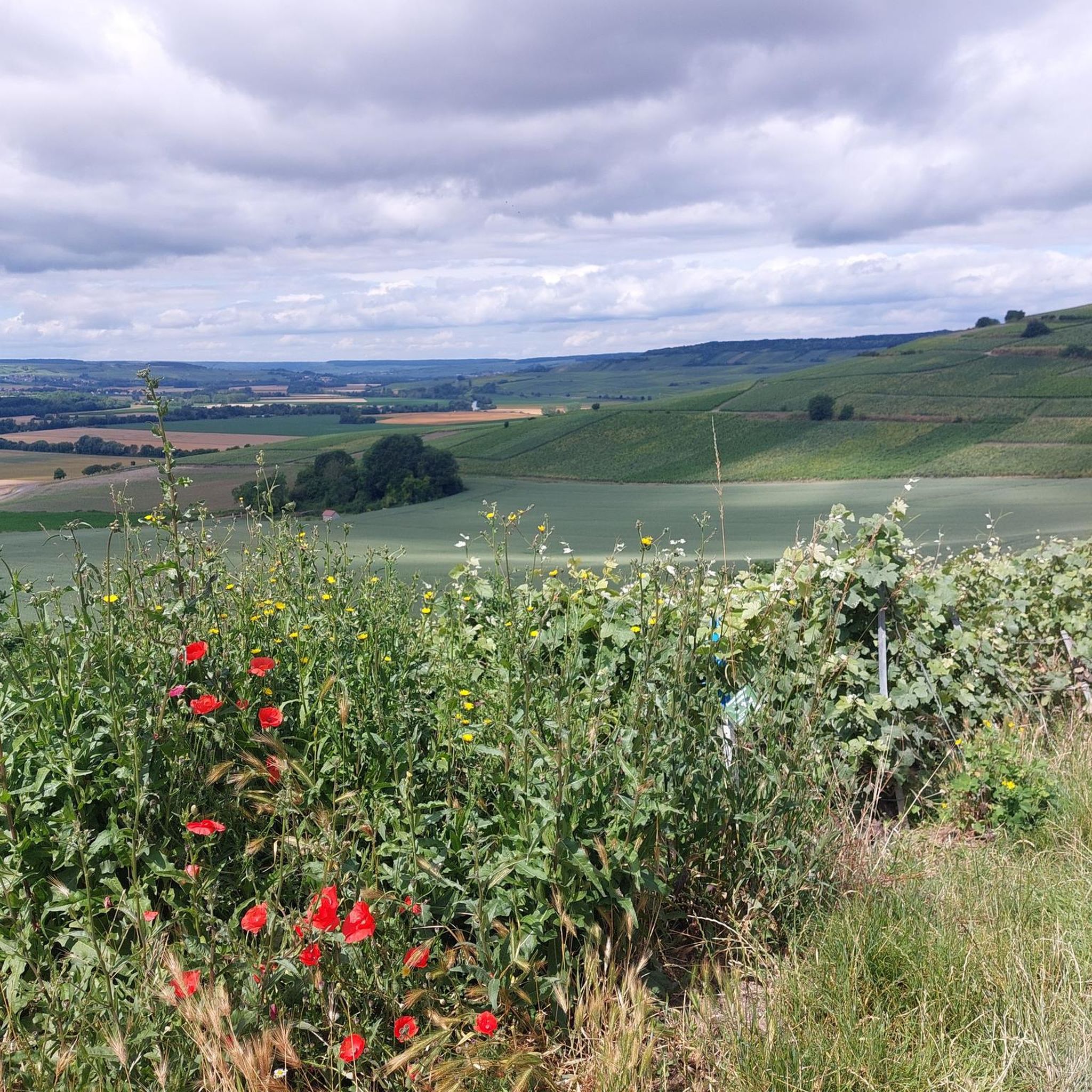
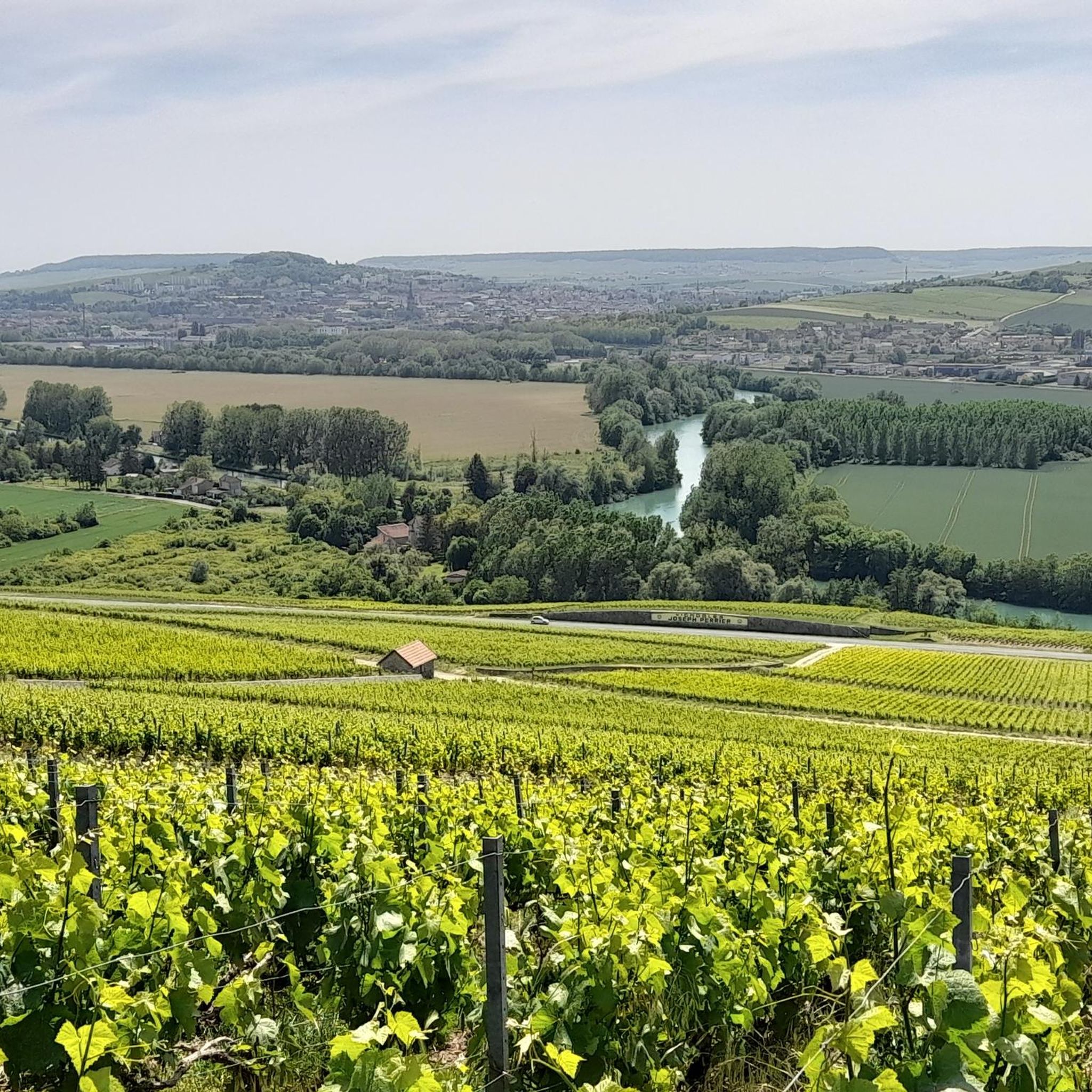
A beautiful view of the Marne River and the Marne Valley. On the way to Hautvillers, you should occasionally take a look at the plain – it's worth it.
0
0
The wine press shows the work of years long gone - the champagne corks on the road are skillfully avoided by sober drivers.
1
0

A very beautiful metal installation that shows the activities of the winemaker.
1
0

Between 1872 and 1884, the concierge and the orangery were built on the outer edge of a vast park, according to plans by the architect Alphonse Gosset (1835-1914)[5]. In 1920, the park was acquired by the municipality with the Auban-Moët mansion and opened to the public. The part of the park around the town hall is laid out in the French style, to emphasise the classical and sober facade of the building. It consists of a grass path and two symmetrical access paths arranged in a horseshoe shape around a fountain. It is decorated with two bronze lions, cast iron statues of ancient gods and various other statues. The other part of the park is laid out in the English style: it is crossed by hilly paths, groves, two pools of water, an artificial island and a rocky grotto with a waterfall. On this side of the garden is a temple of love, built of limestone. This belvedere with Corinthian columns has a coffered ceiling. It is inspired by the Temple of Love in the Petit Trianon in Versailles. The City Hall Park has the label "Remarkable Garden".🪴 In
7
0
Épernay Town Hall is located at number 7bis in the former Auban-Moët mansion, built in 1858 by Victor Moët (1797–1881)[5] to a design by the architect Victor Le Noir, who also designed the Montparnasse railway station in Paris. In the early 19th century, Jean-Baptiste Isabey had the building redesigned in a classical style for Jean-Remy Moët, owner of the Hôtel Auban-Moët and mayor of Épernay. The current layout dates from 1857 and is the work of the brothers Denis and Eugène Bühler. It was donated to the city in 1919, which took it into use as a town hall in 1920. The building houses luxurious rooms, including the wedding hall and the council chamber. The building has been listed as a French Historical Monument since 26 June 2012.[5][6]
7
0

The view from the beautiful rest areas around the monument of Pabst Urban II over the Marne valley and the vineyards of Champagne is magnificent ☺️
2
0
Frequently Asked Questions
How many touring cycling routes are available around Baslieux-Sous-Châtillon?
There are over 70 touring cycling routes available around Baslieux-Sous-Châtillon, offering a diverse range of experiences for cyclists of all levels.
What kind of terrain can I expect on touring cycling routes in Baslieux-Sous-Châtillon?
The routes navigate a landscape characterized by the Marne river valley and surrounding vineyards. You can expect gentle rolling hills interspersed with more pronounced ascents, typical of the Champagne region, along with a mix of riverside paths and routes through agricultural land.
Are there easy touring cycling routes suitable for beginners or families?
Yes, there are 8 easy touring cycling routes. A great option for a relatively flat and scenic ride is On the banks of the Marne – View of Dormans loop from Leuvrigny, which follows the Marne river.
What are some of the more challenging touring cycling routes in the area?
For those seeking a challenge, there are 23 difficult routes. One such route is the Aussichtspunkt – Marne Riverside, Reuil loop from Cœur-de-la-Vallée, which covers 34.7 miles (55.8 km) and includes significant elevation gain through riverside areas.
Are there any circular touring cycling routes around Baslieux-Sous-Châtillon?
Many routes in the area are loops. For example, the popular Town Hall – View to Champagne De Castellan loop from Mareuil-le-Port offers views of Champagne vineyards and local towns. Another option is the View to Champagne De Castellan – Route du Champagne Epernay loop from Leuvrigny.
What do other touring cyclists say about the routes in Baslieux-Sous-Châtillon?
The routes are highly rated by the komoot community, with an average score of 4.5 stars from nearly 100 reviews. Cyclists often praise the varied terrain, from riverside paths to vineyard views, and the options available for different ability levels.
What are some scenic viewpoints or attractions I can see along the touring cycling routes?
The region offers several points of interest. You might encounter the Abbaye de Hautvillers, the Vineyard Worker Sculptures Along the Marne, or the Statue of Pope Urban II and viewpoint. The Châtillon-sur-Marne – Le Moulin Carré loop from Leuvrigny also offers great views.
When is the best season for touring cycling in Baslieux-Sous-Châtillon?
The Champagne region is particularly beautiful in spring and autumn. Spring offers lush greenery and blooming vineyards, while autumn provides stunning colors as the leaves change, and it's also harvest season. Summer is also popular, but can be warmer.
Are there any less crowded touring cycling trails near Baslieux-Sous-Châtillon?
While specific crowd levels can vary, exploring some of the moderate or difficult routes, or those slightly further from main towns, may offer a more tranquil experience. Many routes through agricultural land tend to be less frequented than popular riverside paths.
What should I pack for touring cycling in Baslieux-Sous-Châtillon, especially in autumn?
For autumn cycling, layers are key. Pack a waterproof and windproof jacket, gloves, and a hat or headband. The weather can be changeable, so be prepared for cooler temperatures, especially in the mornings and evenings, and potential rain. Don't forget essentials like a repair kit, water, and snacks.
Are there cafes or places to stop for refreshments along the touring cycling routes?
Given the region's focus on wine and tourism, you'll find villages and towns along many routes that offer opportunities for refreshments, including cafes, bakeries, and small restaurants. Planning your route to pass through these settlements will ensure you have places to stop.
Most popular routes around Baslieux-Sous-Châtillon
Most popular attractions around Baslieux-Sous-Châtillon

Get inspired with the komoot mobile app


Explore more
Browse the best Cycling routes in other regions.
