The best cycling routes around Saint-Imoges
4.1
(629)
4,007
riders
271
rides
Touring cycling routes around Saint-Imoges traverse the Montagne de Reims Regional Natural Park, offering a blend of natural beauty and cultural landmarks. The region is characterized by extensive Champagne vineyards, which are a UNESCO World Heritage Site, alongside dense forests such as the Saint-Imoges Forest. Cyclists will encounter varied terrain, from the plateau of the Montagne de Reims to views overlooking the Marne valley. This area provides a diverse landscape for touring cyclists.
Best touring cycling routes around Saint-Imoges
- The most popular touring cycling route is Abbaye de Hautvillers – Route du Champagne Epernay loop from Parc naturel régional de la Montagne de Reims, a 24.8 miles (40.0 km) trail that takes 2 hours 43 minutes to complete. This moderate route connects significant Champagne heritage sites.
- Another top favourite among local touring cyclists is Route du Champagne Epernay – Avenue de Champagne loop from Parc naturel régional de la Montagne de Reims, a difficult 30.3 miles (48.7 km) path. This route offers extensive views of the Champagne vineyards and passes through Epernay's famous Avenue de Champagne.
- Local touring cyclists also love the Town Hall – Avenue de Champagne loop from Parc naturel régional de la Montagne de Reims, a 20.9 miles (33.7 km) trail leading through the Montagne de Reims and towards Epernay, often completed in about 2 hours 16 minutes.
- Touring cycling around Saint-Imoges is defined by rolling Champagne vineyards, dense forests, and scenic views of the Marne valley. The network offers options for moderate to difficult routes, catering to various ability levels.
- The routes in Saint-Imoges are highly rated by the komoot community with an average score of 4.2 stars from over 700 reviews. More than 5000 touring cyclists have used komoot to explore Saint-Imoges's varied terrain.
Last updated: May 25, 2026
4.6
(81)
272
riders
Moderate bike ride. Good fitness required. Mostly paved surfaces. Suitable for all skill levels.
4.7
(26)
189
riders
Hard bike ride. Very good fitness required. Mostly paved surfaces. Suitable for all skill levels.

Sign up for free
3.5
(2)
31
riders
67.1km
04:24
790m
790m
Hard bike ride. Very good fitness required. Mostly paved surfaces. Suitable for all skill levels.
1.0
(1)
17
riders
Hard bike ride. Very good fitness required. Mostly paved surfaces. Suitable for all skill levels.
5.0
(3)
10
riders
28.7km
02:01
270m
280m
Moderate bike ride. Good fitness required. Mostly paved surfaces. Suitable for all skill levels.
Get access to more routes and recommendations from other explorers.
Sign up for free
Already have an account?
Our route recommendations are based on thousands of hikes, rides, and runs completed by other people on komoot.
Start today with a free account
Your next adventure awaits.
Login or Signup

Tips from the Community

A whole row of statues along the Marne, although they are slowly due for a new coat of paint
0
0

The abbey served as the guardian of the Holy Ampulla (Sainte Ampoule) used in the coronation ceremonies of French kings, and Reims was known as Durocortorum when it served as the capital of the Roman province of Belgica.
4
2
The Saint-Remi Museum in Reims is housed in a former Benedictine abbey that was classified as a UNESCO World Heritage Site in 1991 and officially became a museum in 1978. The museum covers the period from Prehistory to the Renaissance (around 1530) and features regional archaeology collections, classical antiquities, and an extensive military history section
4
2

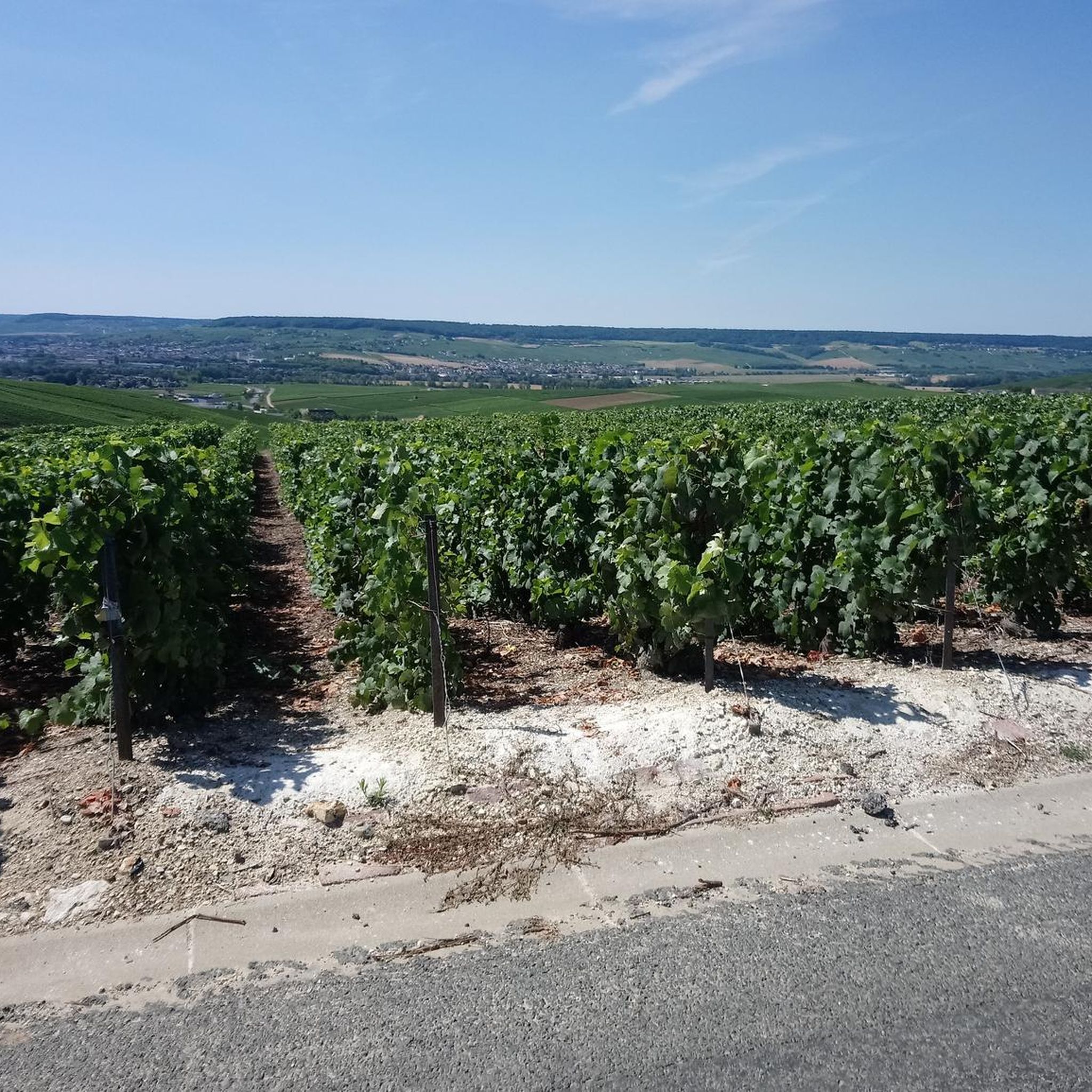
The Chemin des Garennes is a beautiful descent with great views of the vineyards and across to Hautvillers - with little traffic.
0
0
The wine press shows the work of years long gone - the champagne corks on the road are skillfully avoided by sober drivers.
1
0

A very beautiful metal installation that shows the activities of the winemaker.
1
0

Between 1872 and 1884, the concierge and the orangery were built on the outer edge of a vast park, according to plans by the architect Alphonse Gosset (1835-1914)[5]. In 1920, the park was acquired by the municipality with the Auban-Moët mansion and opened to the public. The part of the park around the town hall is laid out in the French style, to emphasise the classical and sober facade of the building. It consists of a grass path and two symmetrical access paths arranged in a horseshoe shape around a fountain. It is decorated with two bronze lions, cast iron statues of ancient gods and various other statues. The other part of the park is laid out in the English style: it is crossed by hilly paths, groves, two pools of water, an artificial island and a rocky grotto with a waterfall. On this side of the garden is a temple of love, built of limestone. This belvedere with Corinthian columns has a coffered ceiling. It is inspired by the Temple of Love in the Petit Trianon in Versailles. The City Hall Park has the label "Remarkable Garden".🪴 In
7
0
Épernay Town Hall is located at number 7bis in the former Auban-Moët mansion, built in 1858 by Victor Moët (1797–1881)[5] to a design by the architect Victor Le Noir, who also designed the Montparnasse railway station in Paris. In the early 19th century, Jean-Baptiste Isabey had the building redesigned in a classical style for Jean-Remy Moët, owner of the Hôtel Auban-Moët and mayor of Épernay. The current layout dates from 1857 and is the work of the brothers Denis and Eugène Bühler. It was donated to the city in 1919, which took it into use as a town hall in 1920. The building houses luxurious rooms, including the wedding hall and the council chamber. The building has been listed as a French Historical Monument since 26 June 2012.[5][6]
7
0
Frequently Asked Questions
How many touring cycling routes are available around Saint-Imoges?
There are over 240 touring cycling routes around Saint-Imoges. These routes offer a mix of easy, moderate, and difficult options, ensuring there's something for every skill level.
What kind of terrain can I expect on touring cycling routes near Saint-Imoges?
The routes traverse diverse landscapes, including the rolling Champagne vineyards, dense forests like the Saint-Imoges Forest, and the plateau of the Montagne de Reims. You'll find both paved sections suitable for road bikes and unpaved paths for mountain or hybrid bikes. Expect varied elevation gains, with some routes featuring significant climbs.
Are there any circular touring cycling routes in the Saint-Imoges area?
Yes, many touring cycling routes around Saint-Imoges are designed as loops. For example, the Abbaye de Hautvillers – Route du Champagne Epernay loop and the Route du Champagne Epernay – Avenue de Champagne loop are popular circular options that allow you to start and end in the same location.
What are some notable landmarks or attractions I can see along the touring cycling routes?
The routes often pass by significant cultural and natural sites. You can visit the historic Abbaye de Hautvillers, explore the famous Avenue de Champagne in Epernay, or see the Champagne Wine and Regional Archaeology Museum (Château Perrier). Natural highlights include the Saint-Imoges Forest and various scenic viewpoints overlooking the Marne valley.
What do other touring cyclists enjoy most about cycling in Saint-Imoges?
The area is highly rated by the komoot community, with an average score of 4.2 stars from over 700 reviews. Cyclists frequently praise the stunning views of the Champagne vineyards, the diverse landscapes of the Montagne de Reims Regional Natural Park, and the opportunity to combine cycling with cultural exploration of Champagne heritage sites.
Are there any easy touring cycling routes suitable for beginners or families?
Yes, out of the over 240 routes, 56 are classified as easy. These routes typically have less elevation gain and cover shorter distances, making them suitable for beginners or families looking for a relaxed ride. While specific 'family-friendly' routes are not explicitly named, these easier options provide a good starting point.
Where can I find parking for my car when starting a touring cycling route in Saint-Imoges?
Parking is generally available in and around Saint-Imoges and the starting points of many routes within the Montagne de Reims Regional Natural Park. For routes that begin from specific towns like Epernay or Hautvillers, public parking facilities are usually accessible. It's advisable to check local signage upon arrival.
What is the best time of year for touring cycling in the Saint-Imoges region?
The Champagne region is beautiful throughout the warmer months. Spring and autumn offer pleasant temperatures and stunning scenery, with vineyards either budding or displaying vibrant fall colors. Summer is also popular, though it can be warmer. Always check the local weather forecast before heading out.
Can I access touring cycling routes near Saint-Imoges using public transport?
While Saint-Imoges itself is a smaller village, the wider region is served by public transport, including train connections to larger towns like Reims and Epernay. From these cities, you can often find local bus services that connect to smaller villages or cycle directly to the start of many routes. Some routes, like those along the Canal de l'Aisne à la Marne, are easily accessible from various points.
Are there any viewpoints along the touring cycling routes offering panoramic views?
Absolutely. The region is known for its breathtaking vistas. Panoramic viewpoints such as the Dom Pérignon belvedere and the panoramic site of the Croix Joseph near Hautvillers offer expansive views of the Marne valley and the sprawling Champagne vineyards. Many routes are specifically designed to pass through or near these scenic spots.
What are some of the more challenging touring cycling routes around Saint-Imoges?
For experienced cyclists seeking a challenge, there are 81 difficult routes available. An example is the Canal de l'Aisne à la Marne – Route du Champagne Epernay loop, which covers over 57 km with significant elevation changes. These routes often feature steeper climbs and longer distances.
Where can I rent a bike in the Saint-Imoges area?
While specific bike rental services in Saint-Imoges itself might be limited, the wider Champagne region, particularly in larger towns like Epernay and Reims, offers several options for bike rentals. It's recommended to check with local tourism offices or search online for rental shops in these nearby cities.
Most popular routes around Saint-Imoges
Most popular attractions around Saint-Imoges

Get inspired with the komoot mobile app


Explore more
Browse the best Cycling routes in other regions.
